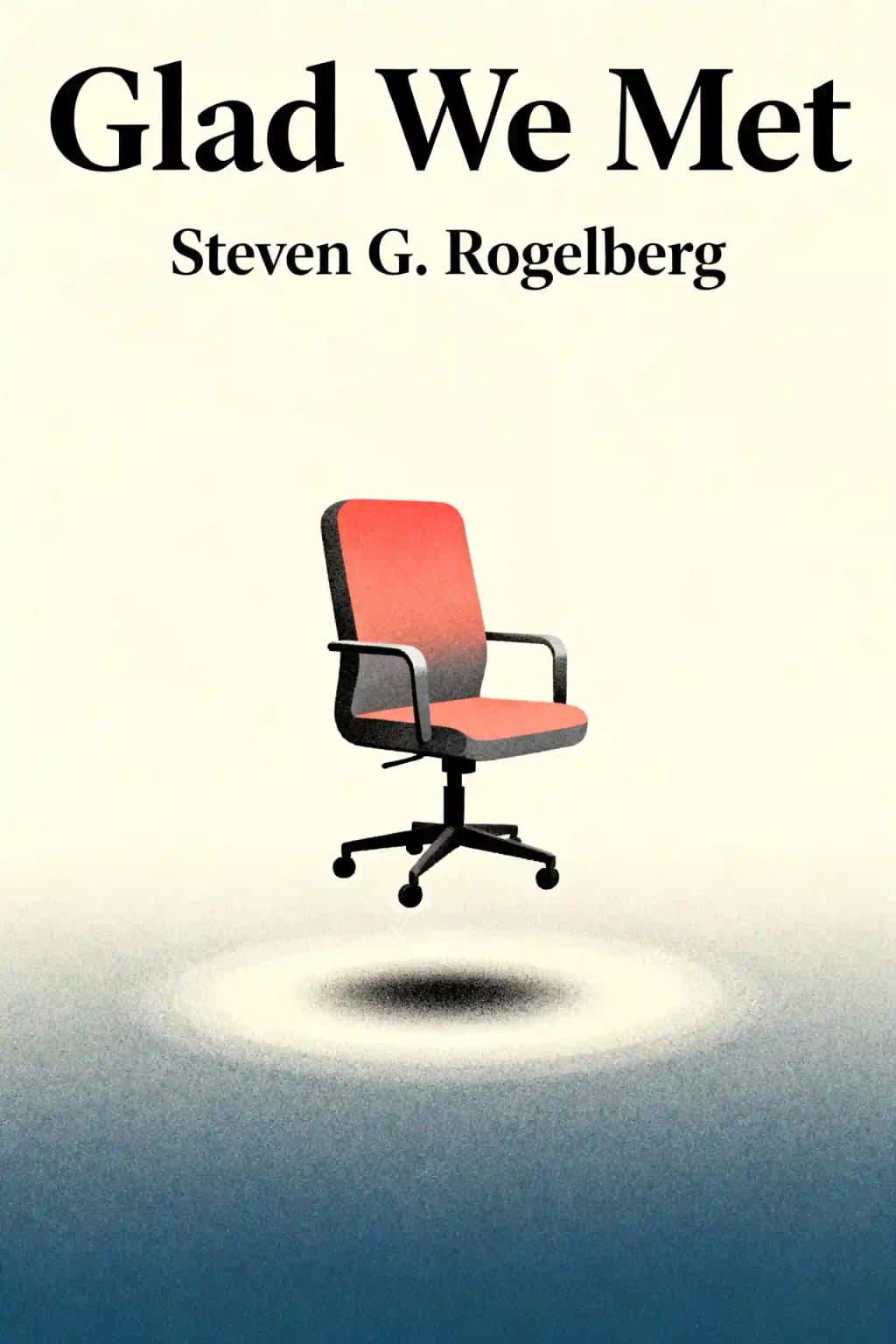
Transform your 1:1 meetings from forgettable check-ins into powerful career catalysts. Endorsed by Adam Grant as the "world's leading expert on fixing meetings," Rogelberg reveals counterintuitive strategies that top companies use to build trust, foster inclusivity, and unlock team potential. Ever wondered why silence matters more than talking?
Steven G. Rogelberg, author of Glad We Met: The Art and Science of 1:1 Meetings, is an organizational psychologist and Chancellor’s Professor at UNC Charlotte specializing in leadership, workplace dynamics, and meeting science. A pioneer in evidence-based management, his research reshapes how organizations approach communication and team effectiveness. Rogelberg’s insights stem from over 150 peer-reviewed publications, National Science Foundation-funded studies, and advisory roles for Fortune 500 companies like Google, Amazon, and Bank of America.
His bestselling book The Surprising Science of Meetings (2019) was hailed by the Washington Post as the “#1 leadership book to watch” and featured on CBS This Morning and NPR.
Recognized with the Humboldt Award and the Society for Industrial and Organizational Psychology’s Humanitarian Award, Rogelberg combines academic rigor with practical strategies. His frameworks are implemented globally by institutions ranging from the United Nations to Warner Brothers, establishing him as the foremost authority on optimizing workplace interactions.
Glad We Met by Steven G. Rogelberg provides a research-backed framework for transforming one-on-one meetings into powerful tools for leadership, employee development, and organizational success. It combines behavioral science with actionable strategies for structuring agendas, fostering trust, and addressing common pitfalls like wasted time or unproductive conversations. The book emphasizes active listening, psychological safety, and aligning meetings with core workplace values.
This book is essential for managers, team leaders, HR professionals, and anyone seeking to improve workplace communication. It’s particularly valuable for those managing hybrid/remote teams or addressing low morale. Rogelberg’s insights also benefit employees aiming to elevate their participation in 1:1s. However, readers note it’s most effective when applied after gaining some management experience.
Yes—the book is praised for its practicality and transformative approach. Readers call it a “manifesto for human connection at work,” offering tools to turn routine check-ins into catalysts for engagement and productivity. Its structured methods for agenda-setting, feedback loops, and empathy-building make it a standout resource in leadership development.
Rogelberg advocates:
These strategies are supported by case studies showing measurable improvements in team performance and retention.
The book identifies solutions for:
Rogelberg argues that well-executed 1:1s can reduce larger team meeting needs by 30-40%.
Rogelberg draws from:
While both books address meeting efficiency, Glad We Met focuses exclusively on 1:1 dynamics rather than group settings. It provides more personalized tools for relationship-building and includes new frameworks like the “Connection-Progress Matrix” to evaluate meeting impact.
Some readers note the strategies require consistent practice to master, and the depth of psychological concepts might overwhelm new managers. However, these critiques are outweighed by the book’s actionable templates and real-world examples.
Absolutely. The book dedicates a chapter to virtual 1:1 best practices, including:
Case studies show teams applying these methods report 25% higher engagement in distributed setups.
Notable lines include:
These emphasize Rogelberg’s core philosophy that 1:1s are leadership compassion in action.
Key metrics include:
The book provides a free assessment tool to benchmark and track these indicators.
Pair with:
Rogelberg’s work uniquely bridges academic rigor with immediate applicability, making it a cornerstone for modern leadership libraries.
著者の声を通じて本を感じる
知識を魅力的で例が豊富な洞察に変換
キーアイデアを瞬時にキャプチャして素早く学習
楽しく魅力的な方法で本を楽しむ
Not having one-on-ones sends a devastating message: your team members aren't worth your time investment.
These meetings aren't just about moving work forward-they're about creating deep connections.
Emphasize that these conversations are about support and growth rather than micromanagement.
When information isn't clear or complete, people naturally attempt to fill in the gaps.
『Glad We Met』の核心的なアイデアを分かりやすいポイントに分解し、革新的なチームがどのように創造、協力、成長するかを理解します。
『Glad We Met』を素早い記憶のヒントに凝縮し、率直さ、チームワーク、創造的な回復力の主要原則を強調します。

鮮やかなストーリーテリングを通じて『Glad We Met』を体験し、イノベーションのレッスンを記憶に残り、応用できる瞬間に変えます。
何でも質問し、声を選び、本当にあなたに響く洞察を一緒に作り出しましょう。

"Instead of endless scrolling, I just hit play on BeFreed. It saves me so much time."
"I never knew where to start with nonfiction—BeFreed’s book lists turned into podcasts gave me a clear path."
"Perfect balance between learning and entertainment. Finished ‘Thinking, Fast and Slow’ on my commute this week."
"Crazy how much I learned while walking the dog. BeFreed = small habits → big gains."
"Reading used to feel like a chore. Now it’s just part of my lifestyle."
"Feels effortless compared to reading. I’ve finished 6 books this month already."
"BeFreed turned my guilty doomscrolling into something that feels productive and inspiring."
"BeFreed turned my commute into learning time. 20-min podcasts are perfect for finishing books I never had time for."
"BeFreed replaced my podcast queue. Imagine Spotify for books — that’s it. 🙌"
"It is great for me to learn something from the book without reading it."
"The themed book list podcasts help me connect ideas across authors—like a guided audio journey."
"Makes me feel smarter every time before going to work"

Glad We Metの要約をPDFまたはEPUBで無料でダウンロード。印刷やオフラインでいつでもお読みいただけます。
Imagine walking into your manager's office for a scheduled one-on-one, only to leave feeling energized, heard, and with a clear path forward. This isn't fantasy - it's what happens when these crucial conversations are done right. Despite 200-500 million one-on-ones occurring daily worldwide (costing approximately $1.25 billion), nearly half are rated as suboptimal by participants. Drawing on extensive research with thousands of workers across multiple countries, organizational scientist Steven Rogelberg reveals that these humble meetings might be the most underutilized tool in the leadership arsenal. The data is striking: managers who regularly meet with employees nearly triple engagement levels compared to those who don't. Employees with regular one-on-ones are 67% less likely to be disengaged and 43% more likely to stay with their current employer. One-on-ones aren't just nice-to-have conversations - they're essential leadership tools that drive engagement, performance, and retention. When executed well, they create psychological safety, enable honest dialogue, and complement formal performance reviews by establishing ongoing feedback loops that make annual conversations less stressful and more productive.