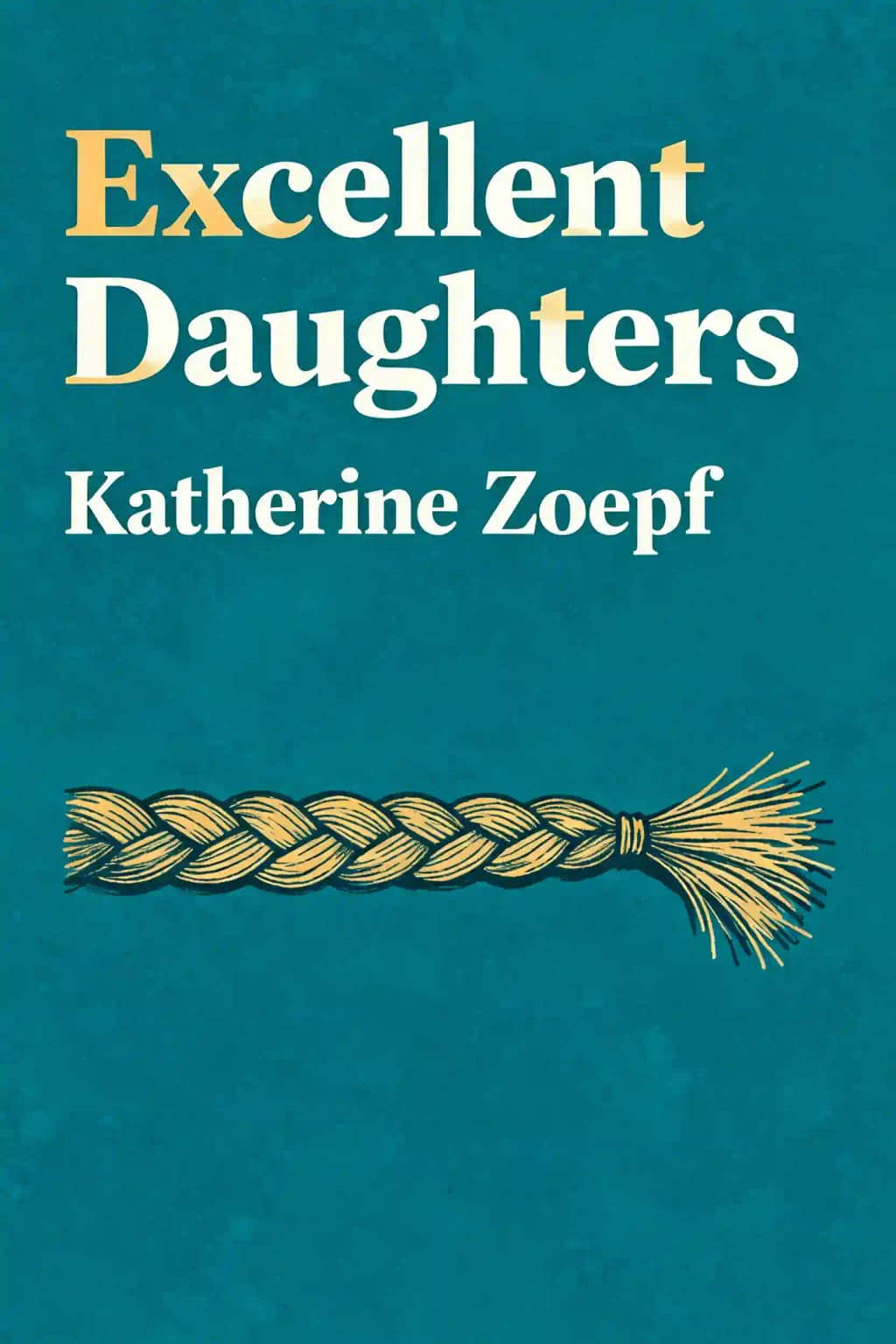
Excellent Daughters
The Secret History of the Miss America Pageant
『Excellent Daughters』の概要
In "Excellent Daughters," Katherine Zoepf unveils the secret revolution of young Arab women quietly transforming their societies. Endorsed by Anne-Marie Slaughter as offering "insights countless political treatises cannot match," this intimate portrait challenges everything you thought you knew about female empowerment in the Middle East.

『Excellent Daughters』の主要テーマ
- female religious education
- arab spring activism
- islamic feminism
- generational cultural shifts
- middle eastern youth
『Excellent Daughters』の名言
Islam is the only religion that has given women their rights.
We believe that our studies are also a way of serving God.
It's only ignorant women who are bullied by men in the name of Islam.
『Excellent Daughters』の登場人物
- Katherine ZoepfAuthor and journalist who lived in the region
- EnasSeventeen-year-old Syrian Quran teacher
- Asmaa MahfouzEgyptian activist who helped spark protests
- Muhammad al-HabashSyrian parliament member and Islamic scholar
著者について
『Excellent Daughters』の著者について
Katherine Zoepf, award-winning journalist and author of Excellent Daughters: The Secret Lives of Young Women Who Are Transforming the Arab World, is renowned for her immersive reporting on gender and social change in the Middle East.
A Princeton University and London School of Economics graduate, Zoepf draws from her firsthand experience living in Syria, Lebanon, and Iraq as a New York Times stringer and Baghdad bureau contributor. Her work, featured in The New Yorker, The New York Times Magazine, and other prominent outlets, explores themes of cultural transformation, women’s agency, and the intersection of tradition and modernity.
As a Bernard L. Schwartz Fellow at New America and a grantee of the Pulitzer Center, Zoepf brings rigorous analysis to stories often overshadowed by conflict. Excellent Daughters, celebrated for its nuanced portrayal of Arab women’s lives, reflects her decade-long commitment to documenting grassroots social movements.
Based in Manhattan, Zoepf continues to amplify underrepresented voices through writing and public speaking engagements.
Excellent Daughtersの要約をダウンロード
Excellent Daughtersの要約をPDFまたはEPUBで無料でダウンロード。印刷やオフラインでいつでもお読みいただけます。
この本に関するよくある質問
Excellent Daughters examines the lives of young Middle Eastern women navigating societal expectations in education, work, marriage, and activism. Through interviews and personal narratives, Zoepf reveals their struggles in patriarchal systems and subtle shifts toward empowerment, such as pursuing careers or redefining traditions.
This book suits readers interested in Middle Eastern culture, gender studies, or social change. Journalists, activists, and students will appreciate its firsthand accounts of women balancing tradition and modernity in Saudi Arabia, Syria, Lebanon, and Egypt.
Yes, for its intimate storytelling and exploration of underreported issues. However, some critics note Zoepf’s journalistic style prioritizes observation over deep analysis, which may leave academic readers wanting more.
Zoepf highlights disparities in access to education and its role in empowerment. For example, Saudi women leverage degrees to enter male-dominated fields, while religious schooling in Egypt sometimes reinforces conservative gender roles.
Cultural norms, restrictive laws, and workplace discrimination limit opportunities. Zoepf shares stories of women overcoming these hurdles, such as Saudi entrepreneurs navigating male guardianship laws.
It contrasts traditional arranged marriages with evolving courtship practices. In Syria, some women use social media to connect with suitors discreetly, while others face pressure to prioritize family honor over personal choice.
Zoepf profiles women like Samira, an Egyptian protester subjected to virginity tests after Tahrir Square, and Lebanese activists advocating for legal reforms. Their stories illustrate both courage and systemic pushback.
A standout line—"The world changes because… daughters make slightly different decisions from their mothers"—captures the book’s focus on incremental social change. Another highlights the paradox of religious conservatism coexisting with female empowerment.
Zoepf explores tensions between modernity and tradition, such as Saudi women embracing veiling as a form of identity while seeking economic independence. These contradictions reveal complex pathways to self-determination.
Some argue Zoepf’s outsider perspective limits depth, and her focus on “positive” stories (like religious women rejecting feminism) risks oversimplification. Critics also note uneven coverage of countries like Yemen and Iraq.
As a Western journalist, Zoepf combines rigorous reporting with personal reflections on cultural adaptation. While this lends accessibility, her framing occasionally centers Western notions of progress.
Yes—themes of balancing family expectations, career ambitions, and self-identity resonate globally. Manal’s struggle to reconcile her dreams with marital duties mirrors challenges faced by women everywhere.