第1章
Where Gods and Monsters Collide
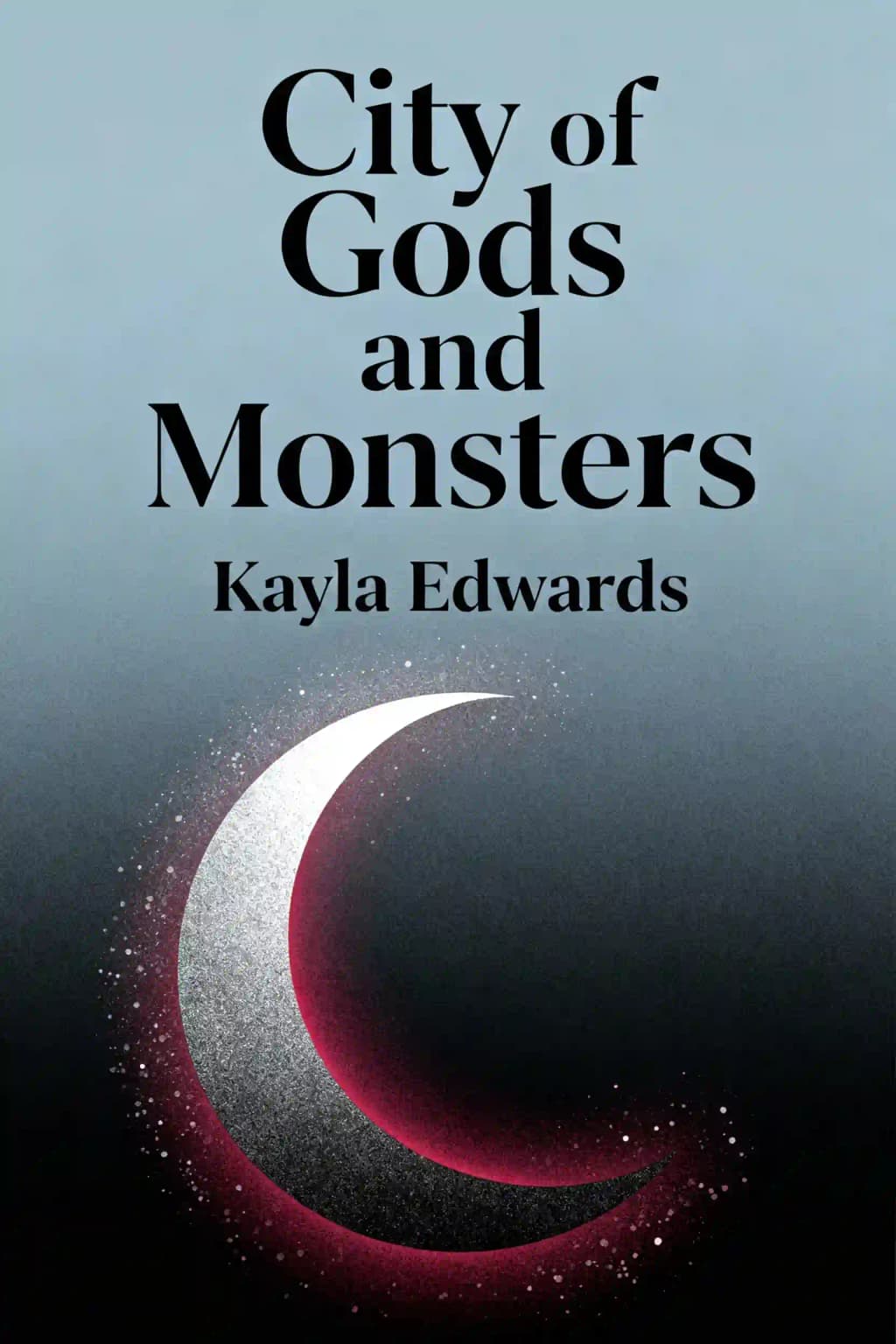
In the shadowy metropolis of Angelthene, where supernatural beings and humans coexist in an uneasy balance, Kayla Edwards crafts a world that has captivated readers since its 2022 release. "City of Gods and Monsters" quickly became a BookTok sensation, with influencers praising its perfect blend of urban fantasy, romance, and suspense. The novel has drawn comparisons to Sarah J. Maas's adult works while carving its own unique place in the fantasy genre. What makes this book particularly compelling is Edwards' background in mythology and folklore, which she seamlessly weaves into a contemporary setting. Her protagonist's journey from ordinary human to someone extraordinary resonates with readers seeking both escapism and emotional depth-perhaps explaining why the novel spent twelve weeks on the New York Times bestseller list and has been optioned for a streaming adaptation.
第2章
A Human Among Immortals
Loren Calla's life changes forever when her friend Sabrine is violently abducted by mysterious attackers bearing distinctive phoenix head tattoos - a mark that will become a haunting symbol throughout her journey. As a human in a world dominated by supernatural beings, Loren has always felt like an outsider, carefully crafting remedies at Madam Voss's apothecary while attending the prestigious Angelthene Academy's House of Salt. Her mundane routine shatters when she discovers she's become the target of an astronomical three-million-gold-mynet bounty, a sum that attracts the attention of every supernatural bounty hunter in the realm. Unlike her best friend Dallas, a powerful witch who can conjure protective shields and manipulate elements at will, Loren has nothing to defend herself except her quick thinking and unwavering determination.
The world Edwards creates is richly stratified, with intricate social hierarchies that place humans firmly at the bottom of a complex supernatural pecking order. Werewolves prowl the night with enhanced strength and primal instincts, witches and warlocks command the elements with centuries of accumulated power, vampires move through high society with ancient wealth and influence, and the feared hellsehers known as Darkslayers inspire terror with their ability to peer into souls and manipulate shadows. Each supernatural race has carved out its own niche in this world, with complex political alliances and long-standing feuds that make human concerns seem trivially ephemeral. This power imbalance creates constant tension as Loren navigates a society where she's viewed as little more than prey - a disposable commodity in the games of immortals.
What makes Loren compelling isn't just her vulnerability but her remarkable adaptability and psychological resilience. When faced with supernatural threats that could easily overwhelm her, she refuses to surrender to fear. Instead, she carefully analyzes her situations, leveraging her knowledge of herbal remedies and supernatural weaknesses to create advantages where none should exist. She understands that in a world of wolves, sometimes the smartest survival strategy is to align oneself with the most dangerous predator in the room - a calculation that leads her to forge unlikely alliances with beings who could end her life with a mere thought. This pragmatic approach to danger reveals a core strength that transcends physical limitations, demonstrating that true power often lies in the ability to think strategically rather than rely on brute force or magical ability. Through Loren's eyes, readers experience the terrifying thrill of navigating a world where every shadow could hide an immortal threat, and every alliance could mean the difference between survival and destruction.
第3章
The Devil in the Details
Darien Cassel embodies the dangerous antihero archetype with compelling complexity. As one of the Seven Devils-elite Darkslayers feared throughout the city-he's introduced as a brutal fighter who channels his rage through underground matches in the Pit. His reputation is built on violence, his hands stained with the blood of countless bounties. Yet beneath this ruthless exterior lies a man haunted by his past and driven by complicated loyalties.
What distinguishes Darien from typical "bad boy" characters is the nuanced exploration of his trauma. Eight years after his mother's death-a tragedy he believes his father orchestrated-Darien remains consumed by guilt and rage. His relationship with his twin sister Ivyana reveals his protective nature, while his reluctance to challenge their father Randal shows the complex calculations he makes to keep those he cares about safe.
Edwards skillfully develops Darien's character through contrasts. In one moment, he rips out a demon's throat with his bare hands; in another, he cooks an impressive pasta dinner for Loren when he notices her blood sugar dropping. These juxtapositions create a multidimensional character whose capacity for tenderness makes his violence all the more unsettling.
The dynamic between Darien and Loren evolves from protector-protected to something more equal and complex. Initially drawn to her as a curiosity-a human girl with an unusual aura who somehow maintains her spirit despite being surrounded by immortals-Darien gradually recognizes qualities in Loren that mirror his own strength. Their relationship challenges his self-perception as someone incapable of genuine connection, forcing him to confront the vulnerability that comes with caring deeply for another person.
第4章
Shadows of the Phoenix
At the heart of the novel's mystery lies the Phoenix Head Society, a secretive organization whose crimson bird symbol appears everywhere from the tattoos of Loren's attackers to an intricate mosaic in crime lord Cain Nash's marble-floored home. Dating back to the First Age of Magic, this ancient group created the Arcanum Well - a legendary artifact shrouded in myth that grants immortals unlimited access to their magical abilities without the devastating risk of the Tricking disease. More crucially, it holds the power to bestow true immortality upon mortals, a feat previously thought impossible in the world's carefully balanced magical ecosystem.
The Society's increasingly desperate attempts to recreate this lost artifact drive the central conflict. Their flawed replica, hidden beneath the city's oldest cathedral, causes horrific mutations in its test subjects, transforming victims - primarily young women resembling Loren - into flesh-hungry demons now terrorizing Angelthene's streets. These failed experiments leave behind grotesque evidence: bodies with partially crystallized organs, skin that crumbles like ancient parchment, and minds warped beyond recognition. These transformations represent the dark consequences of pursuing immortality at any cost, a theme that resonates throughout the narrative and reflects humanity's age-old obsession with cheating death.
Edwards constructs her mystery with careful precision, revealing intricate connections between seemingly disparate elements. The missing girls from the city's prestigious magic academies, the Blood Potions Syndicate's sudden rise to power, the demons appearing throughout the city's thirteen districts - all threads that eventually lead back to the Phoenix Head Society and their obsession with the Arcanum Well. Each revelation raises the stakes while deepening the world-building, from the discovery of ancient ritual sites beneath the city to coded messages hidden in centuries-old spell books. The author creates a satisfying puzzle for readers to solve alongside the protagonists, with clues scattered through historical documents, magical artifacts, and the testimony of centuries-old immortals.
What makes this mystery particularly compelling is its deeply personal dimension for Loren. The revelation that she might be the key to activating the original Well - due to a unique magical resonance in her blood - transforms her from passive victim to central figure in an ancient conflict. Her identity becomes the novel's most tantalizing mystery, raising questions that keep readers engaged: why would immortal beings pay millions in blood-gold to capture an apparently ordinary human girl? The answer lies in her lineage, traced back to the original creators of the Well, a truth that will fundamentally change her understanding of herself and her place in this supernatural world. This personal connection elevates the story beyond a simple magical mystery to an exploration of identity, heritage, and the price of power.
第5章
Bonds Stronger Than Blood
Friendship forms the emotional backbone of "City of Gods and Monsters," particularly through the relationship between Loren, Dallas, and Sabrine. Their bond, established long before the novel's events, provides a foundation of loyalty and trust that contrasts sharply with the treacherous supernatural politics surrounding them.
When Sabrine is abducted, her absence creates a palpable void. Loren's guilt and determination to find her friend drive much of the early narrative, establishing her character as someone who values relationships above personal safety. The eventual revelation that Sabrine has been turned into a werewolf to save her life adds complexity to their friendship, forcing them to navigate new power dynamics while maintaining their emotional connection.
The friendship between Loren and Dallas faces different challenges. Their childhood promise that "no boys would ever get between us" becomes strained as Loren grows closer to Darien. Dallas's jealousy stems not just from possessiveness but from fear-fear that Loren will be hurt, fear that their plans for the future are changing, fear that the supernatural world Loren is entering will consume her. Their arguments and reconciliations feel authentic because they're rooted in genuine concern rather than manufactured drama.
Edwards also explores chosen family through the Seven Devils. Despite their fearsome reputation, the Devils function as a tight-knit unit bound by loyalty rather than blood. Their interactions reveal a complex web of relationships-Travis and Jack's playful banter, Lace's protective attitude toward Tanner, Max's unwavering support of Darien. Even their household spirit Mortifer, who bites unwelcome visitors, contributes to the sense of Hell's Gate as a home rather than merely a headquarters.
This theme culminates powerfully when Darien, facing potential death, recognizes the Devils as "his true family." In a world where immortal beings often view relationships as temporary diversions, these enduring bonds-whether between friends, lovers, or chosen family-represent a different kind of immortality: the legacy of being remembered and loved.
第6章
The Price of Immortality
Immortality in Edwards' world comes with devastating physical and psychological costs that ripple through generations. The Tricking disease, a horrific affliction that targets immortals who overuse magic, causes their bodies to deteriorate in gruesome ways while their consciousness remains painfully intact - trapped in an increasingly useless shell. Randal Slade's condition serves as a haunting example, his red-rimmed eyes and trembling hands betraying the advanced stages of Tricking. His desperate pursuit of the Arcanum Well isn't mere ambition but a terrified race against his own dissolution. Other immortals show similar signs: blackened fingertips, patches of translucent skin, and an eerie glow behind their eyes that marks them as victims of their own endless existence.
The psychological toll of immortality proves equally destructive. Vampires like Calanthe Croft exemplify how centuries of existence can corrupt the soul. Once a renowned healer in medieval Europe, Calanthe has transformed into someone who views humanity as little more than cattle. Her meticulously planned "blood farms" - sterile facilities where humans would be kept in medically induced comas while their blood is continuously harvested - represents the ultimate perversion of her former healing arts. Other ancient beings show similar degradation: Marcus Vale collects human memories like butterflies, while the Eternal Siblings have become so removed from mortality that they treat human wars as elaborate games for their amusement.
Even relatively young immortals struggle with the weight of extended existence. Darien, though only two centuries old, already shows signs of emotional detachment. His string of passionate but shallow affairs with mortals reveals a pattern of avoiding deeper connections - it's easier to maintain physical relationships than risk the inevitable pain of watching loved ones age and die. His journals detail growing numbness to human suffering and an increasing tendency to view decades as others might view days.
The novel's central question emerges through these examples: What truly gives life its meaning? Through Darien's climactic choice to risk death protecting Loren, Edwards suggests that the quality of our connections matters more than their duration. "Immortality was an illusion," Darien realizes in that crucial moment. "What mattered was how you lived today, not the promise of tomorrow." This epiphany directly challenges the Phoenix Head Society's core belief that extending life should be humanity's highest goal.
The Arcanum Well itself serves as a powerful metaphor for this theme. Created from prima materia - "the formless matter that existed before creation" - it represents humanity's eternal desire to transcend natural limitations. Yet its power proves invariably corrupting. Those who drink from it too deeply become twisted reflections of their former selves: Scholar becomes monster, healer becomes torturer, lover becomes predator. The novel suggests through these transformations that accepting mortality might be the wiser choice - that a life well-lived within natural bounds holds more value than an endless existence stripped of humanity.
第7章
Shadows and Light
The setting of Angelthene functions as more than backdrop - it's a living, breathing character in its own right, with distinct districts that reflect the city's intricate supernatural hierarchy. The wealthy Victoria Amazonica District, crowned by the imposing Hell's Gate, showcases neo-Gothic architecture with gleaming obsidian spires and elaborate gargoyles watching from every corner. In stark contrast, the notorious Meatpacking District, where demons conduct their shadowy business, features crumbling warehouses and maze-like alleyways stained with centuries of dark magic residue.
Edwards masterfully creates atmosphere through layered sensory details that bring locations startlingly to life. The Devil's Advocate nightclub maintains a perpetual arctic chill that causes patrons' breath to crystallize mid-air, while vampiric courtiers dance to ethereal music. In the Umbra Forum, sweet hookah smoke mingles with the brackish scent of the river Styx, creating an intoxicating mixture that dulls mortal senses. The gas-lit streets of the underground markets flicker with blue-green flames, casting ever-shifting shadows that seem to move independently of their sources. These precise details ground fantastical elements in tangible reality, making the supernatural feel immediate and visceral rather than abstract.
The novel's sophisticated exploration of liminal spaces - areas between worlds - adds metaphorical depth to the setting. The Crossroads where Loren meets the mysterious Widow exists in perpetual twilight, neither day nor night. The labyrinthine tunnels beneath the city pulse with remnant magic from forgotten rituals, while Hell's Gate itself shimmers between dimensions like heat waves rising from summer pavement. These in-between places mirror Loren's own evolving identity as she discovers her unique position straddling mortal and immortal realms. The boundary spaces become physical manifestations of transformation and possibility.
Light and darkness serve as powerful recurring motifs throughout the narrative, operating on both literal and symbolic levels. Loren's initial dependence on protective HID lamps - their harsh, artificial glare creating safe zones against supernatural threats - highlights her mortal vulnerability and fear of the unknown. In contrast, Darien's hellseher abilities allow him to navigate perfectly in darkness, representing his comfortable acceptance of life's shadowy aspects. Their deepening relationship symbolically bridges these opposing relationships with light and dark, suggesting that true strength comes from embracing both illumination and shadow rather than hiding from either. This evolution is reflected in Loren's growing ability to see beauty in Angelthene's darkness, even as she maintains her connection to light.
第8章
The Power of Choice
Free will versus destiny emerges as a central philosophical tension throughout the narrative, weaving through both major plot points and intimate character moments. Is Loren merely fulfilling a predetermined role as "the key" to the Arcanum Well, or does she have agency to determine her own path? This question becomes particularly poignant when she learns about her lineage as Erasmus Sophronia's daughter, suggesting her entire existence might have been orchestrated for a specific purpose. The revelation that her mother's marriage was arranged specifically to create a child with certain magical abilities further complicates this dynamic, raising questions about whether even her birth was an act of destiny rather than choice.
Edwards explores how choices define identity more than circumstances or abilities - a theme that resonates through multiple character arcs. When Loren discovers her connection to the Well's creator, she doesn't immediately embrace her magical heritage but questions how this knowledge should shape her actions. Her internal struggle manifests in small but significant moments, like choosing to continue working at her bookshop despite having access to vast magical resources, or maintaining friendships with non-magical people even as the magical community tries to claim her. Similarly, Darien constantly chooses loyalty to the Devils over obedience to his father, demonstrating that blood ties don't dictate allegiance. His decision to warn Loren about his father's plans, knowing it would make him a traitor to his family, exemplifies how choice can transcend predetermined loyalties.
The novel's climactic moments emphasize this theme of choice with particular intensity. Faced with the Well's imminent explosion, Loren chooses sacrifice to save the city rather than using her newly discovered powers for personal gain - a decision made more powerful by her earlier expression of dreams for a future with Darien. Darien chooses to run toward certain death for the chance to hold Loren one last time rather than saving himself, proving that true heroism lies not in magical ability but in conscious decision-making. These decisions reveal character more profoundly than any supernatural ability could, suggesting that our choices in moments of crisis define us more than our inherent talents or predetermined roles.
This emphasis on choice extends to relationships as well, particularly in how characters choose to be vulnerable with each other despite past traumas and present dangers. When Darien tells Loren "you are better than enough," he's actively choosing to see her value beyond her utility as "the key" - a significant departure from his usual tactical approach to relationships. When Loren invites Darien into her life despite knowing his dangerous reputation and connection to her enemies, she's choosing connection over safety. These deliberate choices to be vulnerable with another person represent the novel's most powerful form of agency, suggesting that the most meaningful magic lies not in supernatural power but in the everyday decisions to trust, love, and forgive.
第9章
Rebirth and Transformation
The phoenix imagery pervading the novel isn't merely decorative - rebirth and transformation form core thematic elements that resonate throughout every aspect of the narrative. Characters repeatedly face destruction and renewal, emerging changed but not erased by their experiences. Sabrine's transformation into a werewolf represents the most literal example, but nearly every character undergoes some form of metamorphosis, each one reflecting different facets of personal growth and change.
Loren's journey from ordinary human to someone who can manipulate time and contain catastrophic explosions represents the most dramatic transformation. Her power manifests first in small ways - stopping a falling cup, rewinding a few seconds to avoid embarrassment - before culminating in her ability to hold back the Well's explosion. Yet her internal changes prove equally significant - her growing confidence, her willingness to fight for herself rather than just for others, her acceptance of her complex heritage. The shy girl who once apologized for existing gradually discovers her own worth. By the novel's end, when she confidently confronts a werewolf who insults her at school, we see how profoundly she's evolved from the frightened girl who once fled from confrontation. Her transformation extends beyond mere power to encompass self-worth, courage, and the ability to stand her ground.
Darien's transformation is more subtle but no less meaningful. His initial assessment of humans as "fragile, easily broken creatures" evolves as he witnesses Loren's resilience in the face of increasingly impossible situations. The immortal who once viewed emotional distance as strength finds himself drawn into human connections despite his best efforts. His capacity for tenderness, initially shown only to his sister, expands to include Loren and eventually her friends. Most significantly, he moves from viewing connection as weakness to recognizing it as worth dying for - a profound shift for someone who has spent centuries armoring himself against emotional vulnerability. His journey from cold immortal to someone capable of genuine sacrifice represents a different kind of strength.
Even the city itself undergoes transformation, mirroring the changes in its inhabitants. The ancient streets that once housed secret supernatural battles become sites of cooperation between humans and immortals. The Kalendae celebration marking the new year coincides with the novel's climax, symbolizing the death of the old order and birth of something new. When Loren miraculously restores the city after the Well's explosion, it represents not just physical rebuilding but the possibility of a new relationship between humans and immortals - one based on protection rather than predation. The transformed city becomes a physical manifestation of the potential for change, growth, and harmony between once-warring factions.
The theme of transformation extends to smaller characters as well. Marcus, the werewolf elder, moves from rigid traditionalist to cautious reformer. Sarah, Loren's best friend, grows from skeptic to fierce defender of the supernatural world. Even the antagonists undergo changes, though often toward destruction rather than renewal, serving as dark mirrors to the positive transformations of the protagonists.
第10章
The Courage to Be Vulnerable
At its heart, "City of Gods and Monsters" explores the courage required to remain open in a dangerous world. Despite supernatural elements, the novel's most profound conflicts are internal-the battle between self-protection and connection, between isolation and vulnerability, between fear and love.
Loren embodies this courage from the beginning. As a human in a supernatural world, every relationship carries risk, yet she consistently chooses connection. Her willingness to befriend a Devil, to fight for Sabrine despite overwhelming odds, to open herself to Darien romantically despite knowing he could break her heart-these choices demonstrate remarkable bravery precisely because she lacks supernatural powers to protect herself from consequences.
Darien's journey toward vulnerability proves more difficult. Having witnessed his mother's destruction at his father's hands, he initially believes "I would rather be miserable forever" than risk hurting someone he loves. His gradual willingness to lower his defenses with Loren-to show her his scars, to admit his fears, to hold her hand during medical procedures-represents his most heroic acts, more challenging than any physical battle he faces.
The novel suggests that true strength lies not in invulnerability but in the courage to remain open despite past wounds. When Darien finally admits his feelings for Loren, when she chooses to trust him despite initial betrayals, they demonstrate that vulnerability isn't weakness but its own form of power-the power to connect authentically despite the risk of loss.
The epilogue brings this theme full circle as Loren reunites with her father-a man who "defeated Death" but became mortal again. This final transformation suggests that mortality itself might be a choice rather than merely a limitation, and that meaningful connection sometimes requires sacrificing power for the chance to be truly seen and known by another.