第1章
When Darkness Beckons: A Divine Romance Unfolds
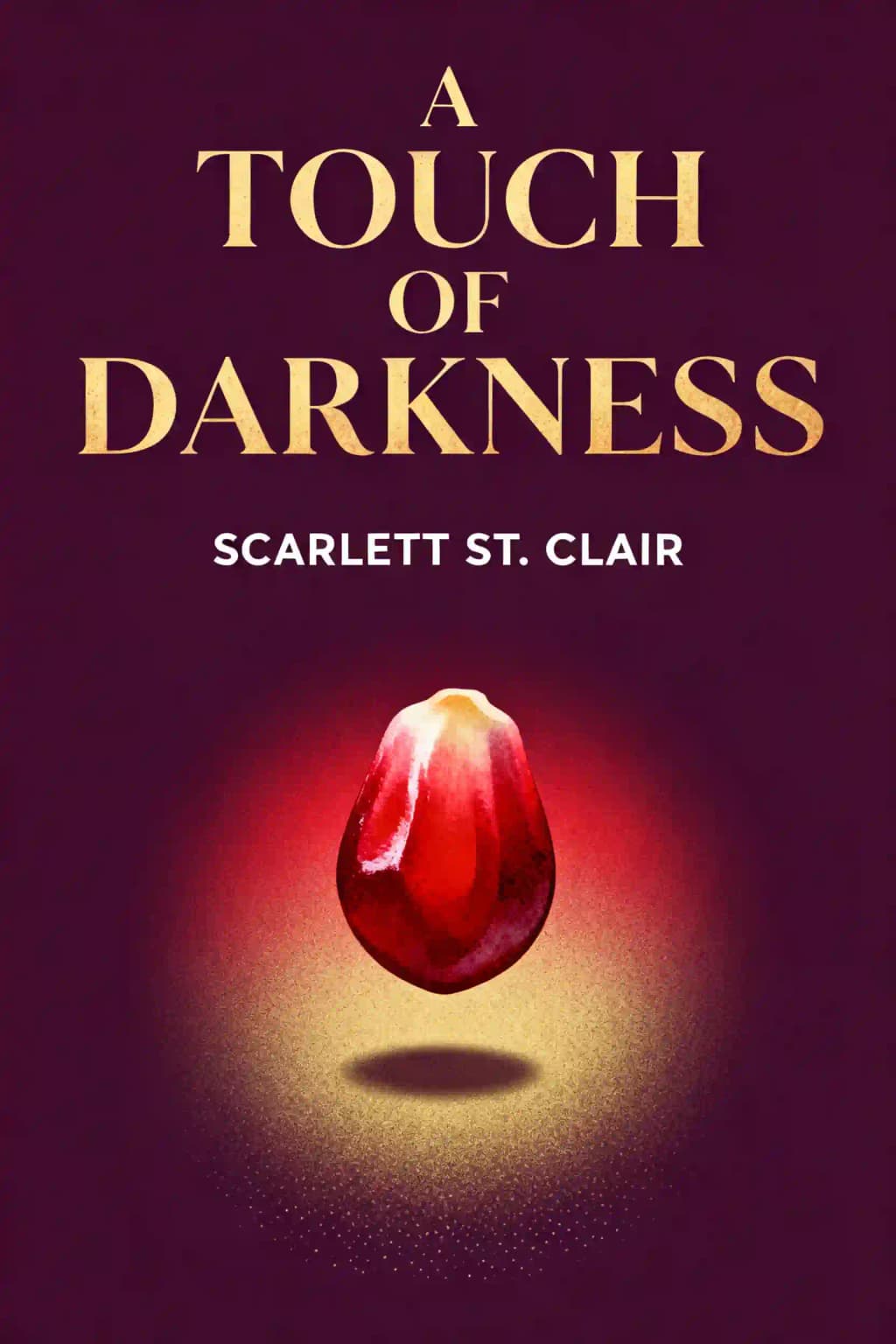
In a world where gods walk among mortals, Scarlett St. Clair's "A Touch of Darkness" has captivated readers with its modern retelling of the Hades and Persephone myth. This New York Times bestseller has garnered a devoted following, particularly among young adults seeking romance with a mythological twist. The novel has spawned a successful series and has been praised for its fresh take on Greek mythology, blending ancient stories with contemporary settings. St. Clair's portrayal of Persephone as a journalism student with divine heritage resonates with readers who appreciate strong female protagonists navigating complex relationships. What makes this story so compelling is not just the forbidden romance, but how it explores themes of independence, power dynamics, and self-discovery against the backdrop of divine politics. As we delve into this dark and sensuous tale, prepare to be transported to a world where gods make dangerous bargains and where a touch of darkness might be exactly what's needed to bring light into the shadows.
第2章
A Goddess in Disguise: Persephone's Hidden Identity
Persephone is not your typical college student. Though she appears mortal, she's actually the Goddess of Spring living incognito in the mortal realm. Her mother Demeter has kept her hidden from the other gods, forcing her to maintain a glamour that conceals her divine horns and nature. This secrecy has become Persephone's prison, leaving her yearning for independence while simultaneously fearing discovery.
As a journalism student at New Athens University with an upcoming internship at New Athens News, Persephone craves adventure and experiences beyond her mother's controlling grasp. Yet she's trapped in a paradox - her divine power to create life manifests instead as death, causing plants to wither at her touch rather than bloom. This inverted ability has left her feeling like a failure as the Goddess of Spring, dependent on her mother's borrowed magic to maintain her place in the mortal world.
Demeter's warnings echo constantly in Persephone's mind: gods view women as either "power plays or playthings," and mortals aren't suitable companions because they age and die. These admonitions have shaped Persephone's worldview, making her both curious about and wary of divine interaction. When her best friend Lexa suggests celebrating her internship at Nevernight, one of Hades' exclusive clubs, Persephone hesitates but ultimately agrees, feeling a rebellious thrill at the prospect of defying her mother's strict rules.
This decision marks the beginning of Persephone's journey toward self-discovery. Her double life - journalism student by day, secret goddess by night - creates a compelling tension. She threatens a nymph waitress who spies for her mother, demonstrating that despite her inability to grow plants like Demeter, she possesses power and determination. This duality in her character - the obedient daughter versus the woman yearning to define herself - sets the stage for her fateful encounter with the God of the Dead.
Persephone's struggle with her identity resonates because it reflects a universal coming-of-age experience: the tension between who we are expected to be and who we wish to become. Her journey begins not with confidence but with rebellion - a small act of defiance that will ultimately change the course of her immortal life.
第3章
A Dangerous Game: The Contract with Hades
What begins as a night of rebellion at Nevernight quickly transforms into a life-altering encounter when Persephone meets Hades. Their first interaction is electric - a high-stakes poker game where questions replace monetary bets. With each hand he wins, Hades peels back layers of Persephone's carefully constructed facade, sensing her rebellion against maternal control. The intensity of their connection is immediate and overwhelming, leaving Persephone both drawn to and unnerved by the God of the Dead.
When she flees the club after realizing his identity, Hades leaves his mark - a series of black dots on her wrist that refuse to wash away. This mysterious mark becomes the physical manifestation of their binding contract, one she didn't even realize she was entering. The terms are revealed when she confronts him: Persephone must create life in the Underworld within six months or become a permanent resident of his realm.
The contract represents more than just a bargain; it symbolizes the first true challenge to Persephone's perception of herself. How can the Goddess of Spring, whose touch brings death to plants in the mortal realm, possibly create life in the domain of death itself? The irony is not lost on her, nor is the gravity of her situation - she's trapped between her mother's controlling nature and Hades' binding contract.
What makes this arrangement particularly compelling is Hades' cryptic suggestion that there are multiple ways to fulfill the contract beyond simply planting a garden. This ambiguity plants seeds of doubt and possibility in Persephone's mind. Is he setting her up to fail? Or does he see something in her that she cannot yet see in herself?
The contract becomes a catalyst for transformation, forcing Persephone to confront her limitations and discover untapped potential. Her initial anger gives way to determination as she resolves to either fulfill the contract or find a way to break it by making Hades angry enough to release her. Little does she know that this bargain will lead her not just to discover her power but to uncover truths about herself, Hades, and the nature of their realms that will forever change her perspective.
As readers, we're drawn into this dangerous game, wondering alongside Persephone: what does Hades truly want from her, and why has he chosen her for this seemingly impossible task?
第4章
Beyond the Myths: Hades Revealed
The Hades that emerges in Persephone's story defies conventional portrayals. Far from the villainous abductor of mythology, this God of the Dead is complex, principled, and surprisingly compassionate beneath his intimidating exterior. His reputation precedes him - known throughout New Athens for his wealth and exclusive gambling clubs where he wagers for human souls. Yet as Persephone's interactions with him deepen, the facade begins to crack.
When she confronts him about his seemingly cruel bargains with mortals, Hades offers an unexpected defense: "I challenge what destroys their lives and give them a choice to conquer or succumb." This philosophy reveals a god who doesn't create suffering but rather presents opportunities for transformation through difficult choices. His contracts aren't designed for entertainment or power but serve a deeper purpose that Persephone gradually comes to understand.
The Underworld itself reflects Hades' true nature. Rather than a place of eternal torment, Persephone discovers a realm with thriving communities, markets, and souls living purposeful afterlives. In Asphodel, souls greet her as the Goddess of Spring, suggesting they've been waiting for her arrival. Even more revealing is Elysium - not a reward for the virtuous as mythology suggests, but a healing paradise for wounded souls.
Perhaps most striking is Hades' relationship with those who serve him. His Dobermans play joyfully in his presence, the ferryman Charon bears no resemblance to his skeletal depictions in textbooks, and his staff speak of him with genuine respect. When Ilias the satyr serves Persephone wine, he offers insight into his employer's character: "If you belong to him, he will tear the world apart to save you." This loyalty isn't born of fear but of genuine appreciation for Hades' protection and care.
Even in his darker moments, Hades demonstrates unexpected depth. When he refuses Orpheus's plea to resurrect Eurydice, it's not from cruelty but from his understanding of cosmic balance. His explanation that love is a "selfish reason for resurrection" hints at personal pain rather than callousness. Later, Persephone witnesses him freely granting his favor to heal a child with cancer, asking only for silence about his help - revealing a god who assists without seeking credit or worship.
Through these revelations, Persephone's perception of Hades transforms from that of a manipulative deity to a complex being carrying the burden of his realm with dignity and purpose. His power is immense - necromancy, resurrection, earth manipulation, charm, and invisibility - yet he wields it with restraint and principle. The narcissus as his sacred flower, symbolizing rebirth and hope for reincarnated souls, becomes a perfect metaphor for the man himself: something beautiful and hopeful growing in the realm of death.
第5章
Journalism and Justice: Persephone's Quest for Truth
Persephone's identity as a journalist isn't merely a cover story - it's fundamental to her character and her journey. Her internship at New Athens News provides more than just an escape from her mother's control; it gives her purpose and a framework through which to understand the world. When she discovers Hades' bargains with mortals, her journalistic instincts immediately kick in. She sees an opportunity for an expose, determined to use her unique access to Nevernight to uncover what she believes is exploitation.
This investigative drive leads her to convince Adonis, a colleague at the newspaper, to share his research on Hades' contracts. The cases she reviews paint a disturbing pattern: desperate mortals making deals with Hades only to face seemingly impossible challenges when they lose. Her sense of justice inflamed, she confronts Hades directly, challenging his methods and demanding answers. This confrontation reveals Persephone's courage - she's willing to question a powerful god despite the risks, driven by her belief in truth and fairness.
However, Persephone's journey as a journalist parallels her personal growth. Just as good reporting requires looking beyond surface appearances, she gradually learns to see beyond her initial assumptions about Hades and his realm. Her visit to Elysium with Thanatos becomes a turning point in her understanding. There, she discovers that Hades' bargains with mortals are actually negotiations with the Fates to change a soul's trajectory. The souls from her investigative list reside not in punishment but in a healing paradise.
This revelation forces Persephone to reconsider her entire perspective. Her commitment to truth compels her to abandon her planned expose in favor of showing Hades in a more positive light. When Demetri offers to let her stop writing about the God of the Dead, she chooses to continue - but with a new purpose. This decision demonstrates her integrity as a journalist; she's willing to revise her views when presented with new evidence.
Persephone's journalistic mindset - her questioning nature, her desire to uncover hidden truths, her commitment to justice - becomes instrumental in her personal transformation. It gives her the tools to see beyond appearances, whether those of Hades, the Underworld, or ultimately, herself. Her quest for truth in her professional life mirrors her journey toward self-discovery, making her growth feel organic and earned rather than arbitrary.
第6章
Desire and Defiance: The Evolving Relationship
The relationship between Persephone and Hades unfolds like a dance of power and vulnerability, with neither willing to fully surrender to the other. Their first encounters are charged with tension - Hades seemingly in control as the powerful God of the Dead, Persephone defiant despite her inexperience. When he touches her wrist at Nevernight, leaving his mark, it establishes a physical connection that mirrors their emotional entanglement.
Their interactions evolve through a series of games and challenges. A rock-paper-scissors match becomes a vehicle for honest conversation about Hades' methods with mortal contracts. Their card games at Nevernight, betting with questions instead of money, allow them to probe each other's boundaries. These playful contests serve as metaphors for their relationship - neither fully trusting, both seeking advantage, yet increasingly drawn to each other despite their caution.
Physical desire builds between them in tantalizing increments. When Hades heals Persephone's injuries after her fall into the Styx, his touch brings immediate relief as she leans into him. The tension between them intensifies in his library, where an argument shifts to desire in the narrow space between bookshelves. After being drugged at La Rose nightclub, Persephone's inhibitions fall away as she straddles Hades in his limo, declaring "you will worship me" - a prophetic statement that foreshadows their future dynamic.
What makes their relationship compelling is how it challenges both characters. Persephone, despite her inexperience, refuses to be intimidated by Hades' power or reputation. She questions his methods, challenges his decisions, and maintains her independence even as she's drawn to him. For Hades, Persephone represents something he hasn't encountered before - someone who sees beyond his fearsome reputation and demands more from him than obedience or fear.
Their relationship reaches a turning point in Hades' bedroom, when he reveals his true divine form - blue eyes and black gazelle horns - and Persephone reaches for him unafraid. Their lovemaking is intense and primal, with Hades claiming her completely: "You are mine," he declares with each thrust. Yet even in this moment of surrender, there's a balance of power. Persephone gives herself willingly, choosing Hades rather than being conquered by him.
The evolution of their relationship reflects Persephone's growing confidence and Hades' increasing vulnerability. What begins as a power play transforms into something neither expected - a connection that challenges them both to reconsider who they are and what they want. Their relationship becomes a catalyst for mutual growth, pushing both to confront their limitations and discover new aspects of themselves.
第7章
Mother's Chains: Demeter's Control and Manipulation
Demeter's relationship with Persephone represents one of the most toxic maternal bonds imaginable - a goddess who uses love as a weapon and protection as a prison. From their first interaction, Demeter's controlling nature is evident. She criticizes Persephone's appearance, dismisses her internship aspirations, and insists on calling her "Kore" (maiden) rather than her chosen name, denying her individuality.
The extent of Demeter's manipulation unfolds gradually. She plants spies like the nymph waitress at the Coffee House to monitor her daughter's movements. She tracks Persephone's phone to surveil her visits to Nevernight. When confronted about this invasion of privacy, Demeter dismisses Persephone's anger with the chilling statement: "I cannot stalk you. I am your mother." This twisted logic reveals how Demeter uses her maternal role to justify control rather than nurture independence.
Demeter's power over Persephone is both emotional and practical. She's made her daughter dependent on borrowed magic to maintain her glamour in the mortal world. When Persephone stands up to her mother for the first time, refusing to quit her job, Demeter is visibly shocked - suggesting a lifetime of unquestioning obedience. Later, when Demeter discovers Persephone with Hades, she attempts to force her daughter to return home, only to find she cannot due to the contract binding Persephone to Hades. Her response is to strip away the magic that had concealed Persephone's divine appearance - an act of punishment disguised as concern.
The full extent of Demeter's manipulation is revealed in their final confrontation in her greenhouse. There, Persephone learns her mother had consulted the Fates at her birth and was told Persephone was destined to be "Queen of Darkness, the Bride of Death." Rather than preparing her daughter for this fate or allowing her to make her own choices, Demeter kept her hidden - not for safety but to ensure Persephone would always need her. When Persephone tries to leave after this revelation, Demeter traps her, revealing her intention to keep her prisoner forever.
This toxic relationship serves as the counterpoint to Persephone's growing bond with Hades. While Demeter claims to protect Persephone while actually controlling her, Hades challenges Persephone while actually empowering her. Demeter's "protection" has stunted Persephone's growth, while Hades' challenges have nurtured it. The contrast couldn't be more stark: Demeter sees Persephone as an extension of herself to be controlled, while Hades sees her as an equal to be respected.
Persephone's journey toward independence requires not just embracing her relationship with Hades but breaking free from her mother's chains - a process that culminates in her destruction of the greenhouse with thick black stalks and silver vines, physically shattering the symbol of her mother's control.
第8章
Blossoming Power: Persephone's Transformation
Persephone's journey from a goddess who withers plants to one who commands life and death represents the heart of her transformation. At the beginning, her divine abilities manifest as destruction rather than creation - flowers die at her touch, leaving her feeling like a failure as the Goddess of Spring. This inverted power symbolizes her stunted development under Demeter's controlling influence.
Her contract with Hades - to create life in the Underworld - forces her to confront this fundamental aspect of her identity. Despite her determination, her initial attempts at gardening in the Underworld prove fruitless. She plants seeds meticulously, worries about her deadly touch, and seeks water for her barren plot, but nothing grows. This failure mirrors her larger struggle - how can she fulfill her potential when she doesn't understand her own nature?
The turning point comes unexpectedly. After making love with Hades in his bedroom, Persephone visits her garden and suddenly feels something different - a pulse of magic, her power returning. When they make love again in the garden, she's surrounded by "the intoxicating flutter of life energy." This connection between her awakening sexuality and her divine power suggests that embracing her desires - which Demeter had suppressed - is key to accessing her true abilities.
Hecate plays a crucial role in Persephone's development, offering cryptic guidance rather than direct answers. When Persephone demonstrates how her touch causes plants to wither, Hecate suggests this isn't truly impossible, stating that "Hades challenges people to embrace their potential." Later, she helps Persephone harness her newfound ability to sense life, teaching her to control rather than fear her powers.
Persephone's transformation culminates in two powerful confrontations. When Minthe taunts her about Hades loving Persephone instead of her, Persephone's power surges. With a flick of her wrist, she transforms Minthe into a mint plant and temporarily turns Adonis's arms into tree limbs. Later, when Demeter attempts to imprison her, Persephone destroys the greenhouse with thick black stalks and silver vines, breaking her mother's spell.
These displays reveal Persephone's true nature - not simply the Goddess of Spring but a deity with power over both life and death. Her abilities reflect her dual identity as both a creator and destroyer, capable of transforming Minthe into a plant (creation) while also wielding destructive force against her mother's greenhouse. This duality makes her the perfect counterpart to Hades, who similarly balances death and renewal in his realm.
The final revelation about Persephone's power comes from Hecate, who explains that she fulfilled her contract not by growing something in the traditional sense, but by "creating life within Hades" and "bringing life to the Underworld." Her transformation of the Underworld was social and emotional rather than merely physical - she brought celebration, connection, and joy to a realm associated with endings. In doing so, she discovered that her power wasn't limited to making plants grow but extended to transforming environments and beings on a fundamental level.
第9章
Between Two Worlds: Finding Balance and Identity
Throughout her journey, Persephone exists in a state of liminality - caught between the mortal world and divine realms, between her mother's expectations and her own desires, between life and death. This in-between state forms the core of her identity crisis and ultimately leads to her most profound growth.
In the mortal world, Persephone maintains a careful glamour to hide her divine nature, studying journalism and building friendships with humans like Lexa. Yet she can never fully belong there - her divine power constantly threatens to reveal itself, and her immortality creates an unbridgeable gap between herself and mortals. Her internship at New Athens News represents her attempt to carve out a mortal identity, one based on merit rather than divine heritage.
The Underworld presents a different kind of belonging. There, souls recognize her as their queen before she accepts this role herself. Children crown her with flowers that don't wither at her touch, and celebrations include her alongside Hades. Yet initially, she resists this identity too, uncomfortable with being worshipped and uncertain about her place in this realm of death.
Persephone's struggle to reconcile these worlds reflects her larger journey toward self-acceptance. She must learn that she doesn't have to choose between being the Goddess of Spring or the Queen of the Underworld - her power and identity encompass both life and death, creation and destruction. This duality, which once seemed contradictory, becomes her strength.
Her transformation of Minthe into a mint plant represents a perfect synthesis of these seemingly opposing forces. The act is simultaneously destructive (removing Minthe's nymph form) and creative (giving her new life as a plant). Similarly, when she destroys her mother's greenhouse, she does so by creating new growth - thick black stalks and silver vines that shatter the structure. These actions demonstrate her growing comfort with her complex nature.
The resolution of Persephone's journey comes not from choosing one world over another but from embracing both. When Hades asks her to "Come to the Underworld with me. Live between worlds," he's offering exactly what she needs - not confinement to either realm but the freedom to move between them, bringing elements of each into the other. This arrangement allows her to maintain her connections in the mortal world while embracing her divine role in the Underworld.
Persephone's ultimate identity is defined not by location but by self-determination. When she declares, "I am Persephone, Goddess of Spring," after transforming Minthe, she's claiming her power and name on her own terms - not as Demeter's daughter or Hades' lover, but as herself. This self-definition represents the true fulfillment of her journey, allowing her to find balance between her many roles and realms.
第10章
Love as Transformation: The Power of Vulnerability
At its heart, Persephone and Hades' story explores how love transforms both the lover and the beloved. Their relationship doesn't merely add to their lives - it fundamentally changes who they are and how they see themselves. This transformative power of love manifests through their willingness to be vulnerable with each other in ways they've never been with anyone else.
For Persephone, vulnerability begins with physical desire. Having lived under Demeter's strict control, she's never experienced romantic or sexual feelings. Her attraction to Hades represents her first step toward claiming her own desires. When she straddles him in his limo, declaring "you will worship me," she's embracing a part of herself her mother tried to suppress. Later, when she reaches for Hades in his true divine form - blue eyes and black gazelle horns - she's accepting him completely, without fear or judgment.
Emotional vulnerability comes harder for both of them. Persephone struggles to admit her growing feelings, fearing rejection and the complications of loving the God of the Dead. When she finally confesses, "I fell in love with you," during their argument in the throne room, it's both a moment of strength and terrible vulnerability - she's laying bare her heart while believing he doesn't feel the same. This admission triggers her most powerful display of magic, as black vines erupt from the floor, binding Hades' wrists and ankles.
For Hades, vulnerability means revealing parts of himself he's kept hidden from everyone else. He allows Persephone to see beyond his fearsome reputation, showing her his gentle care for the souls in his realm and his principled approach to his responsibilities. When he asks to take her to dinner in public, he's risking his carefully maintained image as the untouchable God of the Dead. His willingness to participate in mortal activities like baking cookies and watching movies demonstrates a humility and adaptability few would expect from him.
The transformative nature of their love is perhaps most evident in how it changes their relationship to power. Initially, their interactions are framed as contests - card games, bargains, and challenges where one must win and one must lose. As their feelings deepen, this dynamic shifts toward mutual empowerment. Hades helps Persephone discover her divine abilities, explaining he gave her worshippers to help her gain power. Persephone inspires Hades to create the Halcyon Project - a rehabilitation center for mortals based on her critique of his methods.
Their love culminates in mutual vulnerability when Hades finally confesses, "I love you. I should have told you sooner." This admission from the powerful God of the Dead represents complete surrender of his carefully maintained control. Persephone's response - running to him and accepting his offer to "live between worlds" - shows her willingness to embrace a future neither of them could have imagined at the beginning of their story.
Through their relationship, both characters discover that true power comes not from dominance but from the courage to be vulnerable, to risk rejection, and to allow themselves to be transformed by love.
第11章
Destiny Reclaimed: Writing Your Own Story
The final revelation of Persephone's story centers on the tension between fate and free will. When confronting her mother in the greenhouse, Persephone learns Demeter had consulted the Fates at her birth and was told her daughter was destined to be "Queen of Darkness, the Bride of Death." Rather than accepting this prophecy or preparing Persephone for it, Demeter attempted to thwart fate by keeping her daughter hidden and dependent.
This revelation casts the entire narrative in a new light. The seemingly random encounter at Nevernight, the contract with Hades, their growing relationship - all of these might have been inevitable steps toward fulfilling a destiny established at Persephone's birth. Yet what makes the story compelling is how Persephone reclaims this destiny on her own terms.
Despite the prophecy, Persephone's journey never feels predetermined. Each choice she makes - defying her mother to visit Nevernight, confronting Hades about his contracts with mortals, exploring the Underworld against his instructions - reflects her agency rather than passive acceptance of fate. Even when fulfilling her contract with Hades, she does so in unexpected ways, bringing life to the Underworld through celebration and connection rather than simply growing plants.
The relationship between Persephone and Hades similarly defies simple notions of destiny. Though they might have been fated to meet, the development of their feelings emerges from genuine connection rather than cosmic obligation. When Hades fiercely declares, "You will be my queen. I do not need the Fates to tell me that," he's asserting that their relationship transcends prophecy - it's a choice they make for themselves.
Persephone's transformation of Minthe and confrontation with her mother represent her most powerful assertions of free will. In these moments, she's not simply accepting her divine nature but actively shaping it. "I am Persephone, Goddess of Spring," she declares after transforming Minthe - claiming her identity rather than having it defined by prophecy or parentage.
The final arrangement between Persephone and Hades - to "live between worlds" - represents the perfect synthesis of fate and choice. While they may have been destined to meet and fall in love, the specific nature of their relationship is their own creation. They've found a way to fulfill their cosmic roles while maintaining their independence and honoring their unique needs.
This resolution offers a powerful message: destiny isn't something that happens to you but something you participate in creating. Even if certain elements of our lives are predetermined, how we respond to them - with resistance or acceptance, with fear or courage - remains our choice. Persephone's journey reminds us that reclaiming our stories means neither fighting against fate nor surrendering to it, but finding the space between where we can write our own chapters within the larger narrative of our lives.