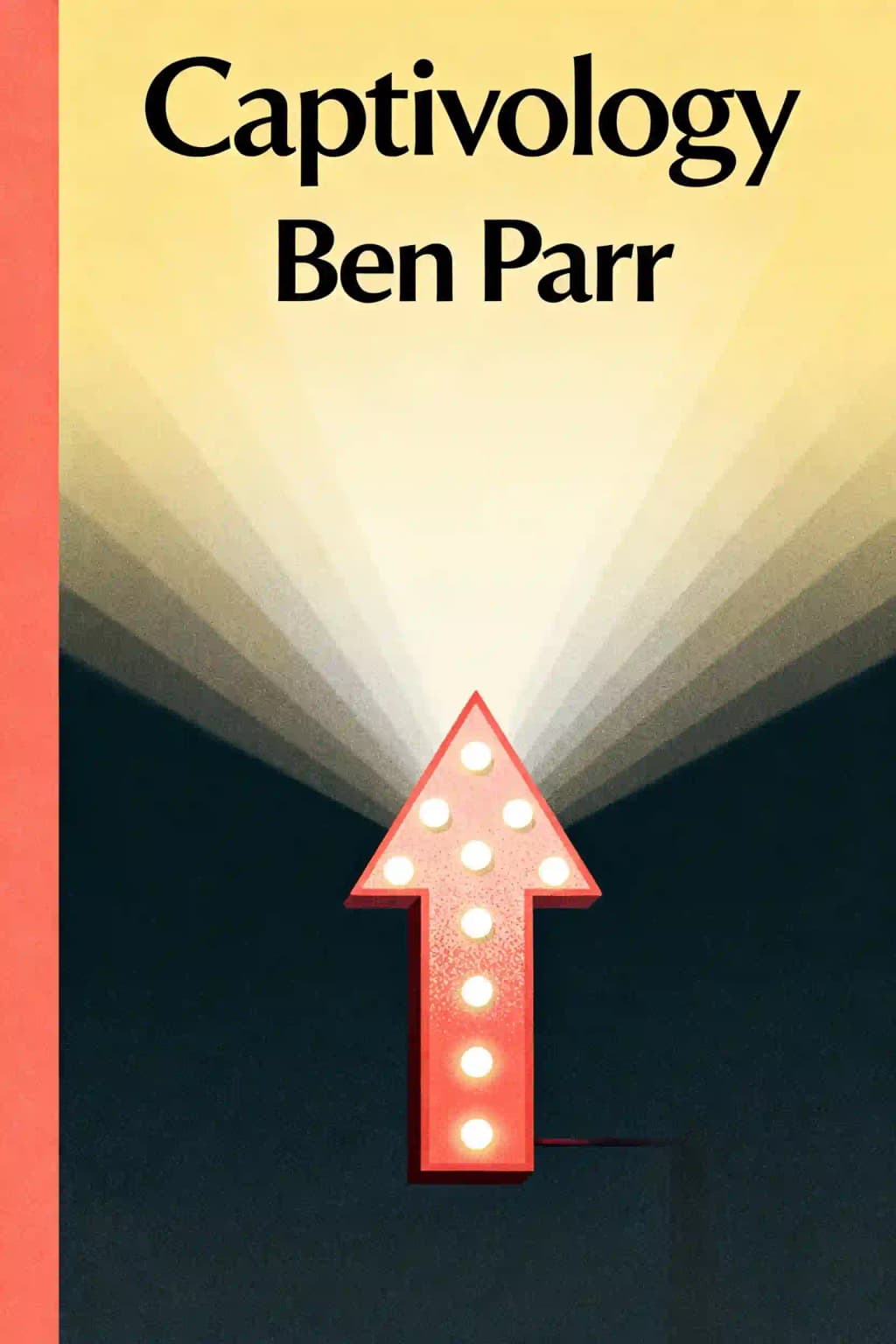
In a world where attention is scarcer than gold, "Captivology" reveals the science behind standing out. Endorsed by Craigslist founder Craig Newmark and featured on CNN, Parr's seven psychological triggers have revolutionized how businesses capture our increasingly fragmented minds. What's your attention worth?
Ben Parr is the award-winning author of Captivology: The Science of Capturing People’s Attention and a renowned expert in attention psychology, marketing, and technology.
A former Co-Editor and Editor-at-Large of Mashable, where he wrote over 2,400 articles on social media and tech innovation, Parr bridges academic insights with practical strategies drawn from interviews with industry leaders like Sheryl Sandberg and Mark Zuckerberg.
As President and Co-Founder of Octane AI, a profitable ecommerce platform leveraging AI-driven customer engagement, he applies his research on attention to real-world business solutions. Parr’s expertise is regularly showcased in major media outlets, including The New York Times, Forbes, and CNN, and he is a Forbes 30 Under 30 honoree.
Captivology, hailed as the top marketing book of 2015 by Strategy+Business Magazine and recipient of the Small Business Book Award, distills decades of psychological research into actionable frameworks for cutting through digital noise. The book has been translated into multiple languages and remains a foundational resource for marketers and entrepreneurs worldwide.
Captivology explores psychological triggers and scientifically backed methods to capture attention in a distracted world. Ben Parr combines research with insights from experts like Sheryl Sandberg and Steven Soderbergh, outlining seven triggers (e.g., automaticity, framing, validation) to attract and sustain focus for ideas, products, or causes.
Marketers, entrepreneurs, educators, and leaders seeking to cut through informational noise will benefit. The book offers actionable strategies for crafting presentations, ads, or campaigns, making it ideal for anyone needing to influence audiences or drive engagement.
Yes—it blends academic research with real-world examples, providing tools applicable across industries. Parr’s interviews with visionaries and clear framework for attention-capturing make it a practical guide for personal and professional growth.
Parr identifies:
Contrast triggers automatic attention by defying expectations. Examples include bold visuals in ads or unexpected story twists. Parr cites Nintendo’s Shigeru Miyamoto, who used contrasting colors and gameplay mechanics to make Super Mario Bros. stand out.
Symbols (e.g., logos, mascots) simplify complex ideas into memorable visuals. Parr highlights how Apple’s bitten apple or Twitter’s bird icon reinforce brand identity and foster instant recognition.
Framing tailors content to audiences’ values. For instance, climate change campaigns emphasizing community health (vs. abstract threats) resonate better. Parr links this to Susan Cain’s Quiet, which reframed introversion as a strength.
Intrinsic motivation—personal fulfillment or curiosity—sustains long-term attention. Parr argues platforms like LinkedIn succeed by aligning users’ career goals with networking features, creating self-driven engagement.
Trust is built via consistency and credibility. Parr cites Reddit’s Alexis Ohanian, who prioritized transparent user moderation to cultivate loyalty. Over time, trust reduces the need for constant attention-grabbing tactics.
Some argue its focus on psychological triggers oversimplifies human behavior. Critics note cultural or contextual factors (e.g., generational media habits) aren’t fully addressed, potentially limiting universal applicability.
It advises leveraging validation (e.g., user testimonials) and gamification (e.g., badges) to boost engagement. Tactics like Facebook’s "Like" button exploit social proof, a trigger Parr ties to dopamine-driven feedback loops.
In an era of AI-generated content and shortened attention spans, its science-backed strategies help brands and individuals stand out. Parr’s emphasis on trust and intrinsic motivation aligns with shifting consumer preferences toward authenticity.
著者の声を通じて本を感じる
知識を魅力的で例が豊富な洞察に変換
キーアイデアを瞬時にキャプチャして素早く学習
楽しく魅力的な方法で本を楽しむ
Immediate attention serves as our first line of defense against threats.
Most 'overnight successes' actually take years of development.
Color dramatically influences attention.
Our frames of reference resist change.
『Captivology』の核心的なアイデアを分かりやすいポイントに分解し、革新的なチームがどのように創造、協力、成長するかを理解します。
『Captivology』を素早い記憶のヒントに凝縮し、率直さ、チームワーク、創造的な回復力の主要原則を強調します。

鮮やかなストーリーテリングを通じて『Captivology』を体験し、イノベーションのレッスンを記憶に残り、応用できる瞬間に変えます。
何でも質問し、声を選び、本当にあなたに響く洞察を一緒に作り出しましょう。

"Instead of endless scrolling, I just hit play on BeFreed. It saves me so much time."
"I never knew where to start with nonfiction—BeFreed’s book lists turned into podcasts gave me a clear path."
"Perfect balance between learning and entertainment. Finished ‘Thinking, Fast and Slow’ on my commute this week."
"Crazy how much I learned while walking the dog. BeFreed = small habits → big gains."
"Reading used to feel like a chore. Now it’s just part of my lifestyle."
"Feels effortless compared to reading. I’ve finished 6 books this month already."
"BeFreed turned my guilty doomscrolling into something that feels productive and inspiring."
"BeFreed turned my commute into learning time. 20-min podcasts are perfect for finishing books I never had time for."
"BeFreed replaced my podcast queue. Imagine Spotify for books — that’s it. 🙌"
"It is great for me to learn something from the book without reading it."
"The themed book list podcasts help me connect ideas across authors—like a guided audio journey."
"Makes me feel smarter every time before going to work"

Captivologyの要約をPDFまたはEPUBで無料でダウンロード。印刷やオフラインでいつでもお読みいただけます。
In a world where we're bombarded with 174 newspapers worth of information daily - quadruple what we processed in 1986 - attention has become our scarcest resource. Why do you check your phone 110 times a day? Why can't you resist clicking on certain headlines? The science behind these behaviors reveals fascinating insights about how our brains work. Attention operates like a bonfire: first comes the spark of immediate attention (unconscious reactions lasting seconds), then the kindling of short attention (conscious focus), and finally the sustained flame of long attention (enduring interest). Understanding this process isn't just academic - it's the key to standing out in our information-saturated world, whether you're launching a product, spreading an idea, or simply trying to be heard above the noise.