第1章
Facing Your Fears: The Journey to Authentic Living
In a world where most people settle for the familiar, Dave Hollis's "Built Through Courage" stands as a rallying cry for those feeling the pull toward something greater. The book has become a cultural touchstone for midlife transformation, earning praise from figures like Tim Ferriss and Brene Brown for its raw honesty. What makes this work particularly compelling is that it emerged from Hollis's own crucible moment-written during the aftermath of his high-profile divorce from Rachel Hollis and his departure from a prestigious career at Disney. The book's message has resonated deeply with readers seeking to navigate major life transitions, particularly those who feel trapped in successful but unfulfilling careers or relationships. As Hollis often asks in his widely followed podcast, "What if the life you want exists just beyond your comfort zone?"
第2章
The Courage to Leave Your Safe Harbor
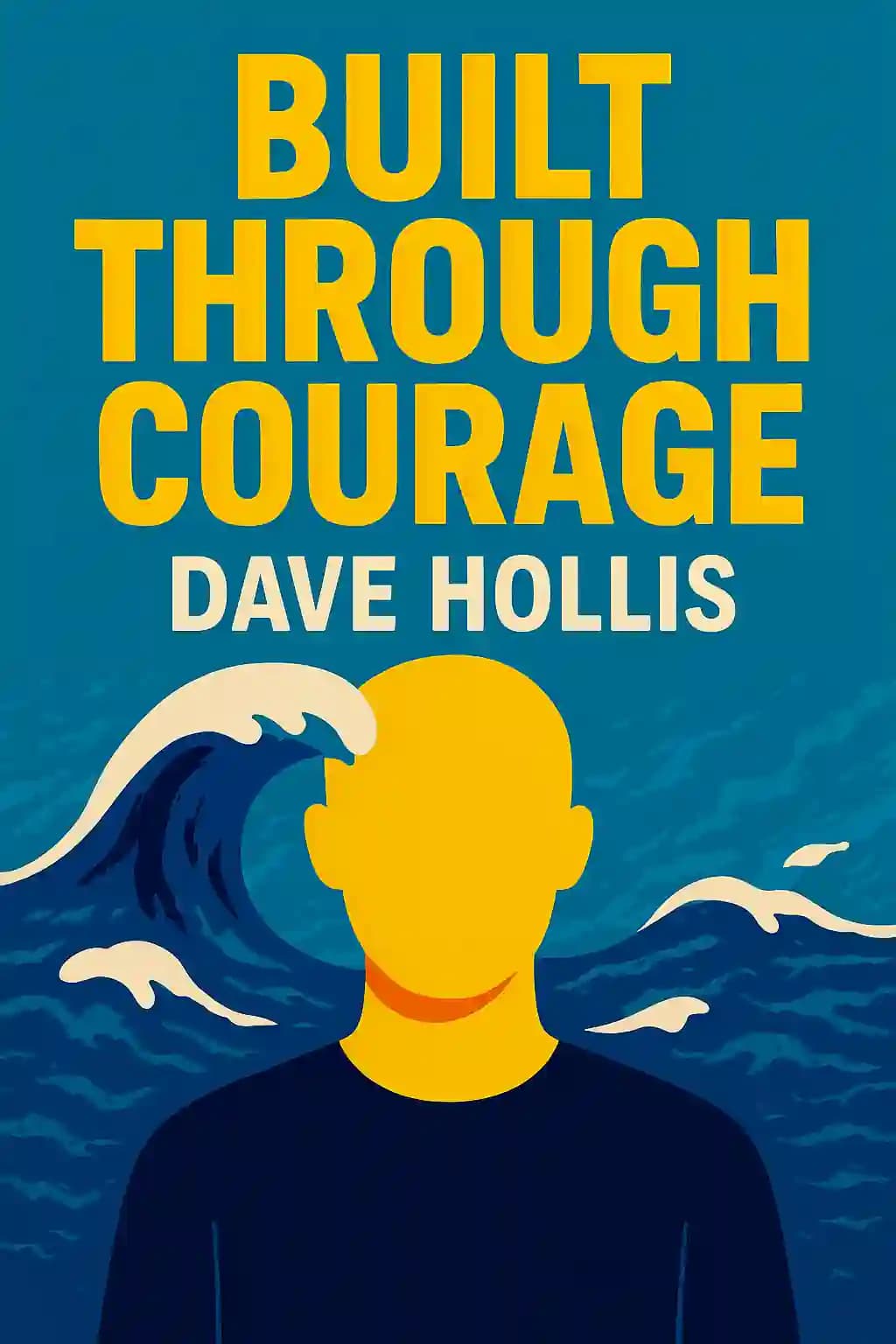
"A ship in harbor is safe, but that's not what ships are built for." This quote, tattooed on Dave Hollis's forearm, serves as the central metaphor for his journey toward authentic living. We all live in harbors constructed by others-family expectations, societal norms, religious beliefs-or through roles we've played as partners, parents, or professionals. These harbors provide comfort but often at the cost of fulfillment.
The journey toward purpose requires losing sight of familiar shores. During his own transformation, Hollis found himself adrift after his sixteen-year marriage unexpectedly dissolved amid a global pandemic. Ben Rector's song "Sailboat" became his anthem: "I feel just like a sailboat, I don't know where I'm headed, but you can't make the wind blow from a sailboat." Through thousands of teary listenings, he discovered a profound truth-we cannot control the timing or conditions of our journey, but we can have faith that we'll eventually reach shore.
Our fast-paced world works against the stillness needed to connect with our authentic selves. Seeking clarity, Hollis once spent three days alone in the Arizona desert with just a notebook. Following Ryan Holiday's advice from "Stillness Is the Key," he made silence his intention. After twenty minutes of journaling surface thoughts, something magical happened-he began accessing his subconscious where unprocessed emotions lived. By trip's end, he had a vision for his future that included running a marathon and building a career in writing and speaking.
The biggest obstacle to leaving our harbor is often our own excuses. We must connect to a "why" stronger than our justifications for staying put. Hollis's "why" begins with honoring his creator's intention and includes being a model for his children, making an impact with his unique talents, and feeling proud of himself. True purpose exists at the intersection of passion (what sets your heart on fire), mastery (what you're great at), impact (how you bring light to the world), and sustenance (financial security).
第3章
Navigating by Your Values
Like ancient seafarers who plotted their course by the stars, our core values serve as guiding principles that keep us on track toward our calling. These values act as guardrails against life's "ship killers"-the hazards that could derail us from our path. Just as a compass provides direction in stormy seas, values offer clarity when life presents difficult choices or ethical dilemmas. Hollis identifies his six core values as centeredness (prioritizing life over work), advocacy (being an ally to the marginalized), growth (striving for daily improvement), optimism (choosing positivity even in hardship), service (being a servant leader), and responsibility (acting with integrity). Each of these values shapes his decision-making process and influences how he shows up in both personal and professional contexts.
Your values may differ, but they should reflect what you stand for and who you aspire to be. To discover your core values, ask yourself: What do I need to value to honor my purpose? How do I want loved ones to describe me? What habits align with my personal brand? When I live by these values, do I feel proud? Consider moments when you felt most fulfilled or accomplished - these often point to your underlying values. For instance, if you find joy in mentoring others, leadership and education might be core values for you. If you're drawn to innovation, creativity and progress might be central to your value system.
Values also help us establish boundaries with others, serving as non-negotiable standards for how we expect to be treated. During Disney's negotiations with theaters over Marvel film pricing, Hollis learned a powerful lesson about standing your ground. When theaters threatened not to play their films at Disney's prices, the company decided to call their bluff-willing to "shoot a hostage" to show how serious they were about their value. When a German theater group refused to play the film, it sent a message to others worldwide that Disney wouldn't undervalue themselves. The film ultimately made $1.4 billion, validating their steadfast commitment to their worth.
This applies directly to your life: stop negotiating your worth with people who question it. When others treat you below your value, it's because you've trained them to do so by allowing boundary violations. This might manifest in various ways - accepting lower pay than you deserve, tolerating disrespectful behavior, or compromising your principles for acceptance. As Tony Gaskins said, "You teach people how to treat you by what you allow, what you stop, and what you reinforce." Sometimes you must put someone on notice or create distance from those who can't respect your boundaries. This might mean having difficult conversations with family members, declining opportunities that compromise your values, or walking away from toxic relationships. Knowing your value and protecting it is an act of self-love that ripples through every aspect of your life, from career decisions to personal relationships.
Remember that values aren't just abstract concepts - they're practical tools for decision-making. When faced with choices, ask yourself: "Does this align with my values?" If the answer is no, you have your answer. Your values should be your non-negotiable standards, guiding you toward authentic success and fulfillment.
第4章
Rediscovering Your Authentic Identity
After leaving his 20-year career in entertainment and then experiencing divorce, Hollis faced profound identity crises. Who was he if not a Disney executive? Who was he if not "Rachel's husband"? These transitions forced him to reexamine who he truly was beyond his external roles.
Through Internal Family Systems therapy, Hollis learned to separate his true self from his thoughts and emotions. His therapist used a sun metaphor-we are the sun, while our thoughts and emotions are merely clouds that sometimes block our light. By understanding that feelings aren't who we are but parts trying to help, he transformed his relationship with anxiety from dread to gratitude. This approach, complemented by Michael Singer's book "The Untethered Soul," taught him that "you are not the voice of the mind-you are the one who hears it."
When reframing his identity during major life changes, Hollis turned to Brendon Burchard's Four Gates of Becoming framework:
First, the Gate of Awareness requires radical self-honesty about who you truly are at your core, beyond roles and relationships. Second, the Gate of Acceptance means surrendering to reality-not giving up, but letting go of what you can't control and finding peace with what is. Third, the Gate of Accountability involves taking back your power by owning your thoughts and actions as you become captain of your ship. Finally, the Gate of Action transforms ownership into daily alignment between who you want to become and how you show up each day.
On two Father's Days that coincided with major identity shifts-leaving Disney in 2018 and the end of his marriage in 2020-Hollis found himself asking: "Who am I now that I'm not who I've been?" In both cases, he needed to identify the unshakable pillars of his identity-his Truths with a capital T. These included being a child of God, father to four kids, son/brother/friend, co-parent, advocate, and someone working to create impact.
We must also become detectives of our limiting beliefs, uncovering where they originated and whether they still serve us. For thirty-five years, Hollis believed he wasn't meant to be a runner-a belief his well-intentioned mother instilled from watching someone tall get injured running. When he challenged this belief at age 36, he questioned his mother's credibility on this matter: she wasn't tall, wasn't a runner, and wasn't in his body. Testing his hypothesis, he began running short distances, then longer ones, eventually completing twenty half marathons and a full marathon.
第5章
Transforming Your Experiences into Wisdom
When working at Disney as head of distribution, Hollis had the surreal responsibility of explaining to filmmakers where their movies would be released on the calendar. This often meant delivering disappointing news to major stars, including having to tell Dwayne "The Rock" Johnson his film would be released in October, traditionally a poor box office month. This experience taught him that while we can't control life's circumstances, we can control how we turn them into opportunities.
Like in Pixar's "Inside Out," our minds contain "lands" representing experiences that shape our identity. These experiences come in two varieties: central experiences that fundamentally define who we are and what we believe we're capable of, and circumstantial experiences that simply happened to happen. The way we attribute meaning to our past experiences-particularly central ones-determines whether they empower or limit us.
Central experiences are the fundamental, foundational moments that define who we are and what we believe we're capable of. How we attribute meaning to these experiences-like academic performance or childhood economic status-determines whether they fuel courage or fear. When we attach positive meaning to even difficult experiences, they can propel us forward rather than holding us back.
Circumstantial experiences are things that "happened to have happened." While they're part of our past and may provide learning opportunities, they don't define who we are-they're merely color commentary to our life story. When we recognize an experience as circumstantial rather than central, we remove its power to limit our beliefs about ourselves.
Our hardest seasons are often the ones that allow us to become who we were meant to be. Looking at formative experiences of admirable people-from Walt Disney being rejected by 302 banks to Oprah overcoming poverty and abuse-reveals recurring themes: an unwillingness to quit, reframing failure as learning, using setbacks as fuel, and persevering despite critics. Like Lazarus in the Bible who had to die to be brought back to life, sometimes parts of us-ego, status, relationships, comfort, identity-must "die" for us to grow.
The "illusion of control" is a cognitive bias where we assume we have control over outcomes when we don't. This creates anxiety and heaviness when things don't go as planned. Life's unexpected challenges-diagnoses, job losses, deaths, breakups-reveal how little control we actually have. But this lack of control isn't a curse; it's freedom. The only thing we can truly control is how we choose to show up today and make the most of our circumstances.
第6章
Taking Ownership of Your Journey
Dave contrasts incumbent versus insurgent mentalities in business and life. Incumbents cling to comfort and the status quo, while insurgents disrupt and innovate. He illustrates this with Blockbuster's fatal rejection of Netflix's $50 million buyout offer, leading to Blockbuster's demise while Netflix grew to $221 billion. Similar fates befell Kodak, Toys "R" Us, and other companies that refused to evolve.
During his own midlife crisis before leaving Disney, Hollis prayed desperately for a miracle, only to receive the revelation: "You are the miracle. I've given you all the gifts you need." This epiphany taught him that while support from others is crucial, we must believe in our inherent worthiness and capabilities, honestly confront our struggles, and willingly seek help. No one is coming to save us-we must save ourselves by taking honest inventory of where we are and activating the miracle within.
Before embarking on any journey of personal transformation, you need a pre-departure checklist, just as a sea captain would prepare before setting sail. This preparation requires three key elements: a radically honest assessment of where you are, a detailed vision of where you want to go, and the tactical details to bridge the gap.
The foundation begins with answering "What do I need in this season?" across five dimensions of health. For physical health, prioritize nutritious food, daily movement, and setting aggressive fitness goals. For spiritual health, connect to a higher power daily, build community with like-minded people, and explore diverse perspectives. Emotional health requires understanding feelings through reading, finding peace through meditation, and practicing gratitude. Mental health demands professional therapy, purposeful work, and self-compassion. For relational health, emphasize meaningful connections, family bonds, and boundaries against negativity.
Just as lighthouses guided sailors to safe harbors and warned of dangerous reefs, we need clear beacons to direct our focus toward what truly matters and away from potential dangers. Drawing from Greg McKeown's "Essentialism," Hollis emphasizes distinguishing between the "vital few" priorities and the "trivial many" distractions. The key insight: "If you don't prioritize your life, someone else will"-allowing others' needs to fill your calendar at the expense of your fulfillment and goals.
第7章
Facing Your Fears Head-On
Fear will be the single biggest threat to your ambition for a better life. Hollis emphasizes that fear is normal and human, but courage allows us to move forward despite it. The goal isn't eliminating fear but developing tools to address it.
One powerful exercise involves writing a letter to yourself from your fear. Following his divorce, Hollis listed 46 specific fears ranging from being alone to letting his children down. This process accomplished two crucial things: it allowed him to question which fears were real (discovering 80% were false) and create plans to address warranted concerns. Fear thrives in darkness, but bringing it into the light by naming it and sharing it with trusted people dismantles its power.
Overcoming fear resembles medical inoculation: small, controlled exposure builds resistance. Hollis illustrates this through his own journey from non-runner to marathon competitor after completing the grueling 29029 Everest challenge. His team began helping each leader face their specific business fears through small exposures-public speaking opportunities, finance lessons, feedback templates-building courage incrementally through toe-dipping into uncomfortable waters.
Writing his first book was Hollis's proudest professional accomplishment, but it came with fear-fear of criticism, comparison to his then-wife's success, and worry about impact. He learned a crucial lesson: pursuing impact means accepting criticism. You can't please everyone, and that's okay. Most people (85%) are casual acquaintances whose opinions shouldn't matter; 10% are misguided loved ones offering fear disguised as concern; only 5% are people whose legitimate concern deserves consideration.
Anxiety about what might happen paralyzes us with fear of worst-case scenarios that rarely materialize. The ancient Stoics understood this-Epictetus noted we suffer more from imagined anxieties than real problems, while Seneca observed we suffer more from imagination than reality. Our fears are almost always worse than reality. As Marcus Aurelius wisely said, "You have power over your mind, not outside events."
Unlike worrying about what might happen, preparing for what can happen builds resilience. The 2020 pandemic taught us the importance of emergency planning-those with savings slept better during job insecurity. Reaching for your vision requires inventorying potential obstacles and creating contingency plans. Like a good sailor who checks supplies before departure, understanding what can go wrong and how you'll handle it cultivates courage.
第8章
Building the Life You Were Meant For
The journey from comfort to fulfillment requires moving through four sequential environments. First is the Safe Harbor, where many remain due to fear of the unknown and illusion of control. Beyond lies the Pool of Fear-an unavoidable moat surrounding comfort that contains our worries of failure, judgment, and inadequacy. There's no way around it; we must plunge through by confronting our fears and reframing our relationship with failure.
Next is the Sea of Learning, where we develop proof of what's possible by intentionally placing ourselves in uncomfortable situations until we move from survival to skill acquisition. Finally, the Ocean of Growth is where we connect with our passion and purpose, developing mastery in areas that energize us and setting increasingly bold goals for our next destination.
Habits follow a loop of cue-routine-reward as described in Charles Duhigg's "Power of Habit." The key is understanding our triggers and choosing healthy routines that deliver the same rewards as our unhealthy coping mechanisms. James Clear identified five trigger sources: time of day, location, preceding events, emotional states, and other people.
Beyond basics, three game-changing habit hacks are: Keystone Habits (those with positive spillover effects, like exercise improving energy and food choices), Habit Stacking (attaching new habits to existing ones, like doing push-ups before washing hands), and Consistency Compounds (maintaining momentum makes habits easier, like a car's highway efficiency).
Life doesn't progress in a straight line toward your goals. You'll have strings of good days followed by bad ones. As Chase Jarvis illustrates in Creative Calling, any new project follows a fluctuating joy/pain continuum-initial excitement, followed by challenges that make you question everything, before learning and mastery create momentum.
People often ask how Hollis stays motivated. Truth is, he doesn't-he just does what needs doing even when he doesn't feel like it. His motivation hacks include: surrounding himself with positivity through gratitude practices and careful media consumption; connecting regularly to his vision through tangible reminders; revisiting goals to ensure they remain realistic and relevant; diagnosing inconsistency in his routines and adjusting accordingly; focusing on one day at a time rather than feeling overwhelmed by the future; celebrating progress instead of fixating on what's left undone; and giving himself grace when comparing his journey to others'.
Remember that rest and recovery are as important as hustle and grind-they're not indulgences but mandatory requirements. Most importantly, avoid "destination addiction"-the dangerous belief that you'll only find peace and fulfillment when you reach some future goal. As Ben Rector's song "Peace" reminds us: "You are only ever here" and "Peace is where you make it." Don't wait to experience joy-manufacture the mindset to receive the good that already exists in your life.
第9章
The Courage to Make a Difference
The journey of courage culminates after equipping you to become your true, authentic self-connected to your passion, skills, and impact. Hollis's own transformation involved three significant "harbor departures" over five years, each requiring courage to leave comfort for growth.
First came the 2014-2016 adoption journey, sparked by Jen Hatmaker's question: "What would it mean to interrupt your good life for something far greater?" Despite failed attempts, frustration, and grief, he persevered to welcome his daughter Noah. This experience built resilience and prepared him for future leaps.
In 2017, just weeks after Noah's birth, he confronted his fear of "not living up to my potential" and declined a four-year contract extension at Disney-everyone's dream job but no longer challenging him. Moving to Austin meant leaving certainty for start-up culture, writing, and teaching-terrifying but soul-fueling.
Finally, his divorce in 2019, though painful, forced self-awareness and growth that "saved my life again." Through all three departures, he learned that courage means facing fears, persevering through setbacks, and believing in your worthiness despite what others think.
Beyond personal transformation, Hollis emphasizes the importance of using our courage to stand for others. His first tattoo-the word "ALLY" on his right forearm-symbolizes his commitment to stand with and advocate for those without the same voice or access he enjoys as a white, straight, male, able-bodied American. He got it after his biracial daughter's birth, after attending a multicultural church that opened his eyes, after watching gay friends being shunned, and after witnessing the broken foster care system.
Beverly Daniel Tatum likens society to a moving sidewalk of racism-unless you actively walk against it, you're passively supporting it. There is no neutral position. This applies to all forms of supremacy and discrimination. Scripture reminds us to "Love your neighbor as yourself," that "God does not show favoritism," to not mistreat foreigners, and that we are "all children of God through faith."
To live your full life, you must have the courage to believe in your extraordinary purpose, move boldly toward your calling, see your experiences as qualifications, be honest about your struggles, sail your own map, lean into your strengths, share your gifts, align actions with values, set boundaries, truly know yourself, change, question limiting beliefs, create priorities that serve you, find hope, be your own storyteller, find growth in pain, see daily blessings, take ownership of your journey, have difficult conversations, appreciate impermanence, tend to your health, focus on essentials, dream big, be intentional, face fears, stop worrying about others' opinions, release control, prepare for obstacles, fight for your life, depend on faith, seek wisdom, be disciplined, remain flexible, maintain integrity, trust your intuition, choose discomfort, and give yourself grace.
The tattoo on Hollis's arm reminds him daily that fulfillment comes only by venturing into choppy waters. A ship in harbor is safe, but that's not what ships are built for. He was built for this. So were you. Be courageous. It's time to leave the harbor.