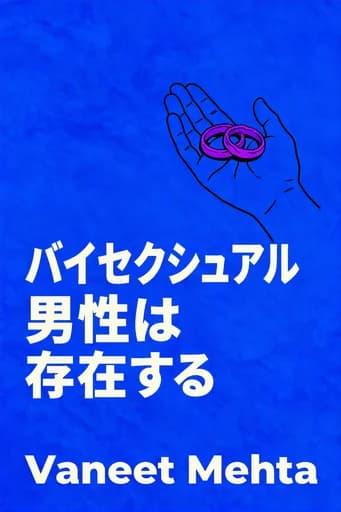
Vaneet Mehta's groundbreaking "Bisexual Men Exist" confronts erasure with personal stories and research, expanding his viral #BisexualMenExist campaign. Featured in Men's Health's top LGBTQ+ books, it's the validation bisexual men desperately needed - and the education everyone else requires.
Vaneet Mehta, British Indian bisexual activist and author of Bisexual Men Exist: A Handbook for Bisexual, Pansexual and M-Spec Men, is a leading voice in LGBTQ+ advocacy and intersectional inclusivity. His debut work blends memoir, research, and community narratives to address identity, mental health, and systemic erasure faced by multi-gender-attracted men.
A software engineer by training, Mehta founded the viral #BisexualMenExist campaign in 2018, which gained global traction and inspired his book. His writing has been featured in Men’s Health, Stonewall, and Metro UK, and he frequently speaks on panels about bisexuality, racism, and mental health awareness.
Mehta’s expertise stems from his lived experiences as a South London-born Indian man navigating biphobia and cultural stigma, alongside his critical analysis of institutional biases in queer spaces. He contributes to anthologies like The Bi-ble: New Testimonials and advocates for safer, intersectional LGBTQ+ communities. Bisexual Men Exist has been praised for its compassionate, research-backed approach to topics like dating, healthcare disparities, and societal skepticism, solidifying its status as a foundational resource in modern queer literature.
Bisexual Men Exist by Vaneet Mehta is a guide combatting biphobia and erasure faced by bisexual, pansexual, and m-spec (multi-gender attracted spectrum) men. It combines personal narratives, advice on coming out, dating, mental health, and critiques of LGBTQ+ spaces, while amplifying voices through the viral #BisexualMenExist campaign.
This book is essential for m-spec men seeking validation, allies aiming to understand bisexual experiences, and LGBTQ+ advocates addressing intersectional issues. It’s also valuable for educators or mental health professionals working with diverse sexual identities.
Yes—readers praise its blend of research, personal stories, and actionable advice. Critics note its heavy focus on biphobia, but it remains a cornerstone for visibility and empowerment, described as “thought-provoking” and “vital for inclusivity.”
Key themes include overcoming stereotypes (“pick a side”), navigating erasure in LGBTQ+ spaces, mental health disparities, and the importance of representation. Mehta also explores intersectionality, addressing race, culture, and masculinity.
The book dissects biphobic myths (e.g., “bisexual men are greedy”) using survey data, interviews, and Mehta’s coming-out journey. It offers strategies to challenge stigma in personal relationships, healthcare, and media.
Founded by Vaneet Mehta in 2020, this viral social movement counters bisexual erasure and promotes positivity. The book expands its mission, sharing community stories and advocating for inclusive policies.
Mehta highlights exclusion of m-spec men in queer communities, such as assumptions they’re “secretly gay” or unwelcome at Pride. He urges LGBTQ+ organizations to address biphobia internally.
Yes—it links bisexual men’s higher rates of anxiety and depression to societal stigma. The book provides resources for coping with isolation and advocating for culturally competent care.
Some readers argue it overly focuses on negative experiences, potentially overshadowing bisexual joy. However, others counter that documenting systemic biphobia is vital for driving change.
Mehta examines how race, disability, and class compound discrimination for m-spec men. For example, South Asian bisexual men face unique cultural pressures, as detailed in his personal anecdotes.
Notable quotes include:
Unlike broader LGBTQ+ guides, it specifically centers m-spec men’s experiences, offering niche insights similar to Bi The Way by Lois Shearing but with a focus on masculinity.
Despite growing bi+ visibility, stereotypes persist in media and healthcare. The book remains a critical tool for addressing ongoing gaps in support and policy.
著者の声を通じて本を感じる
知識を魅力的で例が豊富な洞察に変換
キーアイデアを瞬時にキャプチャして素早く学習
楽しく魅力的な方法で本を楽しむ
Bisexual men don't exist.
Pick a side.
Bisexual Men Exist.
The bisexual bridge theory.
Monosexism erases m-spec identities.
『Bisexual Men Exist』の核心的なアイデアを分かりやすいポイントに分解し、革新的なチームがどのように創造、協力、成長するかを理解します。
鮮やかなストーリーテリングを通じて『Bisexual Men Exist』を体験し、イノベーションのレッスンを記憶に残り、応用できる瞬間に変えます。
何でも質問し、学習スタイルを選び、自分に本当に響くインサイトを一緒に作れます。

"Instead of endless scrolling, I just hit play on BeFreed. It saves me so much time."
"I never knew where to start with nonfiction—BeFreed’s book lists turned into podcasts gave me a clear path."
"Perfect balance between learning and entertainment. Finished ‘Thinking, Fast and Slow’ on my commute this week."
"Crazy how much I learned while walking the dog. BeFreed = small habits → big gains."
"Reading used to feel like a chore. Now it’s just part of my lifestyle."
"Feels effortless compared to reading. I’ve finished 6 books this month already."
"BeFreed turned my guilty doomscrolling into something that feels productive and inspiring."
"BeFreed turned my commute into learning time. 20-min podcasts are perfect for finishing books I never had time for."
"BeFreed replaced my podcast queue. Imagine Spotify for books — that’s it. 🙌"
"It is great for me to learn something from the book without reading it."
"The themed book list podcasts help me connect ideas across authors—like a guided audio journey."
"Makes me feel smarter every time before going to work"

Bisexual Men Existの要約をPDFまたはEPUBで無料でダウンロード。印刷やオフラインでいつでもお読みいただけます。
Picture scrolling through your social media feed and stumbling upon a simple hashtag: #BisexualMenExist. Three words that shouldn't be revolutionary, yet they sparked a movement. What began as a viral rallying cry evolved into something far more substantial-a comprehensive excavation of one of the most misunderstood identities in the LGBTQ+ spectrum. Here's a startling reality: bisexual and multi-gender attracted people make up over half of the LGBTQ+ community, yet they receive less than 1% of LGBTQ+ funding. Even more striking, celebrities like Alan Cumming and Evan Rachel Wood have publicly embraced their bisexual identities while facing the same erasure that millions experience daily. This isn't just about visibility-it's about survival. The men who love across gender lines find themselves caught in a peculiar limbo, too "gay" for straight spaces and too "straight" for queer ones, their existence constantly questioned by the very communities that should embrace them.
Most men attracted to multiple genders never saw themselves reflected in media. Bisexual people comprise 52% of the LGB community, yet only 26% of LGBTQ characters are bisexual, and just 28% are men. This absence creates a vocabulary crisis - without words to describe their feelings, men spend years trapped in confusion. Media actively erases this identity. *Buffy the Vampire Slayer* creator Joss Whedon admitted network pressure forced Willow's transition from dating men to being "fully gay" - executives feared acknowledging multiple-gender attraction would make same-sex relationships seem like a phase. *90210*'s Teddy similarly transforms from ladies' man to gay, erasing bisexuality entirely. Not a single interviewed man recalled seeing bisexual male characters during their formative years. One man captured it perfectly: "I knew I wasn't gay because I liked girls, but I also knew I wasn't straight because I liked boys. I just didn't know what I was."
Society's rigid binary-straight or gay-creates "monosexism," erasing everything between. The impact is devastating: only 14% of bisexual men are out to their families compared to 59% of gay men, while 46% aren't out to anyone. The workplace becomes treacherous-nearly half remain closeted, facing 18% more negative comments, 17% more exclusion, and earning 10.3% less than straight counterparts. Faith communities present even higher barriers, with 64% not out to anyone in their religious circles. One man recalls his mother's ultimatum: "You can be gay and I'll still love you but I will be very disappointed." The unspoken message? Multiple-gender attraction isn't even considered. Educational environments fail catastrophically. Students face fear of becoming targets, worry about expulsion, abuse after coming out, and demands to "pick a side." Support is virtually absent-no LGBTQ+ groups, ignored bullying, teachers perpetuating bigotry. The message: your identity doesn't exist, and if it does, it's unwelcome.
Attraction to multiple genders should expand your dating pool, but it dramatically shrinks it. Studies show 81% of women wouldn't date a bisexual man. This rejection stems from phallocentrism-the notion that sexuality is determined by one's relationship with penises. Express desire for men, and you're immediately categorized as gay, regardless of your attraction to women. Within LGBTQ+ spaces, rejection continues. Gay men often view bisexual men as "confused" or "on their way to coming out as gay." This creates "double discrimination"-rejected by straight people for being too queer and by queer people for not being queer enough. One man describes being interrogated at an LGBTQ+ bar about how he could identify as bisexual despite having no experience with women, as if sexuality requires a resume. Beyond rejection lies fetishization and violence. Claims that "bisexual men are the best in bed" reduce men to their sexuality. More disturbingly, 47% of bisexual men have experienced sexual violence compared to 40% of gay men and 21% of straight men, with 42% believing their orientation motivated the attacks. For those in monogamous relationships, erasure becomes constant. Society views sexuality through a binary lens-date a man, you're gay; date a woman, you're straight. Javier Vilalta's case illustrates extreme consequences: after coming out as bisexual to his ex-wife years post-divorce, she sued him for concealing his "homosexuality." Though he identified as straight during their marriage and only discovered his bisexuality through therapy afterward, the court ordered him to pay 3,000 in damages, completely erasing his bisexual identity.
The statistics reveal a crisis: 59% of bisexual people experience depression versus 46% of gay and lesbian people; 56% of bisexual men suffer anxiety compared to 53% of gay men; 18% of bisexual men self-harm versus 7% of gay men; and 43% report suicidal ideation compared to 32% of gay men. These aren't marginal differences-they represent an invisible health emergency. "Double discrimination" creates a perfect storm. Facing both homophobia and LGBTQ+ rejection, bisexual men encounter discrimination everywhere-education, relationships, family, workplaces. Many struggle with identity confusion, remaining closeted or denying their feelings. Nearly 90% of people with mental health issues report stigma negatively affecting their lives, hitting men particularly hard due to toxic masculinity's demand for stoicism. Multiple men described being told to "man up," "stop being dramatic," or "pray away" their issues-all preventing them from accessing vital support. Even when overcoming stigma, prohibitive barriers remain. UK NHS waiting times stretch to 18 months; US therapy costs $65-$200 per session without insurance. This particularly impacts bisexual men, who face higher poverty rates-25.9% live at or below poverty level versus 20.5% of gay men and 15.3% of straight men. Healthcare professionals often lack understanding of bisexual identities, with therapists being "completely clueless on LGBTQ+ issues." Sexual health stigma compounds these challenges. The AIDS epidemic created damaging "bisexual bridge theory" narratives-a 1987 *New York Times* article titled "AIDS Specter for Women: The Bisexual Man" portrayed them as threats. This harmful perception persists, with many bisexual men concealing their identity from medical professionals. Compared to gay men, they're less likely to receive HIV/STI prevention information, get tested less frequently, and use PrEP less often-creating poor health outcomes.
Discrimination doesn't exist in neat boxes-for men with multiple marginalized identities, oppressions compound in ways single-identity frameworks can't capture. Trans bisexual men face particularly complex challenges. Historically, being heterosexual was required for trans people to access gender-affirming healthcare. Though officially removed, this expectation persists-one man concealed his bisexuality at his hormone appointment, while another's doctor insisted "normal transsexuals are all straight." Both identities subvert societal binaries, threatening essentialism by offering "options of mutability and change." Bisexual men of color navigate unique intersectional challenges rooted in colonial legacies. British Indian households often enforce strict expectations-men must be providers, strong, unemotional, and successful, qualities tied to heterosexuality. Collectivist cultures prioritize community perception, with phrases like "What will people think?" enforcing conformity. A Black bisexual man described the hypermasculinity in Black culture that shuns men who "shy away from masculinity." Ironically, the homophobia now weaponized against LGBTQ+ people is itself a colonial import. British colonial rule introduced the criminalization of homosexuality through laws like India's Section 377 and Jamaica's "buggery laws." Before colonization, these societies demonstrated acceptance-Indian texts showed same-sex attraction was acceptable, while African cultures embraced gender diversity.
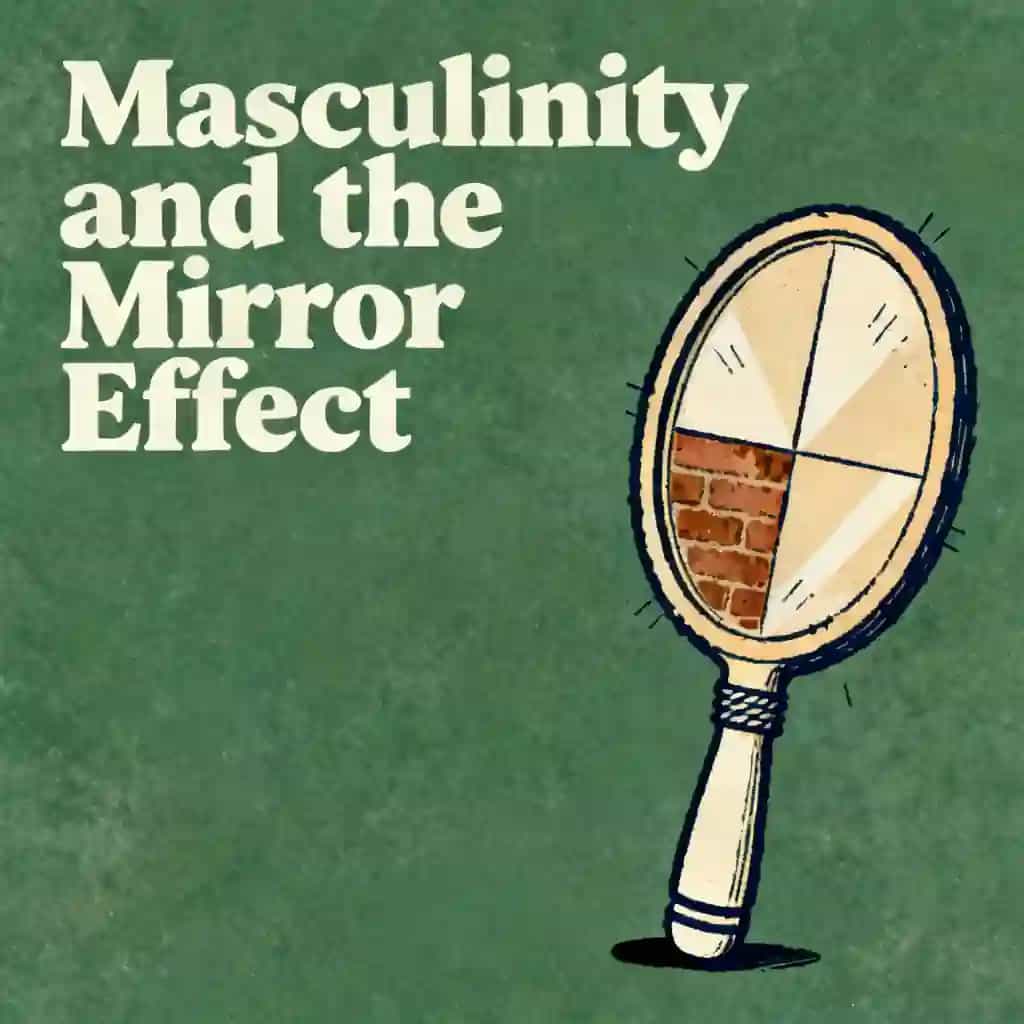
Pride should represent personal confidence and community celebration, yet bisexual men face unique challenges. Research shows 18% experience discrimination in LGBT spaces compared to 4% of gay men, leading half to avoid LGBT events entirely. This has deep historical roots-in the 1980s, the London Lesbian and Gay Centre banned bisexual groups, claiming "bisexual people cannot be lesbian and gay." Today, gatekeeping manifests through slogans like "No straights at Pride." While targeting heterosexual people, these statements harm bisexual, asexual, trans, non-binary, and intersex people who may appear to be in "straight" relationships. In response, bisexual activists have created organizations like The Bisexual Index, Bi Pride UK, and the Bisexual Resource Center. Yet these face severe funding challenges-most are run by unpaid volunteers without time for complex grant applications, while funders assume general LGBTQ+ organizations cover bisexual needs. Despite these challenges, many bisexual men have found pride in their identities. Community plays a crucial role-spending time with other bisexual people normalizes feelings and builds confidence. If safe to do so, claim your identity proudly. Visibility matters-hiding reinforces the misconception that bisexual people eventually "choose sides." In a society that demands we pick a side, choosing to love across boundaries becomes an act of resistance. Your existence isn't a phase or confusion-it's a complete, valid identity. Every time you refuse to erase yourself, you're dismantling the binary brick by brick.