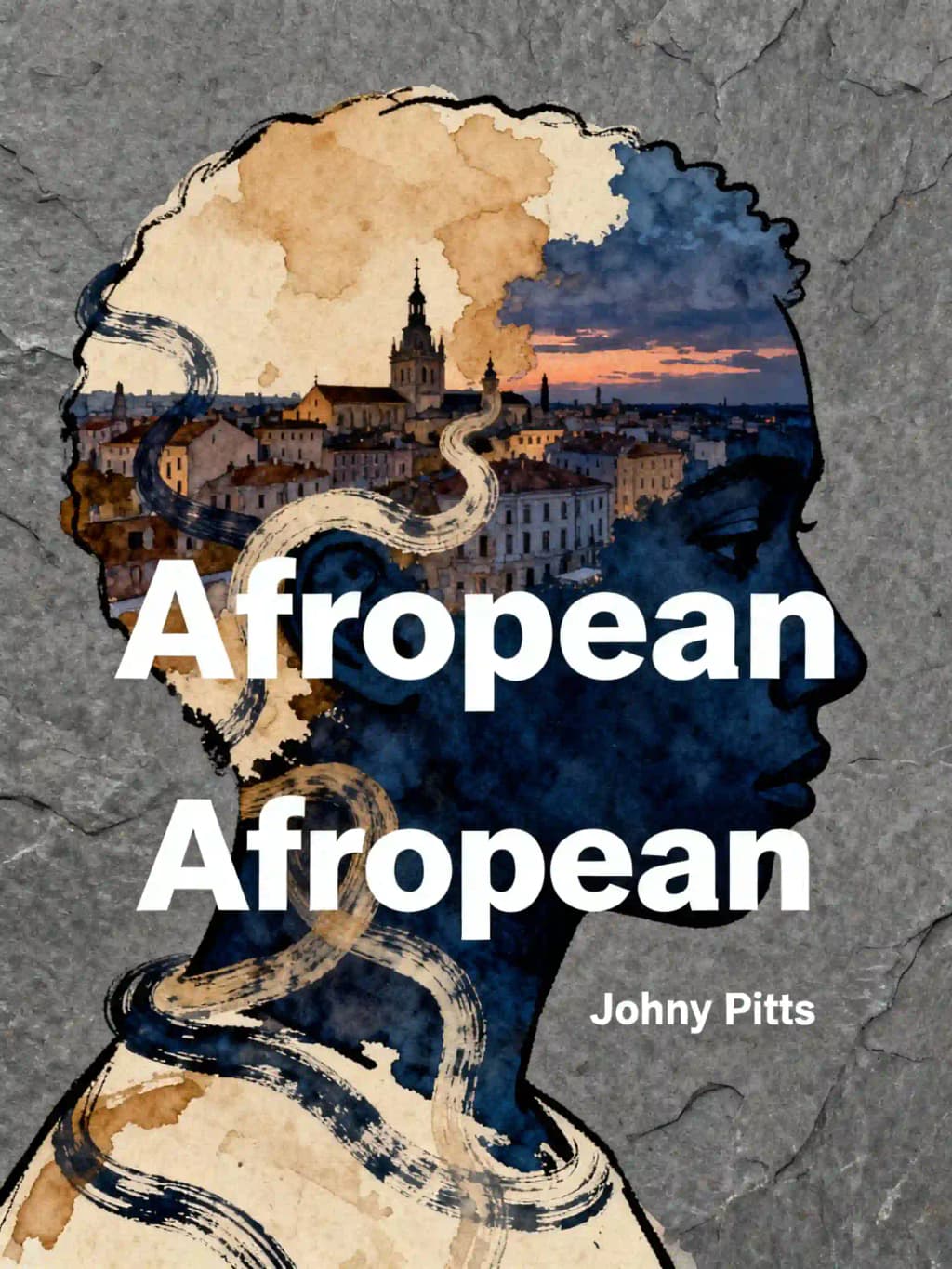
Afropean
『Afropean』の概要
Journey through Black Europe with Johny Pitts' award-winning "Afropean" - winner of four prestigious literary prizes and translated into eight languages. Owen Jones called it "a revelation" for challenging Europe's white-centric narrative through stunning photography and powerful storytelling.

『Afropean』の主要テーマ
- black european identity
- postcolonial urban geography
- diasporic internal tensions
- systemic social exclusion
- multicultural community solidarity
『Afropean』の名言
Afropean identity describes a liminal space where African and European cultures merge.
This wasn't the sanitized diversity celebrated by distant politicians.
The experience shattered any notion of an 'unspoken brotherhood among the Black diaspora'.
Clichy embodied profound social failure and the consequences of systemic exclusion.
Maybe that's what I am!
『Afropean』の登場人物
- Johny PittsAuthor and narrator exploring Afropean identity
- JimmyAfrican-American tour guide in Paris
- Rex KazadiActivist who leads the author to Clichy-sous-Bois
- Mufuki MukunaBelgian-Congolese artist based in Brussels
- Marie DaulneMusician who coined the term 'Afropean'
Afropeanの要約をダウンロード
Afropeanの要約をPDFまたはEPUBで無料でダウンロード。印刷やオフラインでいつでもお読みいただけます。
この本に関するよくある質問
Afropean documents Johny Pitts’ journey across Europe to explore Black identity in marginalized communities, blending travelogue, history, and cultural analysis. Visiting locations like Lisbon’s Cape Verdean shantytowns and Paris’s Clichy Sous Bois, the book challenges monolithic European narratives by centering Afropean voices. It critiques colonial legacies while highlighting resilience and cultural fusion in diasporic spaces.
This book suits readers interested in multiculturalism, European identity, and diaspora studies. Academics, historians, and general audiences gain insights into how Black communities navigate dual allegiances and shape continental culture. It’s particularly valuable for those seeking alternative perspectives on urban marginalization and postcolonial Europe.
Yes—critics praise its vivid storytelling and fresh lens on Black European experiences. Pitts’ blend of personal narrative, photography, and historical critique offers a poignant examination of identity and belonging. Readers applaud its humanizing portrayal of overlooked communities.
Coined by musician Marie Daulne, "Afropean" describes a dual identity embracing African heritage and European citizenship. Pitts expands it into a cultural framework, exploring how Black Europeans negotiate belonging in societies shaped by colonialism and migration.
The book links Europe’s colonial past to modern racial dynamics, such as critiques of Belgium’s AfricaMuseum and Paris’s banlieues. Pitts underscores how historical amnesia perpetuates systemic inequities, while Afropeans reclaim agency through art and community.
- “Blackness was taking part in shaping European identity” – challenges Eurocentric narratives.
- “The Afropean identity is a constant negotiation” – emphasizes fluidity and resilience.
Some readers note a lack of narrative structure, calling it a “series of journalistic articles”. Others desire deeper analysis of systemic racism beyond personal anecdotes. However, most praise its intimate, ground-level perspective.
By centering Black perspectives, Pitts redefines Europe as a mosaic of diasporic cultures. The book contrasts tourist hotspots with marginalized neighborhoods, revealing how Afropeans sustain vibrant communities despite exclusion.
As a British-born writer of mixed heritage, Pitts uses his passport privilege to access diverse Afropean spaces. His photography and journalism background enriches the book’s immersive, visual storytelling.
Key sites include:
- Clichy Sous Bois (Paris): Birthplace of the 2005 riots.
- Rinkeby (Stockholm): Predominantly Muslim neighborhood.
- Patrice Lumumba University (Moscow): Cold War-era hub for African students.
Unlike academic texts, Pitts’ on-the-ground reporting prioritizes personal stories over theory. The blend of memoir and documentary journalism offers a visceral, accessible exploration of identity.
Pitts’ photos of neighborhoods like Cova Da Moura complement written narratives, adding visceral depth to discussions of poverty, resilience, and cultural pride. Visuals underscore the book’s commitment to centering Afropean agency.
As Europe grapples with rising nationalism and debates over migration, the book remains a critical resource for understanding systemic racism and multicultural coexistence. Its themes of identity negotiation resonate amid ongoing social fractures.


