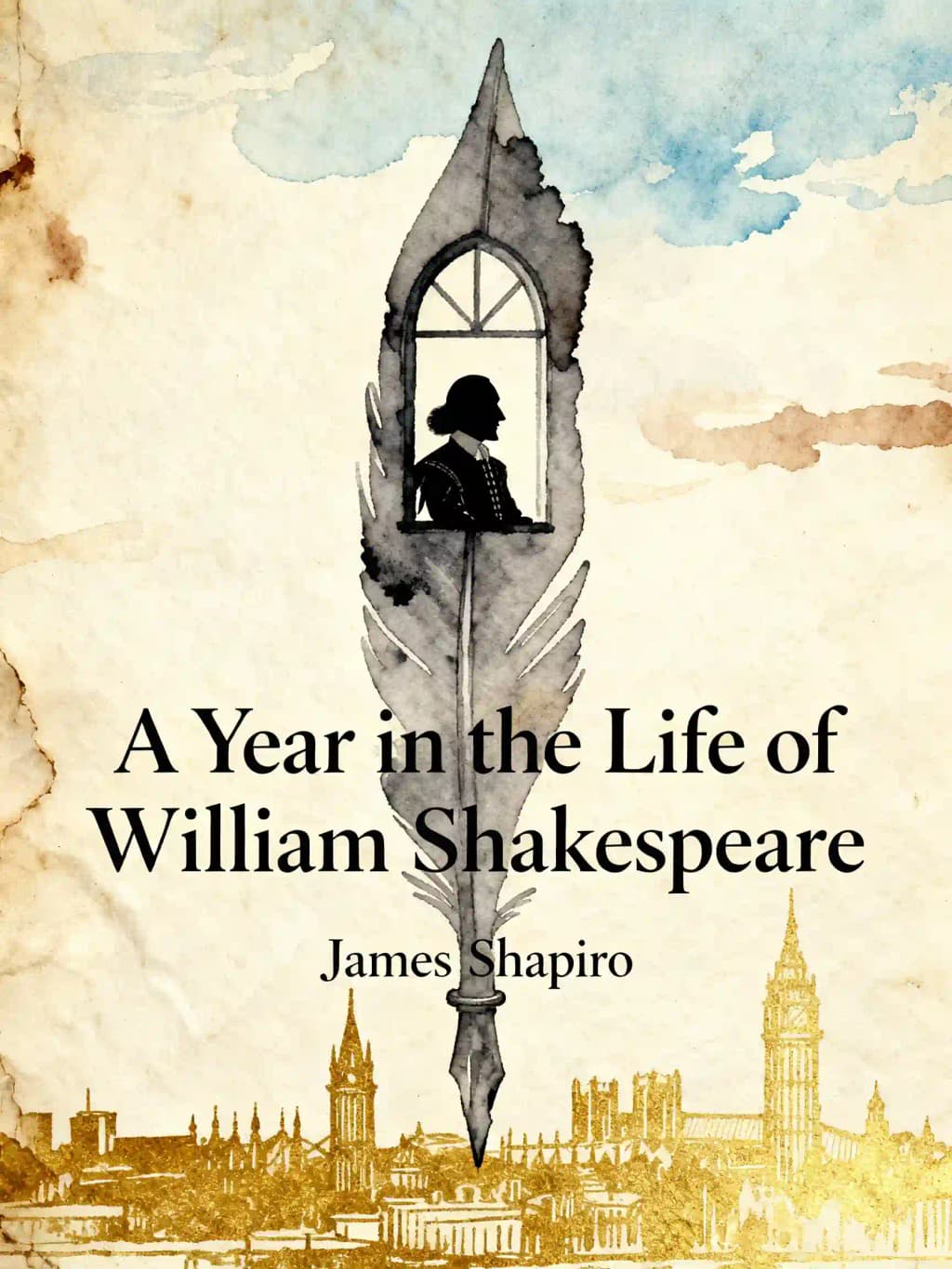
Year in the Life of William Shakespeare, 1599
『Year in the Life of William Shakespeare, 1599』の概要
In 1599, Shakespeare created "Henry V," "Julius Caesar," "As You Like It," and began "Hamlet" - all while the Globe Theatre rose and England faced invasion. Shapiro's Samuel Johnson Prize-winning journey reveals how one pivotal year shaped literature's greatest enigma.
『Year in the Life of William Shakespeare, 1599』の主要テーマ
- elizabethan theatrical production
- literary creative process
- political rhetoric
- early modern london
- globe theatre history
『Year in the Life of William Shakespeare, 1599』の名言
Shakespeare leaves it to the audience to decide.
Love conquers all.
Shakespeare shows how language can be used to sway the masses.
Shakespeare was too canny to offer simple propaganda.
『Year in the Life of William Shakespeare, 1599』の登場人物
- William ShakespearePlaywright, actor, and Globe Theatre shareholder
- Queen ElizabethAging monarch of England during a time of unrest
- Earl of EssexMilitary leader of the Irish campaign
- Sir Nicholas BrendLandowner who leased land for the Globe Theatre
Year in the Life of William Shakespeare, 1599の要約をダウンロード
Year in the Life of William Shakespeare, 1599の要約をPDFまたはEPUBで無料でダウンロード。印刷やオフラインでいつでもお読みいただけます。
この本に関するよくある質問
A Year in the Life of William Shakespeare: 1599 examines a pivotal year when Shakespeare wrote Henry V, Julius Caesar, As You Like It, and an early Hamlet, while navigating political turmoil, the construction of the Globe Theatre, and threats like the Spanish Armada. James Shapiro connects these events to Shakespeare’s creative evolution, offering fresh insights into how history shaped his works.
This book is ideal for Shakespeare enthusiasts, history buffs, and literature students. It appeals to readers seeking a deep dive into Elizabethan England’s cultural and political climate, as well as those interested in how historical context influences artistic genius.
Yes—it won the Samuel Johnson Prize for its groundbreaking research and engaging narrative. Shapiro’s ability to intertwine historical events with Shakespeare’s creative process makes it essential for understanding the Bard’s legacy.
Shapiro links Ireland’s Tyrone Rebellion, fears of Spanish invasion, and Queen Elizabeth’s aging reign to themes in Henry V (war), Julius Caesar (political intrigue), and Hamlet (uncertainty). These events mirror the societal tensions reflected in Shakespeare’s characters and plots.
Unlike broad biographies, Shapiro zooms in on 1599, blending meticulous archival research with literary analysis. This “micro-history” reveals how annual events influenced Shakespeare’s writing, a method praised for its originality and depth.
Shapiro argues that the 1599 Hamlet reflected England’s existential crises, like succession anxieties and moral ambiguity. He traces how Shakespeare reworked older revenge tragedy tropes into a nuanced exploration of human psychology.
The Globe’s 1599 opening is framed as both a business venture and artistic catalyst. Shapiro details how its design influenced staging choices in Henry V (chorus-driven immersion) and Julius Caesar (public rhetoric scenes).
Alongside the Samuel Johnson Prize, it earned the Baillie Gifford “Winner of Winners” Award (2023). Scholars praise its research rigor, while general readers applaud its accessibility.
Yes—the book touches on his Stratford property investments and family dynamics, suggesting these responsibilities may have influenced themes of legacy and ambition in his plays.
Shapiro draws parallels between Caesar’s assassination and fears of Elizabeth’s death without an heir. The play’s exploration of power vacuums resonated with audiences uneasy about succession.
Some scholars argue Shapiro overlinks historical events to Shakespeare’s intent without definitive evidence. However, most agree his theories are plausible and enrich textual interpretation.
While Lear focuses on 1606’s crises, 1599 emphasizes creative breakthroughs. Both use annual deep dives, but 1599 is often regarded as more accessible for casual readers.