第1章
Letters That Changed the Course of History
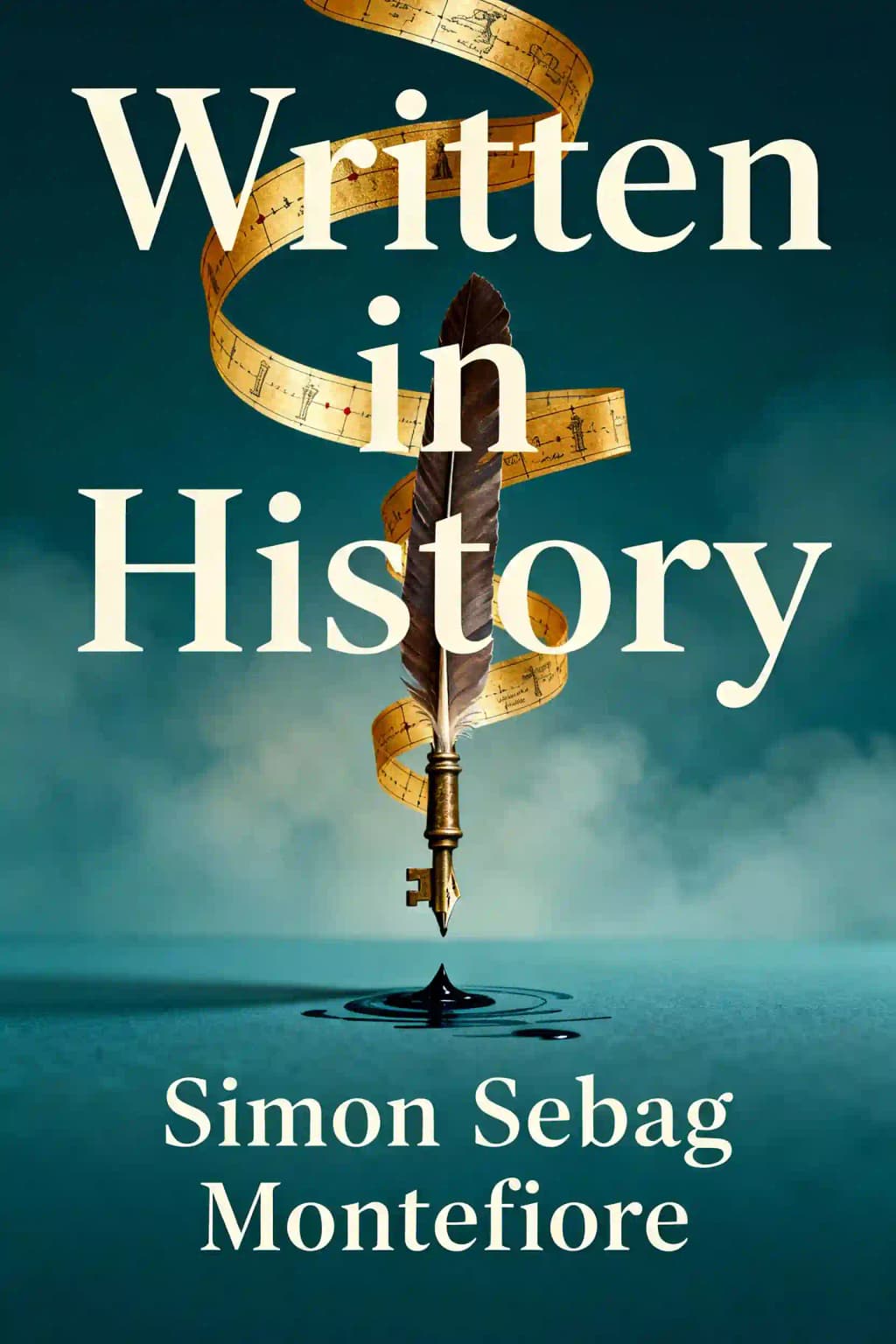
History unfolds not just through grand battles and political decrees, but through the intimate words people share in moments of crisis, passion, and transformation. Simon Sebag Montefiore's collection "Written in History" has become a literary sensation, praised by figures from Barack Obama to Elton John for its ability to capture humanity's most pivotal moments through personal correspondence. As Goethe once observed, letters are "the most significant memorial a person can leave" - unfiltered glimpses into the minds of those who shaped our world. This remarkable anthology takes us from ancient Egyptian pharaohs to modern political leaders, revealing how private thoughts penned in critical moments have altered the course of human events.
第2章
The Power of the Written Word
Letters possess a unique authenticity that formal historical records often lack. While history books may contain misunderstandings or propaganda, private correspondence reveals the unvarnished truth of historical figures - whether it's Stalin's casual cruelty, Catherine the Great's passionate governance, or Mozart's scatological humor.
These letters fall into distinct categories that illuminate different aspects of human experience. Public letters like Zola's "J'Accuse!" or Mao's Cultural Revolution proclamation were intended to change society from the moment they were written. Military correspondence from Rameses the Great to modern generals captures decisions made in the heat of battle. The political-personal letters of autocrats show how their intimate lives shaped governance, while private love letters - from Alexander II's erotic notes to Anais Nin's passionate exchanges with Henry Miller - reveal the emotional lives behind historical facades.
Some of the most poignant are farewell letters, like Leonard Cohen's goodbye to his dying muse or Lucrezia Borgia's acceptance of her impending death. Eyewitness accounts, such as Pliny describing Pompeii's destruction or Columbus reporting on America, place us at history's pivotal moments. Family correspondence, from Mughal emperors advising their sons to Stalin's daughter playfully ordering her father to ban homework, humanizes even the most fearsome historical figures.
Ironically, while email and texting have largely replaced traditional correspondence, paper letters have experienced a renaissance among those seeking security from electronic surveillance. Even Kremlin officials now prefer ink and paper over hackable digital communications - a testament to the enduring power of the written word.
第3章
Love Letters: From Royal Obsession to Revolutionary Passion
History's most consequential romances often played out through letters that changed not just personal lives but entire nations. Henry VIII's passionate pursuit of Anne Boleyn in 1528 reveals a king consumed by desire and dynastic ambition. After twenty years of marriage to Catherine of Aragon with only a daughter to show for it, Henry became infatuated with Anne, whose calculated resistance only intensified his passion. "I would you were in mine arms or I in yours," he wrote, his frustration palpable. Anne's refusal to become merely another royal mistress drove Henry to extraordinary measures, eventually breaking with Rome to establish the Church of England - all to marry a woman who would later face execution when she too failed to produce a male heir.
The tempestuous relationship between artists Frida Kahlo and Diego Rivera comes alive through her vibrant letters. Despite their mutual infidelities and tumultuous marriage, Kahlo's words to Rivera burn with sensual imagery: "Nothing compares to your hands, nothing like the green-gold of your eyes. My body is filled with you for days and days." Their relationship transcended conventional boundaries, with Kahlo eloquently observing that "only one mountain can know the core of another mountain."
Thomas Jefferson's extraordinary philosophical dialogue between his Head and his Heart, written to Maria Cosway in 1786, reveals the intellectual and emotional struggle of America's founding father. His Heart argues passionately that America's revolution succeeded not through calculation but through emotion: "If our country... had been governed by its heads instead of its hearts, where should we have been now? Hanging on a gallows."
Catherine the Great's letters to her brilliant lover Prince Potemkin showcase one of history's most successful political-romantic partnerships. Their correspondence combined intellectual brilliance with raw passion as they transformed Russia through imperial expansion. Catherine playfully attempts to deny her overwhelming attraction while simultaneously revealing it: "I don't love you at all, not at all... But by what strange miracle have you managed to make yourself master of a head that earlier was considered by society to be one of the best in Europe?"
Perhaps most shocking to modern sensibilities is King James I's intimate letter to his male favorite George Villiers, whom he elevated to Duke of Buckingham. James calls himself Villiers' "dear dad" while referring to Villiers as his "wife," hoping for "sweet bedchamber boys to play me with." This relationship survived even James's death, as Villiers managed to befriend the king's son and heir Charles I.
The correspondence between novelist Virginia Woolf and aristocrat Vita Sackville-West reveals a profound intellectual and emotional connection. Vita writes with disarming directness: "I am reduced to a thing that wants Virginia." She acknowledges her emotional vulnerability: "I can't be clever and stand-offish with you: I love you too much for that."
Perhaps the most explicitly passionate royal letters come from Tsar Alexander II to his teenage mistress Princess Ekaterina Dolgorukaya. Using the code word "bingerle" for their sexual encounters, Alexander writes with unrestrained desire: "I want you more madly than ever my adored angel." Despite constant threats from terrorists, Alexander found in her both sexual fulfillment and emotional sanctuary, eventually marrying her after his wife's death.
第4章
Family Bonds: From Royal Siblings to Imperial Heirs
Letters between family members reveal history's most intimate bonds - from royal siblings fighting for survival to parents facing ultimate sacrifices for their children. The 21-year-old Princess Elizabeth's masterful letter to her Catholic half-sister Queen Mary in 1554 saved her life when facing imprisonment in the Tower of London. With calculated strategy, Elizabeth pleaded her innocence: "I pray to God I may die the shamefullest death that any ever died, if I may mean any such thing." Her skillful appeal worked; though briefly imprisoned, Elizabeth survived to become England's greatest monarch.
One of history's most heartbreaking family letters comes from Vilma Grunwald, written moments before being gassed at Auschwitz. After SS doctor Josef Mengele selected her limping son John for execution, Vilma chose to accompany him rather than remain with her husband Kurt and other son Frank. With extraordinary composure facing death, she wrote: "You, my only one, dearest, in isolation we are waiting for darkness... do not blame yourself for what happened, it was our destiny." Her final words comfort her husband: "Take care of the little golden boy."
Royal parenting appears in Charles I's poignant letter to his son from captivity. Facing possible execution after losing the English Civil War, he offers both political counsel and fatherly wisdom: "never to affect more greatness or prerogative than what is really and intrinsically for the good of our subjects." With remarkable dignity, he urges his son to use any future success "humbly and far from revenge."
The surreal childhood of Stalin's daughter Svetlana emerges in her playful "orders" to her father. Between ages seven and eleven, she enjoyed playing dictator, issuing commands that Stalin and his politburo members would sign and post in the kitchen. In "Daily Order No. 3," she demands: "I order you to show me what happens in the Central Committee! Strictly confidential." Stalin indulged these games, calling her "Setanka, Mistress of the House," while signing himself as "Setanka's little secretary. Stalin."
Emperor Joseph II's astonishingly frank letter to his brother Leopold reveals the intimate details of Louis XVI and Marie Antoinette's unconsummated marriage. After visiting the royal couple as a kind of imperial sex therapist, Joseph reports with exasperation that the king "has strong, perfectly satisfactory erections" but "stays there for perhaps two minutes without moving, withdraws without ever discharging but still erect, and bids good night." His intervention apparently worked - the couple soon consummated their marriage and had several children before their eventual execution during the French Revolution.
第5章
Artistic Creation: The Inner Lives of Geniuses
The letters of history's greatest artists reveal the struggles, passions, and insights behind their masterpieces. Michelangelo's poetic letter to Giovanni da Pistoia captures his physical and mental anguish while painting the Sistine Chapel ceiling: "My stomach's squashed under my chin, my beard's pointing at heaven, my brain's crushed in a casket," and "My haunches are grinding into my guts, my poor ass strains to work as a counterweight." Despite creating what would become one of humanity's greatest artistic achievements, he concludes with striking self-doubt: "My painting is dead. Defend it for me, Giovanni, protect my honor. I am not in the right place-I am not a painter."
Mozart's letter to his cousin "Basle" reveals the composer's manic, scatological exuberance. Despite his mother's instruction to write "sensibly," Mozart launches into a wild, anarchic stream of consciousness filled with puns, alliteration, and crude humor: "I have been shitting for nearly 22 years out of the same old hole and yet it's not torn a whit!" This uninhibited expression contrasts sharply with his later, more tender correspondence with his wife Constance, revealing the complex personality behind his musical genius.
Honore de Balzac's passionate letter to Polish Countess Ewelina Hanska demonstrates how correspondence could ignite romance even before a physical meeting. The celebrated author of the Comedie Humaine writes with all-consuming obsession: "I am nearly mad about you... I cannot bring together two ideas that you do not interpose yourself between them." Their relationship, sustained primarily through letters, culminated in marriage just months before Balzac's death in 1850.
John Keats's letter to Fanny Brawne embodies the essence of Romantic passion and doom-laden love. The tubercular poet, just twenty-four when he wrote this, pours out his soul in language that mirrors his finest poetry: "I cannot exist without you-I am forgetful of everything but seeing you again-my Life seems to stop there." Too poor to marry her, their love remained unconsummated, yet his obsession was absolute: "Love is my religion-I could die for that-I could die for you."
T.S. Eliot's rejection letter to George Orwell represents one of literary history's most embarrassing misjudgments. While acknowledging "Animal Farm" as "a distinguished piece of writing," Eliot completely misses the book's universal warning about totalitarianism, instead viewing it merely as a critique of Soviet Russia. He patronizingly suggests Orwell's "Trotskyite" perspective isn't "convincing" and bizarrely argues that the pigs' intelligence justifies their farm leadership: "what was needed was not more communism but more public-spirited pigs."
第6章
Courage in the Face of Death and Danger
Some of history's most remarkable letters reveal extraordinary courage in the face of suffering and mortal danger. Legendary actress Sarah Bernhardt's brief yet powerful letter to fellow actress "Mrs. Pat" Campbell announces her impending leg amputation with startling cheerfulness: "Doctor will cut off my leg next Monday. Am very happy. Kisses all my heart." Her terse, almost casual tone about such a dramatic procedure reflects the indomitable spirit that defined her groundbreaking career.
Novelist Fanny Burney provides an unflinchingly detailed account of her mastectomy performed without anesthesia in 1811 Paris. With extraordinary precision, she recounts every moment of the torturous procedure: "I felt the knife rackingly against the breast bone-scraping it!" Her clinical detachment in recording such agony is remarkable, as is her stoic resolve to remain "wholly resigned" despite "terror that surpasses all description."
RAF Flight Lieutenant David Hughes's jaunty yet poignant letter during the Battle of Britain reveals the extraordinary courage of the young pilots who defended Britain from Nazi invasion. Writing with remarkable understatement, Hughes casually mentions becoming an "Ace" with six German planes to his credit and leading twelve planes against 750 enemy aircraft in "one HELL of a scrap" that left his own plane with 150 bullet holes. Most moving is the letter's tragic context - less than a month later, Hughes himself would be shot down over the English Channel, his body never recovered.
第7章
Discovery: Moments That Changed Our Understanding
The letters in this section capture intellectual breakthroughs that transformed human knowledge. Ada Lovelace, Lord Byron's daughter and pioneering computer scientist, declares herself "the bride of science" while articulating a revolutionary philosophy where "Religion to me is science, and science is religion." She insists all knowledge is "naturally related and interconnected," rejecting the separation of physical and moral facts - a prescient vision from a woman who died tragically young at thirty-six.
Just three years before achieving the first controlled flight, Wilbur Wright writes to the Smithsonian with remarkable clarity about his ambitions. Not a crank but an enthusiast, he explains his lifelong fascination with flight since boyhood experiments with model aircraft. Wright demonstrates his methodical approach, acknowledging that while birds are "the most perfectly trained gymnasts in the world," human flight is "possible and practicable" through accumulated knowledge.
Professor John Stevens Henslow's pivotal letter to his former student Charles Darwin changed the course of scientific history. With enthusiastic urgency, Henslow recommends Darwin as naturalist aboard HMS Beagle, not as "a finished Naturalist, but as amply qualified for collecting, observing, & noting anything worthy to be noted in Natural History." The two-year voyage (which would stretch to five) gave Darwin the observations leading to his revolutionary theory of evolution.
Columbus's letter to Ferdinand and Isabella details his "discovery" of lands unknown to Europeans. He describes claiming islands for Spain "by making public proclamation and unfurling his standard," naming them after Christian saints despite their indigenous names like Guanahani. Columbus portrays the native inhabitants as timid, guileless people who go naked and lack weapons or government. This letter, which introduced Europeans to the Americas, reveals Columbus's complex mix of wonder, religious zeal, and imperial ambition at the dawn of European colonization.
第8章
War and Peace: Letters from the Battlefield
Some of history's most consequential letters were written amid the chaos of war. Peter the Great's brief, triumphant note to his beloved wife Catherine immediately after defeating the Swedish army at Poltava marks Russia's emergence as a world power: "The all-merciful God has this day granted us an unprecedented victory over the enemy. In a word, the whole of the enemy's army is knocked on the head." This particular letter, with its postscript "Come here and congratulate us!" captures both a pivotal historical moment and the tsar's desire to share it with his most trusted companion.
On the eve of D-Day, General Eisenhower crafted two letters - one for victory, one for defeat. His message to the troops before the invasion speaks of a "great crusade" with "the eyes of the world" watching, demanding "nothing less than full victory." But he also prepared a second letter, never sent, taking full responsibility should the invasion fail: "If any blame or fault attaches to the attempt it is mine alone." The contrast between these two letters reveals Eisenhower's extraordinary leadership - understanding both the weight of command and the necessity of accountability at history's most critical juncture.
In Russia's darkest hour, with Moscow fallen to Napoleon, Grand Duchess Catherine writes this fierce, uncompromising letter to her brother Tsar Alexander I: "No peace, and if you get to Kazan, still no peace!" When Alexander trusts no one and fears for his reputation and perhaps his life, it is his sister's unwavering resolve that steels his determination to resist at all costs.
As Europe slides toward catastrophe in July 1914, the peasant mystic Rasputin sends this remarkably prescient warning to Tsar Nicholas II. With raw, unpolished language that no courtier would dare use, Rasputin predicts "a sea of tears" and Russia "drowned in her own blood" should war come. His desperate plea - "don't allow the madmen to triumph" - shows remarkable political insight from a man often dismissed as merely a religious charlatan.
第9章
The Darkness of Power: Letters That Reveal Tyranny
Some of history's most chilling letters reveal the casual brutality of those who wielded absolute power. An ancient Egyptian military dictator named Paiankh writes to his wife Nodjmet with brutally direct instructions about suspected traitors: "have them killed and thrown into the water by night." The cold efficiency of his command - to interrogate them first, then dispose of the bodies in darkness - reveals the ruthless mechanics of authoritarian power from three millennia ago.
Vladimir Lenin's letter to the Bolsheviks of Penza exposes the true nature of the revolutionary leader, far from the grandfatherly image later Soviet propaganda would cultivate. With cold precision, he orders mass public executions: "Hang (and make sure that the hanging takes place in full view of the people) no fewer than one hundred known kulaks." His postscript, "Find some truly hard people," exposes the calculated terror at the heart of Bolshevik rule.
At the height of the Great Terror, Stalin's casual note to his henchman Voroshilov reveals the dictator's method of normalizing mass murder. By referring to victims as "bourgeois puppies of Trotsky" and asking "How low can people sink?" Stalin creates a shared complicity in the violence. The letter shows how Stalin manipulated his inner circle by circulating false confessions obtained through torture, making them believe in vast conspiracies that justified the purges.
Mao Zedong's letter to student radicals launched the chaos of China's Cultural Revolution with carefully crafted doublespeak. While appearing to offer redemption - "after their mistakes have been pointed out you should offer them a way out" - he simultaneously encourages violent rebellion against "reactionaries." His invocation of Marx's words about emancipating all mankind provides ideological cover for what would become years of sanctioned anarchy and persecution.
In stark contrast, Yugoslav leader Josip Broz Tito's defiant note to Stalin may be history's most audacious threat. After surviving multiple Soviet assassination attempts, Tito warns with remarkable directness: "Stop sending people to kill me!" His counter-threat - "I'll send a very fast working one to Moscow and I certainly won't have to send another" - reportedly terrified even Stalin, who kept the letter in his personal safe.
第10章
Moments of Decency in a Brutal World
Amidst history's darkness, certain letters shine with extraordinary moral clarity. Gandhi's remarkable letter to Hitler addresses the Nazi leader with sincere friendship despite their diametrically opposed worldviews. Writing at the height of Nazi power in 1940, the 71-year-old Indian activist acknowledges Hitler's bravery while condemning his "monstrous" acts against Czechoslovakia, Poland, and Denmark. With remarkable moral clarity, he contrasts Hitler's destructive scientific warfare with his own method that requires "no money" and leaves "no legacy" of cruel deeds.
In a remarkably humble letter, President Lincoln congratulates General Grant on capturing Vicksburg during the Civil War while admitting his own strategic misjudgment: "I wish to make the personal acknowledgment that you were right, and I was wrong." This letter reveals Lincoln's exceptional character - his magnanimity, confidence in his own abilities, and rare political humility.
In a poignant letter written during one of her final nights in the White House, Jackie Kennedy reaches across the Cold War divide to thank Soviet Premier Khrushchev for sending a representative to her husband's funeral. With elegant simplicity, she emphasizes the relationship between Kennedy and Khrushchev as "central" to her husband's concern for peace, quoting Khrushchev's own words that "in the next war the survivors will envy the dead."
Emperor Babur, founder of the Mughal dynasty, advises his son Humayun on governing multi-religious India with remarkable tolerance. Writing shortly before his death, the 45-year-old conqueror urges his heir to dispense justice "with heart cleansed of all religious bigotry" according to each community's tenets. He specifically warns against cow sacrifice, explaining this restraint "lies the conquest of the hearts" of Hindu subjects. Most strikingly, he asserts that "the progress of Islam is better by the sword of kindness, not by the sword of oppression."
第11章
Final Farewells: Letters at Life's End
Some of history's most moving letters were written by those facing their own mortality. Leonard Cohen's farewell to his greatest muse exemplifies the art of goodbye in letter writing. When Marianne Ihlen, who inspired songs like "So Long, Marianne," was dying of leukemia in 2016, Cohen's response came swiftly - a beautiful seven-sentence letter acknowledging their shared mortality: "I'm just a little behind you, close enough to take your hand." With elegant simplicity, he affirms their enduring connection: "I've never forgotten your love and your beauty." Cohen himself would die just months later.
Churchill's remarkable letter of farewell to his wife Clementine, written as he prepared to serve in the trenches after his political demotion following the Gallipoli disaster, combines political pragmatism with romantic devotion. With characteristic self-confidence yet tender vulnerability, he consoles her: "Death is only an incident, and not the most important which happens to us in this state of being." His spiritual openness shines through his promise that "if there is anywhere else I shall be on the lookout for you."
As Kafka lay dying of tuberculosis, he wrote a brief, direct letter to his closest friend Max Brod, embodying the themes of secrecy and alienation that defined his work. With characteristic self-doubt about his literary merit, Kafka instructs Brod to destroy "everything I leave behind me...notebooks, manuscripts, letters" without reading them. The irony is profound - had Brod followed these instructions, the world would never have known "Kafkaesque" literature.
Emperor Hadrian's farewell letter represents one of history's most elegant goodbyes. As he dies at his villa in Baiae, this gifted ruler - who was not only emperor but also writer, poet, and architect - composes a final message to his adopted son and successor Antoninus Pius. Most poignantly, he includes a whimsical farewell to his own departing soul: "Little soul, little wanderer, little charmer, body's guest and companion, to what places will you set out for now? To darkling, cold and gloomy ones - and you won't make your usual jokes."
Through these letters - intimate, powerful, sometimes terrifying, often moving - we see history not as an abstract parade of events but as the lived experience of individuals facing the same fundamental human challenges we all encounter: love, power, fear, hope, and ultimately mortality. Their words, preserved across centuries, remind us that behind every historical moment stand real people whose private thoughts and feelings shaped the world we inhabit today.