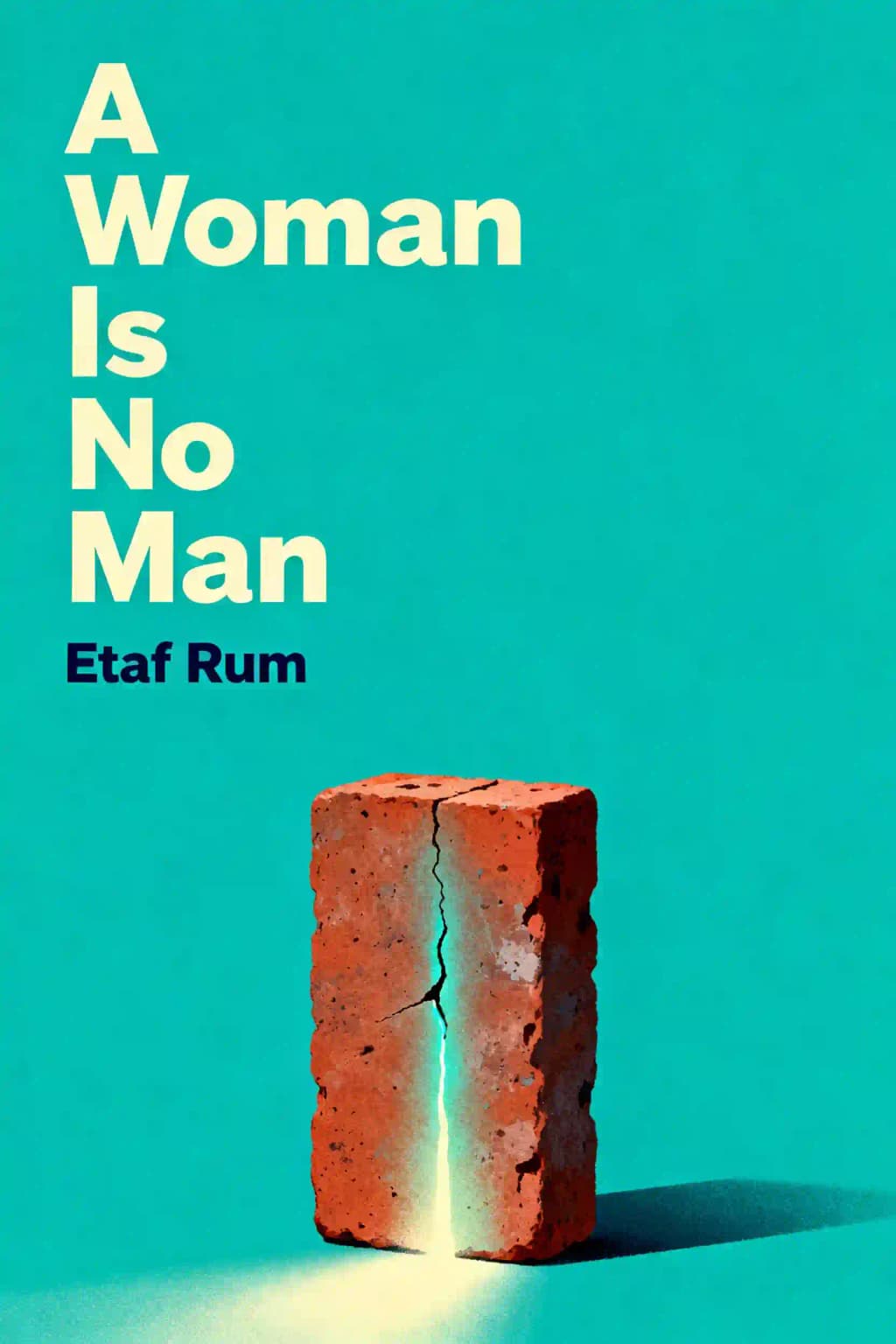
Etaf Rum's groundbreaking debut exposes the silenced struggles of Palestinian-American women. Written in stolen morning hours and championed by Jenna Bush Hager, this New York Times bestseller courageously fills literature's void - daring to ask what happens when cultural loyalty demands a woman's complete surrender.
Etaf Rum is the New York Times bestselling author of A Woman Is No Man and a Palestinian-American novelist whose work explores the lives of Arab-American women navigating tradition, identity, and self-determination. Born and raised in Brooklyn, New York, by Palestinian immigrants, Rum draws from her own experiences to tell stories that were largely absent from contemporary literature.
The novel, which tells the story of three generations of Palestinian-American women struggling to find their voices within the confines of culture and community, became a Read with Jenna Today Show book club pick and a New York Times Book Review Editor's Choice.
Rum holds a master's degree in American and British Literature and teaches college English in North Carolina, where she lives with her two children. She also runs the popular Instagram account @booksandbeans and owns a bookstore and coffee shop of the same name in Rocky Mount.
Her second novel, Evil Eye, was named an NPR Best Book of the Year and further explores the expectations placed on Palestinian-American women. A Woman Is No Man has been translated into multiple languages and continues to resonate with readers seeking authentic representations of the immigrant experience.
A Woman Is No Man by Etaf Rum tells the intergenerational story of three Palestinian-American women living in Brooklyn across different decades. The novel follows Isra, who immigrates to America through an arranged marriage in the 1990s, and her daughter Deya, who faces similar pressures in 2008. The book explores cultural traditions, arranged marriage, domestic violence, and the struggle between personal freedom and family expectations within a conservative Arab-American household.
A Woman Is No Man is essential reading for anyone interested in immigrant experiences, women's rights, and cultural identity struggles. The book resonates particularly with readers seeking to understand generational trauma, domestic violence awareness, and the challenges faced by first-generation Americans. Those who appreciate character-driven narratives exploring family dynamics, cultural conflict, and women's empowerment will find Etaf Rum's debut novel deeply impactful and thought-provoking.
A Woman Is No Man is absolutely worth reading for its powerful, heartbreaking portrayal of women's struggles within oppressive cultural traditions. Reviewers consistently rate it 5 out of 5 stars, praising Etaf Rum's masterful storytelling and the book's ability to spark important conversations about domestic violence and women's education. The novel stays with readers long after finishing, offering both shocking revelations and profound insights into breaking cycles of abuse and cultural silence.
Etaf Rum is a first-generation Palestinian-American author who wrote A Woman Is No Man as her debut novel in 2019. According to Rum, she wrote this book because no one from her Arab-Palestinian immigrant background had told their story due to a culture of silence. Her own experiences with arranged marriage at nineteen, divorce, and subsequent cultural isolation inspired this semi-autobiographical work that illuminates the struggles of women in conservative Arab-American communities.
A Woman Is No Man explores several interconnected themes: the cycle of generational trauma and how dysfunction passes through families, women's oppression within patriarchal cultural systems, and domestic violence as an accepted norm. The novel examines the importance of education and freedom for women, the isolation experienced by immigrant women, and the conflict between traditional cultural values and American freedoms. Etaf Rum also addresses how cultural shame prevents women from speaking out against abuse.
Isra is married off to Adam through an arrangement and moves from Palestine to Brooklyn in the 1990s. She faces constant abuse from her husband Adam, who beats her out of frustration with work and family pressures. Despite her love of reading and dreams of marrying for love, Isra gives birth to four daughters instead of the sons her in-laws desperately want. The devastating truth revealed later is that Isra was murdered by Adam, who then took his own life—not a car accident as Deya was told.
A Woman Is No Man ends with Deya discovering the truth about her parents' deaths from Sarah, a mysterious woman who knew her mother. After confronting her grandparents about their lies regarding the murder-suicide, Deya takes control of her life by refusing arranged marriage and applying to college. The novel's final pages reveal Isra's last desperate attempt at freedom: gathering her daughters and Adam's cash savings to flee on the subway, though readers know this escape attempt ultimately failed.
A Woman Is No Man powerfully illustrates how generational trauma perpetuates through Fareeda, Isra, and Deya. The novel shows how Fareeda's experiences in Palestinian refugee camps shaped her oppressive parenting, which she then inflicts on Isra. Each generation faces the same expectations: early marriage, motherhood as sole purpose, and acceptance of abuse. Etaf Rum demonstrates how these deep-rooted cycles are difficult to change, even when transplanted to America, until someone like Deya finally breaks the pattern.
A Woman Is No Man is fiction but heavily based on true events from Etaf Rum's community. While not strictly autobiographical, Rum states the novel contains events that happened to her fellow neighbors in the Arab-Palestinian community. Her own experiences mirror the characters: arranged marriage at nineteen, early pregnancy, isolation, and divorce against cultural norms. Rum emphasizes the book blurs the line between fiction and memoir, making it an authentic representation of real struggles within conservative Arab-American families.
Education represents freedom and empowerment throughout A Woman Is No Man. Isra's love of reading is punished by her father, symbolizing how knowledge threatens patriarchal control. Deya's desire for college directly conflicts with her grandmother's insistence that "marriage and motherhood is a woman's only worth". Sarah, who achieves education and becomes a bookstore manager in Manhattan, embodies the liberation possible when women access learning. Etaf Rum argues education is vital for women to control their lives and escape oppressive cycles.
While overwhelmingly praised, some readers note A Woman Is No Man focuses heavily on negative aspects within Palestinian and Muslim communities without showing sufficient diversity of experience. Critics might argue the portrayal risks reinforcing stereotypes about Arab culture, though Etaf Rum clarifies she's depicting particularly conservative and extremist families, not representing all Arab-Americans. The author explicitly states that according to the Quran and Muslim teachings, the abusive behaviors shown are not aligned with true Islamic values but represent cultural distortions perpetuated by some traditionalists.
Readers who loved A Woman Is No Man should explore Dominicana by Angie Cruz, which shares remarkable parallels: young women forced into marriage with older men, immigration to New York City, teenage motherhood, abuse, and isolation. Other similar reads include The Kite Runner for immigrant family dynamics, Americanah for cultural identity struggles, and Exit West for contemporary immigration narratives. For more stories about breaking free from oppressive traditions, consider Reading Lolita in Tehran and The Bookseller of Kabul, which also explore women's struggles within conservative Middle Eastern cultures.
著者の声を通じて本を感じる
知識を魅力的で例が豊富な洞察に変換
キーアイデアを瞬時にキャプチャして素早く学習
楽しく魅力的な方法で本を楽しむ
But Deya knew that silence was not the same as peace.
What happens when the traditions meant to preserve identity become the very things that silence half of a community?
The weight of tradition bears down particularly heavily on young women like Deya.
a woman is no man
『Woman Is No Man』の核心的なアイデアを分かりやすいポイントに分解し、革新的なチームがどのように創造、協力、成長するかを理解します。
『Woman Is No Man』を素早い記憶のヒントに凝縮し、率直さ、チームワーク、創造的な回復力の主要原則を強調します。

鮮やかなストーリーテリングを通じて『Woman Is No Man』を体験し、イノベーションのレッスンを記憶に残り、応用できる瞬間に変えます。
何でも質問し、声を選び、本当にあなたに響く洞察を一緒に作り出しましょう。

"Instead of endless scrolling, I just hit play on BeFreed. It saves me so much time."
"I never knew where to start with nonfiction—BeFreed’s book lists turned into podcasts gave me a clear path."
"Perfect balance between learning and entertainment. Finished ‘Thinking, Fast and Slow’ on my commute this week."
"Crazy how much I learned while walking the dog. BeFreed = small habits → big gains."
"Reading used to feel like a chore. Now it’s just part of my lifestyle."
"Feels effortless compared to reading. I’ve finished 6 books this month already."
"BeFreed turned my guilty doomscrolling into something that feels productive and inspiring."
"BeFreed turned my commute into learning time. 20-min podcasts are perfect for finishing books I never had time for."
"BeFreed replaced my podcast queue. Imagine Spotify for books — that’s it. 🙌"
"It is great for me to learn something from the book without reading it."
"The themed book list podcasts help me connect ideas across authors—like a guided audio journey."
"Makes me feel smarter every time before going to work"

Woman Is No Manの要約をPDFまたはEPUBで無料でダウンロード。印刷やオフラインでいつでもお読みいただけます。
In the sun-drenched hills of Palestine, seventeen-year-old Isra prepares for a life she barely understands. As she kneads dough in her mother's kitchen, the scent of za'atar filling the air, an American-Palestinian family arrives seeking a bride for their son Adam. America represents both promise and uncertainty-a place of potential freedom, yet fraught with challenges for someone raised to believe that a woman's worth lies solely in her ability to bear sons and maintain a home. When Isra arrives in Brooklyn after her arranged marriage, she discovers that crossing oceans doesn't free you from cultural chains. The basement windows of her new home offer tantalizingly small glimpses of a world just beyond reach-much like the freedom she yearns for but cannot grasp. What happens when the traditions meant to preserve identity become the very things that silence half a community? This question echoes through the lives of three generations of Palestinian-American women as they navigate the complex terrain between honoring their heritage and claiming their own voices. Their stories reveal how trauma passes silently from mother to daughter, and how the courage to break this cycle requires more than just dreams of a different life.