第1章
From Quantum Leaps to Cosmic Heights: A Journey Against All Odds
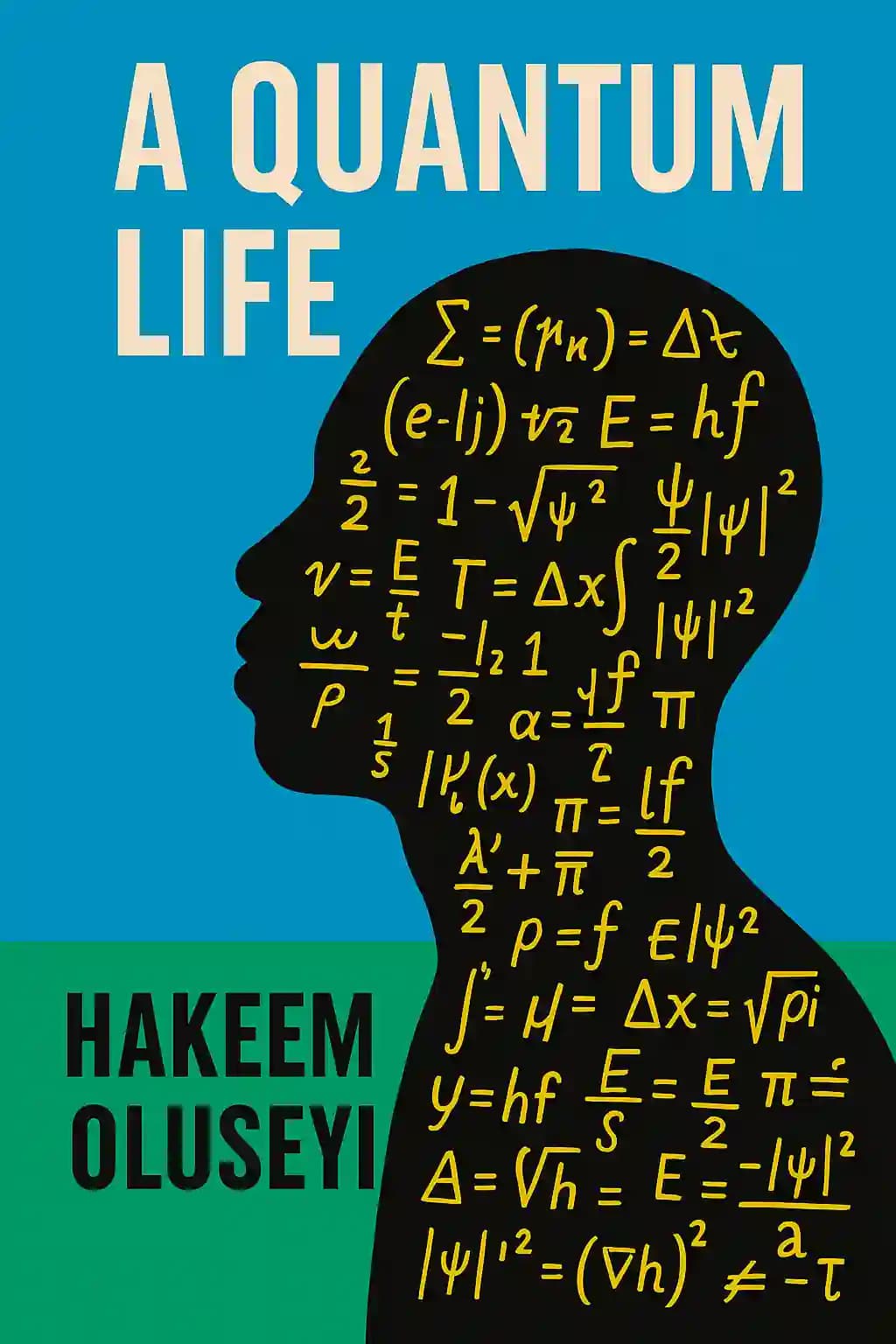
In the shadows of America's toughest neighborhoods-Watts, Houston's Third Ward, New Orleans' Ninth Ward-a curious young boy named James Plummer Jr. developed an unlikely obsession with counting, patterns, and the invisible forces that make things work. This same boy would one day become Dr. Hakeem Oluseyi, a renowned astrophysicist at NASA and Stanford University. His memoir "A Quantum Life" has been celebrated by Neil deGrasse Tyson as "a testament to the power of hope and perseverance" and featured on numerous best science memoir lists. The book's popularity surged after Oluseyi's appearances on Netflix's "Explained" series and Discovery Channel programs, where his charismatic storytelling about complex scientific concepts won him a devoted following. What makes his journey so compelling is not just the scientific heights he reached, but the seemingly impossible barriers he overcame-poverty, racism, addiction, and a fractured family life-to get there. His story embodies the quantum physics principle he came to love: that particles can sometimes tunnel through seemingly impenetrable barriers, defying all classical expectations.
第2章
A Childhood Divided: Science Curiosity Amid Chaos
At just four years old, James Plummer Jr. witnessed the violent dissolution of his parents' marriage, culminating in his mother setting their bed on fire after discovering his father's infidelity. This dramatic scene set the stage for a childhood characterized by constant movement, as his mother-Miss Elaine to everyone else-uprooted him and his older sister Bridgette repeatedly across Louisiana, Texas, and California. "I was what she called 'a mover,'" James explains, tracking his childhood by the songs playing on the radio during each relocation.
Despite the instability, young James displayed remarkable intellectual curiosity. He possessed an uncanny ability to count things-seconds of songs, passing lampposts, and eventually stars in the vast night sky. This talent extended to cards and puzzles, where he could see patterns others missed. His compulsion to understand how things worked led him to disassemble household appliances, much to his mother's frustration: "Why is you always breaking shit?!" she would demand before reaching for a belt or extension cord.
While his sister Bridgette became his protector and surrogate parent during their mother's frequent absences, James found escape through books. His friend Darin Brown taught him how to join book clubs by checking the "Bill me later" box, explaining that as minors, they couldn't be held to the contracts. Through these clubs, he devoured Nancy Drew novels, ghost stories, Edgar Allan Poe, and books about nature and ancient history. Edith Hamilton's "Mythology" particularly captivated him with its tales of heroes with superpowers who needed divine protection.
This early period established the dual nature that would define his life-a brilliant mind trapped in chaotic circumstances, developing survival skills for both the streets and the classroom. When his father briefly reentered his life, taking him to rural Mississippi, James discovered another side of his heritage. On his father's farm in Piney Woods, he learned country skills and was introduced to the family's marijuana business, cleaning and bagging the product with surprising efficiency. "I became skilled at this work," he recalls, "using Ohio Players album covers as my workspace" to separate seeds from the valuable weed.
Despite the dysfunction surrounding him, James's intellect continued to flourish, setting the stage for the remarkable journey that would follow-though the path would be anything but straight.
第3章
The Einstein Revelation: Finding Meaning in Mathematics
The pivotal moment in young James's intellectual development came in the stifling heat of a New Orleans stairwell. Banished from his apartment while his father entertained a mysterious white friend, the fifth-grader sought refuge between floors with his World Book Encyclopedia. Flipping through volume "E," he discovered an article on Albert Einstein with a photo showing the scientist's wild hair. "I immediately felt connected to this fellow weird loner," James recalls.
Reading about relativity triggered an intellectual awakening. Einstein's equation E=mc2 revealed that mass is energy, and that spacetime is four-dimensional-it could bend, contract, and stretch. This explained why his mind could travel millions of miles away from his difficult reality. "When I heard Mama arguing with Daddy about money and childcare, I grabbed the 'Q-R' volume to learn more about relativity," he writes.
So profound was this discovery that James immediately wanted to test relativity with his skateboard. Despite the dangers of his neighborhood at night, he approached some cross-dressing men on the corner and convinced them to help with his experiment-throwing a rock up while stationary versus while skating. Using the song "Crawdad Hole" to measure time, they demonstrated that the rock traveled differently when he was moving, proving spacetime's existence.
This epiphany about physics provided more than just intellectual stimulation-it offered escape. In a world where poverty, racism, and family instability threatened to define him, science became both sanctuary and superpower. When his mother bought him a chemistry set for his eleventh birthday after nearly burning down their house mixing household cleaning supplies, his bedroom transformed into a laboratory where he conducted experiments with beakers and flasks.
His talents didn't go unnoticed at school. After submitting a detailed report on the human brain with multicolor diagrams in sixth grade, his teacher recommended him for IQ testing. When his results came back at 162, his mother was ecstatic, dancing and declaring, "My baby's a genius! One day the whole world gon' know it."
The school placed him in a special program for mentally gifted students, but as Newton's third law states, every action has an equal and opposite reaction. Just as things were improving, his mother announced she was sending him to California to live with his aunt while she cared for his pregnant sister. The pattern of disruption continued, but his passion for science remained the one constant in his turbulent young life.
第4章
Mississippi Brilliance: Finding Recognition Against the Odds
James's return to Mississippi in his early teens marked a pivotal chapter in his development. At Heidelberg High School, ranked the third-worst-performing school in Mississippi and built after local whites burned down their high school rather than integrate with Black students, he found himself in an environment where his intellect was both a blessing and a curse. He often understood course materials better than his teachers and didn't hide it, making him an obnoxious troublemaker in many eyes.
His homeroom teacher Mr. Reeves became an unexpected ally, defending him when he got in trouble by telling the principal, "He's a mischievous kid, but he's a brilliant mischievous kid who we need to encourage. There's nothing really wrong with James. He's just bored." This boredom found productive outlet when two professors from the University of Southern Mississippi arrived to recruit students for their regional science fair.
James recruited his nerd friends Antrum McGee and Aristotle Bender to join him. While they worked on practical projects-Antrum designed a solar water heater from car parts and Aristotle built a manure-powered battery-James focused on programming a simulation of Einstein's special relativity theory using the school's IBM 5150 computer. As the only all-Black team competing at regionals, their cardboard displays looked pathetic compared to the wooden trifolds with brass hinges that other schools presented.
For the state competition in Jackson, they prepared properly with wooden boards, construction paper, and color displays. Disaster struck when they arrived and discovered their display boards had been left behind. In an act of remarkable selflessness, Aristotle offered James his boards, insisting, "You're our best shot."
At the competition, college professors serving as judges moved James from Computer Science to Physics, admitting they didn't understand his special relativity simulation. In the Physics section, he confidently answered increasingly difficult questions from six physics professors, drawing on knowledge he'd accumulated since age ten. When one tried to stump him with a trick question about exceeding light speed, he confidently explained the mathematical impossibility.
James won multiple awards including First Place in Physics, receiving "a big-ass trophy that proved I could bend spacetime just enough to make Mississippi stop and take notice of my beautiful Black mind." This victory represented more than personal achievement-it was a triumph over the limited expectations placed on a Black student from an underfunded school in the Deep South.
His musical talent with the tuba provided another avenue for recognition, earning him spots at the State Band Clinic in Biloxi and eventually a position in the elite Mississippi Lions Club All-State Band. These achievements opened doors to potential college scholarships, but his trajectory changed dramatically when a navy recruiter offered him $20,000 a year with a potential $30,000 signing bonus to become a nuclear engineer. With his family struggling financially during the Reagan recession, this opportunity seemed miraculous. "I guess my Li'l Jame a bonus baby now," his mother said as she signed the consent form.
第5章
College Struggles: The Battle Between Potential and Self-Destruction
After his promising naval career ended prematurely due to a skin condition that disqualified him from serving on ships, James found himself adrift. With nowhere else to go, he reluctantly moved in with his sister Bridgette and her husband, feeling like he'd taken a huge step backward. Eventually, he enrolled at Tougaloo College, a historically Black institution in Mississippi, where his reputation as a science prodigy preceded him.
College presented a new set of challenges-not academic ones, but social and personal ones. James and his roommate JG became the campus's premier weed dealers, with James's father supplying their product. "We drove to New Orleans East where Daddy welcomed us warmly," he recalls. His father offered him quarter pounds of marijuana instead of the couple ounces he had planned to sell, telling him he didn't need to pay until he got his "business feet on the ground."
This venture into drug dealing coincided with a complicated love life. James found himself torn between his hometown girlfriend Lisa and a campus relationship with Jessica, a nursing student described as "Tougaloo royalty." He kept these relationships in separate universes, a skill he'd developed from years of code-switching between different identities.
Everything changed when Lisa announced she was pregnant during Thanksgiving break. Though he initially agreed to marry her and drop out of college, his mother and sister advised against it, offering to help with the baby so he could stay in school. When his son Martel was born after a difficult delivery, Lisa rejected him coldly: "You weren't there for me when I needed you. You don't need to be here now."
Devastated, James turned to harder drugs. On a visit to his father's house in New Orleans, he tried crack cocaine for the first time. "The effect was immediate-a warm wave washing away all my pain and stress," he writes. "'Wow!' I exclaimed as every cell in my body awakened." This began a spiral into addiction that would threaten everything he had worked for.
The situation worsened when he learned his son had cerebral palsy. Despite his efforts to be involved in Martel's life, visiting every weekend, Lisa moved to Houston and left their son with her mother. When she returned with a new boyfriend, James's devastation deepened, and his drug use escalated. He and JG spent their earnings on cocaine binges, leading to failing grades and his eventual decision to drop out rather than have F's on his record.
Working as a janitor at the Ramada Renaissance hotel under a racist supervisor who called all staff "boys" and "girls," James hit bottom. He married Jessica impulsively, hoping the relationship would help him escape his downward spiral. It was only through her stability and support that he eventually found the strength to return to college, reconnect with his academic potential, and begin the long journey back to sobriety and success.
第6章
The Stanford Challenge: Confronting Elitism and Racism
James's academic redemption began with a commitment to excel in his courses after returning to Tougaloo. He found a dedicated study partner for calculus, working through every problem in the textbook and earning an A. He declared physics as his major with a double minor in mathematics, and Dr. Dave Teal, Tougaloo's only physics professor, became his mentor. Despite his previous struggles, he had scored 100% on every physics exam.
This renewed academic focus led to an opportunity to attend a conference for Black physics students at MIT, where he was inspired by astronaut Fred Gregory's challenge to follow in the footsteps of the first Black men in space. Though initially intimidated by the sophisticated Black scientists in three-piece suits discussing academic publications he'd never heard of, James left determined to pursue graduate studies in physics.
After improving his grades and gaining research experience, James was accepted to Stanford's physics program. His arrival there quickly revealed the vast gulf between his preparation and that of his peers. When his joke about choosing Stanford "because they accepted me" fell flat, and his claim about West Coast schools was immediately corrected by "Well, actually" guys listing numerous institutions he hadn't considered, it became painfully clear that he was the token diversity admission.
His academic advisor, Professor Meyerhof, recommended he take undergraduate physics courses before graduate work, explaining that while Stanford had produced thirty African American physics PhDs in the previous decade, some faculty, including the current department chair, hadn't supported his admission. The Stanford courses, though sharing names with ones he'd taken at Tougaloo, were taught at a much higher level with professors who seemed more interested in displaying their brilliance than teaching.
When James initially helped classmates with quantum mechanics problems he understood, he expected reciprocity when he later struggled. Instead, he was repeatedly refused help, even by students he'd previously assisted. One student publicly humiliated him, saying "Some of us read before we ask others for help." Feeling betrayed and humiliated, he resolved to work alone and commit to outworking everyone.
This isolation strategy backfired completely. He earned B's and C's in courses he'd previously aced at Tougaloo, and by the next term, he was scoring lowest in every class. Feeling desperate and trapped, he considered dropping out until Professor Doug Osheroff, a Nobel laureate, challenged him to solve complex physics problems on his blackboard. To James's surprise, he solved them all easily. "I don't know, James," Osheroff said. "Those are some tough problems and you solved all of them with no sweat. You sure seem pretty smart to me."
The most significant turning point came when James discovered Professor Art Walker's research on solar physics. Walker's presentation of soft x-ray photos of the sun's corona-showing the sun as a black sphere covered in white flames, with loop structures, plumes, and bright points at 1.5 million degrees Kelvin-completely changed his understanding of our star. Standing in the back of the auditorium, James realized he was among a select few humans to see the sun's true nature. Despite not fully understanding the images' significance, he knew immediately that he wanted to join Art Walker's research group.
第7章
Demons and Mentors: The Battle for Self-Mastery
While struggling academically at Stanford, James faced personal challenges as well. His wife Jessica felt out of place in Palo Alto and returned to Jackson to complete her nursing degree. Left alone, James reconnected with his addiction through Troy, a charismatic fraternity brother who introduced him to cocaine. Despite having seen crack destroy his friend JG and his father-and nearly himself-James felt no alarm bells when he suggested they "rock it up" and showed Troy how to cook crack using baking soda and water.
Their drug use escalated, with James maintaining a double life-James the "rock man" slipping into East Palo Alto to score and party nonstop on weekends, and James the aspiring "rocket man" whose academic performance actually improved that spring. When Jessica returned and became pregnant, instead of slowing him down, impending fatherhood reminded him of his failures with his first son Martel, whose cerebral palsy therapy he couldn't consistently support.
The breaking point came one night when James was robbed at gunpoint while buying drugs in East Palo Alto. As a woman shouted "Shoot his ass!" he gripped a chain-link fence, certain he was about to die. When the assailants fired into the air instead and drove away laughing, he was left empty-physically, emotionally, and financially. Trudging back to campus at dawn, he knew something had to change.
In desperation, he confessed everything to Professor Art Walker-from his drug use at Tougaloo to his recent relapse and the gun to his head. After his confession, Art simply asked, "Well, you're not going to do those things anymore, are you?" When James promised he wouldn't, Art advised him to tell his pregnant wife the truth. Then Art shared something personal-how growing up Black in Harlem, he'd faced discrimination throughout his career. "Physics is difficult to begin with. And it may be hard, or impossible, to convince some of the faculty you belong here. But you're a smart guy. That's why we wanted you in our program. I believe in you. I believe you can put this behind you and make it through."
Art Walker became more than a research advisor-he became a mentor and father figure who believed in James when few others did. When James failed his qualifying exams under suspicious circumstances, with professors apparently "moving the goalposts" to ensure he failed, Art stood by him. "They know you passed," he said, explaining he would write the necessary memo approving his continuation. He shared wisdom about organizational dynamics and revealed something personal: "Many of them still question my intelligence. They can never accept that a Black man is their intellectual equal."
This mentorship extended beyond academics. Art taught James "how to be a complete man-a professional scientist, a gentleman commanding respect, someone who could engage with others without triggering tribal hierarchies." Most importantly, he taught him to distinguish between what he believed to be true and what he knew scientifically to be true.
As James completed his rehabilitation program and found his academic footing, he felt ready for fatherhood when his daughter Kamilah was born. Unlike with his first child, he was present and involved from the beginning. When Art was diagnosed with pancreatic cancer, James raced to complete his dissertation before his mentor's death, determined to deliver on this last chapter of Art's legacy while he was still alive.
第8章
Becoming Hakeem: Forging a New Identity
As James progressed through his Stanford journey, he began to explore his identity more deeply. At Stanford's Green Library, he immersed himself in African history and culture. "When I decided to change my name, it wasn't about rejecting my past but claiming my identity," he explains. He chose "Hakeem" meaning "wise," "Muata" meaning "he seeks the truth," and "Oluseyi" meaning "God has done this" in Yoruba.
While Stanford colleagues embraced his new name, folks back home insisted, "You still James Plummer to me." Art's response was characteristically straightforward: "Okay, Hakeem Oluseyi...let's get back to work!"
This name change represented more than a superficial rebranding-it symbolized his transformation from a product of his difficult circumstances to an architect of his own destiny. The boy who had been shuttled between relatives' homes, who had cleaned and bagged marijuana for his father's business, who had nearly destroyed himself with crack cocaine, was becoming a man who defined himself by his intellect and character rather than his environment.
As his thesis neared completion, Hakeem had authored thirteen published papers and was ready to defend his work. For his dissertation committee, he chose Art as chairman, Phil Scherrer, Reginald Thomas (a Black engineering professor), and the two toughest professors in physics, including Nobel Prize winner Bob Laughlin-a notorious intellectual challenger whom most students avoided. "I wanted no one to question whether I earned my PhD on merit," he explains.
During his defense presentation, Laughlin challenged his findings about solar corona correlation with the magnetic field, but Hakeem stood his ground firmly stating, "Look, Bob, you can see whatever the hell you want in it. But my quantitative analyses consistently show a strong correlation." After an hour-long private inquisition with the committee, Art finally delivered the news with a handshake: "Congratulations, Doctor."
A year after graduating from Stanford, Hakeem and Art co-hosted the 2001 Annual Meeting of the National Society of Black Physicists at Stanford. Though Art had lost significant weight and looked frail, he presided proudly over this gathering of his Black peers. Working alongside him felt like his final gift, his final lesson in manhood. Art died a month later, in April 2001. Hakeem served as a pallbearer at his small family funeral, the only student invited.
That same year, Hakeem's father suffered a severe stroke. Though they hadn't spoken in two years, he visited him and found a broken old man in a diaper, but sober for the first time in years. They reconnected over RC Colas at a juke joint, where his father sang for him in that soft Mississippi blues style he hadn't heard since he was ten.
Losing these two towering men-his biological father and his intellectual father-left Hakeem feeling alone yet strangely freed. They had taught him that self-respect comes from self-mastery and self-acceptance. It was time to forge his own path.
第9章
Legacy of Light: Passing the Torch to New Generations
Embracing his future as a research physicist meant putting the street behind him, but Hakeem didn't want to leave his community. After rehab, he began tutoring Black and Latino students at Carlmont High School, the same school featured in the movie "Dangerous Minds." These ambitious teenagers had never had a teacher who looked and talked like them. He offered them not just math skills but the rigor, self-confidence, and self-respect needed to master challenging material.
In 2002, Hakeem began traveling to Africa to educate the next generation of astro-scientists, and later received a Kellogg Foundation grant to create a mentoring program for Black astronomy students in South Africa. His South African students initially didn't identify with him, seeing him as just an affluent American professor. He had to show them he understood their struggle straddling two worlds-heroes in their townships but feeling like second-class students at university.
Rather than drilling them on test material, he taught them cosmology and quantum field theory-subjects at the apex of physics. Every student passed their honors exams in the top 20 percent, and the proportion of Black astronomy PhD students in South Africa has climbed ever since. Soon after, South Africa won the international competition to host the Square Kilometer Array, the world's most powerful radio telescope cluster. Four of his students appear proudly in the front row of the SKA team photo.
This commitment to mentorship represents Hakeem's understanding that true success isn't measured solely by personal achievement but by how many others you lift up along the way. Just as Art Walker had seen potential in him when others didn't, Hakeem now seeks out that same potential in students from backgrounds similar to his own.
His journey from James Plummer Jr.-the curious boy counting stars in the Mississippi night sky-to Dr. Hakeem Oluseyi, NASA astrophysicist and educator, embodies the quantum tunneling phenomenon he so loves: the improbable possibility of passing through seemingly impenetrable barriers. His life demonstrates that our paths are not predetermined by our circumstances but shaped by our choices, our resilience, and sometimes by the mentors who believe in us when we struggle to believe in ourselves.
In the cosmic story of Hakeem Oluseyi, we find a powerful reminder that the universe's greatest mysteries might be slightly less profound than the mystery of human potential-how a child from America's toughest neighborhoods could grow up to explain the stars, and in doing so, become a guiding light for others to follow.
第10章
The Quantum Nature of Human Potential
Hakeem's journey illuminates the quantum nature of human potential-how our lives, like subatomic particles, don't follow predictable, deterministic paths but rather exist in a state of probability and possibility. At many junctures, his path could have led to death or prison instead of MIT, UC Berkeley, and Stanford. Like star trails across the night sky, his journey through this quantum multiverse reminds us of life's limitless possibilities.
The same boy who once pressed a ball of his own poop against bathroom heater coils "to see what would happen" grew up to design experiments that revealed the sun's mysteries. The teenager who cleaned and bagged marijuana for his father's drug business became a scientist whose research helps protect Earth's electronic infrastructure from solar storms. The young man who nearly destroyed himself with crack cocaine transformed into a mentor guiding the next generation of Black scientists.
What makes Hakeem's story so powerful is not just the distance he traveled from the streets to the stars, but the recognition that these seemingly opposite worlds were always connected within him. His street smarts informed his scientific intuition; his outsider status gave him fresh perspectives on established theories; his struggles with addiction taught him about human frailty and resilience in ways that made him a more effective mentor.
In quantum physics, particles can exist in multiple states simultaneously until observed. Similarly, Hakeem contained multitudes-the gangsta and the physicist, the addict and the mentor, the abandoned son and the devoted father. His life reminds us that human potential isn't fixed but fluid, not limited but limitless. We are all, in our way, quantum beings-capable of tunneling through barriers that classical physics would deem impenetrable, existing in multiple states of possibility until we choose which reality to manifest.
As Hakeem himself reflects: "Like quantum tunneling-the improbable possibility of passing through seemingly impenetrable barriers-I've oscillated between breakthrough successes and crushing setbacks, living proof that our lives follow quantum rather than deterministic physics."