In "A New Way to Think," Roger Martin challenges outdated management models that no longer work. Named a Forbes must-read, this HBR collection reveals why imagination trumps data analytics - a revelation that's reshaping how industry leaders approach strategy, culture, and innovation.
Roger L. Martin, author of A New Way to Think, is a globally recognized management strategist and former dean of the University of Toronto’s Rotman School of Management. A Harvard-educated thought leader, Martin pioneered frameworks like integrative thinking and design thinking, concepts central to this book’s exploration of reimagining business problem-solving.
His expertise stems from decades as a trusted advisor to Fortune 500 CEOs at companies like Procter & Gamble, Ford, and Lego, as well as his tenure co-leading Monitor Group, a top strategy consultancy.
Martin’s authority is reinforced by his #1 ranking in Thinkers50’s 2017 management thought leader list and his 13 influential books, including The Opposable Mind and Fixing the Game. His 30+ Harvard Business Review articles and roles on boards like Thomson Reuters and the Skoll Foundation further cement his credibility.
A New Way to Think builds on his legacy of challenging conventional business wisdom, offering actionable models tested in real-world corporate and academic settings. The book has become a staple in executive education programs worldwide, reflecting Martin’s enduring impact on modern management theory.
A New Way to Think challenges conventional management frameworks by proposing 14 alternative models to common business challenges. Roger L. Martin argues that persistent problems often stem from flawed thinking, not poor execution, and advocates reevaluating strategies around competition, culture, innovation, and customer-centricity. The book compiles insights from Martin’s Harvard Business Review articles, offering actionable reframings for leaders seeking transformative solutions.
This book is ideal for executives, managers, and business students aiming to rethink entrenched practices. Its practical frameworks benefit leaders navigating strategy, organizational culture, or innovation hurdles. Readers familiar with Martin’s earlier work on integrative thinking or those seeking alternatives to traditional management theories will find it particularly valuable.
Key ideas include:
Unlike prescriptive guides, Martin critiques widely accepted models like shareholder primacy and static strategy planning. He emphasizes why dominant frameworks fail and provides tested alternatives—such as redefining corporate purpose or integrating innovation into daily operations—rather than offering step-by-step fixes.
The book teaches leaders to diagnose flawed mental models and adopt integrative thinking—a hallmark of Martin’s work. By reframing issues like cultural change or resource allocation, managers can escape binary choices and develop hybrid solutions that address root causes.
Some argue Martin’s alternatives lack granular implementation guidance, requiring readers to extrapolate tactics. Others note the book’s structure—reworked articles—can feel repetitive. However, most praise its paradigm-shifting value for leaders willing to challenge orthodoxy.
It expands on concepts from The Opposable Mind (integrative thinking) and The Design of Business (innovation processes). New material addresses contemporary issues like stakeholder capitalism and agile culture, synthesizing Martin’s decades of research and advisory experience.
Yes—its focus on adaptive thinking remains critical amid AI disruption and market volatility. The customer-centric strategies and culture redesign principles are particularly relevant for hybrid workplaces and ESG (Environmental, Social, Governance) demands.
Mid-career professionals and aspiring executives will gain tools to identify systemic workplace issues and advocate for strategic changes. The book’s emphasis on questioning assumptions aids leadership transitions and innovation roles.
Martin rejects culture as a “soft” side project, arguing it’s shaped by everyday decisions and metrics. He advises aligning cultural values with customer outcomes, such as incentivizing employee behaviors that directly enhance client experiences.
Pair with:
著者の声を通じて本を感じる
知識を魅力的で例が豊富な洞察に変換
キーアイデアを瞬時にキャプチャして素早く学習
楽しく魅力的な方法で本を楽しむ
Competition happens at the front line, not at the head office.
Customers don't think this way.
The organization should mobilize its resources to deliver maximum impact where customers make their choices.
Prioritizing customer satisfaction offers a more sustainable approach.
『A New Way to Think』の核心的なアイデアを分かりやすいポイントに分解し、革新的なチームがどのように創造、協力、成長するかを理解します。
『A New Way to Think』を素早い記憶のヒントに凝縮し、率直さ、チームワーク、創造的な回復力の主要原則を強調します。

鮮やかなストーリーテリングを通じて『A New Way to Think』を体験し、イノベーションのレッスンを記憶に残り、応用できる瞬間に変えます。
何でも質問し、声を選び、本当にあなたに響く洞察を一緒に作り出しましょう。

"Instead of endless scrolling, I just hit play on BeFreed. It saves me so much time."
"I never knew where to start with nonfiction—BeFreed’s book lists turned into podcasts gave me a clear path."
"Perfect balance between learning and entertainment. Finished ‘Thinking, Fast and Slow’ on my commute this week."
"Crazy how much I learned while walking the dog. BeFreed = small habits → big gains."
"Reading used to feel like a chore. Now it’s just part of my lifestyle."
"Feels effortless compared to reading. I’ve finished 6 books this month already."
"BeFreed turned my guilty doomscrolling into something that feels productive and inspiring."
"BeFreed turned my commute into learning time. 20-min podcasts are perfect for finishing books I never had time for."
"BeFreed replaced my podcast queue. Imagine Spotify for books — that’s it. 🙌"
"It is great for me to learn something from the book without reading it."
"The themed book list podcasts help me connect ideas across authors—like a guided audio journey."
"Makes me feel smarter every time before going to work"

A New Way to Thinkの要約をPDFまたはEPUBで無料でダウンロード。印刷やオフラインでいつでもお読みいただけます。
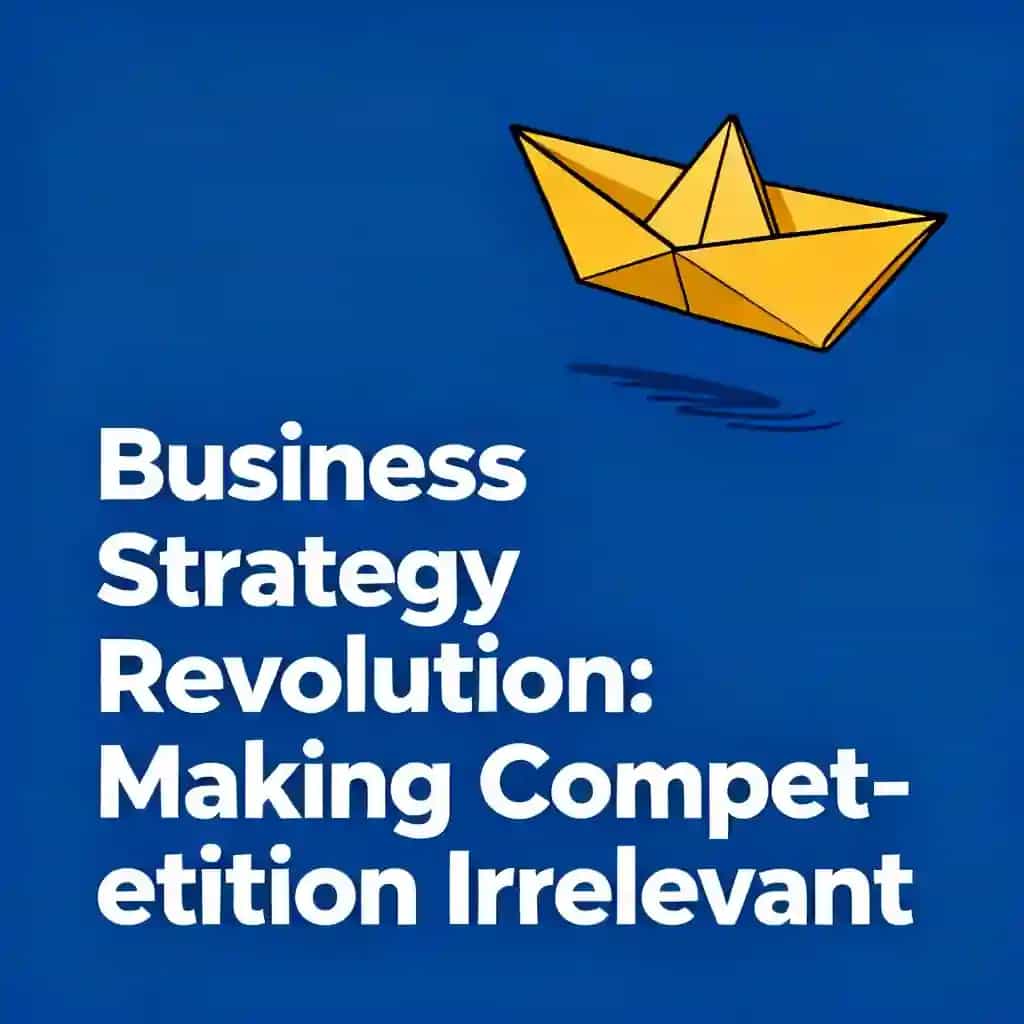
Think about the last time you tried solving a problem by working harder at the same solution, only to get the same disappointing result. You're not alone. For forty years, one pattern has repeated itself in boardrooms worldwide: when strategies fail, executives don't question their approach-they just push harder. It's like trying to open a door by pulling when it clearly says "push," except the door is a multi-million-dollar business decision. This stubborn loyalty to broken frameworks isn't just inefficient-it's expensive. What if the problem isn't execution but the mental models themselves? We love the narrative of corporate titans clashing-Apple versus Samsung, Coke versus Pepsi-like nations at war. But customers don't experience competition this way. When you're standing in a store aisle, you're not choosing between corporations. You're choosing between this laptop and that one, this soda and that one. The competition isn't happening in boardrooms; it's happening at the shelf, the checkout counter, the moment of decision. This shift in perspective changes everything. If competition occurs at the front line, then the people closest to customers-not the executives furthest away-have the most valuable insights. Yet traditional hierarchies assume wisdom flows downward from the top. The irony? Those making the biggest decisions often have the least direct contact with the actual battlefield. A poor product won't be rescued by being part of a prestigious company. Mac users might love Microsoft Office, but that doesn't make them switch to Windows. The real question becomes: does your organizational structure add value or just add layers?