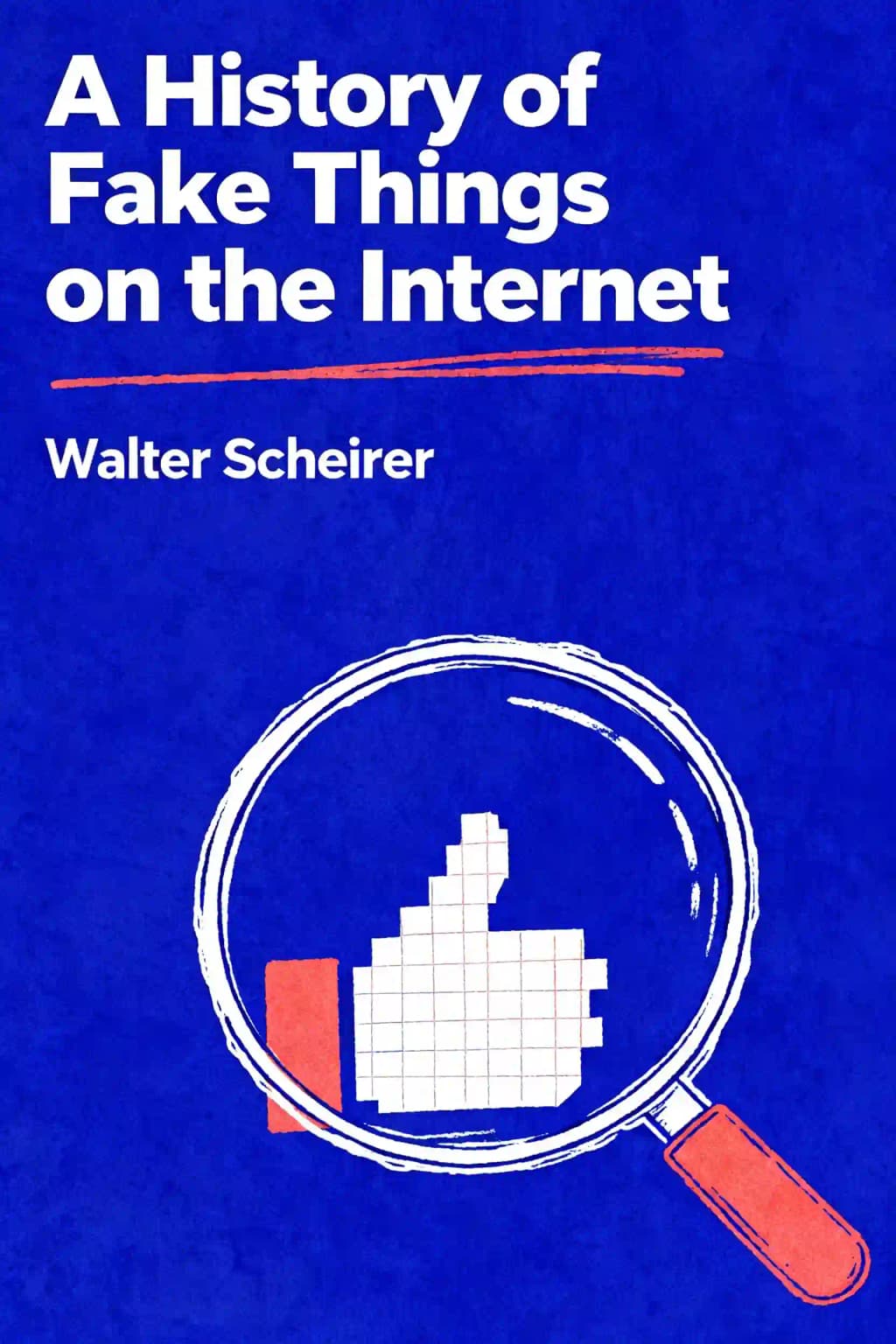
In "A History of Fake Things on the Internet," Walter Scheirer reveals how digital deception evolved from pixelated hoaxes to diplomatic-crisis-causing deepfakes. With nearly 70% of people encountering fake news, this thrilling digital underworld tour offers the essential "triple-check rule" for our post-truth era.
Walter Scheirer is the Dennis O. Doughty Collegiate Professor of Engineering at the University of Notre Dame and author of A History of Fake Things on the Internet (Stanford University Press), a groundbreaking exploration of digital deception’s evolution.
A globally recognized AI ethicist and computer vision pioneer, Scheirer bridges technical expertise in media forensics with humanities-driven analysis of technology’s societal impacts. His research on machine learning and information security informs the book’s examination of disinformation ecosystems, drawing from his roles as IEEE Computer Society Pattern Analysis chair and Computer Vision Foundation board member.
Scheirer’s interdisciplinary approach stems from dual training in computer science and international relations, reflected in his upcoming book Virtue in Virtual Spaces: Catholic Social Teaching and Technology (Liturgical Press 2024). A frequent contributor to the Bulletin of the Atomic Scientists, his work has been cited in over 100 technical publications.
A History of Fake Things on the Internet has been adopted by universities worldwide as a critical text for understanding digital culture’s ethical challenges.
A History of Fake Things on the Internet by Walter Scheirer traces the evolution of digital deception, from 19th-century photo manipulation to AI-driven deepfakes. It analyzes how technological advancements enabled fake content creation and examines societal impacts like eroded trust and viral conspiracy theories. The book argues that human behavior—not just technology—drives these challenges, blending historical case studies with insights into hacker culture and media forensics.
This book is essential for tech enthusiasts, digital historians, and anyone concerned about misinformation. Educators, policymakers, and social media users will gain tools to critically assess online content. Scheirer’s accessible analysis of AI ethics and media literacy also appeals to readers interested in cybersecurity or the cultural implications of emerging technologies.
Yes—it’s a timely, rigorously researched guide to understanding digital deception’s roots and consequences. Scheirer combines technical expertise (e.g., explaining deepfake algorithms) with cultural criticism, offering actionable strategies to combat misinformation. Its exploration of early internet hoaxes and modern AI threats makes it relevant for both general readers and professionals in tech or journalism.
Scheirer traces deepfakes to advancements in machine learning and generative adversarial networks (GANs), which enable hyper-realistic synthetic media. He highlights how these tools build on earlier innovations like Photoshop and CGI, emphasizing that human creativity—not just technology—propels their misuse. The book warns about deepfakes’ potential to undermine political systems and personal reputations.
The book details pre-internet hoaxes like 19th-century spirit photography and 1980s BBS-era pranks. It analyzes early viral deceptions like the “Dancing Baby” meme (1996) and “All Your Base Are Belong to Us” (2001), showing how they laid groundwork for modern misinformation tactics. Scheirer also explores conspiracy theories like QAnon and flat-earth movements.
Scheirer argues that AI’s capacity to generate convincing fakes demands new ethical frameworks for tech development. He advocates for “human-centric AI” that prioritizes transparency and accountability, citing Catholic Social Teaching principles. The book urges researchers to consider societal harms when designing tools like large language models.
Scheirer recommends reverse-image searches, metadata analysis, and AI-detection tools like Deepware Scanner. He emphasizes critical thinking: checking sources, verifying claims across platforms, and understanding common manipulation tactics (e.g., emotional manipulation in deepfake audio). The book also advises reporting suspicious content to fact-checking organizations.
While Virtue in Virtual Spaces (2024) focuses on ethical tech design through a philosophical lens, A History of Fake Things provides a technical and cultural history of digital deception. Both books address AI’s societal impact, but the latter delves deeper into specific case studies of misinformation, making them complementary reads.
Some reviewers note the book’s dense technical explanations may challenge casual readers. Others suggest it could explore non-Western misinformation campaigns more thoroughly. However, most praise its balanced approach to blaming systemic issues rather than individual “bad actors” for fake content’s spread.
With AI-generated content proliferating across social media and political campaigns, Scheirer’s analysis of detection methods and ethical safeguards remains critical. The book’s framework helps readers navigate emerging threats like real-time deepfake video calls and AI-powered impersonation scams, making it a vital resource for digital literacy.
As a Notre Dame AI researcher and former Securics R&D director, Scheirer combines academic rigor with industry insights. His work in biometrics and media forensics informs the book’s technical depth, while his commentary on Catholic ethics adds a unique lens for evaluating technology’s societal role.
“Problems associated with fake content stem not from the technology itself, but from our capacity for both creativity and destruction.” This encapsulates Scheirer’s thesis that human behavior—not just algorithms—determines whether innovations empower or deceive.
著者の声を通じて本を感じる
知識を魅力的で例が豊富な洞察に変換
キーアイデアを瞬時にキャプチャして素早く学習
楽しく魅力的な方法で本を楽しむ
The Internet functioning as an extension of our collective imagination.
Do all falsehoods mislead?
Technology [is] the new holy writ.
Humans have always sought to transcend physical reality through imagination.
Myths provide simplifications that resolve contradictions.
『History of Fake Things on the Internet』の核心的なアイデアを分かりやすいポイントに分解し、革新的なチームがどのように創造、協力、成長するかを理解します。
『History of Fake Things on the Internet』を素早い記憶のヒントに凝縮し、率直さ、チームワーク、創造的な回復力の主要原則を強調します。

鮮やかなストーリーテリングを通じて『History of Fake Things on the Internet』を体験し、イノベーションのレッスンを記憶に残り、応用できる瞬間に変えます。
何でも質問し、声を選び、本当にあなたに響く洞察を一緒に作り出しましょう。

"Instead of endless scrolling, I just hit play on BeFreed. It saves me so much time."
"I never knew where to start with nonfiction—BeFreed’s book lists turned into podcasts gave me a clear path."
"Perfect balance between learning and entertainment. Finished ‘Thinking, Fast and Slow’ on my commute this week."
"Crazy how much I learned while walking the dog. BeFreed = small habits → big gains."
"Reading used to feel like a chore. Now it’s just part of my lifestyle."
"Feels effortless compared to reading. I’ve finished 6 books this month already."
"BeFreed turned my guilty doomscrolling into something that feels productive and inspiring."
"BeFreed turned my commute into learning time. 20-min podcasts are perfect for finishing books I never had time for."
"BeFreed replaced my podcast queue. Imagine Spotify for books — that’s it. 🙌"
"It is great for me to learn something from the book without reading it."
"The themed book list podcasts help me connect ideas across authors—like a guided audio journey."
"Makes me feel smarter every time before going to work"

History of Fake Things on the Internetの要約をPDFまたはEPUBで無料でダウンロード。印刷やオフラインでいつでもお読みいただけます。
In 2016, a photo showing Donald Trump meeting with Russian officials sparked outrage online. The lighting looked natural, shadows fell correctly, and the subjects interacted convincingly. Just one problem: the meeting never happened. This sophisticated fake exemplifies the phenomenon Walter Scheirer explores in "A History of Fake Things on the Internet." Rather than simply condemning digital deception, Scheirer reveals its rich cultural history, showing how manipulation has always intertwined with human creativity. Drawing from his dual expertise as computer scientist and cultural historian, he offers a nuanced view of why we create, share, and believe fake content-and what it reveals about our collective imagination.