Worst-Case Thinking: The Stoic Art of the Pre-Mortem Strategy
Explore the pre-mortem strategy and Stoic worst-case thinking to overcome optimism bias and the planning fallacy for better project management and risk mitigation.
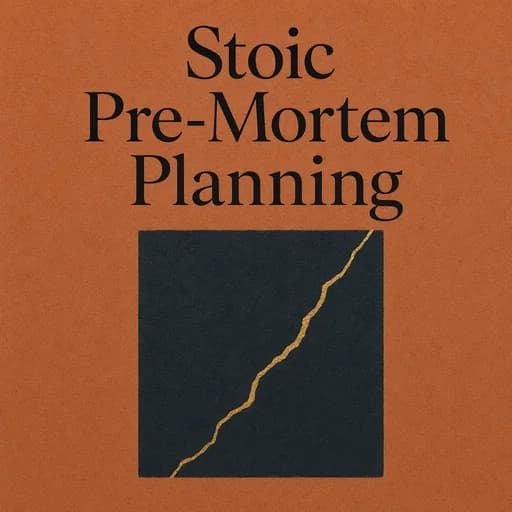
Miglior citazione da Worst-Case Thinking: The Stoic Art of the Pre-Mortem Strategy
The fear lives in the vagueness, but once you put a name to the 'evil,' you can actually start building a plan to handle it.
Generated by hassan mujtaba
Practical risk management through the philosophy that all life decisions should be based on worst-case outcomes.






Domande frequenti
A pre-mortem is a strategic cognitive tool where you imagine a project has already failed before it even begins. Instead of waiting for a disaster to occur and conducting a post-mortem, you attend the funeral of the project early to identify potential snags. This approach allows you to work backward from a total failure to determine what went wrong, helping you manage your life and projects more practically by addressing risks before they manifest.
Optimism bias is the systematic belief that bad things only happen to others and that our own projects will naturally finish on time and under budget. The pre-mortem strategy directly challenges this bias by forcing you to confront the reality of failure. By assuming the worst-case outcome at the starting line, you can bypass the brain's tendency to lie to itself, allowing for more realistic project management and a clearer understanding of potential obstacles.
While some worry that worst-case thinking leads to paralysis, proponents argue it is actually a practical tool for risk mitigation. The goal is not to discourage starting, but to overcome the planning fallacy—our tendency to underestimate the time and resources needed for success. By using this Stoic art to visualize failure, you gain the clarity needed to build more robust plans, ensuring you don't just imagine failure but actively work to prevent it from happening.
Creato da alumni della Columbia University a San Francisco
BeFreed Riunisce Una Community Globale Di Menti Curiose


"Instead of endless scrolling, I just hit play on BeFreed. It saves me so much time."


"I never knew where to start with nonfiction—BeFreed’s book lists turned into podcasts gave me a clear path."


"Perfect balance between learning and entertainment. Finished ‘Thinking, Fast and Slow’ on my commute this week."
"Crazy how much I learned while walking the dog. BeFreed = small habits → big gains."
"Reading used to feel like a chore. Now it’s just part of my lifestyle."

"Feels effortless compared to reading. I’ve finished 6 books this month already."
"BeFreed turned my guilty doomscrolling into something that feels productive and inspiring."

"BeFreed turned my commute into learning time. 20-min podcasts are perfect for finishing books I never had time for."
"BeFreed replaced my podcast queue. Imagine Spotify for books — that’s it. 🙌"

"It is great for me to learn something from the book without reading it."
"The themed book list podcasts help me connect ideas across authors—like a guided audio journey."
"Makes me feel smarter every time before going to work"
Creato da alumni della Columbia University a San Francisco
BeFreed Riunisce Una Community Globale Di Menti Curiose
"Instead of endless scrolling, I just hit play on BeFreed. It saves me so much time."
"I never knew where to start with nonfiction—BeFreed’s book lists turned into podcasts gave me a clear path."
"Perfect balance between learning and entertainment. Finished ‘Thinking, Fast and Slow’ on my commute this week."
"Crazy how much I learned while walking the dog. BeFreed = small habits → big gains."
"Reading used to feel like a chore. Now it’s just part of my lifestyle."
"Feels effortless compared to reading. I’ve finished 6 books this month already."
"BeFreed turned my guilty doomscrolling into something that feels productive and inspiring."
"BeFreed turned my commute into learning time. 20-min podcasts are perfect for finishing books I never had time for."
"BeFreed replaced my podcast queue. Imagine Spotify for books — that’s it. 🙌"
"It is great for me to learn something from the book without reading it."
"The themed book list podcasts help me connect ideas across authors—like a guided audio journey."
"Makes me feel smarter every time before going to work"
"Instead of endless scrolling, I just hit play on BeFreed. It saves me so much time."
"I never knew where to start with nonfiction—BeFreed’s book lists turned into podcasts gave me a clear path."
"Perfect balance between learning and entertainment. Finished ‘Thinking, Fast and Slow’ on my commute this week."
"Crazy how much I learned while walking the dog. BeFreed = small habits → big gains."
"Reading used to feel like a chore. Now it’s just part of my lifestyle."
"Feels effortless compared to reading. I’ve finished 6 books this month already."
"BeFreed turned my guilty doomscrolling into something that feels productive and inspiring."
"BeFreed turned my commute into learning time. 20-min podcasts are perfect for finishing books I never had time for."
"BeFreed replaced my podcast queue. Imagine Spotify for books — that’s it. 🙌"
"It is great for me to learn something from the book without reading it."
"The themed book list podcasts help me connect ideas across authors—like a guided audio journey."
"Makes me feel smarter every time before going to work"
"Instead of endless scrolling, I just hit play on BeFreed. It saves me so much time."
"I never knew where to start with nonfiction—BeFreed’s book lists turned into podcasts gave me a clear path."
"Perfect balance between learning and entertainment. Finished ‘Thinking, Fast and Slow’ on my commute this week."
"Crazy how much I learned while walking the dog. BeFreed = small habits → big gains."
"Reading used to feel like a chore. Now it’s just part of my lifestyle."
"Feels effortless compared to reading. I’ve finished 6 books this month already."
"BeFreed turned my guilty doomscrolling into something that feels productive and inspiring."
"BeFreed turned my commute into learning time. 20-min podcasts are perfect for finishing books I never had time for."
"BeFreed replaced my podcast queue. Imagine Spotify for books — that’s it. 🙌"
"It is great for me to learn something from the book without reading it."
"The themed book list podcasts help me connect ideas across authors—like a guided audio journey."
"Makes me feel smarter every time before going to work"