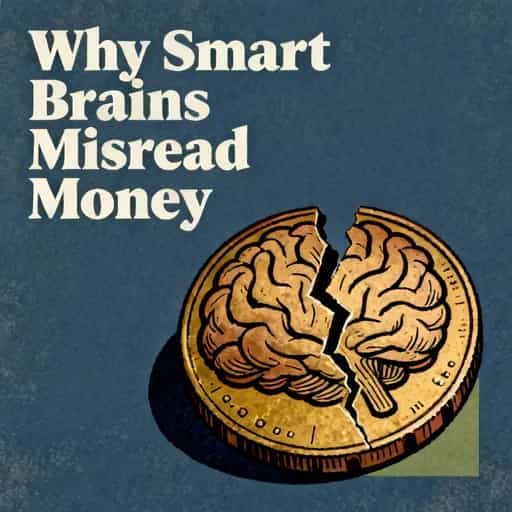
The Solomon Paradox: Mastering Practical Worldly Wisdom
Explore why brilliant people make poor choices and how to bridge the gap between intelligence and virtue using mental models, inversion, and probabilistic thinking.

Miglior citazione da The Solomon Paradox: Mastering Practical Worldly Wisdom
Wisdom isn’t this monolithic block of gold we just find one day, but rather a set of tools we carry. It is a practical, two-dimensional quality that integrates virtue and wit—using our intelligence to achieve altruistic outcomes.
Generated by Tom
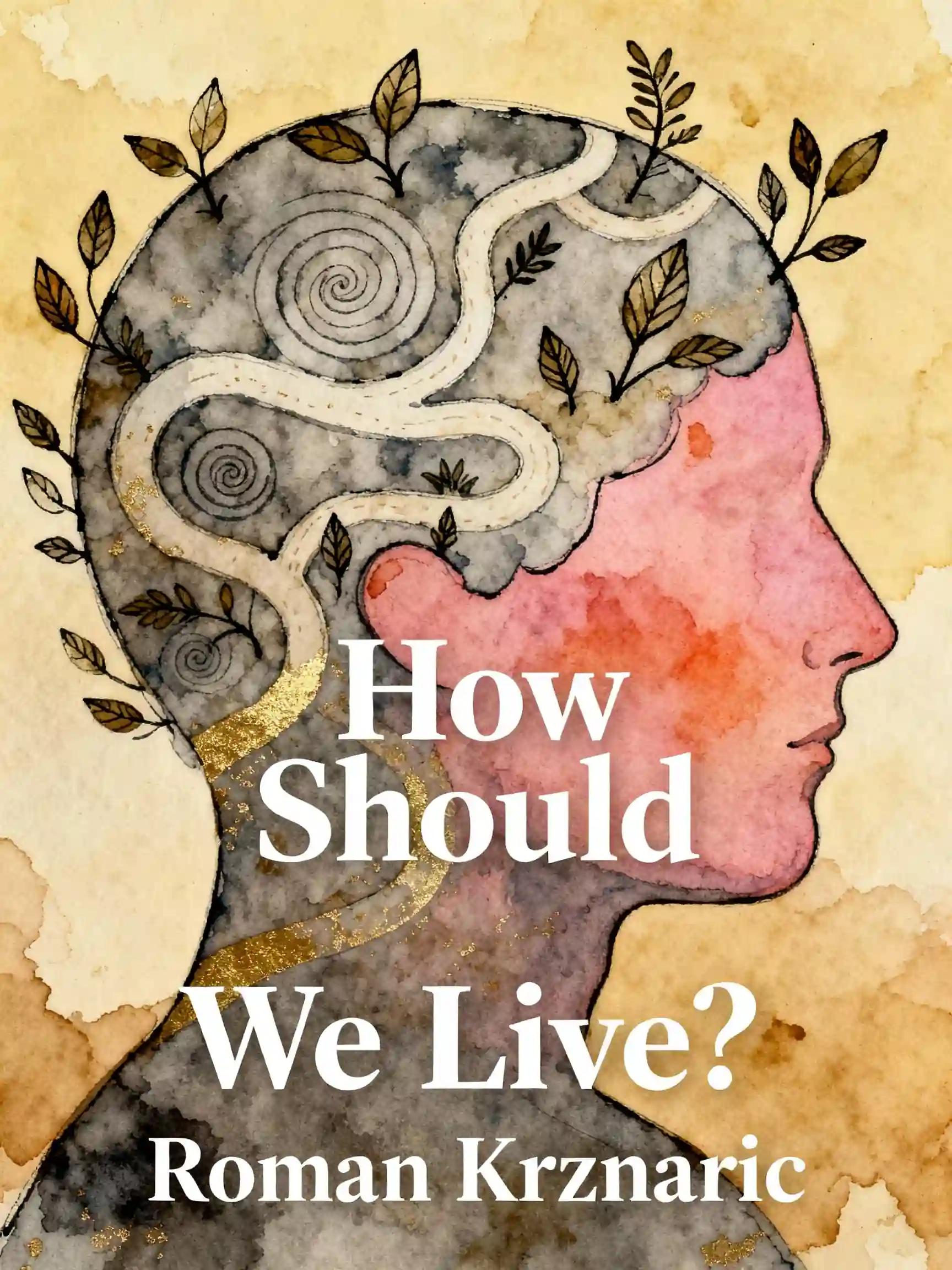
Deep understanding of the concepts provided in the book and wisdom of the author .



Domande frequenti
The Solomon Paradox refers to the phenomenon where individuals can provide legendary, wise advice to others while struggling to manage their own lives effectively. This suggests that wisdom is not a fixed, all-encompassing trait but is often domain-specific. A person might demonstrate high intelligence or "wit" in a field like natural science while remaining a novice in human affairs. True wisdom requires integrating this wit with virtue and altruism across different areas of life.
A latticework of mental models is a framework for organizing knowledge so that facts are not isolated but anchored to fundamental theories. Munger argued that there are roughly 80 to 90 important models from big disciplines—such as psychology, economics, physics, and biology—that do the "heavy lifting" in understanding the world. By connecting these models, you avoid "man with a hammer" syndrome, where you try to solve every problem using only one perspective, such as financial incentives or engineering logic.
This concept, popularized by Alfred Korzybski, reminds us that every strategy, theory, or model is a simplification of reality. A map is useful because it is a reduction, but danger arises when a person confuses the map with the actual ground. In decision-making, this means staying "radically open-minded" and paying close attention to the "territory" (actual results and changing conditions) rather than blindly following a strategic plan or a biased mental representation.
Inversion is the practice of looking at a problem backward by focusing on what to avoid rather than what to achieve. Instead of asking how to succeed, you ask, "What would cause this to fail?" By identifying these "Gray Rhino" risks or obvious pitfalls, you can work backward to prevent them. This approach prioritizes "avoiding stupidity" over "seeking brilliance," which often provides a more resilient path to success in business, relationships, and personal goals.
The Lollapalooza Effect occurs when multiple mental models or psychological tendencies act in concert to drive an outcome toward an extreme. For example, when "Incentive-Caused Bias," "Social Proof," and "Scarcity" all align at once, they can create massive wins or total disasters. Understanding this effect helps a wise person recognize the "chemical reaction" of various factors in a situation before it reaches an explosive or irreversible conclusion.
Creato da alumni della Columbia University a San Francisco
"Instead of endless scrolling, I just hit play on BeFreed. It saves me so much time."


"I never knew where to start with nonfiction—BeFreed’s book lists turned into podcasts gave me a clear path."


"Perfect balance between learning and entertainment. Finished ‘Thinking, Fast and Slow’ on my commute this week."
"Crazy how much I learned while walking the dog. BeFreed = small habits → big gains."
"Reading used to feel like a chore. Now it’s just part of my lifestyle."

"Feels effortless compared to reading. I’ve finished 6 books this month already."
"BeFreed turned my guilty doomscrolling into something that feels productive and inspiring."

"BeFreed turned my commute into learning time. 20-min podcasts are perfect for finishing books I never had time for."
"BeFreed replaced my podcast queue. Imagine Spotify for books — that’s it. 🙌"

"It is great for me to learn something from the book without reading it."
"The themed book list podcasts help me connect ideas across authors—like a guided audio journey."
"Makes me feel smarter every time before going to work"
Creato da alumni della Columbia University a San Francisco
"Instead of endless scrolling, I just hit play on BeFreed. It saves me so much time."
"I never knew where to start with nonfiction—BeFreed’s book lists turned into podcasts gave me a clear path."
"Perfect balance between learning and entertainment. Finished ‘Thinking, Fast and Slow’ on my commute this week."
"Crazy how much I learned while walking the dog. BeFreed = small habits → big gains."
"Reading used to feel like a chore. Now it’s just part of my lifestyle."
"Feels effortless compared to reading. I’ve finished 6 books this month already."
"BeFreed turned my guilty doomscrolling into something that feels productive and inspiring."
"BeFreed turned my commute into learning time. 20-min podcasts are perfect for finishing books I never had time for."
"BeFreed replaced my podcast queue. Imagine Spotify for books — that’s it. 🙌"
"It is great for me to learn something from the book without reading it."
"The themed book list podcasts help me connect ideas across authors—like a guided audio journey."
"Makes me feel smarter every time before going to work"
"Instead of endless scrolling, I just hit play on BeFreed. It saves me so much time."
"I never knew where to start with nonfiction—BeFreed’s book lists turned into podcasts gave me a clear path."
"Perfect balance between learning and entertainment. Finished ‘Thinking, Fast and Slow’ on my commute this week."
"Crazy how much I learned while walking the dog. BeFreed = small habits → big gains."
"Reading used to feel like a chore. Now it’s just part of my lifestyle."
"Feels effortless compared to reading. I’ve finished 6 books this month already."
"BeFreed turned my guilty doomscrolling into something that feels productive and inspiring."
"BeFreed turned my commute into learning time. 20-min podcasts are perfect for finishing books I never had time for."
"BeFreed replaced my podcast queue. Imagine Spotify for books — that’s it. 🙌"
"It is great for me to learn something from the book without reading it."
"The themed book list podcasts help me connect ideas across authors—like a guided audio journey."
"Makes me feel smarter every time before going to work"
"Instead of endless scrolling, I just hit play on BeFreed. It saves me so much time."
"I never knew where to start with nonfiction—BeFreed’s book lists turned into podcasts gave me a clear path."
"Perfect balance between learning and entertainment. Finished ‘Thinking, Fast and Slow’ on my commute this week."
"Crazy how much I learned while walking the dog. BeFreed = small habits → big gains."
"Reading used to feel like a chore. Now it’s just part of my lifestyle."
"Feels effortless compared to reading. I’ve finished 6 books this month already."
"BeFreed turned my guilty doomscrolling into something that feels productive and inspiring."
"BeFreed turned my commute into learning time. 20-min podcasts are perfect for finishing books I never had time for."
"BeFreed replaced my podcast queue. Imagine Spotify for books — that’s it. 🙌"
"It is great for me to learn something from the book without reading it."
"The themed book list podcasts help me connect ideas across authors—like a guided audio journey."
"Makes me feel smarter every time before going to work"