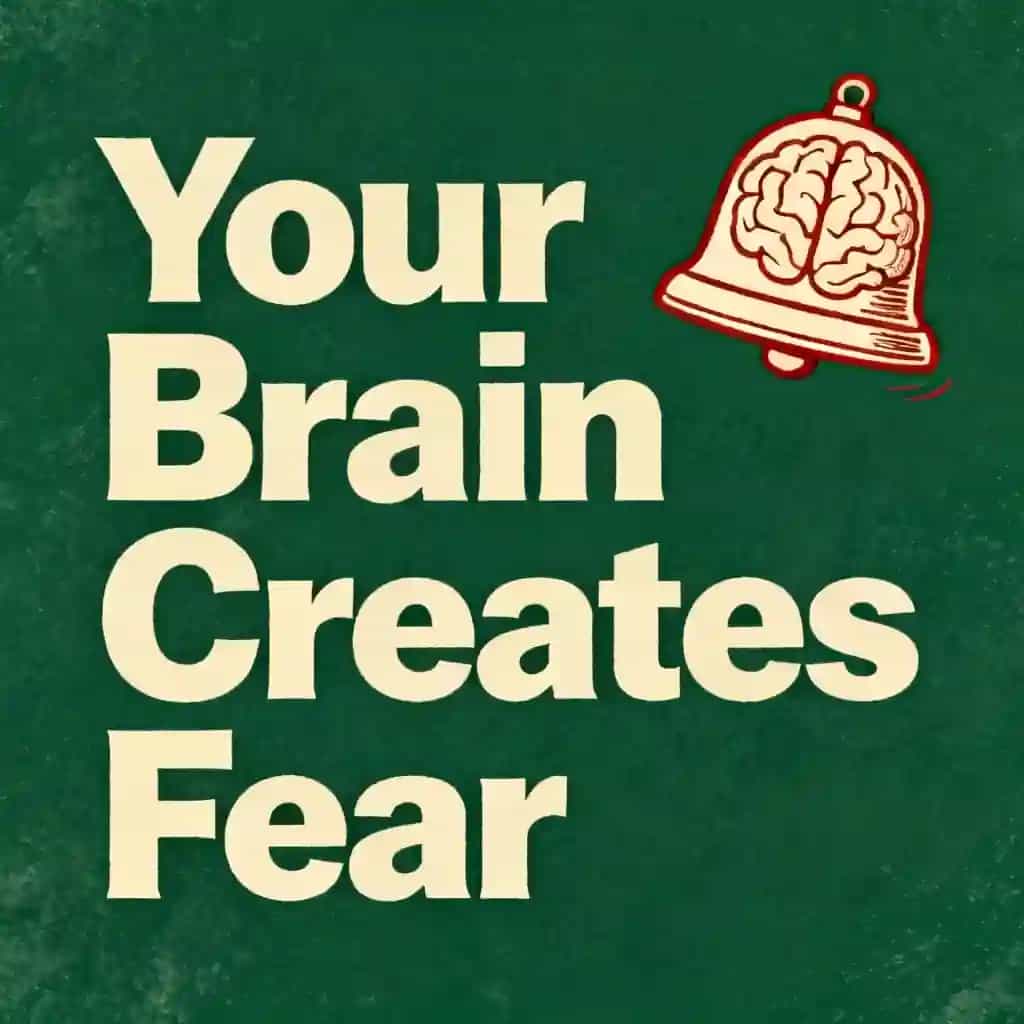
The Meaning-Making Machine: How Your Brain Creates Reality
Explore how The Meaning-Making Machine shapes your reality. Learn how your brain creates mental narratives and assumptions that dictate your stress and emotions.

Miglior citazione da The Meaning-Making Machine: How Your Brain Creates Reality
This is the invisible architect of your reality: the constant, automatic stream of assumptions, judgments, and interpretations that you mistake for objective truth.
Generated by Ricky
Create a practical daily lesson that trains me to automatically notice assumptions, judgments, interpretations, and mental stories as they happen throughout the day. This is not a lecture about communication. It is a mental training program whose goal is to make me aware of the invisible assumptions my brain constantly creates without me noticing. Explain that the human brain naturally fills gaps with stories, guesses, interpretations, and judgments, and that most of the time we mistake those stories for reality. Every lesson should focus on helping me recognize these patterns in real life. Include many concrete examples from everyday situations such as: * assuming what another person is thinking * assuming what they meant * assuming why they acted a certain way * assuming their emotions from facial expressions or body language * assuming intentions * assuming cause and effect * assuming people share the same meaning of a word * assuming someone understood what I meant * assuming people have the same mental image behind concepts and words * assuming I know what someone remembers * judging people from appearance * judging myself * confusing observations with interpretations * confusing facts with conclusions * creating stories from incomplete information Go beyond the obvious examples. I want to discover subtle assumptions that most people never notice they are making. For example, explain how two people can use the exact same word (“success,” “respect,” “dog,” “friendship,” “love,” “professionalism”) while each has a completely different mental model behind that word, yet both unconsciously assume they are talking about the same thing. Teach me to separate: * What I directly observed. * What I inferred. * What I imagined. * What I concluded. Repeatedly train me to ask questions such as: * “What did I actually observe?” * “What story did my brain add?” * “How do I know this is true?” * “What evidence do I have?” * “What else could explain this?” * “Am I observing reality or interpreting it?” Repeat throughout the lesson that: Feelings are data, not facts. Interpretations are not observations. A story is not reality. Notice the story before believing it. Replace certainty with curiosity. Include short mental exercises that I can practice immediately during conversations, meetings, emails, text messages, while driving, watching people, or reflecting on my own emotions. The lesson should feel like cognitive training, not philosophy or motivation. The goal is to make noticing assumptions become automatic until it becomes second nature.

Domande frequenti
The Meaning-Making Machine refers to the invisible architect of your reality: the constant and automatic stream of assumptions, judgments, and interpretations your brain creates. It functions as a process that manufactures stories to fill gaps in what you actually observe. By turning simple observations into complex narratives in a fraction of a second, this mental mechanism often leads you to mistake subjective interpretations for objective truths.
Mental narratives are not just harmless thoughts; they actively dictate your emotions, stress levels, and the quality of your relationships. When you mistake a manufactured story for a fact, you lose the ability to respond to the world as it actually is. This process often happens unconsciously, causing you to live in a simulation of your own making rather than seeing the world with complete clarity.
Reality consists of objective observations, such as seeing a colleague walk past without speaking. Perception, or the meaning-making process, involves the brain instantly attaching labels like anger, arrogance, or unprofessionalism to that event. While we think we are seeing the world clearly, we are often seeing a heavily edited version shaped by our own cognitive biases and the stories our brains manufacture to explain the behavior of others.
Recognizing these assumptions is vital because it allows you to distinguish between what you actually observed and the story your brain manufactured. Without this awareness, you may experience unnecessary anxiety or defensiveness based on confrontations that haven't actually happened. By understanding the psychology of assumptions, you can improve your emotional intelligence and stop reacting to a reality that exists only within your own mental interpretations.
Creato da alumni della Columbia University a San Francisco
"Instead of endless scrolling, I just hit play on BeFreed. It saves me so much time."


"I never knew where to start with nonfiction—BeFreed’s book lists turned into podcasts gave me a clear path."


"Perfect balance between learning and entertainment. Finished ‘Thinking, Fast and Slow’ on my commute this week."
"Crazy how much I learned while walking the dog. BeFreed = small habits → big gains."
"Reading used to feel like a chore. Now it’s just part of my lifestyle."

"Feels effortless compared to reading. I’ve finished 6 books this month already."
"BeFreed turned my guilty doomscrolling into something that feels productive and inspiring."

"BeFreed turned my commute into learning time. 20-min podcasts are perfect for finishing books I never had time for."
"BeFreed replaced my podcast queue. Imagine Spotify for books — that’s it. 🙌"

"It is great for me to learn something from the book without reading it."
"The themed book list podcasts help me connect ideas across authors—like a guided audio journey."
"Makes me feel smarter every time before going to work"
Creato da alumni della Columbia University a San Francisco
"Instead of endless scrolling, I just hit play on BeFreed. It saves me so much time."
"I never knew where to start with nonfiction—BeFreed’s book lists turned into podcasts gave me a clear path."
"Perfect balance between learning and entertainment. Finished ‘Thinking, Fast and Slow’ on my commute this week."
"Crazy how much I learned while walking the dog. BeFreed = small habits → big gains."
"Reading used to feel like a chore. Now it’s just part of my lifestyle."
"Feels effortless compared to reading. I’ve finished 6 books this month already."
"BeFreed turned my guilty doomscrolling into something that feels productive and inspiring."
"BeFreed turned my commute into learning time. 20-min podcasts are perfect for finishing books I never had time for."
"BeFreed replaced my podcast queue. Imagine Spotify for books — that’s it. 🙌"
"It is great for me to learn something from the book without reading it."
"The themed book list podcasts help me connect ideas across authors—like a guided audio journey."
"Makes me feel smarter every time before going to work"
"Instead of endless scrolling, I just hit play on BeFreed. It saves me so much time."
"I never knew where to start with nonfiction—BeFreed’s book lists turned into podcasts gave me a clear path."
"Perfect balance between learning and entertainment. Finished ‘Thinking, Fast and Slow’ on my commute this week."
"Crazy how much I learned while walking the dog. BeFreed = small habits → big gains."
"Reading used to feel like a chore. Now it’s just part of my lifestyle."
"Feels effortless compared to reading. I’ve finished 6 books this month already."
"BeFreed turned my guilty doomscrolling into something that feels productive and inspiring."
"BeFreed turned my commute into learning time. 20-min podcasts are perfect for finishing books I never had time for."
"BeFreed replaced my podcast queue. Imagine Spotify for books — that’s it. 🙌"
"It is great for me to learn something from the book without reading it."
"The themed book list podcasts help me connect ideas across authors—like a guided audio journey."
"Makes me feel smarter every time before going to work"
"Instead of endless scrolling, I just hit play on BeFreed. It saves me so much time."
"I never knew where to start with nonfiction—BeFreed’s book lists turned into podcasts gave me a clear path."
"Perfect balance between learning and entertainment. Finished ‘Thinking, Fast and Slow’ on my commute this week."
"Crazy how much I learned while walking the dog. BeFreed = small habits → big gains."
"Reading used to feel like a chore. Now it’s just part of my lifestyle."
"Feels effortless compared to reading. I’ve finished 6 books this month already."
"BeFreed turned my guilty doomscrolling into something that feels productive and inspiring."
"BeFreed turned my commute into learning time. 20-min podcasts are perfect for finishing books I never had time for."
"BeFreed replaced my podcast queue. Imagine Spotify for books — that’s it. 🙌"
"It is great for me to learn something from the book without reading it."
"The themed book list podcasts help me connect ideas across authors—like a guided audio journey."
"Makes me feel smarter every time before going to work"