BeFreed
    Categories>Leadership & Corp Culture>The Coaching Habit: 7 Questions to Lead Better

    The Coaching Habit: 7 Questions to Lead Better

    26 min
    |
    |
    7 apr 2026
    LeadershipCommunication skillBusiness

    Stop giving advice and start asking questions. Learn how to tame your inner advice monster and use curiosity to build a more independent, focused team.

    The Coaching Habit: 7 Questions to Lead Better

    Miglior citazione da The Coaching Habit: 7 Questions to Lead Better

    “

    The secret to impactful leadership isn't having better answers—it's about staying curious a little bit longer, saying less, and asking more.

    ”

    Questa lezione audio è stata creata da un membro della comunità BeFreed

    Domanda di input

    Create a deep lesson of the Michael Bungay Stanier's "The Coaching Habit" and the 7 questions

    Voci dei presentatori
    Lenaplay
    Milesplay
    Stile di apprendimento
    Approfondito
    Fonti di conoscenza
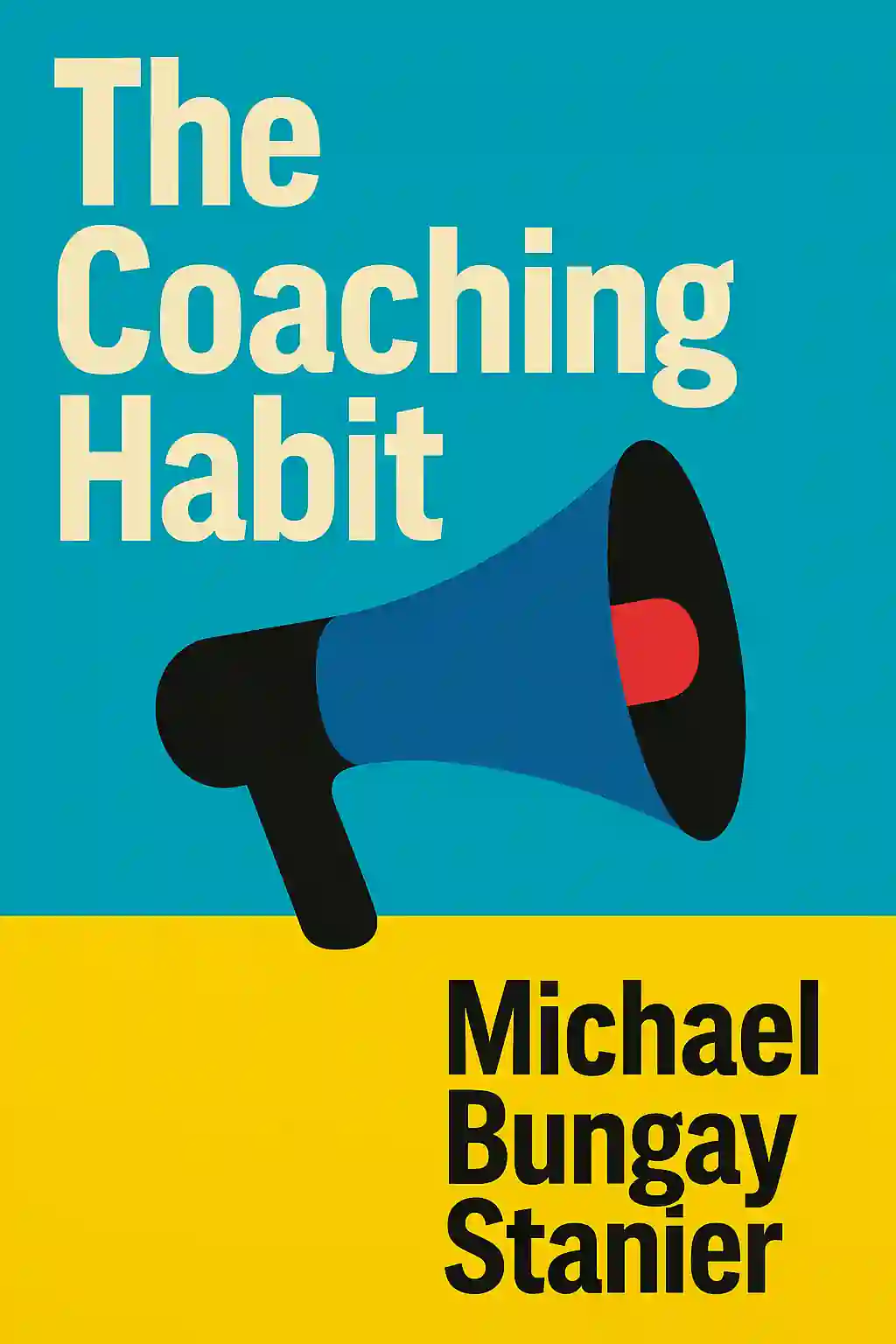
    The coaching habit
    The Five Most Important Questions You Will Ever Ask About Your Organization (J-B Leader to Leader Institute/PF Drucker Foundation)
    Good Leaders Ask Great Questions
    Move Fast and Fix Things
    The Advice Trap
    Humble Inquiry

    Domande frequenti

    Scopri di più

    Improve my coaching skills

    Improve my coaching skills

    PIANO DI APPRENDIMENTO

    Improve my coaching skills

    Effective coaching is one of the most valuable leadership skills in today's workplace, directly impacting team performance, employee engagement, and organizational success. This learning plan is ideal for managers, team leaders, HR professionals, and aspiring professional coaches who want to develop structured, evidence-based coaching abilities that drive real transformation in individuals and teams.

    3 h 6 m•4 Sezioni
    Self-Improvement, Productivity & Leadership

    Self-Improvement, Productivity & Leadership

    PIANO DI APPRENDIMENTO

    Self-Improvement, Productivity & Leadership

    In an era of constant distraction, the ability to master one's habits and lead others effectively is a critical competitive advantage. This plan is designed for aspiring leaders and professionals looking to optimize their daily output and scale their influence through psychological shifts and systems thinking.

    2 h 40 m•4 Sezioni
    Study Self, Habits, Mind & Leadership

    Study Self, Habits, Mind & Leadership

    PIANO DI APPRENDIMENTO

    Study Self, Habits, Mind & Leadership

    This learning plan bridges the gap between internal psychology and external leadership. It is ideal for aspiring managers and professionals who want to master their own habits and mindset before leading others toward high-impact results.

    2 h 50 m•4 Sezioni
    Help my coaching business grow.

    Help my coaching business grow.

    PIANO DI APPRENDIMENTO

    Help my coaching business grow.

    This learning plan is essential for coaches who have mastered their craft but struggle with the business mechanics of scaling. It provides a strategic roadmap for transitioning from manual client hunting to a systematized, high-ticket business model.

    2 h 46 m•4 Sezioni
    Habits, Psychology & Inspiration Explorer

    Habits, Psychology & Inspiration Explorer

    PIANO DI APPRENDIMENTO

    Habits, Psychology & Inspiration Explorer

    This learning plan bridges the gap between behavioral science and peak performance, offering a comprehensive roadmap for anyone looking to master their own psychology. It is ideal for leaders, high-achievers, and lifelong learners who want to replace automatic behaviors with intentional, high-impact habits.

    2 h 57 m•4 Sezioni
    The 7 Habits of Highly Effective People Summary: Keys to Personal Success
    BLOG

    The 7 Habits of Highly Effective People Summary: Keys to Personal Success

    Unlock the core habits of success with this summary of The 7 Habits of Highly Effective People—timeless lessons to lead, grow, and thrive in 2025.

    BeFreed Team

    Lead, Chat, Focus, & Connect Better

    Lead, Chat, Focus, & Connect Better

    PIANO DI APPRENDIMENTO

    Lead, Chat, Focus, & Connect Better

    This learning plan is designed for emerging leaders and professionals looking to excel in a distracted, hyper-connected world. It bridges the gap between technical expertise and the essential soft skills required for leadership, deep focus, and strategic networking.

    3 h 6 m•4 Sezioni
    Lead with respect and emotional control

    Lead with respect and emotional control

    PIANO DI APPRENDIMENTO

    Lead with respect and emotional control

    This plan is designed for leaders who want to move beyond technical expertise to master the emotional dynamics of high-pressure environments. It is ideal for managers and executives seeking to cultivate a culture of respect through self-awareness and Stoic discipline.

    3 h 10 m•4 Sezioni

    Creato da alumni della Columbia University a San Francisco

    BeFreed Riunisce Una Community Globale Di 1,000,000 Menti Curiose
    Scopri di piu su come si parla di BeFreed nel web

    "Instead of endless scrolling, I just hit play on BeFreed. It saves me so much time."

    @Moemenn
    platform
    star
    star
    star
    star
    star

    "I never knew where to start with nonfiction—BeFreed’s book lists turned into podcasts gave me a clear path."

    @Chloe, Solo founder, LA
    platform
    comments
    12
    likes
    117

    "Perfect balance between learning and entertainment. Finished ‘Thinking, Fast and Slow’ on my commute this week."

    @Raaaaaachelw
    platform
    star
    star
    star
    star
    star

    "Crazy how much I learned while walking the dog. BeFreed = small habits → big gains."

    @Matt, YC alum
    platform
    comments
    12
    likes
    108

    "Reading used to feel like a chore. Now it’s just part of my lifestyle."

    @Erin, Investment Banking Associate , NYC
    platform
    comments
    254
    likes
    17

    "Feels effortless compared to reading. I’ve finished 6 books this month already."

    @djmikemoore
    platform
    star
    star
    star
    star
    star

    "BeFreed turned my guilty doomscrolling into something that feels productive and inspiring."

    @Pitiful
    platform
    comments
    96
    likes
    4.5K

    "BeFreed turned my commute into learning time. 20-min podcasts are perfect for finishing books I never had time for."

    @SofiaP
    platform
    star
    star
    star
    star
    star

    "BeFreed replaced my podcast queue. Imagine Spotify for books — that’s it. 🙌"

    @Jaded_Falcon
    platform
    comments
    201
    thumbsUp
    16

    "It is great for me to learn something from the book without reading it."

    @OojasSalunke
    platform
    star
    star
    star
    star
    star

    "The themed book list podcasts help me connect ideas across authors—like a guided audio journey."

    @Leo, Law Student, UPenn
    platform
    comments
    37
    likes
    483

    "Makes me feel smarter every time before going to work"

    @Cashflowbubu
    platform
    star
    star
    star
    star
    star

    Creato da alumni della Columbia University a San Francisco

    BeFreed Riunisce Una Community Globale Di 1,000,000 Menti Curiose
    Scopri di piu su come si parla di BeFreed nel web

    "Instead of endless scrolling, I just hit play on BeFreed. It saves me so much time."

    @Moemenn
    platform
    star
    star
    star
    star
    star

    "I never knew where to start with nonfiction—BeFreed’s book lists turned into podcasts gave me a clear path."

    @Chloe, Solo founder, LA
    platform
    comments
    12
    likes
    117

    "Perfect balance between learning and entertainment. Finished ‘Thinking, Fast and Slow’ on my commute this week."

    @Raaaaaachelw
    platform
    star
    star
    star
    star
    star

    "Crazy how much I learned while walking the dog. BeFreed = small habits → big gains."

    @Matt, YC alum
    platform
    comments
    12
    likes
    108

    "Reading used to feel like a chore. Now it’s just part of my lifestyle."

    @Erin, Investment Banking Associate , NYC
    platform
    comments
    254
    likes
    17

    "Feels effortless compared to reading. I’ve finished 6 books this month already."

    @djmikemoore
    platform
    star
    star
    star
    star
    star

    "BeFreed turned my guilty doomscrolling into something that feels productive and inspiring."

    @Pitiful
    platform
    comments
    96
    likes
    4.5K

    "BeFreed turned my commute into learning time. 20-min podcasts are perfect for finishing books I never had time for."

    @SofiaP
    platform
    star
    star
    star
    star
    star

    "BeFreed replaced my podcast queue. Imagine Spotify for books — that’s it. 🙌"

    @Jaded_Falcon
    platform
    comments
    201
    thumbsUp
    16

    "It is great for me to learn something from the book without reading it."

    @OojasSalunke
    platform
    star
    star
    star
    star
    star

    "The themed book list podcasts help me connect ideas across authors—like a guided audio journey."

    @Leo, Law Student, UPenn
    platform
    comments
    37
    likes
    483

    "Makes me feel smarter every time before going to work"

    @Cashflowbubu
    platform
    star
    star
    star
    star
    star

    "Instead of endless scrolling, I just hit play on BeFreed. It saves me so much time."

    @Moemenn
    platform
    star
    star
    star
    star
    star

    "I never knew where to start with nonfiction—BeFreed’s book lists turned into podcasts gave me a clear path."

    @Chloe, Solo founder, LA
    platform
    comments
    12
    likes
    117

    "Perfect balance between learning and entertainment. Finished ‘Thinking, Fast and Slow’ on my commute this week."

    @Raaaaaachelw
    platform
    star
    star
    star
    star
    star

    "Crazy how much I learned while walking the dog. BeFreed = small habits → big gains."

    @Matt, YC alum
    platform
    comments
    12
    likes
    108

    "Reading used to feel like a chore. Now it’s just part of my lifestyle."

    @Erin, Investment Banking Associate , NYC
    platform
    comments
    254
    likes
    17

    "Feels effortless compared to reading. I’ve finished 6 books this month already."

    @djmikemoore
    platform
    star
    star
    star
    star
    star

    "BeFreed turned my guilty doomscrolling into something that feels productive and inspiring."

    @Pitiful
    platform
    comments
    96
    likes
    4.5K

    "BeFreed turned my commute into learning time. 20-min podcasts are perfect for finishing books I never had time for."

    @SofiaP
    platform
    star
    star
    star
    star
    star

    "BeFreed replaced my podcast queue. Imagine Spotify for books — that’s it. 🙌"

    @Jaded_Falcon
    platform
    comments
    201
    thumbsUp
    16

    "It is great for me to learn something from the book without reading it."

    @OojasSalunke
    platform
    star
    star
    star
    star
    star

    "The themed book list podcasts help me connect ideas across authors—like a guided audio journey."

    @Leo, Law Student, UPenn
    platform
    comments
    37
    likes
    483

    "Makes me feel smarter every time before going to work"

    @Cashflowbubu
    platform
    star
    star
    star
    star
    star

    "Instead of endless scrolling, I just hit play on BeFreed. It saves me so much time."

    @Moemenn
    platform
    star
    star
    star
    star
    star

    "I never knew where to start with nonfiction—BeFreed’s book lists turned into podcasts gave me a clear path."

    @Chloe, Solo founder, LA
    platform
    comments
    12
    likes
    117

    "Perfect balance between learning and entertainment. Finished ‘Thinking, Fast and Slow’ on my commute this week."

    @Raaaaaachelw
    platform
    star
    star
    star
    star
    star

    "Crazy how much I learned while walking the dog. BeFreed = small habits → big gains."

    @Matt, YC alum
    platform
    comments
    12
    likes
    108

    "Reading used to feel like a chore. Now it’s just part of my lifestyle."

    @Erin, Investment Banking Associate , NYC
    platform
    comments
    254
    likes
    17

    "Feels effortless compared to reading. I’ve finished 6 books this month already."

    @djmikemoore
    platform
    star
    star
    star
    star
    star

    "BeFreed turned my guilty doomscrolling into something that feels productive and inspiring."

    @Pitiful
    platform
    comments
    96
    likes
    4.5K

    "BeFreed turned my commute into learning time. 20-min podcasts are perfect for finishing books I never had time for."

    @SofiaP
    platform
    star
    star
    star
    star
    star

    "BeFreed replaced my podcast queue. Imagine Spotify for books — that’s it. 🙌"

    @Jaded_Falcon
    platform
    comments
    201
    thumbsUp
    16

    "It is great for me to learn something from the book without reading it."

    @OojasSalunke
    platform
    star
    star
    star
    star
    star

    "The themed book list podcasts help me connect ideas across authors—like a guided audio journey."

    @Leo, Law Student, UPenn
    platform
    comments
    37
    likes
    483

    "Makes me feel smarter every time before going to work"

    @Cashflowbubu
    platform
    star
    star
    star
    star
    star
    1.5K Ratings4.7
    Inizia il tuo percorso di apprendimento, ora
    BeFreed App
    BeFreed

    Impara qualsiasi cosa, personalizzato

    DiscordLinkedIn
    Riassunti di libri in evidenza
    Crucial ConversationsThe Perfect MarriageInto the WildNever Split the DifferenceAttachedGood to GreatSay Nothing
    Categorie di tendenza
    Self HelpCommunication SkillRelationshipMindfulnessPhilosophyInspirationProductivity
    Liste di lettura delle celebrita
    Elon MuskCharlie KirkBill GatesSteve JobsAndrew HubermanJoe RoganJordan Peterson
    Collezione premiata
    Pulitzer PrizeNational Book AwardGoodreads Choice AwardsNobel Prize in LiteratureNew York TimesCaldecott MedalNebula Award
    Argomenti in evidenza
    ManagementAmerican HistoryWarTradingStoicismAnxietySex
    Migliori libri per anno
    2025 Best Non Fiction Books2024 Best Non Fiction Books2023 Best Non Fiction Books
    Autori in evidenza
    Chimamanda Ngozi AdichieGeorge OrwellO. J. SimpsonBarbara O'NeillWinston ChurchillCharlie Kirk
    BeFreed vs altre app
    BeFreed vs. Other Book Summary AppsBeFreed vs. ElevenReaderBeFreed vs. ReadwiseBeFreed vs. Anki
    Strumenti di apprendimento
    Knowledge VisualizerAI Podcast Generator
    Informazioni
    Chi siamoarrow
    Prezziarrow
    FAQarrow
    Blogarrow
    Carrierearrow
    Partnershiparrow
    Programma Ambassadorarrow
    Directoryarrow
    BeFreed
    Try now
    © 2026 BeFreed
    Termini di utilizzoInformativa sulla privacy
    BeFreed

    Impara qualsiasi cosa, personalizzato

    DiscordLinkedIn
    Riassunti di libri in evidenza
    Crucial ConversationsThe Perfect MarriageInto the WildNever Split the DifferenceAttachedGood to GreatSay Nothing
    Categorie di tendenza
    Self HelpCommunication SkillRelationshipMindfulnessPhilosophyInspirationProductivity
    Liste di lettura delle celebrita
    Elon MuskCharlie KirkBill GatesSteve JobsAndrew HubermanJoe RoganJordan Peterson
    Collezione premiata
    Pulitzer PrizeNational Book AwardGoodreads Choice AwardsNobel Prize in LiteratureNew York TimesCaldecott MedalNebula Award
    Argomenti in evidenza
    ManagementAmerican HistoryWarTradingStoicismAnxietySex
    Migliori libri per anno
    2025 Best Non Fiction Books2024 Best Non Fiction Books2023 Best Non Fiction Books
    Strumenti di apprendimento
    Knowledge VisualizerAI Podcast Generator
    Autori in evidenza
    Chimamanda Ngozi AdichieGeorge OrwellO. J. SimpsonBarbara O'NeillWinston ChurchillCharlie Kirk
    BeFreed vs altre app
    BeFreed vs. Other Book Summary AppsBeFreed vs. ElevenReaderBeFreed vs. ReadwiseBeFreed vs. Anki
    Informazioni
    Chi siamoarrow
    Prezziarrow
    FAQarrow
    Blogarrow
    Carrierearrow
    Partnershiparrow
    Programma Ambassadorarrow
    Directoryarrow
    BeFreed
    Try now
    © 2026 BeFreed
    Termini di utilizzoInformativa sulla privacy

    Punti chiave

    1

    Taming Your Inner Advice Monster

    0:00

    Lena: You know, Miles, I was thinking about our last team meeting, and I realized I spent almost the entire time just... giving orders. It’s like I have this "Advice Monster" living in my head that just won't shut up!

    0:12

    Miles: Oh, the Advice Monster is real. Michael Bungay Stanier actually says that’s the biggest trap for leaders. We think we’re being helpful by having all the answers, but we’re actually creating over-dependence and getting ourselves overwhelmed. It’s a vicious circle.

    0:27

    Lena: Exactly! And the source materials for today’s deep dive into *The Coaching Habit* say the secret isn't having better answers—it's about staying curious a little bit longer. Apparently, the most impactful leaders say less and ask more.

    0:42

    Miles: It’s counterintuitive, right? We’re going to look at seven specific questions that can transform those superficial "Small Talk Tangos" into conversations that actually matter. So, let’s explore how we can start taming that Advice Monster with the first tool in the kit.

    2

    The Power of the Kickstart Question

    0:59

    Lena: It really is a battle, isn’t it—trying to keep that Advice Monster caged while you’re just itching to solve a problem? But Michael Bungay Stanier points out that the very first hurdle is simply how we open the door. Most of us start with that standard, "How’s it going?" or "How are you?" and we get the standard, "Fine," or "Busy." And then we just dive into the status report.

    1:22

    Miles: Right—and that’s what the source materials call a transactional conversation. It’s superficial. It doesn’t actually get to the meaningful stuff. Stanier suggests a much better opening, which he calls the Kickstart Question: "What’s on your mind?"

    1:37

    Lena: I love how simple that is. "What’s on your mind?" It feels so much more open than "What’s the status of the project?"

    1:44

    Miles: Exactly—it’s an invitation. It gives the other person the freedom to talk about what’s actually important to them right now. It could be a technical snag in their workflow—or it could be a personal challenge that’s totally draining their focus. By starting there, you aren’t just managing a task—you’re actually supporting a human being.

    2:03

    Lena: And you’re letting them set the agenda. That’s a huge shift in power, isn’t it? Usually, the manager walks in with their own list of things to check off. But with this question, you’re signaling that their priorities matter most in this moment. It builds that psychological safety we always hear is so vital for high performing teams.

    2:23

    Miles: Absolutely. When you use the Kickstart Question regularly—especially in one on ones—you start uncovering things you’d never find in a standard status update. You find those hidden challenges or even new opportunities they might have been hesitant to bring up. It moves you away from being the "Commander" who just gives orders and toward being a "Coach" who empowers.

    2:43

    Lena: But I can already hear the Advice Monster whispering—what if they tell me something I don't know how to fix? Or what if they start rambling?

    2:50

    Miles: That’s the beauty of it—you don’t have to fix it yet. You’re just gathering data. And if they do start wandering off into the weeds, the other questions in the toolkit help you reel it back in. But you have to start with that genuine curiosity. You have to be willing to stay in that space of not knowing for a few minutes.

    3:07

    Lena: I was reading in the source material that most our work conversations are so focused on efficiency that we miss the connection. We’re so busy being productive that we forget to be impactful. "What’s on your mind?" is like hitting the pause button on the treadmill of "doing" so you can actually "see" the person in front of you.

    3:25

    Miles: It’s a superpower in a world of distraction. Imagine the impact of actually being present and asking that. It signals, "I’m here, I’m listening, and I want to know what’s real for you." It’s such a small change, but the sources say it can completely transform the quality of your relationships at work.

    3:42

    Lena: It’s interesting—one of the sources mentioned that this question is particularly effective because it’s non-judgmental. It doesn’t imply they *should* be thinking about something specific. It just asks what *is* there.

    3:54

    Miles: Right—and it avoids that "Advice Monster" reflex where we hear one word and think, "Oh, I know exactly what you need to do." By keeping the opening broad, you’re forcing yourself to listen longer before your brain starts building a solution.

    4:07

    Lena: It’s like clearing the whiteboard before you start drawing. You’re letting them provide the markers.

    4:13

    Miles: That’s a great way to put it. And once they’ve put that first thing on the board, that’s when you get to use what Stanier calls the best coaching question in the world.

    3

    The Best Coaching Question in the World

    4:23

    Lena: Okay, so they’ve told you what’s on their mind. Maybe they say, "I’m really stressed about the marketing launch." My Advice Monster is already screaming, "Tell them to delegate the social media posts!" How do I stop myself?

    4:36

    Miles: This is where you use the AWE Question. It’s an acronym for "And What Else?" Stanier calls it the most powerful coaching question because it’s the ultimate self management tool for the leader.

    4:47

    Lena: "And what else?" It sounds almost too simple. Does it really work?

    4:52

    Miles: It’s profound because of a simple truth about human communication: the first thing someone tells you is almost never the real challenge. It’s just the "vanguard" problem—the one that’s easiest to talk about or the one that’s top of mind. If you jump in and offer advice after the first thing they say, you are almost certainly solving the wrong problem.

    4:47

    Lena: Wow. So by asking "And what else?" you’re basically saying, "I believe there’s more to this, and I’m giving you the space to find it."

    5:18

    Miles: Exactly. It’s a pressure relief valve. In the source materials, there’s this great example of a team member saying they’re overwhelmed by emails. If you give advice right then—like "turn off notifications"—you might miss the fact that they’re also drowning in meetings, or they aren't clear on their priorities. By asking "And what else?" a few times, you get to the root cause.

    5:39

    Lena: The source suggests asking it at least three times! That feels like a lot. Won't it get awkward?

    5:45

    Miles: It might feel a little clunky at first, but that’s because we aren't used to that much silence or curiosity. But think about what it does for the other person. It encourages them to go beyond the surface, to explore the situation from different angles, and often to have their own "aha" moment without you saying a word.

    6:02

    Lena: It shifts the cognitive load, doesn’t it? Instead of me doing the heavy lifting to find a solution, they’re doing the thinking.

    6:10

    Miles: Precisely. You’re training their brain to think strategically. Every time you ask "And what else?" you’re building their capability. You’re moving from being the "Chief Problem Solver" to a "People Enabler." And for the leader, it buys you time. It keeps you from rushing into a commitment or an answer that might not even be helpful.

    6:28

    Lena: I love the idea that curiosity is the antidote to the Advice Monster. If I’m genuinely curious about what else is there, I can’t be busy giving advice at the same time.

    6:39

    Miles: It’s a binary state—you’re either in "Advice Mode" or "Curiosity Mode." The AWE Question is the switch that keeps you in curiosity. And it works in almost any context—brainstorming, giving feedback, even personal conversations. It shows you aren't satisfied with the easy answer.

    6:56

    Lena: It’s also a way to build trust. If a manager keeps asking "And what else?" it shows they aren't just trying to check a box and move on. They’re actually interested in the full picture.

    7:06

    Miles: It creates that culture of self discovery. People start to realize that you aren't just going to give them the answer, so they start digging deeper themselves before they even come to you.

    7:16

    Lena: So, we’ve used the Kickstart Question to open the door, and the AWE Question to dig deeper. But at some point, we have to narrow it down, right? We can't just keep asking "And what else?" forever.

    7:27

    Miles: Right. Eventually, the whiteboard gets a little too crowded. That’s when you have to pivot from expansion to focus. And that requires a very specific, very surgical question.

    4

    Cutting Through the Noise to Find the Real Challenge

    7:38

    Lena: I’ve definitely been in those meetings where we talk for forty-five minutes, everyone is sharing "what else" is going on, and by the end, I have no idea what we’re actually trying to solve. It’s just a big cloud of issues.

    7:52

    Miles: That’s the "Drama Triangle" or just getting bogged down in the details. When a conversation feels unfocused or like it’s going in circles, that’s your cue for the Focus Question: "What’s the real challenge here for you?"

    8:05

    Lena: Oh, I see the magic word in there. "For you."

    8:08

    Miles: You nailed it. That is the most important part of the question. Without "for you," the person will talk about the system, or the client, or the budget, or "the situation." But when you add "for you," it forces them to take ownership. It brings the focus back to their specific struggle.

    8:25

    Lena: It’s like a funnel. You’ve used the AWE question to get all the data out there, and now you’re asking them to pick the one thing that matters most.

    5:18

    Miles: Exactly. One of the sources mentioned that when people are stressed, *everything* feels like a challenge. They can’t distinguish between a minor annoyance and the root problem. Asking "What’s the real challenge here for you?" prompts introspection. It helps them identify the one thing that, if resolved, would provide the greatest relief.

    8:55

    Lena: It reminds me of that quote from the sources about how the ability to focus is a superpower in a world of distraction. As a leader, you’re helping your team exercise that superpower.

    9:05

    Miles: And you’re stopping yourself from wasting time on the wrong problems. How many times have we spent hours fixing a symptom because we didn't take thirty seconds to find the root cause? This question separates the signal from the noise.

    9:18

    Lena: I’m thinking about the Advice Monster again. It loves a messy problem because it can offer twenty different solutions. But when you ask this question, you’re essentially telling the Monster, "Wait, let's see which problem we’re actually solving first."

    9:34

    Miles: Right—and it makes the answer easier to find. Research actually shows that including the word "you" in a question leads to quicker and more accurate responses because it personalizes the cognitive task.

    9:46

    Lena: That’s fascinating. So, it’s not just a linguistic trick—it’s actually helping their brain process the information more effectively.

    9:53

    Miles: It really is. It moves the conversation from the "drama" of the situation to the "reality" of their role in it. It’s a way of saying, "I know there’s a lot going on, but what is the part *you* need to move past?"

    10:06

    Lena: It also helps with accountability. If they identify the real challenge, they’re much more likely to be committed to the solution.

    2:23

    Miles: Absolutely. It’s the difference between compliance—doing what you told them to do about a problem you identified—and ownership—solving a problem they’ve defined themselves.

    10:24

    Lena: So, we’ve found the challenge. We’ve cut through the noise. But knowing the challenge isn't the same as knowing what the person actually *wants* to happen.

    5:18

    Miles: Exactly. And that leads us to a question that sounds simple but can actually be the hardest one to answer. It’s the one that gets to the very heart of the matter.

    5

    The Foundation of Every Interaction

    10:43

    Lena: I feel like I often assume I know what people want. If they come to me with a problem, I assume they want a solution. If they come to me crying, I assume they want a tissue. But assumptions are dangerous, aren't they?

    10:56

    Miles: They’re the Advice Monster’s best friend. The Foundation Question is: "What do you want?"

    11:02

    Lena: It sounds so blunt! Is it really okay to just ask that?

    11:05

    Miles: It’s surprisingly difficult for people to answer, which is exactly why it’s so powerful. Often, we’re so busy complaining about what we *don’t* want or what’s going wrong that we haven't actually clarified the desired outcome. By asking "What do you want?" you’re forcing the person to define the "destination."

    11:25

    Lena: In the source materials, this is linked to the GROW model—that "G" for Goal. You can’t build a "way forward" if you don’t know where you’re trying to go.

    7:27

    Miles: Right. And it helps the leader understand their role in the conversation. Sometimes people just want to be heard. Sometimes they want a specific resource. Sometimes they want you to step in and handle a conflict. But until you ask, you’re just guessing.

    11:49

    Lena: I’ve definitely been in situations where I spent twenty minutes giving advice only to have the person say, "Oh, I already have a plan, I just wanted to vent." I felt like such a fool!

    11:59

    Miles: We’ve all been there. And that’s a waste of your energy and their time. Asking "What do you want?" brings clarity to the heart of the matter. It puts the attention on what really matters.

    12:10

    Lena: One of the sources mentioned that this is about helping people see the strategic value of their choices. If they can articulate what they want, they can start to see the trade offs involved.

    5:18

    Miles: Exactly. It’s not just about a wish list. It’s about a clear, specific, realistic goal. And once that goal is out in the open, it changes the energy of the conversation. It moves from "problem mode" to "possibility mode."

    12:35

    Lena: It’s also a way to respect the other person’s autonomy. You aren't imposing a goal on them—you’re asking them to define it for themselves.

    12:44

    Miles: That’s the essence of coaching. You’re guiding them to their own breakthrough insights. And it pairs perfectly with the next question, which is my personal favorite because it’s a total game changer for managing your own workload as a leader.

    12:57

    Lena: Oh, is this the one that helps us stop being the "Chief Problem Solver"?

    13:02

    Miles: It is. It’s called the Lazy Question, but don't let the name fool you. It’s actually incredibly strategic.

    6

    The Strategic Art of Being a Lazy Coach

    13:10

    Lena: Okay, Miles, you have to explain the "Lazy Question." Because as a manager, "lazy" is the last thing I’m allowed to be, right? I’m supposed to be the one working the hardest!

    13:20

    Miles: That’s the trap! If you’re the only brain in the room doing the heavy lifting, you’re the bottleneck. The Lazy Question is: "How can I help?"

    13:29

    Lena: Wait, that’s it? "How can I help?" I feel like I say that all the time.

    13:33

    Miles: But do you say it *before* you start helping, or *while* you’re already doing the work? The point of the Lazy Question is to stop you from jumping in and solving the problem for them. It forces the other person to make a specific request.

    13:46

    Lena: Oh, I see. It’s like a guardrail for the Advice Monster. Instead of the Monster just pouncing, it has to wait for an invitation.

    5:18

    Miles: Exactly. And Stanier suggests a slightly more "blunt" version if you really want to be effective: "What do you want from me?"

    14:02

    Lena: Ooh, that’s spicy.

    14:03

    Miles: It is! But think about it—it stops the "vague" requests. It prevents that situation where someone dumps a mess on your desk and just walks away, expecting you to fix it. It makes them define your role. Are you a listener? A supporter? An encourager? Or are you actually needed for a specific action?

    14:22

    Lena: One of the sources pointed out that by asking this, you learn what the person *actually* needs. Maybe they don’t need you to fix the budget—they just need you to approve a small change. If you hadn't asked, you might have spent three hours redoing the whole spreadsheet.

    14:36

    Miles: It buys you back so much time. And it increases engagement because the person is still in the driver’s seat. They aren't just handing over the keys—they’re asking for a specific type of assistance.

    14:48

    Lena: It reminds me of the "Operational Coaching" concept from the source materials. This isn't about an hour long formal session. This is a five minute catch up in the hallway. "What’s the real challenge here for you? Okay, how can I help?"

    Miles: Boom. Done. You’ve empowered them, you’ve clarified the goal, and you’ve protected your own time. It’s the difference between being a "boss" who supervises and a "coach" who prioritizes engagement.

    15:11

    Lena: I love the idea of "taming the Advice Monster" by just being a bit "lazier." It’s so counterintuitive, but it makes so much sense. If I’m always the one with the answers, my team never learns to find their own. I’m actually holding them back by being "helpful."

    15:27

    Miles: You’re creating "learned helplessness." The Lazy Question is the antidote. It signals, "I trust you to lead this, and I’m here to support you in the way *you* define."

    15:38

    Lena: But what if they say, "I want you to just do it for me"?

    15:41

    Miles: Then you get to have a conversation about that! You can ask, "And what else could we do?" or "What’s the real challenge for you in doing this yourself?" You don't have to say yes just because they asked. But at least you’re talking about the real issue now.

    15:55

    Lena: It’s all about staying curious just a little bit longer. Even when they ask for help, you stay curious about *why* they need that specific help.

    6:10

    Miles: Precisely. And that leads us to the most difficult part of strategy—which is often the most difficult part of being a leader. Choosing what *not* to do.

    7

    The Strategy of Saying No

    16:15

    Lena: We’ve talked about getting to the heart of the matter and identifying what people want. But in the real world, we have limited resources. We can't say yes to everything.

    16:25

    Miles: This is where the Strategic Question comes in: "If you are saying Yes to this, what are you saying No to?"

    16:32

    Lena: That’s a tough one. It’s easy to say "Yes" in the moment because it feels good. It feels productive. But every "Yes" has a hidden cost, doesn't it?

    16:41

    Miles: It always does. Michael Porter, the business coach, said the essence of strategy is choosing what *not* to do. But most of us are "Yes-aholics." We say yes to the new project, the extra meeting, the quick favor—and then we wonder why we’re burnt out and the important stuff isn't getting done.

    16:57

    Lena: The source materials say that saying "Yes" more slowly means being willing to stay curious before committing. This question forces that pause. It makes the trade offs explicit.

    7:27

    Miles: Right. It’s about helping your team—and yourself—strategically allocate resources. If a team member wants to take on a new challenge, asking them what they’re saying "No" to makes them realize the reality of their workload. They might realize they don't actually have the capacity, or they might realize they need to drop a lower priority task.

    17:28

    Lena: It’s a way of making room for what truly matters. Instead of just adding more to the plate, you’re looking at the plate and deciding what needs to be scraped off to make room for the new stuff.

    17:38

    Miles: I love how one source mentioned that this is about "buying back time." If your team learns to self correct and realize their own capacity issues before they even come to you, you’ve just saved yourself a ton of management headache.

    17:51

    Lena: It also builds their strategic thinking skills. They start to see the bigger picture of how their time and energy impact the whole organization’s goals.

    5:18

    Miles: Exactly. It moves them from "task execution" to "resource management." And it’s a great question to ask yourself, too. Every time that Advice Monster wants to jump in and "help," ask yourself: "If I say yes to fixing this for them, what am I saying no to in my own work?"

    18:20

    Lena: Ouch. That hits home. Usually, I’m saying "No" to the high level strategic planning I’m actually supposed to be doing!

    18:26

    Miles: We all do it! The Advice Monster loves the "quick win" of solving a small problem, but it’s often at the expense of the big, important work. The Strategic Question is the reality check.

    18:38

    Lena: It’s about focus again, isn't it? "In a world of distraction, the ability to focus is a superpower." And focus requires saying "No" a lot more than saying "Yes."

    2:23

    Miles: Absolutely. So, we’ve gone through the opening, the digging, the focusing, the goal setting, the role definition, and the strategic trade offs. We’re almost at the end of the conversation. But Stanier says we shouldn't just stop there.

    7:27

    Lena: Right. We need to make sure the learning actually sticks. We need the "Learning Question."

    8

    Making the Learning Stick

    19:11

    Lena: I’ve had so many great conversations where I felt like we really got somewhere, but then a week later, it’s like it never happened. The person is back to the same old habits. Why does that happen?

    19:23

    Miles: Because we didn't create a "learning moment." We just had a conversation. The seventh and final question—the Learning Question—is: "What was most useful for you?"

    19:33

    Lena: "What was most useful for you?" That’s such a great way to wrap up. It’s not just "Do you have any questions?" which always gets a "No."

    19:41

    Miles: Right—"Do you have any questions?" is a closed door. "What was most useful for you?" is a reflection prompt. It forces the person to look back over the last ten or fifteen minutes and identify the "nugget" of wisdom or the specific insight they’re taking away.

    19:55

    Lena: And as the coach, it tells you what actually resonated! I might think the most important part was our discussion about the budget, but they might say, "The most useful thing was when you asked me what I wanted. It made me realize I was overcomplicating everything."

    5:18

    Miles: Exactly. It’s a feedback loop for you, and a solidification process for them. Neuroscience tells us that we don't really learn when we’re told something—we learn when we have to retrieve that information and articulate it ourselves. By asking this question, you’re literally helping their brain wire in the new insight.

    20:29

    Lena: Stanier calls the Kickstart Question and the Learning Question the "Coaching Bookends." They ensure that every interaction—even a quick one—is of high value.

    20:37

    Miles: I love that. It turns a "transaction" into a "transformation." And it builds that habit of continuous learning. If people know they’re going to be asked what was useful at the end of every check in, they start looking for the "useful" parts *during* the conversation.

    20:52

    Lena: It’s building self awareness, too. Like we saw in the source about weekly check ins—helping people see their own patterns and strengths.

    6:10

    Miles: Precisely. It’s the final step in moving from a "boss" who tells to a "leader" who develops. And it’s so easy to implement! You just have to remember to leave that last sixty seconds at the end of the meeting.

    19:33

    Lena: "What was most useful for you?" It’s such a positive note to end on, too. It focuses on the value and the growth rather than the stress of the problem.

    21:24

    Miles: It really does. So, that’s the seven questions. It’s a complete tactical toolkit for anyone who wants to have more impactful, empowering conversations. But knowing the questions is only half the battle.

    7:27

    Lena: Right. The other half is making them a *habit*. Which, as the title of the book suggests, is the real challenge.

    9

    Turning Questions into Habits

    21:45

    Miles: We’ve all read books or listened to episodes and thought, "That’s genius! I’m going to do that starting tomorrow!" And then tomorrow comes, the emails start piling up, the Advice Monster wakes up hungry, and we fall right back into our old patterns.

    22:00

    Lena: It’s because our brains are wired for efficiency, right? It’s easier to do what we’ve always done. To change, we need a "habit loop."

    5:18

    Miles: Exactly. Stanier talks about the importance of identifying the "trigger"—the moment right before you jump in with advice. Maybe it’s that knock on the door, or that specific "ping" on Teams when someone says, "I have a problem."

    22:22

    Lena: So, the trigger is the "Advice Monster" waking up. And the new "routine" is asking a question instead of giving an answer.

    7:27

    Miles: Right. But you have to start small. You can’t try to use all seven questions in every conversation tomorrow. One of the sources suggests just starting with the Kickstart Question in your next one on one. See what happens when you just say, "What’s on your mind?"

    22:44

    Lena: Or the AWE question! The "practice drill" in the source materials says to try asking "And what else?" at least three times the next time someone brings you a challenge. Just that one change could be huge.

    22:56

    Miles: And don't forget the "reward." Notice how much better the conversation feels. Notice how much time you save when you don't have to fix everything yourself. Notice the lightbulb go on in your team member’s eyes. That’s the fuel that makes the habit stick.

    23:10

    Lena: I love the practical advice in the sources about keeping a "cheat sheet" on your desk. A visual trigger to remind you to stop and ask a powerful question.

    Miles: Yes! The "9 Starter Coaching Questions" PDF or even just a post it note with "AWE" written on it. Anything to disrupt that automatic reflex to be the "Chief Problem Solver."

    23:32

    Lena: It’s about building capability, not just solving tasks. When you make coaching a habit, you’re building a high performing, autonomous team. You’re creating a culture of curiosity rather than a culture of dependency.

    23:45

    Miles: And as we saw in the "Engagement Guide" source, this is exactly what people want in 2026. They want managers who act like coaches. They want to be empowered, not just supervised. They want feedback and recognition and a sense of growth.

    24:02

    Lena: It’s a 2026 "must-have," as the source said. In this hybrid, fast paced world, we don't have time for the "Small Talk Tango." We need conversations that matter.

    24:13

    Miles: We really do. And it starts with that one simple, brave act: staying curious just a little bit longer. Taming that Advice Monster and trusting that the person in front of you has the capacity to find their own way.

    24:29

    Lena: It’s about being a "People Enabler." What a great way to rethink our roles as leaders.

    10

    Closing Reflections and the Path Forward

    24:35

    Lena: This has been such an eye opening deep dive, Miles. I feel like I have a whole new lens to look at my interactions. It’s not about being a "perfect" coach—it’s just about being more "coach like."

    5:18

    Miles: Exactly. It’s a journey, not a destination. You’re going to fail. The Advice Monster is going to win some days. And that’s okay! The goal is just to catch yourself more often. To notice that trigger and choose curiosity over advice.

    25:03

    Lena: I’m definitely going to try the "What’s on your mind?" opener in my team meeting this afternoon. I’m curious to see what actually comes out when I clear the whiteboard and let them lead.

    25:12

    Miles: That’s a great first step. And to everyone listening, I’d encourage you to pick just one of these seven questions. Maybe it’s the AWE question, or maybe it’s the Strategic Question about what you’re saying "No" to. Try it out today. Don't wait for the "perfect" coaching moment—just integrate it into the flow of your work.

    25:32

    Lena: It’s those small, consistent actions that compound into transformative growth. Like we talked about with the weekly check ins—it only takes fifteen minutes to start building that self awareness and engagement.

    25:44

    Miles: And remember the "Advice Monster" is always there, but you have the tools to tame it. You have the "Superpower of Focus" and the "Art of the Powerful Question."

    25:53

    Lena: It’s about shifting from being the person with all the answers to being the person who asks the right questions. As that quote from the source said, "To be on a quest is nothing more or less than to become an asker of questions."

    20:37

    Miles: I love that. Let’s all go on that quest together. Let’s stay curious, stay open, and see what kind of impact we can really have when we stop telling and start asking.

    26:16

    Lena: Thank you all so much for joining us for this deep dive into *The Coaching Habit*. We hope it’s given you some practical tools to transform your leadership and your life.

    26:27

    Miles: Take a moment to reflect—what was most useful for *you* in our conversation today? Whatever it is, take that one thing and put it into practice. We’ll be right here with you, taming our own Advice Monsters one question at a time. Thanks for listening!

    Contenuti simili

    book cover
    The coaching habit
    Michael Bungay Stanier
    Unlock potential with seven powerful questions. Transform your leadership by saying less and asking more for greater impact.
    8 min
    podcast cover
    Leadership RevolutionThe Advice TrapChallenging CoachingLead Like a Coach
    27 sources
    The Coach Approach: Leading When You Lack Answers
    Stop being the bottleneck and escape the advice trap. Learn how to empower your team through curious inquiry and the GROW model, even when you don't have the solutions yourself.
    26 min
    book cover
    Lead Like a Coach
    Karen Morley
    Empower your team through coaching leadership. Learn practical strategies to inspire, motivate and unlock potential for shared success.
    8 min
    podcast cover
    source 1source 2source 3The Question Formulation Technique for Research - Right Question Institute
    6 sources
    The Art of Asking Better Questions
    Discover the secret superpower most of us never learned - how to craft questions that unlock breakthrough thinking, solve complex problems, and transform conversations from surface-level exchanges into profound discoveries.
    30 min
    book cover
    Ask
    Jeff Wetzler
    Master the art of asking to unlock hidden wisdom and deepen relationships.
    11 min
    book cover
    The Advice Trap
    Michael Bungay Stanier
    A guide for leaders to curb their advice-giving impulse and empower others through curiosity and effective questioning.
    8 min
    book cover
    You Coach You
    Helen Tupper and Sarah Ellis
    Empower yourself with practical coaching tools to overcome career challenges and achieve your goals.
    8 min
    podcast cover
    Control StressUsing your brain--for a changeAfformations®Magic of Believing
    29 sources
    Hypnosis coaching and the science of real change
    Willpower alone can't fix deep-seated habits. Learn how hypnosis coaching rewires the brain's automatic patterns to move you from survival to mastery.
    32 min