BeFreed
    Categories>Philosophy & Spirituality>Stoic Resilience: Closing the Training Gap with Cognitive Reappraisal

    Stoic Resilience: Closing the Training Gap with Cognitive Reappraisal

    14 min
    |
    |
    11 giu 2026
    Philosophy & SpiritualitySelf-GrowthPsychology

    Explore Stoic Resilience and how to close the training gap using cognitive reappraisal. Learn to bridge the divide between your internal state and reality.

    Stoic Resilience: Closing the Training Gap with Cognitive Reappraisal
    Scegli come viene raccontato

    Un episodio. Tanti modi per ascoltarlo.

    Le stesse idee da Stoic Resilience: Closing the Training Gap with Cognitive Reappraisal. Scegli voce, profondità e ritmo più adatti a te. Puoi cambiare in qualsiasi momento.

    Trascrizione e capitoli

    Capitolo 1

    The Invisible Training Ground

    Sometimes a conversation ends, and you walk away sure that everything went well, only to realize later that the other person was left wondering what just happened—and in that moment, you realize that your internal state was completely disconnected from the reality of the room . This gap between how we want to show up and how we actually respond under pressure is what the ancient Stoics spent their lives trying to bridge. They didn't view philosophy as a collection of dusty books or clever quotes to post on a wall; they viewed it as a gym for the mind, a place of rigorous, daily training . If you have ever felt like your emotions were an emergency brake pulled by someone else, or if you’ve found yourself defaulting to panic when a project hits a snag, you aren't dealing with a character flaw—you're dealing with a training gap . The Stoic framework is a 2,300—year—old operating system designed to close that gap, now validated by modern neuroscience as one of the most effective ways to regulate the human brain . Research across 306 experimental comparisons shows that the core Stoic strategy of cognitive reappraisal has a significant impact on emotional stability and personal resilience . It turns out that the ancients were onto something that we are only now proving in fMRI labs: you have the power to revoke the pain caused by external events simply by changing your estimate of them [c80731ba]. This matters for you because the world isn't going to get any quieter—but your internal volume can stay exactly where you set it . We are going to look at how to move from being fragile and broken by change to being antifragile, where you actually grow because of it . This isn't about being "tough" in a hollow, aggressive way; it's about building a baseline of peace that doesn't depend on things going according to plan . So let's dive into the foundational logic that makes this kind of unshakeable stability possible.


    Capitolo 2

    The Architecture of the Internal Locus

    In 135 CE, a former slave named Epictetus sat with his students and laid out a principle so simple it sounds almost too easy: some things are up to us, and some things are not . This is the dichotomy of control, and it is the bedrock upon which every other Stoic exercise is built . You'll notice that when you're stressed, it’s almost always because you are trying to exert power over something in the "not up to me" category—like a colleague's opinion, a market shift, or a flight delay . The Stoic instruction is to ruthlessly sort every trigger into these two piles . Your judgments, your intentions, and your own effort are within your sphere of influence; everything else—the past, the weather, the results of your work—belongs to the world . Modern psychology calls this an internal locus of control, and it is a massive predictor of life satisfaction . When you focus exclusively on your own effort, you cut the cognitive load that comes from worrying about outcomes you can't touch . This isn't just a mindset shift; it changes your physiology. Studies show that when you perceive control, your stress hormones drop and your problem—solving abilities improve . This is the difference between "reaction," which is an emotional whiplash, and "response," which is a considered choice sourced from your values [c80731ba]. The goal here is ataraxia—a state of active tranquility where you remain upright even as external chaos rages [c80731ba]. It’s not about being numb or detached; it’s about being so stable that you don't need to "recover" from the storm because you never let it knock you down in the first place [c80731ba]. By building the "reserve clause" into your daily life—adding a mental footnote of "fate permitting" to your plans—you stop making your peace a hostage to whether things go your way . You start to see that while you can't control the cards you're dealt, you have total authority over how you play the hand .

    Capitolo 3

    Rehearsing the Storm Before the Clouds Gather

    There is a common mistake in how we think about preparation; we often treat resilience like an emergency brake that we only pull when the car is already spinning out of control . The Stoics did the opposite. They practiced a technique called premeditatio malorum, or the premeditation of adversity . Every morning, instead of scrolling through notifications, they would spend a few minutes vividly imagining what could go wrong that day—the difficult conversation, the tech glitch, the rude comment from a neighbor . This isn't pessimism; it's a "pre—mortem" friction check . By visualizing these setbacks and rehearsing a calm, virtuous response in advance, you strip the shock out of the moment when it actually happens . Your brain recognizes the friction as "the plan" rather than a catastrophe . This practice directly counters what psychologists call "impact bias"—our tendency to overestimate how bad future events will feel . When you realize that you have already mentally survived the worst—case scenario, your diffuse anxiety transforms into structured readiness . It’s a form of "fear—setting" that mobilizes effort rather than sapping it . If you've ever felt that paralyzing dread before a big presentation, try spending three minutes on this morning prep . Identify the one thing most likely to go wrong, and say to yourself: "This might happen. If it does, my character is the only thing that matters" . This turns the obstacle into fuel for your fire . You aren't hoping for an easy day; you're ensuring your baseline is strong enough to handle a hard one . This is how you move from being fragile to being robust . The "view from above" is another tool for this morning grounding—zooming out mentally until your city, the earth, and the vastness of time are in view . From that height, the "urgent" 10:00 AM meeting looks like a tiny ripple in a vast ocean, and your anxieties shrink back to their real size .

    Capitolo 4

    The Neural Circuit of Calm

    When you practice these exercises, you aren't just changing your philosophy; you are physically restructuring your brain . Modern neuroscience has mapped exactly what happens when you use Stoic reappraisal. The fundamental circuit involves the relationship between your amygdala—the brain's threat—detection system—and the prefrontal cortex, or PFC, which handles top—down regulation . Your amygdala fires in about 40 to 140 milliseconds, but the PFC needs about 280 milliseconds more to engage . That tiny window is where your freedom lives . Every time you pause and ask, "Is this within my control?" you are strengthening the functional connectivity between these two regions . In fact, 48 different neuroimaging studies have confirmed that cognitive reappraisal consistently activates the prefrontal control regions while downregulating amygdala activity . You are training the neural infrastructure of equanimity . This is why the "Epictetus Pause"—taking one deep breath when you feel a negative emotional spike—is so effective . It brings oxygen to the brain and resets your physiology, giving the PFC the time it needs to override the limbic system's automatic reaction [c80731ba]. If you find yourself getting annoyed at your kids or a driver cutting you off, that single breath is a micro—workout for your brain's regulatory architecture [c80731ba]. Furthermore, trait reappraisal—the habit of looking for constructive interpretations—predicts how well you habituate to stress . Research shows that people who use these techniques have more efficient cortisol responses; they don't stay in a state of high alarm long after the threat has passed . This is the "vagal index" in action—high heart rate variability associated with better adaptive flexibility . You're not just "thinking" differently; you're building a more resilient body that knows how to turn off the alarm . This is why Stoicism isn't a "lifestyle aesthetic"—it's a performance skill validated by the hardest data we have .

    Capitolo 5

    Cleaning the Citadel Every Evening

    The Stoics knew that resilience is drained by "open loops"—those nagging regrets and worries we carry from today into tomorrow . To fix this, Marcus Aurelius and Seneca practiced a structured evening review, often called the examen . Before bed, you ask yourself three clinical questions: What did I do well? Where did I miss the mark? What will I do differently tomorrow? . This isn't about self—flagellation; it's about extracting data from your experiences and then closing the books . Reflection converts a regular day into steady growth . Research shows that this kind of structured writing about emotional experiences has a significant effect on health outcomes and psychological well—being . It allows you to "clean the citadel" by forgiving your human errors and setting a clear intention for the next morning . If you only do one thing from this entire framework, make it the nightly review . It turns your mistakes into durable learning . You stop ruminating because you've already processed the day's events and filed them away . This practice also helps you track your "reactivity score"—how quickly you recovered from triggers during the day . By rating your reactivity from one to five, you can start to see patterns and identify which triggers still need work . This is how you turn philosophy into a habit . Consistency is what turns these ideas into character . The Stoics trained every day, like athletes, whether they felt like it or not . They understood that "no great thing is created suddenly," as Epictetus said . By closing today's books tonight, you ensure that you don't take yesterday's stress into tomorrow's battle . You wake up with a clean slate, ready to choose your virtue again .

    Capitolo 6

    Avoiding the Trap of Suppression

    One of the most dangerous misconceptions about Stoicism is that it's about emotional suppression—holding your face still while seething inside . This "pseudo—stoicism" is actually incredibly harmful. Research shows that emotional suppression increases physiological stress, impairs memory, and even carries a 35% increase in all—cause mortality risk over a 12—year period . If you find yourself numbing your emotions or telling yourself "it's fine" when it clearly isn't, you are not practicing Stoicism; you are running a strategy that the evidence consistently condemns . Authentic Stoic practice is about reappraisal—changing your interpretation of an event before the emotional cascade locks in . It’s about feeling with skill, not not feeling at all . The Stoics felt deeply, but they chose responses that aligned with their values . If you find yourself becoming unemotional or distant, you need to slow down and name what you feel before you try to reframe it . Another pitfall is using Stoicism as an excuse for passivity—"reframing" a problem that you actually have the power to fix . Reappraisal helps in uncontrollable situations, but it can actually hurt in controllable ones where action is required . This is why the dichotomy of control is the first step—it's a sorting mechanism, not a single prescription . For things you can change, take action; for things you can't, change your interpretation . You also have to watch out for "rumination"—turning negative visualization into a chronic worry loop . Premeditation of adversity should always end with a plan, not just a fear . Worry without a plan is just rumination; visualization plus a plan is preparation . By staying aware of these traps, you ensure that your practice builds a stronger, more vibrant mind rather than a numbed one .

    Capitolo 7

    Your 30—Day Resilience Blueprint

    Building an unshakeable mind doesn't happen overnight, but you can see measurable changes in as little as one to two weeks if you are consistent . The goal is to move from theory to a trainable cognitive skill . For the first week, focus purely on awareness—start the morning framing and the evening review . Whenever something triggers you, pause and write down one line: "I can control X; I cannot control Y" . In the second week, introduce "voluntary discomfort" to build your distress tolerance . This could be a 60—second cold shower, a phone—free evening hour, or skipping a snack . These small, controlled stresses—what scientists call "hormesis"—increase your resilience and prove to your brain that comfort isn't a requirement for peace . By the third week, start applying the "virtue audit" to your interpersonal frictions—choosing to practice patience, courage, or wisdom in real time . Use "if—then" plans, or implementation intentions, to automate your responses . For example: "If my colleague interrupts me, then I will breathe and speak my point calmly" . These specific plans dramatically increase follow—through because they delegate the behavior to an environmental cue . By the fourth week, test yourself against a real stressor using the full script: visualize the obstacle, filter for control, apply a virtue, and take action . Track your progress with three simple numbers: days completed, your reactivity score, and one behavior that aligned with your chosen virtue . It takes a median of 66 days for a new habit to become automatic, so don't get discouraged if the first month feels like a workout . You are building a mental operating system that you can rely on for the rest of your life [c80731ba].

    Capitolo 8

    Living the Examined Life

    If you look at the life of Marcus Aurelius, you see a man who dealt with plagues, wars, and betrayals—but he didn't "bounce back" from them; he stayed upright through them [c80731ba]. He wrote his Meditations in a war tent, not as a publication, but as a personal training journal to hold himself to his principles . This is the heart of Stoic wisdom: you have power over your mind, not outside events, and realizing this is where you find your real strength . When you build the resilience habit, you stop living in fear of "bad days" because you realize that a bad day is just a day with more fuel for your fire . You don't need the world to be easy; you just need your baseline to be strong . This philosophy stops being something you know and starts being something you are when you thread these practices through your ordinary day . It’s the two minutes of morning rehearsal, the midday pause to sort a problem, and the brief evening review . Together, they add up to maybe ten minutes of your time—but they change the entire quality of your life . You'll find that you are more present, more grateful, and far less pushed around by the opinions of others or the volatility of the world . So, take a moment now to think about the one challenge you are most likely to face tomorrow. Visualize it, filter it for what you control, and decide how you will respond with virtue. Thank you for your time and for engaging with these ideas. I encourage you to try the evening review tonight—just three questions before you sleep—and see how it changes the way you wake up tomorrow. Peace isn't something that happens to you; it’s something you build, one judgment at a time.

    Miglior citazione da Stoic Resilience: Closing the Training Gap with Cognitive Reappraisal

    “

    You have the power to revoke the pain caused by external events simply by changing your estimate of them. The world isn't going to get any quieter, but your internal volume can stay exactly where you set it.

    ”
    N

    Generated by nicole_s12345

    Domanda di input

    Practical philosophical wisdom for finding peace and resilience in daily life, focusing on Stoic or similar frameworks for emotional stability.

    Voci dei presentatori
    Lenaplay
    Fonti di conoscenza
    A Handbook for New Stoics
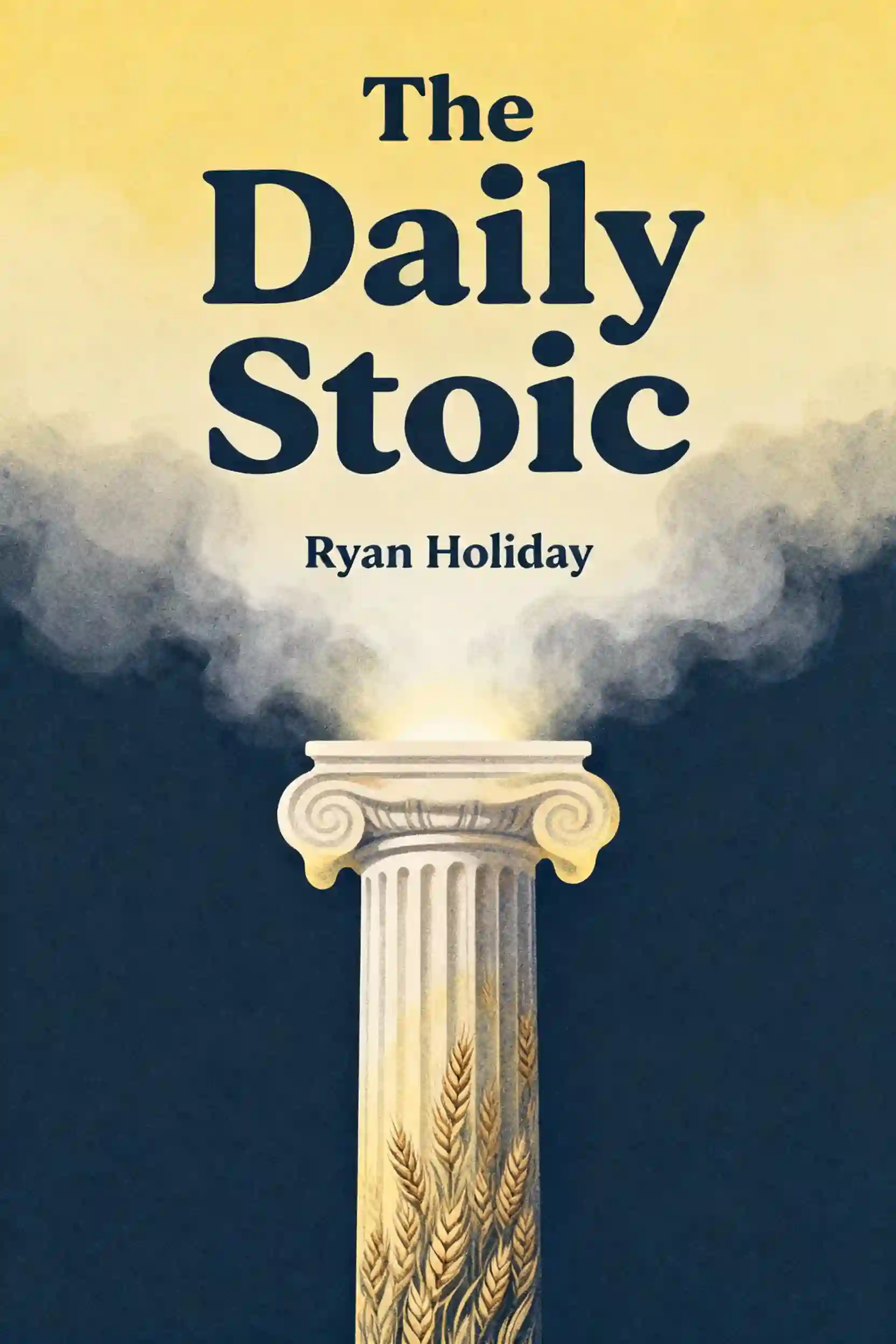
    The Daily Stoic
    Stoic Exercises, the Daily Practices That Build a Stronger Mind — Stoic of the Day
    link
    https://stoicoftheday.com/posts/stoic-exercises/
    Daily Stoicism: The Ultimate Guide to Stoic Habits, Routines & Practices
    link
    https://www.thestoicnetwork.com/2025/02/stoic-practices-daily-life.html
    The Resilience Habit: Building an Unshakeable Baseline - Stoicism U
    link
    https://stoicismu.com/the-resilience-habit/
    How to Practice Stoicism: Dichotomy of Control & Negative Visualisation - High Performance Culture
    link
    https://hiperformanceculture.com/identity/stoicism/guide/

    Domande frequenti

    The training gap refers to the disconnect between how we intend to show up and how we actually respond under pressure. It occurs when our internal state is out of sync with the reality of a situation, often leading to panic or emotional instability. Stoic philosophy addresses this not as a character flaw, but as a need for rigorous mental training. By viewing philosophy as a gym for the mind, individuals can close this gap and maintain composure during challenging moments.

    Cognitive reappraisal is a core Stoic strategy that involves changing your estimate of external events to revoke the pain they cause. Modern neuroscience validates this 2,300-year-old operating system, with research across 306 experimental comparisons showing it significantly impacts emotional stability. By reframing how we perceive snags or setbacks, we can regulate the brain's response and prevent emotions from acting like an emergency brake pulled by external forces.

    Recent neuroscience research and fMRI lab studies have proven that ancient Stoic practices are highly effective for personal resilience. The data suggests that the Stoic framework functions as a practical operating system for the human brain, specifically through the use of cognitive reappraisal. This scientific validation confirms that the mind can be trained to remain steady, allowing individuals to bridge the gap between their desired behavior and their actual reactions under stress.

    Creato da alumni della Columbia University | a San Francisco

    BeFreed Riunisce Una Community Globale Di Menti Curiose

    4.7

    valutazione media

    Oltre 7,84 mila valutazioni dell’app

    Community BeFreed

    Sul serio, non ho ancora esplorato l'app fino in fondo, ma dopo questi primi giorni sono davvero colpita… BeFreed è su un altro livello rispetto a qualsiasi altra app di apprendimento che abbia usato. Ti coinvolge tantissimo e migliora davvero la concentrazione: perfetta per chi non riesce a smettere di scrollare!

    @ladyInfinity

    Ho comprato BeFreed esattamente 23 giorni fa e da allora l'ho usata ogni singolo giorno. Si è integrata completamente nel mio flusso di lavoro e nelle mie abitudini di studio.

    @jayallen

    La verità è che l'app ha superato tutte le mie aspettative. Posso chiederle di generare audio su qualunque argomento, qualsiasi esso sia, e il risultato è impressionante. Il mio campo professionale è una specializzazione in psicoterapia, molto multidisciplinare; eppure le risposte sono molto accurate.

    @Raguipa

    Quello che apprezzo di più è quanto abbia ridotto il mio scrolling: passo meno tempo a cercare e più tempo ad assorbire informazioni. La combinazione di audiolibri completi, podcast e piani di apprendimento è brillante.

    @colonyofcreatorsNGO

    Sono istruttore di apprendimento accelerato PhotoReading da 24 anni… libri, lettura e apprendimento sono il mio pane, e BeFreed ha fatto un ottimo lavoro offrendo un approccio innovativo per trasmettere le informazioni in un modo facile da assimilare.

    @BeFreed user

    Non è solo un'app di riassunti di libri: ho usato l'opzione di lettura divertente ed è un riassunto molto migliore, un modo più efficace di afferrare le idee rispetto al metodo tradizionale. Solo questo vale la spesa.

    @austinakon

    Adoro questa app. La uso da diversi giorni e non riesco a smettere di ascoltare. Un ottimo modo per iniziare.

    @jcrules328

    Il programma mi piace davvero; lo sto provando da circa un mese e lo trovo una vera gemma. Funziona così bene perché con BeFreed posso creare i miei argomenti, e la voce è ottima, con una scelta illimitata di narrazioni.

    @DanielCZ

    Sul serio, non ho ancora esplorato l'app fino in fondo, ma dopo questi primi giorni sono davvero colpita… BeFreed è su un altro livello rispetto a qualsiasi altra app di apprendimento che abbia usato. Ti coinvolge tantissimo e migliora davvero la concentrazione: perfetta per chi non riesce a smettere di scrollare!

    @ladyInfinity

    Ho comprato BeFreed esattamente 23 giorni fa e da allora l'ho usata ogni singolo giorno. Si è integrata completamente nel mio flusso di lavoro e nelle mie abitudini di studio.

    @jayallen

    La verità è che l'app ha superato tutte le mie aspettative. Posso chiederle di generare audio su qualunque argomento, qualsiasi esso sia, e il risultato è impressionante. Il mio campo professionale è una specializzazione in psicoterapia, molto multidisciplinare; eppure le risposte sono molto accurate.

    @Raguipa

    Quello che apprezzo di più è quanto abbia ridotto il mio scrolling: passo meno tempo a cercare e più tempo ad assorbire informazioni. La combinazione di audiolibri completi, podcast e piani di apprendimento è brillante.

    @colonyofcreatorsNGO

    Sono istruttore di apprendimento accelerato PhotoReading da 24 anni… libri, lettura e apprendimento sono il mio pane, e BeFreed ha fatto un ottimo lavoro offrendo un approccio innovativo per trasmettere le informazioni in un modo facile da assimilare.

    @BeFreed user

    Non è solo un'app di riassunti di libri: ho usato l'opzione di lettura divertente ed è un riassunto molto migliore, un modo più efficace di afferrare le idee rispetto al metodo tradizionale. Solo questo vale la spesa.

    @austinakon

    Adoro questa app. La uso da diversi giorni e non riesco a smettere di ascoltare. Un ottimo modo per iniziare.

    @jcrules328

    Il programma mi piace davvero; lo sto provando da circa un mese e lo trovo una vera gemma. Funziona così bene perché con BeFreed posso creare i miei argomenti, e la voce è ottima, con una scelta illimitata di narrazioni.

    @DanielCZ

    Adoro poter ricevere informazioni e idee utili e condensate in un audio in stile podcast da 8-15 minuti. Non sono un grande fan dei podcast per via di tutto il riempitivo, ma qui si va dritti al punto.

    @BeFreed user

    Sto finendo il dottorato e devo leggere un sacco di materiale che non conosco… Con BeFreed basta inserire un prompt: l'app trova le fonti per te e genera un podcast audio. Trovo il processo di BeFreed più scorrevole di NotebookLM.

    @Brad

    Cerco spesso su YouTube qualcosa da ascoltare mentre preparo la colazione, cammino o sono in viaggio, e BeFreed offre un approccio ancora più mirato, senza pubblicità e senza riempitivi!

    @BeFreed user

    La cosa in assoluto migliore di questa piattaforma è la versatilità. Non c'è letteralmente nessun argomento fuori portata. Gestisce qualsiasi cosa le proponi… È raro trovare uno strumento di apprendimento senza limiti che mantenga davvero le promesse.

    @jayallen

    BeFreed è fantastica. Il design intuitivo mi fa passare meno tempo a navigare e più tempo a imparare. Il mix di audiolibri, podcast e piani di apprendimento è una combinazione geniale che ha cambiato completamente la mia routine quotidiana.

    @BeFreed user

    All'inizio mi ci è voluto un po' per capire come creare podcast in italiano e poi… boom! È fantastico! Posso chiedergli di spiegarmi qualsiasi argomento e lo fa benissimo, con grande intelligenza!

    @matteo77

    BeFreed è diventata la mia app quotidiana per gli audiolibri… Quello che mi piace di più è che inserisci il tuo testo e ottieni un audio da ascoltare ovunque.

    @kotanzu1

    Adoro poter ricevere informazioni e idee utili e condensate in un audio in stile podcast da 8-15 minuti. Non sono un grande fan dei podcast per via di tutto il riempitivo, ma qui si va dritti al punto.

    @BeFreed user

    Sto finendo il dottorato e devo leggere un sacco di materiale che non conosco… Con BeFreed basta inserire un prompt: l'app trova le fonti per te e genera un podcast audio. Trovo il processo di BeFreed più scorrevole di NotebookLM.

    @Brad

    Cerco spesso su YouTube qualcosa da ascoltare mentre preparo la colazione, cammino o sono in viaggio, e BeFreed offre un approccio ancora più mirato, senza pubblicità e senza riempitivi!

    @BeFreed user

    La cosa in assoluto migliore di questa piattaforma è la versatilità. Non c'è letteralmente nessun argomento fuori portata. Gestisce qualsiasi cosa le proponi… È raro trovare uno strumento di apprendimento senza limiti che mantenga davvero le promesse.

    @jayallen

    BeFreed è fantastica. Il design intuitivo mi fa passare meno tempo a navigare e più tempo a imparare. Il mix di audiolibri, podcast e piani di apprendimento è una combinazione geniale che ha cambiato completamente la mia routine quotidiana.

    @BeFreed user

    All'inizio mi ci è voluto un po' per capire come creare podcast in italiano e poi… boom! È fantastico! Posso chiedergli di spiegarmi qualsiasi argomento e lo fa benissimo, con grande intelligenza!

    @matteo77

    BeFreed è diventata la mia app quotidiana per gli audiolibri… Quello che mi piace di più è che inserisci il tuo testo e ottieni un audio da ascoltare ovunque.

    @kotanzu1

    Scopri di piu su come si parla di BeFreed nel web
    Inizia il tuo percorso di apprendimento, ora
    App BeFreed
    BeFreed

    Impara qualsiasi cosa, personalizzato

    DiscordLinkedIn
    Riassunti di libri in evidenza
    Crucial ConversationsThe Perfect MarriageInto the WildNever Split the DifferenceAttachedGood to GreatSay Nothing
    Categorie di tendenza
    Self HelpCommunication SkillRelationshipMindfulnessPhilosophyInspirationProductivity
    Liste di lettura delle celebrita
    Elon MuskCharlie KirkBill GatesSteve JobsAndrew HubermanJoe RoganJordan Peterson
    Collezione premiata
    Pulitzer PrizeNational Book AwardGoodreads Choice AwardsNobel Prize in LiteratureNew York TimesCaldecott MedalNebula Award
    Argomenti in evidenza
    ManagementAmerican HistoryWarTradingStoicismAnxietySex
    Migliori libri per anno
    2025 Best Non Fiction Books2024 Best Non Fiction Books2023 Best Non Fiction Books
    Autori in evidenza
    Chimamanda Ngozi AdichieGeorge OrwellO. J. SimpsonBarbara O'NeillWinston ChurchillCharlie Kirk
    BeFreed vs altre app
    BeFreed vs. Other Book Summary AppsBeFreed vs. ElevenReaderBeFreed vs. ReadwiseBeFreed vs. Anki
    Strumenti di apprendimento
    Knowledge VisualizerAI Podcast Generator
    Informazioni
    Chi siamoarrow
    Prezziarrow
    FAQarrow
    Blogarrow
    Carrierearrow
    Partnershiparrow
    Programma Ambassadorarrow
    Directoryarrow
    BeFreed
    Try now
    © 2026 BeFreed
    Termini di utilizzoInformativa sulla privacy
    BeFreed

    Impara qualsiasi cosa, personalizzato

    DiscordLinkedIn
    Riassunti di libri in evidenza
    Crucial ConversationsThe Perfect MarriageInto the WildNever Split the DifferenceAttachedGood to GreatSay Nothing
    Categorie di tendenza
    Self HelpCommunication SkillRelationshipMindfulnessPhilosophyInspirationProductivity
    Liste di lettura delle celebrita
    Elon MuskCharlie KirkBill GatesSteve JobsAndrew HubermanJoe RoganJordan Peterson
    Collezione premiata
    Pulitzer PrizeNational Book AwardGoodreads Choice AwardsNobel Prize in LiteratureNew York TimesCaldecott MedalNebula Award
    Argomenti in evidenza
    ManagementAmerican HistoryWarTradingStoicismAnxietySex
    Migliori libri per anno
    2025 Best Non Fiction Books2024 Best Non Fiction Books2023 Best Non Fiction Books
    Strumenti di apprendimento
    Knowledge VisualizerAI Podcast Generator
    Autori in evidenza
    Chimamanda Ngozi AdichieGeorge OrwellO. J. SimpsonBarbara O'NeillWinston ChurchillCharlie Kirk
    BeFreed vs altre app
    BeFreed vs. Other Book Summary AppsBeFreed vs. ElevenReaderBeFreed vs. ReadwiseBeFreed vs. Anki
    Informazioni
    Chi siamoarrow
    Prezziarrow
    FAQarrow
    Blogarrow
    Carrierearrow
    Partnershiparrow
    Programma Ambassadorarrow
    Directoryarrow
    BeFreed
    Try now
    © 2026 BeFreed
    Termini di utilizzoInformativa sulla privacy

    Contenuti simili

    Copertina del libro Stoicism: Ancient Wisdom for Modern Resilience
    A Handbook for New StoicsHow to Be a StoicThe ManualThe Practicing Stoic
    19 sources
    Stoicism: Ancient Wisdom for Modern Resilience
    Discover how Stoicism goes beyond inspirational quotes to offer practical tools for emotional intelligence and mental resilience in 2026. Learn actionable practices to focus on what you can control and find calm in chaos.
    21 min
    Copertina del libro Unshakeable Peace: Stay Grounded Through Any Storm
    source 1source 2source 3source 4
    6 sources
    Unshakeable Peace: Stay Grounded Through Any Storm
    Discover how to find true inner calm using ancient Stoic wisdom and modern neuroscience. Learn practical techniques to stay grounded when life gets chaotic, from breathing practices to rewiring your brain for resilience.
    28 min
    Copertina del libro Ancient Wisdom for Modern Resilience: Historical Lessons
    Self-Help That WorksBounce Back
    2 sources
    Ancient Wisdom for Modern Resilience: Historical Lessons
    Discover how Stoic philosophers, Holocaust survivors, and historical figures developed unshakeable resilience. From ancient Greek practices to Japanese Kintsugi, learn timeless strategies for bouncing back stronger from any setback.
    9 min
    Copertina del libro Stoic habits to stay calm when life feels chaotic
    A Handbook for New StoicsHow to Be a StoicLessons in StoicismThe Manual
    21 sources
    Stoic habits to stay calm when life feels chaotic
    Exhausted by constant stress? Learn how focusing on what you can control and using small mental shifts can help you respond with intention and steadiness.
    12 min
    Copertina del libro Ancient Stoic Secrets to Unshakable Inner Peace
    The ManualHow to Be a StoicLessons in StoicismThe Stoic Dichotomy of Control in Practice - Psychology Today
    6 sources
    Ancient Stoic Secrets to Unshakable Inner Peace
    Discover how 2,000-year-old Stoic wisdom can transform your relationship with stress, emotions, and life's challenges. Learn practical daily exercises to build mental resilience and find freedom through self-control.
    10 min
    Copertina del libro Stoic man principles for staying grounded in chaos
    How to Be a StoicA Handbook for New StoicsLessons in StoicismThe Manual
    25 sources
    Stoic man principles for staying grounded in chaos
    When life feels out of control, reacting with stress is easy. Learn how ancient Stoic logic helps you find internal stability and mental toughness.
    44 min
    Copertina del libro Stoicism: The Emotional Scientist
    MeditationsOn The Shortness Of LifeHow to be a modern stoic: an introduction to an ancient philosophy applied to your daily lifeStoic Principles for Work: A Practical Guide for the Modern Knowledge Worker | 10000Hours Blog
    6 sources
    Stoicism: The Emotional Scientist
    Feeling overwhelmed by life's chaos? Discover how Stoic wisdom helps you reframe your reactions and find mental clarity in a modern world.
    27 min
    Copertina del libro The Inner Fortress: Stoic Resilience and CBT
    Stoicism and Cognitive Behavioural Therapy (CBT) - Owen FitzpatrickThe Psychology of Manipulation: Mechanisms, Tactics, and Defense - Dark Psychology LabDark Psychology And Manipulation: 10 Most Common TechniquesDark Psychology Manipulation Tactics: A Stoic's Guide to Immunity — Steel Maxim — Steel Maxim
    6 sources
    The Inner Fortress: Stoic Resilience and CBT
    Build inner immunity by combining ancient wisdom with modern psychology. Learn how to spot manipulation and regain control over your reactions.
    24 min