The Science of Never Missing Twice
Missing a habit once is an accident, but twice is a new pattern. Learn how to stop the downward spiral and use the day-after to protect your progress.

Miglior citazione da The Science of Never Missing Twice
While missing once is an accident, missing twice is the start of a new habit—an unwanted one. The real danger is not the skip itself, but the psychological spiral that convinces you that you have already blown it.
Generated with BeFreed
The Science of Never Missing Twice






Domande frequenti
According to the science of habit formation, a single missed day is statistically insignificant and does not damage the neural scaffolding you have built in the basal ganglia. However, missing twice in a row signals the start of a new, unwanted pattern. While one miss is often an accident, the second miss begins to wire a different circuit—the habit of "not doing" the behavior—which can quickly lead to a total collapse of the routine.
The "what-the-hell effect" is a psychological cycle where a single mistake leads to a feeling of total failure. Because of all-or-nothing thinking, a person who misses one day may feel they have already "blown it," leading to a shame spiral that justifies further indulgence or quitting entirely. The Never Miss Twice Rule acts as a defensive guardrail against this effect by providing a clear protocol to resume the habit before the psychological damage becomes permanent.
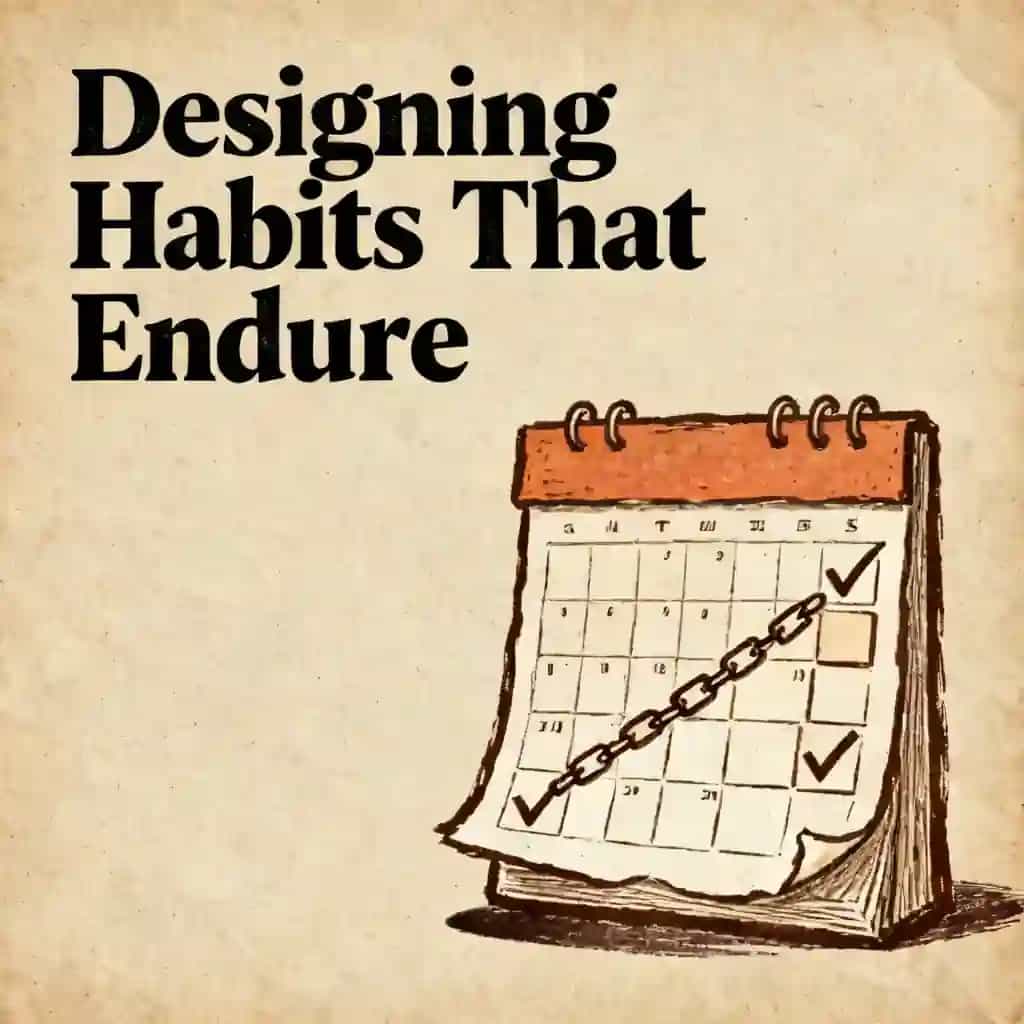
While streak counters provide initial motivation, they eventually shift from a positive "achievement" focus to a negative "loss avoidance" focus. When a long streak is broken, it often triggers a sense of catastrophic failure and "streak attachment" grieving, which can suppress future engagement. Tools like heatmaps are more effective because they treat a miss as a single data point in a larger sea of success rather than a total reset to zero.
A Minimum Viable Version, or "Lazy Day" protocol, is a scaled-down version of a habit that takes less than five minutes and requires almost no willpower, such as doing one push-up instead of a full workout. It should be used on "day two" after a miss or when life is chaotic. The goal is not physical progress, but rather preserving the "cue-action loop" in the brain and reinforcing your identity as someone who shows up even on their worst days.
A Trigger Failure occurs when the environmental cue for the habit disappears, such as a change in routine that removes your usual "anchor." An Action Failure happens when the cue occurs, but the behavior feels too "expensive" or difficult for your current energy levels. Identifying the type of failure allows you to treat the miss as a design problem rather than a lack of willpower, helping you either re-anchor the habit to a new cue or shrink the action to a more manageable size.
Creato da alumni della Columbia University a San Francisco
"Instead of endless scrolling, I just hit play on BeFreed. It saves me so much time."


"I never knew where to start with nonfiction—BeFreed’s book lists turned into podcasts gave me a clear path."


"Perfect balance between learning and entertainment. Finished ‘Thinking, Fast and Slow’ on my commute this week."
"Crazy how much I learned while walking the dog. BeFreed = small habits → big gains."
"Reading used to feel like a chore. Now it’s just part of my lifestyle."

"Feels effortless compared to reading. I’ve finished 6 books this month already."
"BeFreed turned my guilty doomscrolling into something that feels productive and inspiring."

"BeFreed turned my commute into learning time. 20-min podcasts are perfect for finishing books I never had time for."
"BeFreed replaced my podcast queue. Imagine Spotify for books — that’s it. 🙌"

"It is great for me to learn something from the book without reading it."
"The themed book list podcasts help me connect ideas across authors—like a guided audio journey."
"Makes me feel smarter every time before going to work"
Creato da alumni della Columbia University a San Francisco
"Instead of endless scrolling, I just hit play on BeFreed. It saves me so much time."
"I never knew where to start with nonfiction—BeFreed’s book lists turned into podcasts gave me a clear path."
"Perfect balance between learning and entertainment. Finished ‘Thinking, Fast and Slow’ on my commute this week."
"Crazy how much I learned while walking the dog. BeFreed = small habits → big gains."
"Reading used to feel like a chore. Now it’s just part of my lifestyle."
"Feels effortless compared to reading. I’ve finished 6 books this month already."
"BeFreed turned my guilty doomscrolling into something that feels productive and inspiring."
"BeFreed turned my commute into learning time. 20-min podcasts are perfect for finishing books I never had time for."
"BeFreed replaced my podcast queue. Imagine Spotify for books — that’s it. 🙌"
"It is great for me to learn something from the book without reading it."
"The themed book list podcasts help me connect ideas across authors—like a guided audio journey."
"Makes me feel smarter every time before going to work"
"Instead of endless scrolling, I just hit play on BeFreed. It saves me so much time."
"I never knew where to start with nonfiction—BeFreed’s book lists turned into podcasts gave me a clear path."
"Perfect balance between learning and entertainment. Finished ‘Thinking, Fast and Slow’ on my commute this week."
"Crazy how much I learned while walking the dog. BeFreed = small habits → big gains."
"Reading used to feel like a chore. Now it’s just part of my lifestyle."
"Feels effortless compared to reading. I’ve finished 6 books this month already."
"BeFreed turned my guilty doomscrolling into something that feels productive and inspiring."
"BeFreed turned my commute into learning time. 20-min podcasts are perfect for finishing books I never had time for."
"BeFreed replaced my podcast queue. Imagine Spotify for books — that’s it. 🙌"
"It is great for me to learn something from the book without reading it."
"The themed book list podcasts help me connect ideas across authors—like a guided audio journey."
"Makes me feel smarter every time before going to work"
"Instead of endless scrolling, I just hit play on BeFreed. It saves me so much time."
"I never knew where to start with nonfiction—BeFreed’s book lists turned into podcasts gave me a clear path."
"Perfect balance between learning and entertainment. Finished ‘Thinking, Fast and Slow’ on my commute this week."
"Crazy how much I learned while walking the dog. BeFreed = small habits → big gains."
"Reading used to feel like a chore. Now it’s just part of my lifestyle."
"Feels effortless compared to reading. I’ve finished 6 books this month already."
"BeFreed turned my guilty doomscrolling into something that feels productive and inspiring."
"BeFreed turned my commute into learning time. 20-min podcasts are perfect for finishing books I never had time for."
"BeFreed replaced my podcast queue. Imagine Spotify for books — that’s it. 🙌"
"It is great for me to learn something from the book without reading it."
"The themed book list podcasts help me connect ideas across authors—like a guided audio journey."
"Makes me feel smarter every time before going to work"