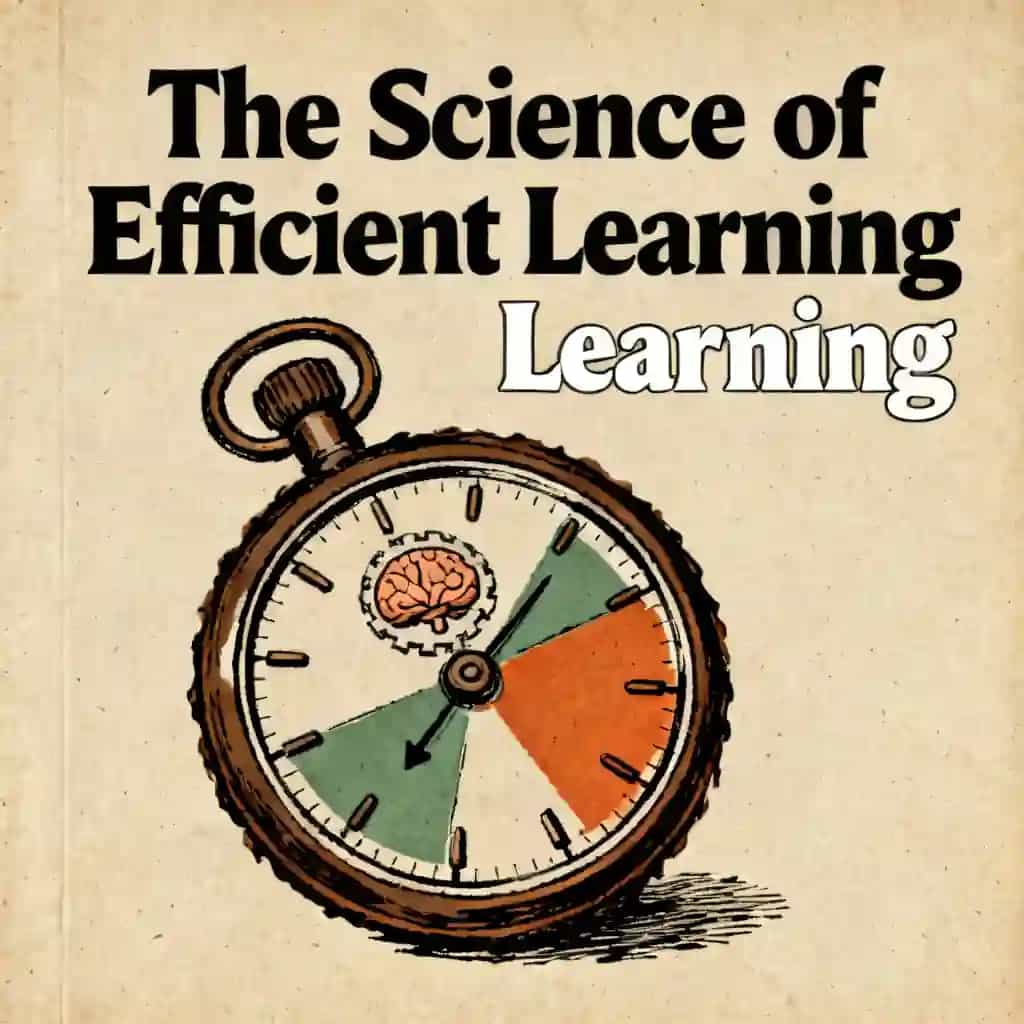
Mastering the Science of Accelerated Learning
Stop wasting time on passive re-reading and discover evidence-based cognitive techniques that help you learn three times faster and retain knowledge forever.

Miglior citazione da Mastering the Science of Accelerated Learning
Real learning is a generative process where you have to build the knowledge yourself; if it feels too easy, you’re probably just recognizing the information rather than encoding it.
Generated by Shubham
I want to learn how to learn effectively.

Domande frequenti
Research shows that these methods often lead to a "fluency illusion," where the material feels familiar because you are looking at it, but it isn't actually being encoded into long-term memory. These are passive forms of consumption that have low utility for durable learning. To truly lock knowledge in, you must shift from passive reading to active engagement, which requires the brain to do the "heavy lifting" of retrieving or explaining the information.
Spaced Repetition is a strategy focused on when you review information, specifically by increasing the intervals between study sessions to combat the "forgetting curve." It tells the brain that information is important because it keeps reappearing. Retrieval Practice is a tool focused on how you review, emphasizing pulling information out of your brain (through flashcards or practice tests) rather than putting it in. When used together, they create a synergistic effect that strengthens neural pathways significantly more than restudying.
Interleaving involves mixing different topics or types of problems (e.g., ABC, BCA) rather than practicing them in blocks (e.g., AAA, BBB). While it feels more difficult and confusing, it prevents "autopilot" learning. By forcing the brain to constantly discriminate between different types of problems and decide which strategy to apply, you build true expertise and avoid the "illusion of mastery" that often leads to freezing up during exams when questions are mixed together.
The Feynman Technique involves explaining a complex concept in the simplest terms possible, as if you were teaching it to a twelve-year-old. This is effective because it acts as a "bullshit detector" for your own understanding; if you cannot explain a concept without using jargon or getting stuck, you have identified a gap in your knowledge. Stripping away complexity forces you to confront the "fuzzy" parts of your mental model and ensures a deeper conceptual grasp.
Scientific research suggests that the idea of strict "visual" or "auditory" learning styles is a myth. However, a concept called Dual Coding shows that everyone learns better when information is presented in both verbal and visual formats. By using two different "hooks"—such as a written description and a diagram—you provide the brain with multiple pathways to retrieve that memory later, regardless of your perceived learning style.
Creato da alumni della Columbia University a San Francisco
"Instead of endless scrolling, I just hit play on BeFreed. It saves me so much time."


"I never knew where to start with nonfiction—BeFreed’s book lists turned into podcasts gave me a clear path."


"Perfect balance between learning and entertainment. Finished ‘Thinking, Fast and Slow’ on my commute this week."
"Crazy how much I learned while walking the dog. BeFreed = small habits → big gains."
"Reading used to feel like a chore. Now it’s just part of my lifestyle."

"Feels effortless compared to reading. I’ve finished 6 books this month already."
"BeFreed turned my guilty doomscrolling into something that feels productive and inspiring."

"BeFreed turned my commute into learning time. 20-min podcasts are perfect for finishing books I never had time for."
"BeFreed replaced my podcast queue. Imagine Spotify for books — that’s it. 🙌"

"It is great for me to learn something from the book without reading it."
"The themed book list podcasts help me connect ideas across authors—like a guided audio journey."
"Makes me feel smarter every time before going to work"
Creato da alumni della Columbia University a San Francisco
"Instead of endless scrolling, I just hit play on BeFreed. It saves me so much time."
"I never knew where to start with nonfiction—BeFreed’s book lists turned into podcasts gave me a clear path."
"Perfect balance between learning and entertainment. Finished ‘Thinking, Fast and Slow’ on my commute this week."
"Crazy how much I learned while walking the dog. BeFreed = small habits → big gains."
"Reading used to feel like a chore. Now it’s just part of my lifestyle."
"Feels effortless compared to reading. I’ve finished 6 books this month already."
"BeFreed turned my guilty doomscrolling into something that feels productive and inspiring."
"BeFreed turned my commute into learning time. 20-min podcasts are perfect for finishing books I never had time for."
"BeFreed replaced my podcast queue. Imagine Spotify for books — that’s it. 🙌"
"It is great for me to learn something from the book without reading it."
"The themed book list podcasts help me connect ideas across authors—like a guided audio journey."
"Makes me feel smarter every time before going to work"
"Instead of endless scrolling, I just hit play on BeFreed. It saves me so much time."
"I never knew where to start with nonfiction—BeFreed’s book lists turned into podcasts gave me a clear path."
"Perfect balance between learning and entertainment. Finished ‘Thinking, Fast and Slow’ on my commute this week."
"Crazy how much I learned while walking the dog. BeFreed = small habits → big gains."
"Reading used to feel like a chore. Now it’s just part of my lifestyle."
"Feels effortless compared to reading. I’ve finished 6 books this month already."
"BeFreed turned my guilty doomscrolling into something that feels productive and inspiring."
"BeFreed turned my commute into learning time. 20-min podcasts are perfect for finishing books I never had time for."
"BeFreed replaced my podcast queue. Imagine Spotify for books — that’s it. 🙌"
"It is great for me to learn something from the book without reading it."
"The themed book list podcasts help me connect ideas across authors—like a guided audio journey."
"Makes me feel smarter every time before going to work"
"Instead of endless scrolling, I just hit play on BeFreed. It saves me so much time."
"I never knew where to start with nonfiction—BeFreed’s book lists turned into podcasts gave me a clear path."
"Perfect balance between learning and entertainment. Finished ‘Thinking, Fast and Slow’ on my commute this week."
"Crazy how much I learned while walking the dog. BeFreed = small habits → big gains."
"Reading used to feel like a chore. Now it’s just part of my lifestyle."
"Feels effortless compared to reading. I’ve finished 6 books this month already."
"BeFreed turned my guilty doomscrolling into something that feels productive and inspiring."
"BeFreed turned my commute into learning time. 20-min podcasts are perfect for finishing books I never had time for."
"BeFreed replaced my podcast queue. Imagine Spotify for books — that’s it. 🙌"
"It is great for me to learn something from the book without reading it."
"The themed book list podcasts help me connect ideas across authors—like a guided audio journey."
"Makes me feel smarter every time before going to work"