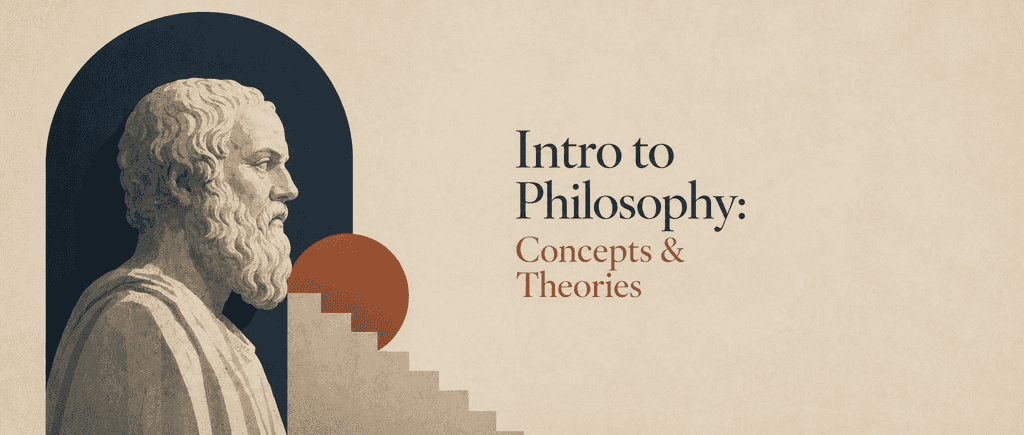
Hikma: The Harmony of Faith and Logic
Explore the profound world of Islamic philosophy, where Greek logic meets spiritual revelation. Discover how thinkers like Al-Farabi and Avicenna bridged the gap between reason and the divine to seek ultimate truth.

Miglior citazione da Hikma: The Harmony of Faith and Logic
It’s not faith vs. reason—it’s actually reason helping faith stay true to its own highest principles, using the tools we were given to make sure our understanding of the divine doesn't collapse into something small or contradictory.
Generated by Taoufik
Anything phylosophical in arabic

Domande frequenti
According to the philosopher Al-Farabi, humanity is divided into three intellectual classes based on how they access truth. The first class consists of philosophers who require "Burhan," or absolute logical proof derived from first principles. The second class uses dialectical proofs, which rely on a high level of probability and often use scripture as an anchor for reason. The third and most numerous class is reached through rhetorical proofs, using metaphors, stories, and symbols to understand complex truths. Al-Farabi argued that while the "clothing" or delivery method changes for each group, the underlying truth remains the same.
Thinkers like Al-Farabi and Ibn Sina provided a naturalistic explanation for prophecy centered on the "active intellect." They proposed that a Prophet possesses an exceptionally powerful intellect and imagination capable of receiving a divine "overflow" of knowledge. Instead of seeing prophecy as a supernatural event that breaks the laws of nature, they viewed it as a peak human capacity where the Prophet acts as a master translator, turning raw universal data into the symbols, narratives, and laws that a civilization needs to function.
In Ibn Sina’s "Proof of the Truthful," he categorizes everything in existence as either "Necessary" or "Possible." A "Possible" (or contingent) thing is something that could either exist or not exist and requires an external cause to be brought into being, such as a phone or a human. In contrast, a "Necessary Being" is something that cannot not exist; its very essence is existence itself. Ibn Sina argued that because a collection of possible things cannot cause itself, there must be a singular, non-contingent Necessary Being—God—at the beginning of the chain.
Developed by the philosopher Mulla Sadra, "Substantial Motion" is the idea that everything in the universe, except for God, is in a constant state of internal evolution. Rather than objects just moving from one place to another, their very substance is being recreated and evolved at every moment. This perspective suggests that God is not just a creator who acted once in the past, but is eternally creating the world at every single instant, making the universe a dynamic and living process rather than a static machine.
The "Falsafa" (philosophers) followed Greek logic to argue that the universe is eternal, suggesting that an eternal cause (God) must have an eternal effect. Conversely, the "Mutakallimun" (theologians) argued that the universe must have a beginning. They used logical puzzles to show that an infinite past is impossible; for example, they argued that if time were infinite, we could never have reached the present moment, much like one can never finish counting to infinity. This debate was ultimately about whether God acts as a "necessary cause" or a "sovereign creator" with the free will to choose a specific moment for creation.
Creato da alumni della Columbia University a San Francisco
"Instead of endless scrolling, I just hit play on BeFreed. It saves me so much time."


"I never knew where to start with nonfiction—BeFreed’s book lists turned into podcasts gave me a clear path."


"Perfect balance between learning and entertainment. Finished ‘Thinking, Fast and Slow’ on my commute this week."
"Crazy how much I learned while walking the dog. BeFreed = small habits → big gains."
"Reading used to feel like a chore. Now it’s just part of my lifestyle."

"Feels effortless compared to reading. I’ve finished 6 books this month already."
"BeFreed turned my guilty doomscrolling into something that feels productive and inspiring."

"BeFreed turned my commute into learning time. 20-min podcasts are perfect for finishing books I never had time for."
"BeFreed replaced my podcast queue. Imagine Spotify for books — that’s it. 🙌"

"It is great for me to learn something from the book without reading it."
"The themed book list podcasts help me connect ideas across authors—like a guided audio journey."
"Makes me feel smarter every time before going to work"
Creato da alumni della Columbia University a San Francisco
"Instead of endless scrolling, I just hit play on BeFreed. It saves me so much time."
"I never knew where to start with nonfiction—BeFreed’s book lists turned into podcasts gave me a clear path."
"Perfect balance between learning and entertainment. Finished ‘Thinking, Fast and Slow’ on my commute this week."
"Crazy how much I learned while walking the dog. BeFreed = small habits → big gains."
"Reading used to feel like a chore. Now it’s just part of my lifestyle."
"Feels effortless compared to reading. I’ve finished 6 books this month already."
"BeFreed turned my guilty doomscrolling into something that feels productive and inspiring."
"BeFreed turned my commute into learning time. 20-min podcasts are perfect for finishing books I never had time for."
"BeFreed replaced my podcast queue. Imagine Spotify for books — that’s it. 🙌"
"It is great for me to learn something from the book without reading it."
"The themed book list podcasts help me connect ideas across authors—like a guided audio journey."
"Makes me feel smarter every time before going to work"
"Instead of endless scrolling, I just hit play on BeFreed. It saves me so much time."
"I never knew where to start with nonfiction—BeFreed’s book lists turned into podcasts gave me a clear path."
"Perfect balance between learning and entertainment. Finished ‘Thinking, Fast and Slow’ on my commute this week."
"Crazy how much I learned while walking the dog. BeFreed = small habits → big gains."
"Reading used to feel like a chore. Now it’s just part of my lifestyle."
"Feels effortless compared to reading. I’ve finished 6 books this month already."
"BeFreed turned my guilty doomscrolling into something that feels productive and inspiring."
"BeFreed turned my commute into learning time. 20-min podcasts are perfect for finishing books I never had time for."
"BeFreed replaced my podcast queue. Imagine Spotify for books — that’s it. 🙌"
"It is great for me to learn something from the book without reading it."
"The themed book list podcasts help me connect ideas across authors—like a guided audio journey."
"Makes me feel smarter every time before going to work"
"Instead of endless scrolling, I just hit play on BeFreed. It saves me so much time."
"I never knew where to start with nonfiction—BeFreed’s book lists turned into podcasts gave me a clear path."
"Perfect balance between learning and entertainment. Finished ‘Thinking, Fast and Slow’ on my commute this week."
"Crazy how much I learned while walking the dog. BeFreed = small habits → big gains."
"Reading used to feel like a chore. Now it’s just part of my lifestyle."
"Feels effortless compared to reading. I’ve finished 6 books this month already."
"BeFreed turned my guilty doomscrolling into something that feels productive and inspiring."
"BeFreed turned my commute into learning time. 20-min podcasts are perfect for finishing books I never had time for."
"BeFreed replaced my podcast queue. Imagine Spotify for books — that’s it. 🙌"
"It is great for me to learn something from the book without reading it."
"The themed book list podcasts help me connect ideas across authors—like a guided audio journey."
"Makes me feel smarter every time before going to work"