Federico Faggin: Consciousness, Silicon, and the Intel 4004
Explore Federico Faggin's journey from inventing the Intel 4004 microprocessor to challenging the idea that consciousness is just a product of biological computers.
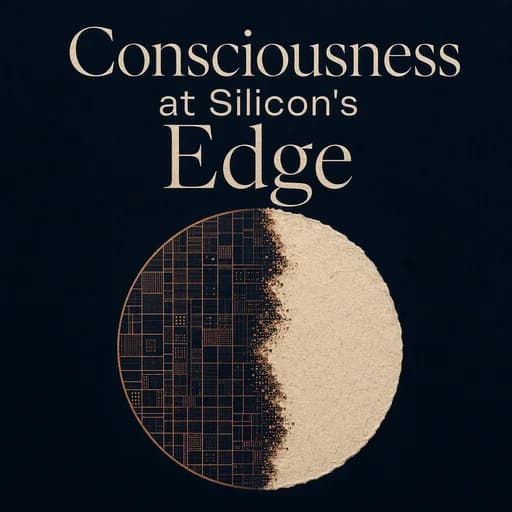
Miglior citazione da Federico Faggin: Consciousness, Silicon, and the Intel 4004
If you start with bits of matter that have zero consciousness and zero free will, how do you ever get to a being that has both? No amount of electrical or biochemical signals can ever 'become' the feeling of love or the taste of an orange.
Generated by Aditya
Create a premium audio lesson based on the attached source about Federico Faggin's 'Spacetime is the Memory of a Self-Knowing Universe'. Focus on his core arguments regarding the distinction between classical/quantum information and the nature of consciousness. Follow the user's specific structural requirements: start with a skeptical hook, include confidence ratings for major conclusions, provide a critical analysis of evidence, and conclude with practical takeaways. Keep the tone intellectually rigorous and documentary-style, ensuring all concepts are accessible to an intelligent layperson.


Domande frequenti
Federico Faggin is a renowned physicist and inventor celebrated for leading the design of the Intel 4004, the world's first microprocessor. He is also the pioneer behind silicon gate technology, which serves as the fundamental building block for modern smartphones and laptops. While he spent his career at the peak of hard science and technology, he has recently shifted his focus toward exploring the profound scientific and philosophical debates surrounding the nature of consciousness.
Federico Faggin challenges the common materialist view that humans are merely biological computers or that the brain secretes consciousness like an organ. Instead, he argues that consciousness is not an accidental byproduct of matter but is actually the foundation of everything. He suggests that the universe is trying to know itself, proposing a radical shift in how we understand identity, free will, and the relationship between the physical world and the mind.
In his exploration of consciousness and the silicon limit, Federico Faggin presents a unique theory where spacetime is viewed as the memory of the universe. He moves away from traditional tech-centric views to argue that the universe is a self-knowing entity. This perspective suggests that our physical reality is deeply intertwined with a conscious foundation, fundamentally changing how we perceive the history of matter and the role of human experience within the cosmos.
Creato da alumni della Columbia University a San Francisco
"Instead of endless scrolling, I just hit play on BeFreed. It saves me so much time."


"I never knew where to start with nonfiction—BeFreed’s book lists turned into podcasts gave me a clear path."


"Perfect balance between learning and entertainment. Finished ‘Thinking, Fast and Slow’ on my commute this week."
"Crazy how much I learned while walking the dog. BeFreed = small habits → big gains."
"Reading used to feel like a chore. Now it’s just part of my lifestyle."

"Feels effortless compared to reading. I’ve finished 6 books this month already."
"BeFreed turned my guilty doomscrolling into something that feels productive and inspiring."

"BeFreed turned my commute into learning time. 20-min podcasts are perfect for finishing books I never had time for."
"BeFreed replaced my podcast queue. Imagine Spotify for books — that’s it. 🙌"

"It is great for me to learn something from the book without reading it."
"The themed book list podcasts help me connect ideas across authors—like a guided audio journey."
"Makes me feel smarter every time before going to work"
Creato da alumni della Columbia University a San Francisco
"Instead of endless scrolling, I just hit play on BeFreed. It saves me so much time."
"I never knew where to start with nonfiction—BeFreed’s book lists turned into podcasts gave me a clear path."
"Perfect balance between learning and entertainment. Finished ‘Thinking, Fast and Slow’ on my commute this week."
"Crazy how much I learned while walking the dog. BeFreed = small habits → big gains."
"Reading used to feel like a chore. Now it’s just part of my lifestyle."
"Feels effortless compared to reading. I’ve finished 6 books this month already."
"BeFreed turned my guilty doomscrolling into something that feels productive and inspiring."
"BeFreed turned my commute into learning time. 20-min podcasts are perfect for finishing books I never had time for."
"BeFreed replaced my podcast queue. Imagine Spotify for books — that’s it. 🙌"
"It is great for me to learn something from the book without reading it."
"The themed book list podcasts help me connect ideas across authors—like a guided audio journey."
"Makes me feel smarter every time before going to work"
"Instead of endless scrolling, I just hit play on BeFreed. It saves me so much time."
"I never knew where to start with nonfiction—BeFreed’s book lists turned into podcasts gave me a clear path."
"Perfect balance between learning and entertainment. Finished ‘Thinking, Fast and Slow’ on my commute this week."
"Crazy how much I learned while walking the dog. BeFreed = small habits → big gains."
"Reading used to feel like a chore. Now it’s just part of my lifestyle."
"Feels effortless compared to reading. I’ve finished 6 books this month already."
"BeFreed turned my guilty doomscrolling into something that feels productive and inspiring."
"BeFreed turned my commute into learning time. 20-min podcasts are perfect for finishing books I never had time for."
"BeFreed replaced my podcast queue. Imagine Spotify for books — that’s it. 🙌"
"It is great for me to learn something from the book without reading it."
"The themed book list podcasts help me connect ideas across authors—like a guided audio journey."
"Makes me feel smarter every time before going to work"
"Instead of endless scrolling, I just hit play on BeFreed. It saves me so much time."
"I never knew where to start with nonfiction—BeFreed’s book lists turned into podcasts gave me a clear path."
"Perfect balance between learning and entertainment. Finished ‘Thinking, Fast and Slow’ on my commute this week."
"Crazy how much I learned while walking the dog. BeFreed = small habits → big gains."
"Reading used to feel like a chore. Now it’s just part of my lifestyle."
"Feels effortless compared to reading. I’ve finished 6 books this month already."
"BeFreed turned my guilty doomscrolling into something that feels productive and inspiring."
"BeFreed turned my commute into learning time. 20-min podcasts are perfect for finishing books I never had time for."
"BeFreed replaced my podcast queue. Imagine Spotify for books — that’s it. 🙌"
"It is great for me to learn something from the book without reading it."
"The themed book list podcasts help me connect ideas across authors—like a guided audio journey."
"Makes me feel smarter every time before going to work"