Discover how email marketing helps small business owners build lists, optimize subject lines, and create personalized content to drive conversions and loyalty.

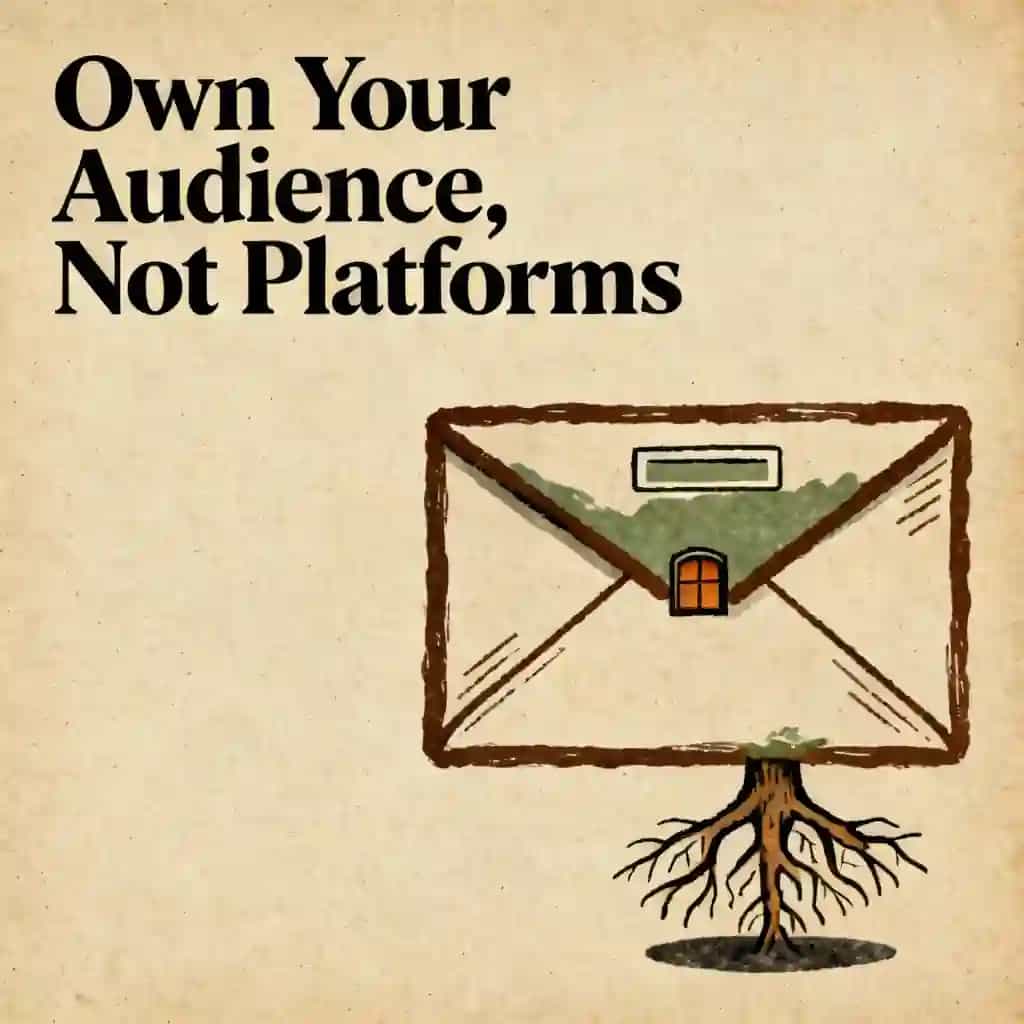
Email is a superpower for small business owners because you actually own that list; no one can throttle your reach or change the rules overnight, leading to an average return of $36 for every single dollar spent.
This subtopic will discuss the benefits of email marketing for small business owners, including how to build an email list, craft compelling subject lines, and create personalized content that drives conversions and customer loyalty.

Creato da alumni della Columbia University a San Francisco
"Instead of endless scrolling, I just hit play on BeFreed. It saves me so much time."
"I never knew where to start with nonfiction—BeFreed’s book lists turned into podcasts gave me a clear path."
"Perfect balance between learning and entertainment. Finished ‘Thinking, Fast and Slow’ on my commute this week."
"Crazy how much I learned while walking the dog. BeFreed = small habits → big gains."
"Reading used to feel like a chore. Now it’s just part of my lifestyle."
"Feels effortless compared to reading. I’ve finished 6 books this month already."
"BeFreed turned my guilty doomscrolling into something that feels productive and inspiring."
"BeFreed turned my commute into learning time. 20-min podcasts are perfect for finishing books I never had time for."
"BeFreed replaced my podcast queue. Imagine Spotify for books — that’s it. 🙌"
"It is great for me to learn something from the book without reading it."
"The themed book list podcasts help me connect ideas across authors—like a guided audio journey."
"Makes me feel smarter every time before going to work"
Creato da alumni della Columbia University a San Francisco

Jackson: Hey Nia, I was just looking at some marketing data from this year, 2026, and it blew my mind. Did you know that social media only shows your posts to maybe 2% to 10% of your followers?
Nia: It’s frustrating, right? You spend all that time on a post just for an algorithm to bury it. But that’s why email is basically a superpower for small business owners. You actually own that list. No one can throttle your reach or change the rules overnight.
Jackson: Exactly! And the ROI is wild—we're talking an average return of $36 for every single dollar spent. That's higher than paid search and social media combined.
Nia: It really is the ultimate direct channel. Today, we’re going to show you how to close the gap between knowing email matters and actually making it drive conversions and loyalty.
Jackson: I’m ready. Let’s explore how to build that foundation and start growing your list organically.
Nia: So, we’ve established that your email list is this incredible asset you actually own—your personal direct line to your customers—but now we have to talk about the "how." How do you get people to actually give you that email address in the first place? Because let’s be real—no one wakes up in 2026 thinking, "I really hope I can sign up for another generic newsletter today."
Jackson: Right! "Join our newsletter" is basically the "have a nice day" of the internet—it’s polite, but it doesn’t actually mean anything. People are protective of their inboxes. They need a reason—a really good one—to let you in.
Nia: Exactly. And that reason is what we call a lead magnet. It’s that immediate value you offer in exchange for their contact info. But here is the mistake I see so many small business owners making—they try to offer "The Ultimate 100—Page Guide to Everything." Jackson, have you ever actually read a 100—page PDF you downloaded from a random website?
Jackson: Never. It goes straight to my "Downloads" folder to die. I think I have a digital graveyard of "ultimate guides" that I’ll never touch.
Nia: We all do! The data shows that the highest—converting lead magnets in 2026 are actually the ones that solve one very specific, narrow problem—immediately. We’re talking checklists, templates, or a quick—win calculator. Think about it—if you’re a local bakery, don’t offer a "guide to home baking." Offer a "one—page checklist for the 5 common mistakes that make your cookies flat."
Jackson: That’s so much more actionable. It’s the difference between a textbook and a cheat sheet. I love the idea of a "quick win." It builds trust instantly because you’ve already helped them before they’ve even spent a dime.
Nia: Precisely. And the format matters less than the specificity. For a service business—like a consultant—maybe it’s a fill—in—the—blank template for a common client situation. Or even a short 5—to—7 lesson email course that’s delivered automatically. The key is that it has to be tangible. Someone uses a checklist today—they feel the value today.
Jackson: And once you have that "irresistible" offer—where are we putting it? I see a lot of signup forms buried at the very bottom of websites—in the footer—right next to the copyright date and the privacy policy.
Nia: Oh, the "footer grave." That is the lowest—traffic spot on your entire site. If you want people to see your offer, you’ve got to put it where they’re actually paying attention. High—converting spots are "above the fold" on your homepage—meaning you see it without scrolling—or even right after a blog post where the reader’s trust is already high because they just consumed your content.
Jackson: I’ve also noticed "exit—intent" popups becoming huge this year. You know—when you move your mouse toward the "back" button and a message pops up saying, "Wait! Don't leave empty—handed."
Nia: They’re incredibly effective! An exit—intent popup can capture 2% to 4% of visitors who were about to leave forever. For a site with 5,000 monthly visitors, that’s an extra 100 to 200 subscribers every single month for free. It’s like a safety net for your traffic.
Jackson: It’s interesting how even local, offline businesses can use this. I was at a coffee shop the other day that had a QR code on the receipt. It didn't just say "Join our list"—it said "Scan for 15% off your next latte."
Nia: That is the perfect local strategy. "Join our list" isn't a reason—but "Get first access to new arrivals before they hit the floor" is a reason. Whether you’re using a QR code at the register or a paper signup sheet—which still works, by the way—the key is always the "why." Give them a reason to care, and they’ll give you the invite to their inbox.
Jackson: Okay, so we’ve got them on the list. They’ve downloaded the checklist or grabbed the discount code. Now comes the moment of truth—the inbox. We’ve all seen our own inboxes on a Monday morning—it’s a battlefield. How does a small business owner make sure their email doesn't just end up in the "Select All > Delete" pile?
Nia: It all starts and ends with the subject line. Think of the subject line as the storefront window. If the window is boring or cluttered, no one is walking inside. And in 2026, the rules have shifted because of how we consume content. Most people are checking email on their phones first thing in the morning—and the Gmail app on an iPhone cuts off your subject line at just 38 characters.
Jackson: 38 characters? That’s not much at all! That’s like... five or six words?
Nia: It’s tiny! That’s why brevity is your best friend. AWeber actually analyzed a thousand subject lines from top senders, and while the average was around 43 characters, the shorter ones—the ones that get straight to the point—consistently won on mobile. You want to be specific, not vague. "5 ways to get more opens" will always beat "Some email tips for you."
Jackson: I’ve noticed a lot of people trying to be "clever" or using a lot of emojis and exclamation points to stand out. Does that actually work, or does it just look like spam?
Nia: Usually, it backfires. Excessive punctuation and fake urgency—like "URGENT: OPEN NOW"—are massive red flags for spam filters. But here’s a tip that really surprised me—capitalization. Most of us default to "Title Case," where every word is capitalized. But research found that using "sentence case"—where only the first word is capitalized—can actually feel more personal, like an email from a friend. One split test showed that a lowercase version of a subject line got 35% more opens!
Jackson: That’s a huge difference for such a small tweak. It’s like the "lowercase" look feels less like a "corporate blast" and more like a real person reaching out.
Nia: Exactly. And don’t forget the "Curiosity Gap." Humans are wired to want to close that gap. If you write a subject line like "The one mistake costing you 50% of your traffic," I’m going to open that because I need to know if I’m making that mistake. It’s about promising a specific benefit and then—this is the important part—actually delivering that benefit the second they open the email.
Jackson: What about the "from" name? I sometimes get emails from "Info@CompanyName" or "No—Reply," and I almost never open those.
Nia: Oh, "No—Reply" is the fastest way to kill a relationship. It literally says, "We want to talk to you, but don't you dare talk back to us." Small businesses have a massive advantage here—you can use a real person’s name. "Nia from the Bakery" feels a thousand times more welcoming than just "The Bakery." It humanizes the brand instantly.
Jackson: Right, it’s that "best friend" vibe you mentioned earlier. So, if we keep it short, use sentence case, and send it from a real human, we’re already ahead of most of the big corporations.
Nia: Absolutely. And one last trick for the inbox—the preview text. That’s the little snippet of text that appears right after the subject line. Most people leave it to default, so it ends up saying something like "View this email in a browser" or "Hi [Name]." But if you treat it like a secondary subject line—a "hook" that supports the main title—your open rates will climb. It’s all about maximizing that tiny bit of real estate the subscriber sees before they decide to click.
Jackson: So, the subscriber clicked. They’re in! Now we’re actually inside the email. I feel like this is where the pressure really hits—what do you actually say? Do you just talk about your latest sale, or are you supposed to be writing a novel?
Nia: This is where the "60/40 rule" or the "Value—to—Promotion ratio" comes in. If every single email you send is a sales pitch—"Buy this! 20% off! Sale ends Sunday!"—people are going to tune you out. It’s like that friend who only calls you when they need a favor. Eventually, you stop picking up the phone.
Jackson: I’ve definitely been that person who unsubscribes because a brand was just "too much." It felt like they were shouting at me.
Nia: Right. The most successful small businesses in 2026 lead with value first and sell second. A good working ratio is two or three "value—driven" emails for every one promotional send. "Value" could be educational content, a behind—the—scenes look at how you make your products, or even just sharing a useful resource that helps your audience. You’re building a relationship, not just a transaction.
Jackson: And what about the length? I’ve heard people say that no one reads anymore, but then I see these super long newsletters that people seem to love.
Nia: It’s a bit of a paradox. AWeber’s data shows the average marketing email is about 434 words—roughly a three—minute read. More than half are under 300 words. But the truth is, the "right" length is however long it takes to say something meaningful. If you have a 1,900—word newsletter that is packed with original analysis and personality, people will read every word. The problem isn’t length—it’s "fluff." If you’re just filling space, delete it.
Jackson: I love that. "Every sentence has to earn its place." And I suppose writing to "one person" helps with that too?
Nia: That is the ultimate writing tip. Whenever you catch yourself writing "those of you who" or "to all our customers," stop. Rewrite it to one specific reader. Use the word "you." It shifts the entire tone from a broadcast to a conversation. It’s that human touch again—it makes the reader feel seen.
Jackson: What about the visuals? Do I need a professional designer to make these emails look like a Nike ad?
Nia: Actually, no! In fact, clean and readable usually outperforms "visually complex" every single time. A busy design can actually distract from the message. You want a single—column layout because that’s what looks best on a phone. Use images when they add context—like a product photo or a chart—but don't use them just as "decorative filler."
Jackson: And we have to talk about the Call to Action—the CTA. I see emails with like five different buttons all going to different places. It’s overwhelming.
Nia: That’s the "paradox of choice." When you give people too many options, they often choose nothing. Every email should have one clear primary goal and one primary CTA. And use a button! Research shows that buttons are easier to spot and tap on mobile, and businesses using them tend to have higher click—through rates than those just using text links. One goal, one button, one clear next step.
Jackson: It sounds like the key is just being respectful of the reader’s time. Give them something useful, make it easy to read, and tell them exactly what to do next.
Nia: Precisely. If you treat their inbox like a sacred space—which it is—they’ll reward you with their attention. It’s about being a "welcome guest" rather than an "uninvited pest." When you consistently provide value, your subscribers actually look forward to seeing your name pop up.
Jackson: Now, I know what some listeners are thinking—"Nia, this sounds great, but I’m running a business! I don't have time to be writing personalized emails to everyone all day." And that’s where automation comes in, right? It’s like having a digital twin who handles the heavy lifting while you sleep.
Nia: Automation is the secret weapon that lets small teams act like giant corporations. You write the sequence once, and it runs for every single person who joins your list. And the most important automation—the one you absolutely have to have—is the Welcome Series.
Jackson: I’ve heard that welcome emails get, what, four times the open rate of regular emails?
Nia: At least! That "window of attention" right after someone signs up is your biggest opportunity. They are interested in you *right now*. A simple five—email welcome series can do so much heavy lifting. Email one delivers the lead magnet and sets expectations. Email two—sent maybe two days later—tells your origin story. Why did you start this? What do you believe in? This is where you build that "know, like, and trust" factor.
Jackson: And then you move into the "Best Of" content?
Nia: Exactly. Email three is a "greatest hits" of your best resources or blog posts. Email four shares "social proof"—customer stories or testimonials that let others tell your story for you. And then, finally, by email five—about ten days in—you give them a "soft introduction" to your product or service. You’ve provided so much value at this point that the offer feels natural, not pushy.
Jackson: It’s like a digital handshake that turns into a full conversation. But it’s not just for new people—automation can also "win back" people who’ve gone quiet, right?
Nia: The "Re—engagement Campaign" is vital for list health. Every list has people who stop opening emails after a while—it’s just the nature of the beast. But if you keep emailing people who don’t engage, it actually hurts your "sender reputation" and makes your emails more likely to land in everyone else’s spam folder.
Jackson: So you send a "Hey, are you still there?" kind of email?
Nia: Basically! You set up a trigger for anyone who hasn't opened an email in, say, 90 days. You send a short sequence designed to rekindle interest—maybe share your best recent content or offer a special "we miss you" discount. If they still don't engage after three emails, you remove them from the list. It feels scary to "delete" subscribers, but it actually makes your list stronger and more profitable.
Jackson: And for the e—commerce folks out there—automation is basically a revenue machine. I’m thinking about abandoned cart emails.
Nia: Oh, if you sell products and you don't have an abandoned cart sequence, you are literally leaving money on the table. A sequence of two or three emails—sent one hour, 24 hours, and maybe 48 hours after they left—can recover a huge chunk of those lost sales. Sometimes people just get distracted! A gentle reminder, some social proof, or a small shipping incentive can be the nudge they need to finish the checkout.
Jackson: It really is about being "right time, right message." You’re not guessing what they need—their behavior is telling you exactly what to send.
Nia: That’s the beauty of it. Automation handles the "nurturing" while you focus on the "doing." Whether it’s a post—purchase follow—up to ask for a review or a "win—back" for a customer who hasn't bought in six months, these sequences work 24/7. It turns your email list from a static bucket of names into a dynamic revenue—generating system.
Jackson: We’ve talked about sending the right message at the right time, but what about the right *person*? I think one of the biggest mistakes small businesses make is treating their entire email list as one big, identical group. But the person who just bought from you yesterday is in a very different place than someone who just downloaded a free checklist, right?
Nia: You nailed it. This is where "segmentation" comes in. And honestly, it’s one of the most powerful things you can do for your ROI. Segmented campaigns can see up to 100% higher click rates than non—segmented ones. It’s the difference between a "shout" to a crowd and a "whisper" to an individual.
Jackson: So, how does a small business owner even start with this? It sounds like it could get complicated really fast.
Nia: It doesn’t have to be! You don’t need 50 different segments. You can start with just two or three. The most basic one is "Customers" versus "Non—Customers." You wouldn't send a "10% off your first order" coupon to someone who has already bought from you five times, right? That’s just confusing—and it can actually be a bit annoying for the customer.
Jackson: Right, it makes it feel like you don't actually know who they are. What are some other "quick win" segments?
Nia: Geographic segmentation is a big one. If you’re a local business with multiple locations, or even just if you’re running an event in a specific city, you only want to email the people nearby. Or "Engagement Level"—you can create a segment for your "VIPs"—the people who open every single email. You can send them exclusive early access or ask them for feedback because you know they’re your biggest fans.
Jackson: I love that. And you can also segment by "Interest," right? Like, if you’re a fitness coach, you might have one group interested in weight loss and another interested in marathon training.
Nia: Exactly. And you can find that out right at the start! You can include a simple question on your signup form or send a "preference survey" later on. "What would you most like to learn about?" Two or three options, and suddenly you have segments that receive content they actually asked for.
Jackson: This year, we’re also seeing a lot of "Behavioral Segmentation" through AI. It’s almost like the software is watching for patterns we might miss.
Nia: It’s fascinating. AI can now look at things like "purchase propensity"—who is most likely to buy in the next 30 days based on their browsing behavior? Or "churn risk"—identifying someone who is starting to disengage before they actually leave. It lets you be proactive rather than reactive.
Jackson: But even without the fancy AI, just simple "Lifecycle" segments make a huge difference. A "New Lead" who just discovered you needs education and trust—building. An "At—Risk Customer" who hasn't logged in for two weeks needs a "win—back" reminder.
Nia: Precisely. Segmentation ensures that you aren't "over—selling" to new users or "under—communicating" with your regulars. It protects your list from fatigue. When every email I get from you is relevant to my specific situation, I’m going to keep opening them. It’s how you turn a 10,000—person list into a community of individuals.
Jackson: And it helps with deliverability too, right? Because the email providers see that your content is being opened and clicked by the people it’s sent to, so they’re more likely to keep you out of the spam folder.
Nia: 100%. High engagement is the "green light" for inbox providers like Gmail and Outlook. Segmentation is the engine that drives that engagement. It’s not just about "better marketing"—it’s about building a healthier, more sustainable business asset.
Jackson: Okay, so we’re sending emails, we’re segmenting, we’ve got our automations running. How do we know if any of it is actually working? I know people get obsessed with "Open Rates," but is that really the most important thing to watch in 2026?
Nia: Open rates are a great "health check" for your subject lines and your list quality—most small businesses should aim for at least 20%. But you have to be careful, because some privacy updates can actually skew those numbers. The metric that really tells the story of your content's effectiveness is the Click—Through Rate, or CTR.
Jackson: Because a "click" is an action. It means they didn't just see the storefront—they walked inside.
Nia: Exactly. AWeber’s research shows that most effective email strategies hit a CTR between 6% and 10%. If your open rate is high but your CTR is low, it means your subject line was great, but the content inside didn't deliver or your call to action wasn't clear enough. It’s the ultimate "relevance" metric.
Jackson: What about unsubscribes? I know it hurts when you see that number go up, but you mentioned earlier that it’s not always a bad thing?
Nia: It’s actually a "healthy pruning" process. A modest unsubscribe rate—anything below 0.5% per send—is totally normal. It means the people who aren't a good fit for your brand are leaving on their own, which keeps your list quality high. You only need to worry if it spikes, because that usually means you’re sending too often or the content isn't what they signed up for.
Jackson: And for the bottom line—revenue attribution. That’s the "holy grail," right? Knowing exactly how many dollars that one email generated.
Nia: That is the power of connecting your email platform to your store—whether it’s Shopify, WooCommerce, or even just using Stripe. You can see, "Okay, this 'New Arrival' email generated $1,200 in sales." For service—based businesses, you might track "proxy metrics" like how many discovery calls were booked from an email link.
Jackson: I think sometimes we get caught up in "vanity metrics"—like just seeing the list size grow—but a list of 500 highly engaged people is worth way more than 5,000 people who never open your emails.
Nia: "List Quality" over "List Quantity" every single time. One metric I love to watch is the "Reply Rate." When people actually hit "reply" and talk to you, that is the highest form of engagement. It signals to the email providers that you are a "real person" having "real conversations," which is the best thing you can do for your deliverability.
Jackson: It’s like we’re coming full circle to that "relationship" idea. The metrics are just the data points that show how strong the relationship is.
Nia: Precisely. Don't let the numbers overwhelm you. Pick two or three key metrics—maybe CTR, Revenue, and List Growth—and watch them consistently. Use them to run small tests. If you try a new subject line style and your open rates jump 10%, you’ve learned something valuable about your audience. That’s how you optimize your way to that $36 ROI.
Jackson: It’s a process of constant refinement. You don't have to be perfect on day one—you just have to start and then let the data guide you.
Nia: That’s the secret. The businesses that win with email are the ones that treat it as a "core business function"—listening to their audience, providing value, and using the data to get a little bit better with every single send.
Jackson: So, we’ve covered a lot today—everything from lead magnets and subject lines to automation and segmentation. It’s clear that email is more than just "sending messages"—it’s about building a sustainable, algorithm—free asset for your business.
Nia: It really is. And for everyone listening who feels like this is a lot to take on—remember, you don't have to do it all by Monday morning. The best way to start is just by picking one thing. Maybe it’s setting up that first Welcome Email. Or maybe it’s just making your signup form a little more prominent on your website.
Jackson: I love that "one thing" approach. It makes the $36 superpower feel much more attainable. So, Nia, as we wrap things up—if someone wanted to take their first real step today, what would you suggest?
Nia: I’d say, take ten minutes and look at your current signup offer. Ask yourself honestly: "Would I give my email address for this?" If the answer is "maybe," make it more specific. Turn that "guide" into a "checklist." That one small shift can change the trajectory of your list growth.
Jackson: That is such a practical move. Specificity wins every time. It’s been so interesting to see how these "old school" ideas of relationship—building are actually the most "cutting edge" strategies in 2026.
Nia: It’s a human—to—human channel in an increasingly automated world. That’s why it works. As we bring this to a close, I want to encourage everyone to think about one person on their list—just one—and ask: "How can I make my next email the most useful thing they read all week?"
Jackson: That’s a powerful perspective. If you focus on being useful, the ROI tends to take care of itself. Thank you all for spending this time with us to dive into the world of email marketing.
Nia: Yes, thank you for listening! We hope you feel empowered to go out and start building those deeper connections. Take one idea from today, apply it, and see what happens. Your business—and your subscribers—will thank you for it. Reflect on what you've learned, and we'll see you in the inbox!