The Blank Slate Fantasy and the January Drift
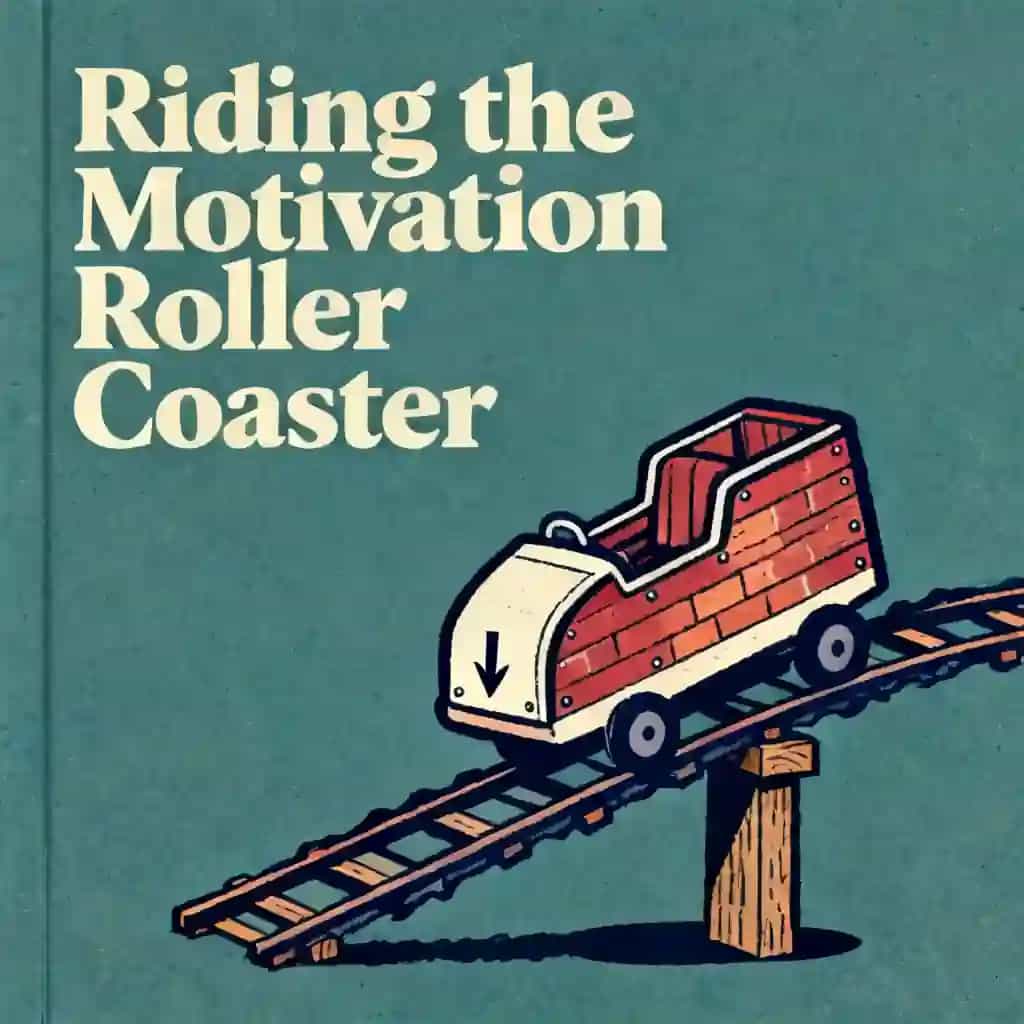
Cedric: Hello there! I was just thinking about that specific feeling we all get when we start something new—that rush of energy where everything feels possible. You’ve got the new running shoes, the pristine notebook, or the shiny new app, and for a week — maybe two — you showed up and did the work. Then life got in the way, the initial rush faded, and you were left wondering why you started at all, that "new car smell" of the goal just… evaporates. Suddenly, you’re staring at a rainy Tuesday morning, and the motivation that felt like a superpower on January 1st is nowhere to be found.
Kate: It’s a classic trap, isn’t it? We often start with what psychologists call "blank slate fantasies". We imagine this version of ourselves—the "New Year, New Me" version—who somehow doesn't have the same struggles or time constraints as the current version. But the reality is that motivation isn't a fixed character trait you either have or you don't. It’s actually a neurological state, and it’s notoriously unstable.
Cedric: That’s such a relief to hear, honestly. I think most of us assume that if we lose steam, it’s because we’re "weak" or "lazy." But you’re saying it’s just how our brains are wired?
Kate: Exactly. There was a study by Norcross and colleagues back in 2002 that tracked people making New Year’s resolutions. They found that only 8% of people achieve their New Year's resolutions. And it wasn’t because they didn't care about their goals anymore. It’s because the "launch energy" that gets you off the ground isn't the same fuel that keeps you in orbit.
Cedric: So, if we can't trust that initial spark to carry us to the finish line, what are we supposed to do? How do we stop our goals from becoming just another source of guilt?
Kate: That’s exactly what we’re diving into today. We’re going to look at why that drift happens—why only 8% of people actually achieve their resolutions —and more importantly, how you can build a system that doesn't rely on "feeling inspired" every single day. We’ll explore how to move from chasing a mood to building a cadence that actually lasts.
Cedric: I love that. Moving from a mood to a system. Let’s get into the mechanics of why willpower alone usually isn't enough to bridge that gap.