The Avoidance Loop: Neuroscience of Addiction and Procrastination
Explore the neuroscience of the avoidance loop. Learn how procrastination and addiction stem from a reward-based learning system and emotional regulation issues.
Miglior citazione da The Avoidance Loop: Neuroscience of Addiction and Procrastination
Procrastination is not a productivity problem to be solved with better calendars, but an emotional regulation problem that requires a deep understanding of your own brain.
Generated by Samantha
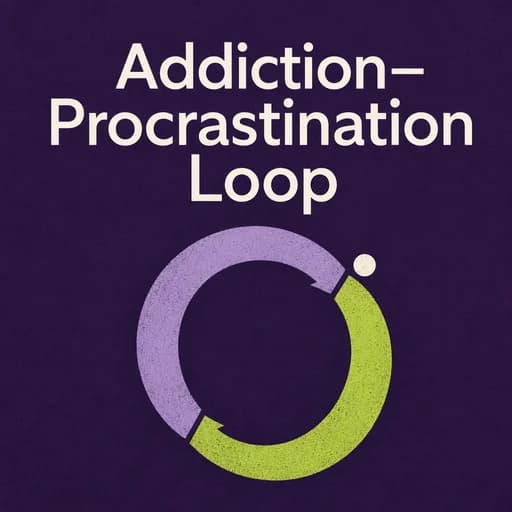
Overcoming the cycle of addiction and procrastination, specifically focusing on how the urge to seek a quick escape triggers procrastination and feeds into addictive behaviors.






Domande frequenti
The avoidance loop is a sophisticated survival mechanism where the brain prioritizes immediate relief over long-term goals. When faced with a difficult task, your brain seeks a quick escape to avoid discomfort, providing a hit of relief that reinforces the habit. This neurological circuit is a reward-based learning system that values feeling good in the present moment, often leading to a cycle of procrastination that mimics the patterns found in substance addiction.
No, procrastination is not a failure of character, laziness, or a lack of discipline. According to the neuroscience of the avoidance loop, it is actually an emotional regulation problem rather than a productivity issue. Your brain is running ancient survival software designed to protect you from discomfort. Because avoiding a task provides instant relief, your brain views this escape as a successful survival strategy, even if it leads to negative consequences tomorrow.
Procrastination and addictive behaviors share the same underlying neurological circuit. Both are driven by a reward-based learning system that seeks immediate hits of relief to escape uncomfortable emotions or tasks. This survival mechanism prioritizes short-term dopamine relief over future responsibilities. By understanding that these urges are rooted in how the brain regulates emotions, you can begin to see why quick escapes like checking your phone feed into deeper addictive cycles.
Creato da alumni della Columbia University a San Francisco
"Instead of endless scrolling, I just hit play on BeFreed. It saves me so much time."


"I never knew where to start with nonfiction—BeFreed’s book lists turned into podcasts gave me a clear path."


"Perfect balance between learning and entertainment. Finished ‘Thinking, Fast and Slow’ on my commute this week."
"Crazy how much I learned while walking the dog. BeFreed = small habits → big gains."
"Reading used to feel like a chore. Now it’s just part of my lifestyle."

"Feels effortless compared to reading. I’ve finished 6 books this month already."
"BeFreed turned my guilty doomscrolling into something that feels productive and inspiring."

"BeFreed turned my commute into learning time. 20-min podcasts are perfect for finishing books I never had time for."
"BeFreed replaced my podcast queue. Imagine Spotify for books — that’s it. 🙌"

"It is great for me to learn something from the book without reading it."
"The themed book list podcasts help me connect ideas across authors—like a guided audio journey."
"Makes me feel smarter every time before going to work"
Creato da alumni della Columbia University a San Francisco
"Instead of endless scrolling, I just hit play on BeFreed. It saves me so much time."
"I never knew where to start with nonfiction—BeFreed’s book lists turned into podcasts gave me a clear path."
"Perfect balance between learning and entertainment. Finished ‘Thinking, Fast and Slow’ on my commute this week."
"Crazy how much I learned while walking the dog. BeFreed = small habits → big gains."
"Reading used to feel like a chore. Now it’s just part of my lifestyle."
"Feels effortless compared to reading. I’ve finished 6 books this month already."
"BeFreed turned my guilty doomscrolling into something that feels productive and inspiring."
"BeFreed turned my commute into learning time. 20-min podcasts are perfect for finishing books I never had time for."
"BeFreed replaced my podcast queue. Imagine Spotify for books — that’s it. 🙌"
"It is great for me to learn something from the book without reading it."
"The themed book list podcasts help me connect ideas across authors—like a guided audio journey."
"Makes me feel smarter every time before going to work"
"Instead of endless scrolling, I just hit play on BeFreed. It saves me so much time."
"I never knew where to start with nonfiction—BeFreed’s book lists turned into podcasts gave me a clear path."
"Perfect balance between learning and entertainment. Finished ‘Thinking, Fast and Slow’ on my commute this week."
"Crazy how much I learned while walking the dog. BeFreed = small habits → big gains."
"Reading used to feel like a chore. Now it’s just part of my lifestyle."
"Feels effortless compared to reading. I’ve finished 6 books this month already."
"BeFreed turned my guilty doomscrolling into something that feels productive and inspiring."
"BeFreed turned my commute into learning time. 20-min podcasts are perfect for finishing books I never had time for."
"BeFreed replaced my podcast queue. Imagine Spotify for books — that’s it. 🙌"
"It is great for me to learn something from the book without reading it."
"The themed book list podcasts help me connect ideas across authors—like a guided audio journey."
"Makes me feel smarter every time before going to work"
"Instead of endless scrolling, I just hit play on BeFreed. It saves me so much time."
"I never knew where to start with nonfiction—BeFreed’s book lists turned into podcasts gave me a clear path."
"Perfect balance between learning and entertainment. Finished ‘Thinking, Fast and Slow’ on my commute this week."
"Crazy how much I learned while walking the dog. BeFreed = small habits → big gains."
"Reading used to feel like a chore. Now it’s just part of my lifestyle."
"Feels effortless compared to reading. I’ve finished 6 books this month already."
"BeFreed turned my guilty doomscrolling into something that feels productive and inspiring."
"BeFreed turned my commute into learning time. 20-min podcasts are perfect for finishing books I never had time for."
"BeFreed replaced my podcast queue. Imagine Spotify for books — that’s it. 🙌"
"It is great for me to learn something from the book without reading it."
"The themed book list podcasts help me connect ideas across authors—like a guided audio journey."
"Makes me feel smarter every time before going to work"