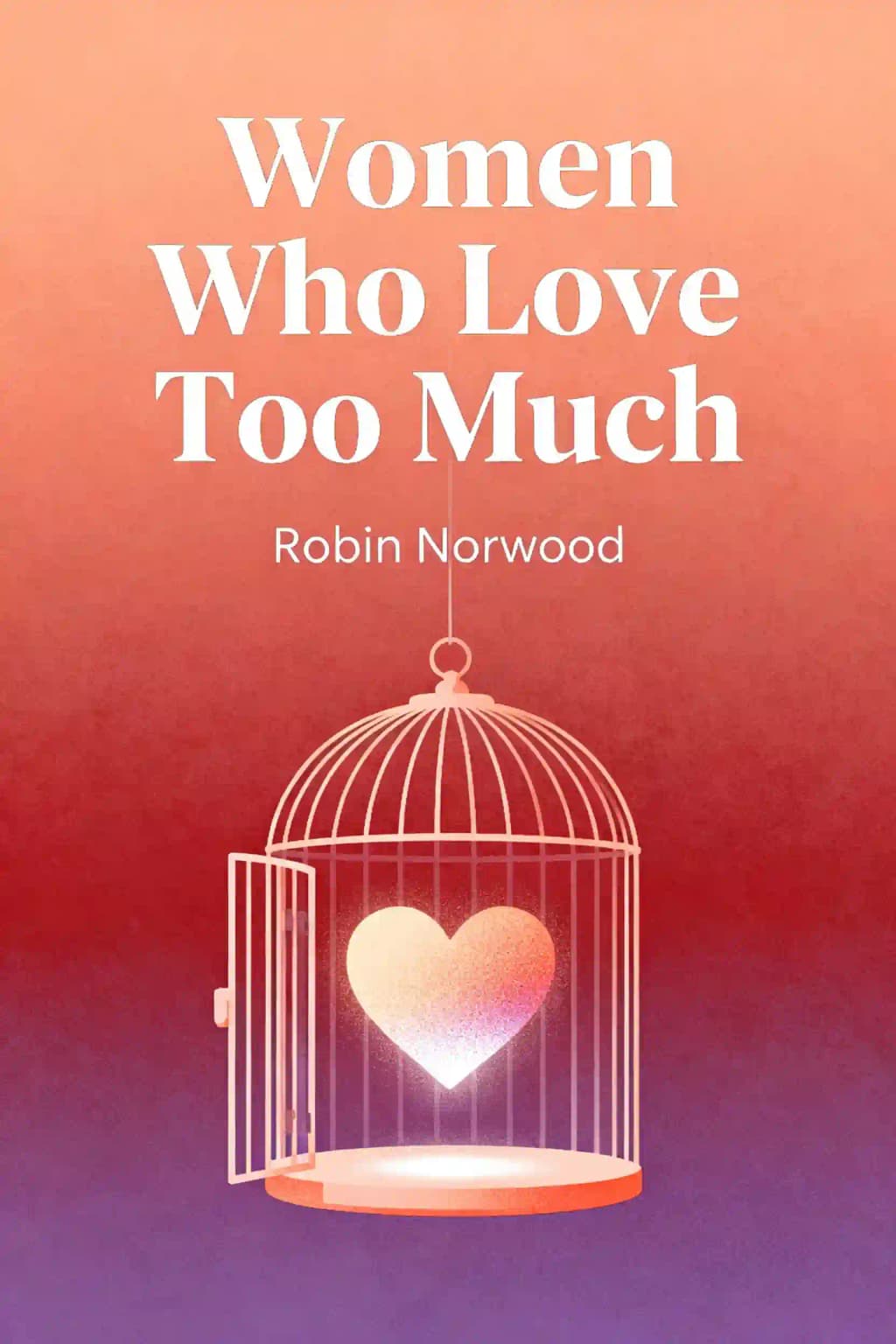
Discover why "Women Who Love Too Much" remains a self-help phenomenon since 1985. Robin Norwood's groundbreaking exploration of relationship addiction has transformed therapy approaches worldwide, helping countless women break free from the painful cycle of loving men who can't love them back.
Robin Norwood, bestselling author of Women Who Love Too Much, is a licensed marriage and family therapist renowned for her expertise in relationship addiction and co-dependency. Drawing from 15 years of clinical practice treating addictive behaviors and unhealthy relationship patterns, Norwood’s work bridges self-help and psychology, offering transformative insights into emotional healing and personal boundaries.
Her influential follow-up books, including Letters from Women Who Love Too Much and Daily Meditations for Women Who Love Too Much, expand on her groundbreaking framework for recovery.
A pioneer in addressing co-alcoholism and compulsive behaviors, Norwood’s authority extends beyond literature—she hosts the podcast Sensationally Silver, discussing aging, empowerment, and holistic well-being. Her books have been translated into over 30 languages, with Women Who Love Too Much selling more than 3 million copies worldwide and remaining a cornerstone of modern relationship psychology.
Women Who Love Too Much explores patterns of obsessive attachment in relationships, where women mistake emotional pain for love. Robin Norwood, a therapist, identifies how childhood trauma drives attraction to emotionally unavailable partners and offers a 10-step recovery program to break cycles of codependency and rebuild self-worth. The book combines case studies (like Jill’s relentless pursuit of Randy) with actionable strategies for healthier relationships.
This book is critical for women stuck in one-sided relationships, those prioritizing partners’ needs over their own, or anyone recognizing codependent behaviors. It’s also valuable for therapists addressing relationship addiction. Norwood’s insights resonate with readers seeking to understand why they’re drawn to distant or troubled partners and how to cultivate self-love.
Yes, its timeless analysis of codependency remains relevant, especially as modern dating trends amplify emotional unavailability. The 10-step framework provides concrete tools for breaking toxic cycles, making it a practical guide for those navigating apps, ghosting, or ambiguous relationships. Critics praise its empathetic approach but note its narrow focus on heterosexual dynamics.
Key signs include obsessive thoughts about a partner’s approval, tolerating disrespect to avoid abandonment, and equating suffering with devotion. Norwood highlights behaviors like compulsive communication (e.g., Jill’s nightly calls to Randy) and prioritizing a partner’s emotional needs over one’s own well-being.
Norwood links childhood experiences—like neglect or parental addiction—to adult attraction to emotionally distant partners. Women who grew up feeling unlovable often seek validation through “fixing” troubled partners, recreating familiar but harmful dynamics. This pattern perpetuates low self-esteem and substance abuse, as seen in Brenda’s case.
The program includes steps like ending destructive relationships, seeking therapy, and building self-care routines. It emphasizes breaking codependency by focusing on personal growth instead of “saving” partners. Norwood advocates journaling, support groups, and redefining love as mutual respect rather than obsession.
A “love addict” bases self-worth on a partner’s attention, tolerates abuse to avoid loneliness, and obsessively chases emotionally unavailable men. Norwood contrasts this with healthy love, which involves reciprocity and emotional safety. The book argues addiction stems from childhood voids, not genuine connection.
Critics argue the book oversimplifies complex relationships and lacks diversity in its examples (e.g., focusing on heterosexual women). Some find its 1985 terminology outdated but acknowledge its pioneering role in codependency discourse. Others note it doesn’t address systemic factors like economic dependence.
Norwood describes how these partners (often struggling with addiction or commitment phobia) reinforce a woman’s belief that she must “earn” love through sacrifice. By staying emotionally distant, they mirror childhood dynamics, keeping the woman trapped in a cycle of pursuit and rejection, as seen with Randy.
Case studies include Jill, who flew cross-country to win over an indifferent partner, and Brenda, whose food addiction worsened as she sought validation. These examples illustrate how obsession escalates into self-destructive behaviors when validation isn’t reciprocated.
Both address codependency, but Norwood’s book focuses narrowly on romantic relationships, while Melody Beattie’s work covers broader familial and platonic dynamics. Norwood offers a structured recovery plan, whereas Beattie emphasizes daily affirmations and boundary-setting. Both remain foundational in self-help genres.
While not directly from Norwood’s work, “new cheese” (referenced in a search result about another book) symbolizes adaptability. For Women Who Love Too Much, the parallel concept is “healthy love”—releasing outdated patterns to embrace relationships built on mutual respect rather than obsession.
Senti il libro attraverso la voce dell'autore
Trasforma la conoscenza in spunti coinvolgenti e ricchi di esempi
Cattura le idee chiave in un lampo per un apprendimento veloce
Goditi il libro in modo divertente e coinvolgente
Love is not enough.
When being loved feels painful, it is because the love we are receiving is toxic.
We can become addicted to people, just as we do to substances.
It is possible to love a man too much.
Measuring love by the depth of your torment.
Scomponi le idee chiave di Women Who Love Too Much in punti facili da capire per comprendere come i team innovativi creano, collaborano e crescono.
Distilla Women Who Love Too Much in rapidi promemoria che evidenziano i principi chiave di franchezza, lavoro di squadra e resilienza creativa.

Vivi Women Who Love Too Much attraverso narrazioni vivide che trasformano le lezioni di innovazione in momenti che ricorderai e applicherai.
Chiedi qualsiasi cosa, scegli la voce e co-crea spunti che risuonino davvero con te.

Creato da alumni della Columbia University a San Francisco
"Instead of endless scrolling, I just hit play on BeFreed. It saves me so much time."
"I never knew where to start with nonfiction—BeFreed’s book lists turned into podcasts gave me a clear path."
"Perfect balance between learning and entertainment. Finished ‘Thinking, Fast and Slow’ on my commute this week."
"Crazy how much I learned while walking the dog. BeFreed = small habits → big gains."
"Reading used to feel like a chore. Now it’s just part of my lifestyle."
"Feels effortless compared to reading. I’ve finished 6 books this month already."
"BeFreed turned my guilty doomscrolling into something that feels productive and inspiring."
"BeFreed turned my commute into learning time. 20-min podcasts are perfect for finishing books I never had time for."
"BeFreed replaced my podcast queue. Imagine Spotify for books — that’s it. 🙌"
"It is great for me to learn something from the book without reading it."
"The themed book list podcasts help me connect ideas across authors—like a guided audio journey."
"Makes me feel smarter every time before going to work"
Creato da alumni della Columbia University a San Francisco

Ottieni il riassunto di Women Who Love Too Much in formato PDF o EPUB gratuito. Stampalo o leggilo offline quando vuoi.
Have you ever found yourself desperately clinging to a relationship that causes more pain than joy? This isn't about loving too intensely-it's about becoming obsessed with emotionally unavailable partners, allowing that obsession to control your emotions, and measuring love by the depth of your torment. Consider Jill, a successful law student who became infatuated with Randy, an attorney she met through friends. Despite his clear warnings not to pressure him, she called constantly and flew to see him twice, only to be ignored during her second visit while he drank beer and watched television. When she finally questioned his drinking, Jill realized she'd never seen him sober but had dismissed his vague, inconsistent communication as her fault for "boring him." Women caught in this pattern share striking similarities: they take responsibility for others' emotions, feel magnetically drawn to emotionally unavailable men, fear abandonment, suffer from critically low self-esteem, and develop an addiction to emotional pain. The roots typically trace back to childhood experiences in dysfunctional homes. When Jill's father was emotionally unavailable, she blamed herself rather than recognizing his limitations. By believing she could win his love if only she changed enough, she maintained an illusion of control-a pattern that continued in her adult relationships.