Capitolo 1
The Startup Graveyard: Lessons from Fallen Ventures
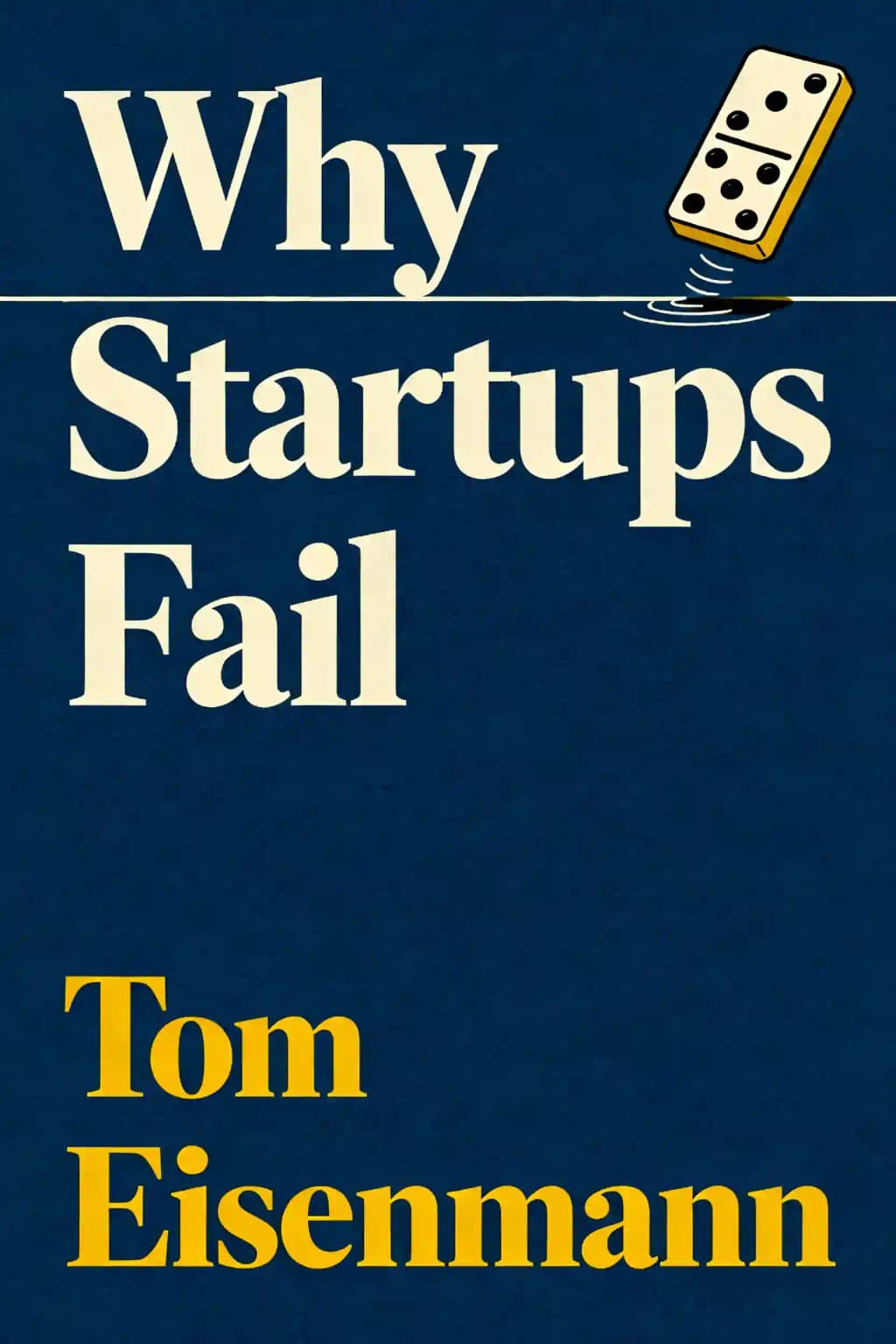
Why do startups fail? This question haunts entrepreneurs, investors, and business schools alike. Tom Eisenmann's groundbreaking book "Why Startups Fail" has become required reading in Silicon Valley's top accelerators and venture capital firms since its publication. The Harvard Business School professor spent years investigating the ruins of once-promising ventures, conducting hundreds of interviews with founders who experienced the painful journey from optimism to shutdown.
What makes this book particularly compelling is Eisenmann's refusal to settle for the simplistic "bad idea" or "poor execution" explanations that dominate startup post-mortems. Instead, he identifies distinct patterns of failure that occur at different stages of a startup's lifecycle. Tech luminaries like Reid Hoffman and Marc Andreessen have praised the book for its nuanced approach, with Hoffman noting that "understanding failure patterns is the secret weapon of successful entrepreneurs."
The book's cultural impact extends beyond business circles-it has influenced how we think about innovation and risk-taking in America. In a society that celebrates entrepreneurial success stories, Eisenmann provides the necessary counterbalance: a thoughtful examination of why smart, hardworking people with promising ideas still fail, and how understanding these patterns might help the next generation of founders avoid the same pitfalls.
Capitolo 2
The Anatomy of Startup Failure
Entrepreneurial failure lacks a universal definition. Is it determined by company size, innovation level, or financial returns? Harvard defines entrepreneurship as pursuing opportunities with limited resources, intertwining business acumen with risk in novel ventures. By this standard, failure hinges on financial returns to early investors, contrasting with startups that either persist or collapse under unforeseen circumstances.
Entrepreneurs often attribute failure to flawed concepts ("horses") or founders ("jockeys"). Many cite external factors like competition, while investors frequently focus on leadership issues. Billionaire Peter Thiel asserts that failed companies couldn't escape competition, suggesting concepts are crucial. Yet sorting ventures by horse or jockey oversimplifies the complex interplay of multiple influences.
Success requires both strong ideas and skilled execution. The diamond-and-square framework helps understand this interplay by examining eight critical components across opportunity and resource providers. This comprehensive model aids in aligning each element harmoniously-a necessity for a startup's promise to materialize. Misalignment, a typical harbinger of failure, finds a remedy in this framework.
The opportunity elements include customer value proposition, technology, operations, marketing, and profit formula. Resource elements encompass founders, team, investors, and partners. Their alignment is vital to avoid pitfalls. High-valuation startups excel in unique features and product performance, though this alone doesn't guarantee success. Meanwhile, low-valuation startups often conduct less customer research and fewer MVP tests before launching products.
Ultimately, understanding failure requires examining how these elements interact throughout a startup's journey. Success isn't simply about having a good horse or jockey-it's about how well they work together across changing terrain.
Capitolo 3
Breaking the Catch-22: Resources Before Results
Early-stage startups face a fundamental paradox: they need resources to pursue opportunities but can't attract those resources until they start showing results. This Catch-22 situation creates a seemingly impossible barrier to entry for new ventures. How can founders break this cycle?
Four key tactics emerge as potential solutions, though each carries its own hazards. Lean experiments allow founders to test assumptions with minimal investment, but may lead to false positives or overlooking crucial initial research. Partnerships can provide access to resources and credibility, yet often bring misaligned interests that can derail the venture's progress. Staging-delaying certain risks until later-conserves resources but might result in suboptimal investment patterns. Storytelling can persuade stakeholders to commit resources based on future potential, but risks breeding self-delusion among founders.
Consider how these tactics played out for real startups. Some founders conducted minimal customer research before launching, leading to painful pivots later. Others, like Quincy Apparel, partnered with manufacturers who didn't prioritize their needs, resulting in quality issues and delays. The staging approach sometimes left startups unprepared for challenges they'd postponed facing, while compelling storytelling occasionally convinced founders to believe their own hype despite contradictory market signals.
What's the solution? Balance is key. Successful founders combine these tactics strategically while maintaining a clear-eyed view of reality. They conduct enough research to validate core assumptions, form partnerships with aligned incentives, stage risks intelligently, and tell authentic stories that inspire without distorting the truth.
Breaking the Catch-22 isn't about finding a single perfect strategy-it's about orchestrating multiple approaches while constantly reassessing and adjusting as you learn. The most successful founders maintain this delicate balance throughout their startup journey, allowing them to acquire resources before they've proven results, while still building on solid foundations.
Capitolo 4
When Good Ideas Meet Bad Partners
The story of Quincy Apparel illustrates a common but devastating failure pattern: having a sound business concept undermined by poor resource alignment. Despite identifying genuine market demand for professional women's clothing with better fit and reasonable prices, Quincy collapsed due to deficiencies in execution, operations, and investor relations.
The founders, Christina Wallace and Alexandra Nelson, lacked crucial industry experience. Their self-reliant approach proved costly as they attempted to navigate the complex world of garment production, facing numerous setbacks with fabric issues and design execution. Their equal decision-making arrangement led to unresolved disputes, amplified by asymmetry in their personal stakes in the venture.
Quincy's team struggled with a fundamental mismatch-the founders hired industry veterans accustomed to specialization and defined roles, but startup success required flexibility and initiative. This misalignment led to inadequate innovation and unaddressed problems. Wallace undermined Nelson's authority by playing "good cop," while failing to foster a cohesive team culture.
The investor relationships proved equally problematic. Quincy's funding came with conditional tranches that added pressure to meet specific growth milestones. Lead investors offered little strategic input, contrary to initial expectations. The founders felt constantly strained by the need to convince skeptical investors rather than candidly navigating operational challenges.
Strategic partnerships further complicated matters. Quincy outsourced production but struggled due to poor factory relationships. Factories deprioritized their orders, causing delays and cost increases. This demonstrated the risks of partnering with larger, established players without sufficient leverage.
What could Quincy have done differently? Starting smaller would have helped-focusing on a single garment type to test and refine their model before expansion. Using a single factory to manage production could have reduced risks. Establishing clearer leadership roles, leveraging advisors more effectively, and perhaps postponing full-time transitions until further evidence supported their concept's viability might have saved the venture.
The Quincy story reminds us that even with a compelling value proposition, a startup can fail when its resource elements-founders, team, investors, and partners-aren't properly aligned with its opportunity.
Capitolo 5
False Starts: When Founders Rush to Launch
Suraj Nagaraj's journey with Triangulate exemplifies a common pitfall for early-stage startups: the false start. Driven by a novel idea for online dating that leveraged computer-generated behavioral data for better matches than self-reported information, Nagaraj launched without adequately testing critical assumptions. When technical setbacks derailed initial trials, these assumptions remained largely unvalidated, setting the stage for a series of costly pivots.
Why are founders prone to false starts? There's a pervasive bias toward action in entrepreneurial culture. The mantra "move fast and break things" encourages rapid execution, sometimes at the expense of proper research and validation. Technical founders often prefer building products over talking to potential customers-either due to natural inclination or introversion. This leads to solutions in search of problems rather than products designed to address verified needs.
Nagaraj's first pivot introduced "Wings," a dating service using Facebook data to offer "social proof" through friend endorsements. Despite unique features, Wings was built on inadequate consumer insight. The user base grew but remained unsatisfactory. Post-launch feedback revealed engagement issues, prompting another pivot to a system reliant on user data aggregation over sophisticated matching algorithms. Finally, "DateBuzz" emerged with features designed to engage users beyond superficial judgments, yet struggled with cash constraints and user acquisition.
How can entrepreneurs avoid false starts? The Double-Diamond Design framework offers guidance by emphasizing both divergent and convergent thinking. It encourages entrepreneurs to fully define problems before jumping to solutions, remaining open to discovering better opportunities rather than becoming fixated on initial ideas.
Proper customer interviews are crucial-speaking to a broad, relevant audience rather than relying on convenience sampling or biased feedback. These interviews should focus on uncovering genuine needs rather than pitching solutions prematurely. Observing how users interact with existing solutions reveals pain points that might not emerge in conversation.
Other valuable techniques include journey mapping (visualizing the customer's entire experience), competitor analysis (validating unmet needs amid existing solutions), and market sizing (gauging potential viability with realistic estimates). Creating personas-detailed archetypes of target users-helps teams personalize and streamline solutions.
The false start pattern teaches us that rushing to launch without proper validation is a costly mistake. By investing time in understanding customer needs before building solutions, founders can avoid the painful cycle of pivots that depleted Triangulate's resources and ultimately led to its demise.
Capitolo 6
False Positives: When Early Success Misleads
Imagine launching your startup and experiencing immediate, explosive success. Customers love your product, revenue flows in, and everything seems to validate your business model. This happened to Baroo, a pet care service for luxury apartment buildings. Their launch at Boston's Ink Block development was so successful that they quickly expanded to Chicago, Washington D.C., and New York.
But this early triumph contained a hidden danger: it was a false positive-early success that misleadingly suggested sustainable demand. Several unique factors had artificially boosted Baroo's initial performance: simultaneous new tenant occupancy created a concentrated pool of potential customers, while a Hollywood film crew temporarily housed at Ink Block generated abnormal demand. Boston's severe winter that year further increased the need for dog-walking services.
This unwarranted confidence pushed Baroo to scale prematurely. As they expanded to new cities, they encountered operational challenges their systems couldn't handle. Building owners pushed for events Baroo couldn't maintain, revealing scaling limits. Tech inefficiencies and workforce issues emerged, underscoring poor planning. By early 2017, Baroo faced mounting financial losses, board disagreements, and investor hesitance. Despite merger attempts, they shut down in February 2018.
What causes false positives? They often stem from misinterpreting early adopter enthusiasm as indicative of mainstream market demand. Early adopters-those first customers who try new products-have different characteristics and needs than the broader market. They're more tolerant of imperfections, more excited by novelty, and often have specific pain points that make them unusually receptive to your solution.
To avoid false positives, entrepreneurs should conduct comprehensive early customer research to distinguish between early adopter and mainstream needs. Testing across diverse customer segments helps identify which aspects of your product have broad appeal versus niche interest. Strategies for managing product appeal include targeting both early and mainstream customers while avoiding overreliance on either group.
Personal biases can also contribute to false positives. Entrepreneurs naturally want to believe in their ideas and may unconsciously filter feedback, hearing praise more clearly than criticism. Unexpected success can be particularly dangerous because it bypasses the critical thinking that usually accompanies struggle.
The lesson from Baroo's experience is clear: validate your success across multiple contexts before committing to major expansion. Ask whether your early traction depends on specific circumstances that might not exist elsewhere. Test your product with mainstream users, not just enthusiastic early adopters. And always maintain a healthy skepticism about early results, especially when they seem too good to be true.
Capitolo 7
Scaling Challenges: Speed, Scope, and Resources
Late-stage startups face unique challenges that threaten their survival despite promising returns and available resources. About one-third fail to deliver investor gains, primarily due to difficulties in establishing growth that is both ambitious and feasible. The Six S framework helps evaluate a startup's potential for success by examining internal factors (Staff, Structure, Shared Values) and external factors (Speed, Scope, Series X).
Speed-how fast a startup expands its original market-can fuel higher valuation and attract talent but risks market saturation and intense rivalry. Choosing the right growth rate is pivotal; while rapid growth feeds higher equity valuations and operational efficiencies, countervailing forces like market saturation, competition, quality issues, and cultural strain pose significant risks. Misjudging the "speed limit" can doom a startup.
Scope involves expanding product offerings, entering new markets, and innovating. Strategic decisions require balancing ambition with feasibility. Risks include high costs, market misalignment, and internal resource conflicts. In some scenarios, ambitious scope leads to standout success, while for others, it results in early failure. Entrepreneurs must consider challenges like integrating new features with existing ones and understanding when innovation no longer yields fresh returns.
Late-stage startups also face particular fundraising challenges (Series X). With intense pressures for aggressive growth from competing VCs, startups risk falling into the "winner's curse," where overvaluation increases pressure for immediate success. The danger of overfunding is underlined by Fred Wilson's estimate that this mismatch causes many startup failures. Startups must also account for down rounds, where later funding at a decreased value signals struggles.
As startups evolve, they transition from relying on generalists to requiring specialists (Staff). The original founding team may lack scale-specific skills needed as the startup grows. Known as executive churn, this adjustment process reflects Ben Horowitz's point that managing at scale is learned, not innate. Early leaders might struggle with new complexities, such as managing specialized teams or adopting data-driven decision-making.
Structure becomes crucial as informal communication gives way to formalized reporting and management systems. This coordination of complex activities and conflict resolution across functions is essential. Entrepreneurs, often wary of bureaucracy, might delay implementing structure, but timely structure ensures information flow and conflict resolution.
Shared Values ensure employees act consistently with company principles. Yet rapid scaling can dilute culture as new hires outnumber veterans. Maintaining culture involves clear mission statements, consistent communication, reinforcing values, and aligning HR practices with cultural values.
The RAWI test helps navigate scaling hazards by evaluating if a startup is truly prepared: Ready (proven model with robust margins), Able (access to human and capital resources), Willing (embracing growth risks), and Impelled (competitive pressures necessitating growth).
Capitolo 8
The Speed Trap: When Growth Outpaces Capability
The allure of rapid growth is powerful. Investors reward it, the media celebrates it, and founders dream of it. But scaling too quickly can be deadly for startups-a phenomenon known as the "Speed Trap." Consider Fab.com, which rocketed from launch to a $1 billion valuation in just 16 months, only to collapse shortly thereafter.
What makes the Speed Trap so dangerous? When growth outpaces a company's operational capabilities, quality suffers, customers become dissatisfied, and the foundation begins to crack. Fab expanded internationally before solidifying its U.S. operations, launched multiple product categories without mastering any single one, and hired hundreds of employees without proper systems to manage them.
The pressure to grow quickly often comes from multiple sources. Venture capitalists, having invested at high valuations, push for rapid expansion to justify and increase those valuations. Competitors create urgency by threatening to capture market share. And founders themselves, seeing early success, naturally want to capitalize on momentum.
But sustainable growth requires building infrastructure ahead of demand-developing robust systems, hiring experienced managers, and creating processes that can scale. When companies prioritize growth metrics over operational excellence, they inevitably hit a breaking point. Customer service deteriorates, employee burnout increases, and financial inefficiencies multiply.
How can startups avoid the Speed Trap? First, they must recognize the difference between vanity metrics (like user signups or gross merchandise volume) and sustainable growth indicators (like customer retention and unit economics). Second, they should invest in operational capabilities before they're desperately needed-what LinkedIn founder Reid Hoffman calls "building the airplane while flying it."
Most importantly, founders must resist external pressures to grow at unsustainable rates. This requires both confidence and clarity about the company's true capacity for growth. As venture capitalist Fred Wilson notes, "The best CEOs know when to step on the gas and when to tap the brakes."
The Speed Trap teaches us that growth isn't inherently good-it's only valuable when a company can maintain quality and customer satisfaction while expanding. Sometimes the wisest decision is to grow more slowly, ensuring that each step forward is built on solid ground rather than quicksand.
Capitolo 9
Moonshots and Cascading Miracles
Some startups don't just aim to build a business-they seek to transform entire industries or solve global challenges. These "moonshot" ventures, like Better Place's ambitious plan to revolutionize transportation with electric cars and swappable batteries, face a unique failure pattern: Cascading Miracles.
Better Place, founded by Shai Agassi, envisioned replacing gasoline cars worldwide to combat oil dependence. With incentives in Israel and partnerships with Renault-Nissan, early successes included securing a $110 million Series A and promising research on consumer preferences. However, the venture required a series of near-impossible successes to avoid collapse.
First, electric car adoption needed to extend beyond eco-conscious consumers to the mainstream, where cost played a pivotal role. While electricity was cheaper in countries like Israel, high vehicle prices often nullified these savings, demanding significant subsidies. Second, Better Place offered swappable batteries as a solution to range anxiety, but their acceptance hinged on consumer attitudes toward electric vehicle use, particularly for long trips.
Having multiple auto manufacturers on board was imperative for reaching critical market share. However, persuading them to adopt a swappable battery design ran against their focus on distinct vehicle identities and cost constraints. Auto manufacturers sought assurance that Better Place-compatible vehicles could sell across numerous regions rapidly, demanding intricate logistical planning and vast capital.
Better Place required immense upfront capital due to pre-deploying charge spots and exchange stations. While Agassi raised significant funds, the leap of faith required from investors before profit realization added stress. Even with all assumptions favoring Better Place, perfect execution across various business functions in different countries was required-one of the most operationally demanding startup launches ever attempted.
Entrepreneurs with groundbreaking solutions face the risk that proposed changes might intimidate rather than entice customers. Pinpointing the right level of innovation is complex, especially since early versions aren't available for feedback due to lengthy development cycles. Historical surveys, like Better Place's 2008 estimate of 400,000 potential buyers, can severely overestimate demand. Standard market research overestimates consumer interest in pioneering products, so innovative entrepreneurs must use smoke tests or customer prepaid deposits for more accurate demand insights.
Facing product development delays presents another paradox. Many encounter novel technologies or fast-evolving competitors that are challenging to incorporate smoothly. Strategic options include accepting delays (cautiously), freezing functionality to meet market deadlines, or cutting features to launch earlier. Understanding that delays compound when steering pioneering technological advances is key.
The lesson from moonshot ventures is clear: when success requires multiple low-probability events to occur in sequence, the overall probability of success approaches zero. Entrepreneurs pursuing transformative visions must find ways to break their journey into manageable steps, each with its own sustainability, rather than requiring a perfect sequence of miracles.
Capitolo 10
Running on Empty: The Art of Knowing When to Quit
Deciding to shut down a startup is perhaps the most emotionally challenging decision a founder will ever make. The personal attachment to one's venture creates an identity crisis when considering closure. As one founder put it, "My startup wasn't just what I did-it was who I was." This emotional entanglement often leads to delays that waste resources and opportunities.
Early signs of failure manifest through missteps and last-ditch strategies like pivoting or seeking investments. While some pivots succeed, late-stage adjustments seldom provide room for successful transformations. Early pivots, like those by PayPal and YouTube, have led to success, but late pivots are akin to steering a large ship-consuming more energy and resources. Fab.com struggled with a late pivot due to misalignments in growth and execution, leading to depleted cash reserves.
Startups failing to meet performance benchmarks often find themselves scrambling for new investors, as existing backers might be reluctant to provide additional capital. Challenges arise when courting new investors as due diligence can uncover a venture's vulnerabilities, leading to withdrawal of interest, as seen in Baroo's case.
When funding avenues dry up, the focus shifts to potential acquisition, often fraught with its own hurdles. Many startups, including Dot & Bo and Baroo, faced difficulties in securing satisfactory offers, primarily due to dwindling cash reserves weakening negotiation leverage. The acquisition process is time-consuming and, if unsuccessful, can stigmatize the company as "damaged goods."
Entrepreneurs facing shutdown are influenced by factors beyond success likelihood. Founders may delay accepting defeat due to control over the board, personal investment, or misconceived grit. Delaying closure might stem from false hope, a desire to appear resilient, or loyalty to employees and investors. The pressure to project unwavering confidence can leave founders isolated, concealing struggles even from those who might offer support.
When closure becomes inevitable, founders must approach it responsibly. Engaging legal and financial advisers aids in navigating complexities like managing legal, tax, and employee obligations. The liquidation process demands choosing among Bankruptcy, Assignment for the Benefit of Creditors, or Workout approaches. Communication is equally pivotal, handling stakeholders with transparency and respect.
The art of knowing when to quit involves recognizing when the path forward requires more resources than available or when the market has clearly rejected your solution. Making this decision promptly preserves resources, reputation, and relationships-allowing founders to bounce back stronger for their next venture.
Capitolo 11
Bouncing Back: Life After Startup Failure
In the aftermath of a startup's failure, entrepreneurs face a challenging journey of recovery, reflection, and reentry. Christina Wallace's experience after Quincy's collapse exemplifies this three-phase process, demonstrating resilience and adaptability in the face of setback.
The recovery phase involves grappling with financial woes, neglected personal relationships, and emotional distress. Entrepreneurs face a barrage of emotions-grief, shame, anger, relief-and must find ways to acknowledge these feelings. Regaining control through routine and beginning professional reintegration through small steps toward new opportunities helps stabilize the situation. Taking time to process the experience is crucial before jumping into the next venture.
After surmounting intense emotions, reflection becomes essential. This phase is challenging because there's a natural tendency to blame external factors or wallow in feelings of inadequacy, impeding learning. To genuinely absorb valuable lessons, it's pivotal to let time dilute the emotional sting. Writing a detailed postmortem and consulting with trusted peers provides clarity. Most successful founders grapple with "what went wrong" and "what can be done differently" through introspection, offering insights that guide future endeavors.
Once reflection concludes, the question "What next?" arises. Surprisingly, many jump back into entrepreneurship-a study of 50 entrepreneurs found over half initiated new ventures within five years. The stigma of failure isn't as severe for those who've maintained their networks and handled their company's closure gracefully. Taking responsibility for the last venture's failure and articulating learned lessons earns respect and fosters trust.
The entrepreneurs highlighted in Eisenmann's book all found success after their ventures failed. Some began new entrepreneurial journeys, like Jason Goldberg, who founded new startups, and Lindsay Hyde, who embraced venture investments. Others, like Christina Wallace, moved into education and corporation-driven innovation, while still nurturing entrepreneurial spirit.
What's most striking about these post-failure trajectories is how they reflect the lessons learned from failure. Founders who experienced resource misalignment often became more deliberate about partner selection in subsequent ventures. Those who fell into the Speed Trap typically adopted more measured growth strategies later. The painful experiences became valuable wisdom that informed better decisions.
As Reid Hoffman famously said, "An entrepreneur is someone who jumps off a cliff and builds a plane on the way down." What Eisenmann's research shows is that even if that first plane crashes, the knowledge gained from the attempt makes the next flight much more likely to succeed.