Capitolo 1
When Helping Hurts: The Hidden Toll of Trauma Work
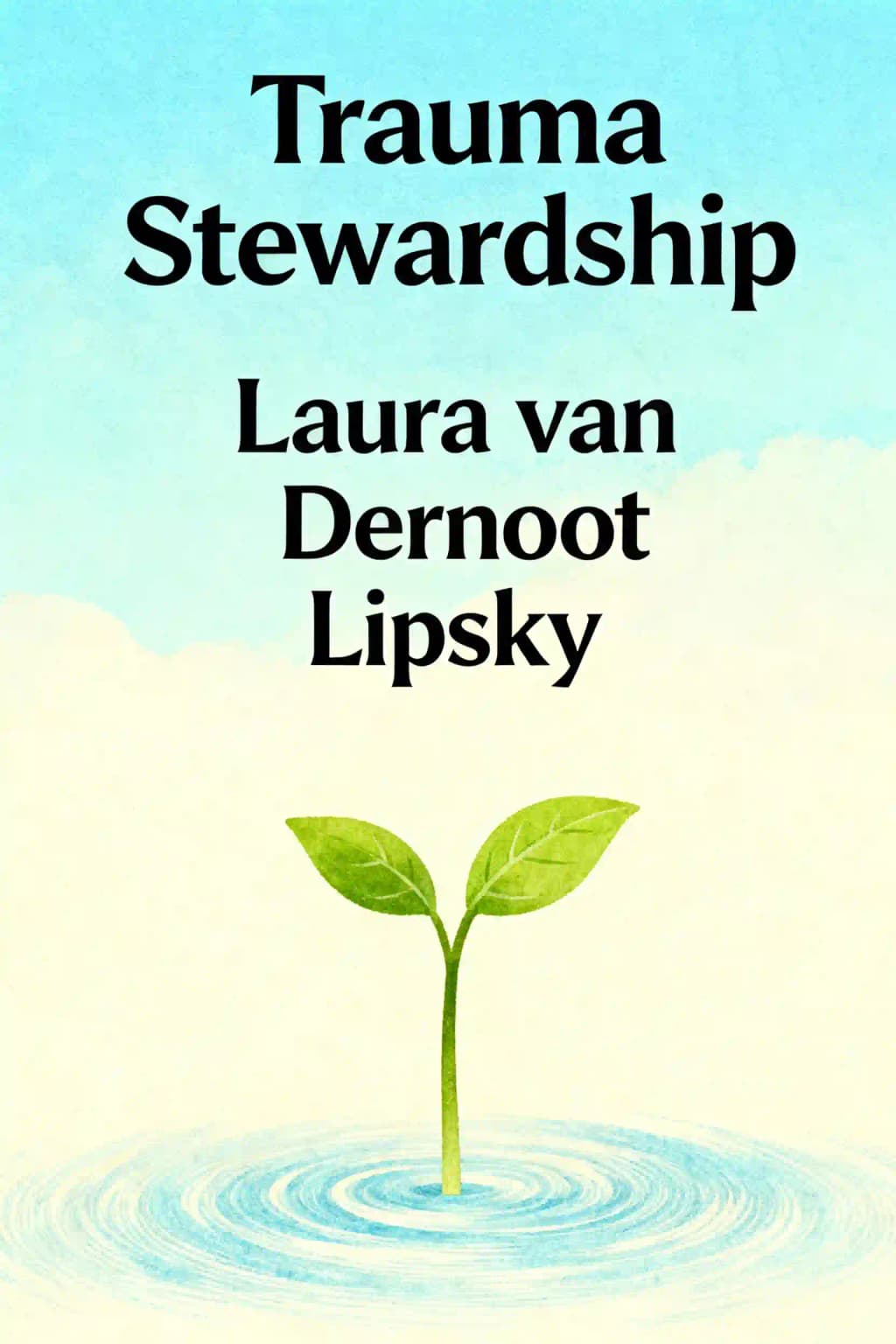
Have you ever wondered why flight attendants instruct you to put on your own oxygen mask before helping others? Laura van Dernoot Lipsky's groundbreaking book "Trauma Stewardship" offers a profound answer that extends far beyond airplane safety. This work has become required reading in healthcare systems, social service agencies, and environmental organizations worldwide, with luminaries like Eve Ensler and Alice Walker praising its revolutionary approach. Drawing from her 25+ years working with trauma survivors, Lipsky reveals how exposure to others' suffering fundamentally changes us-often without our awareness-and offers a transformative framework for sustaining ourselves while continuing to serve others effectively. The book's insights have proven so valuable that trauma stewardship training programs have spread internationally, helping thousands of caregivers, activists, and first responders reclaim their capacity for joy and purpose amid challenging work.
Capitolo 2
Understanding Trauma Exposure: A Universal Human Experience
Trauma stewardship applies to anyone who encounters suffering-social workers, teachers, firefighters, medical personnel, environmentalists, caregivers, activists-regardless of whether the trauma is glaring or subtle, sudden or prolonged, widely recognized or barely perceived. This isn't merely an idea but a daily practice through which individuals, organizations, and societies tend to hardship and trauma experienced by humans, other living beings, or our planet.
The practice calls us to engage with trauma by caring for and guiding those who struggle, without internalizing their suffering as our own. If we're to alleviate suffering long-term, we must respond to even urgent conditions sustainably and intentionally. By developing awareness to care for ourselves while caring for others, we enhance our potential to work for change ethically and with integrity.
This approach may require questioning deeply held beliefs-particularly the notion that commitment is measured by martyrdom. The most crucial technique in trauma stewardship is learning to stay fully present in our experience, slowing down enough to be curious about our internal responses without judgment. As we observe ourselves with fascination rather than criticism, we can ask: "How am I different now than I was?" and notice changes in ourselves, our relationships, and our work.
Trauma exposure response is the transformation that occurs within us from witnessing others' suffering. This transformation affects our worldview, psychological responses, and physiological well-being-often without our awareness. Many helpers mistakenly believe their role grants immunity from the suffering they witness.
Research shows trauma exposure doubles social workers' risk of PTSD, yet awareness remains dangerously low. Our responses manifest on a continuum from subtle to life-changing, often developing as protective mechanisms that eventually imprison us. As Peter Levine notes, we've become separated from our instinctual selves, rewarded for denying feelings rather than processing them.
Many caregivers resist acknowledging trauma exposure due to guilt ("who am I to complain?"), fear of appearing weak, or concern that admitting distress will overwhelm them. Organizations that prize toughness further discourage honest assessment. Yet awareness is critical-"by the time you're thirsty, you're already dehydrated." Only by understanding our response can we find our way through it.
Capitolo 3
The Three Levels of Trauma Stewardship: Personal, Organizational, Societal
Trauma creates ripple effects that extend far beyond initial impact, affecting not just individuals but organizations and entire societies. When we understand how suffering perpetuates across these three levels, we recognize the necessity of trauma stewardship as a transformative approach.
At the personal level, our individual histories profoundly influence our work with trauma. The closer our connection to the trauma we're exposed to professionally, the greater both our potential insight and vulnerability. Those working with populations whose experiences mirror their own may bring deeper understanding but face heightened emotional risks. Maintaining boundaries becomes crucial-knowing where our self ends and another's begins prevents debilitating identification that ultimately diminishes our effectiveness as advocates.
At the organizational level, workplace culture can either mitigate or worsen trauma exposure effects. Organizations often impose conflicting objectives and insufficient resources that prevent workers from performing their jobs effectively. This leads to what Michael Lipsky calls "service rationing" - the process workers use to bridge the gap between ideal practice and reality. Workers must continually redefine their jobs, making compromises between what they can do and what they're asked to do. This coping mechanism may preserve job satisfaction but can diminish quality of work over time. Without effective policies supporting workers, both direct service and social change efforts are undermined.
To fully understand trauma stewardship, we must take a macro view of how society interfaces with trauma exposure. In an ideal society, we would confront suffering directly without questioning disparities that contribute to it, whether we benefit from them, or if we're vulnerable to them ourselves.
The societal response to our work profoundly impacts its toll. When people react with discomfort, judgment, or objectification to hearing about our work, our isolation increases - a key factor in maintaining systematic oppression. We often participate in this isolation ourselves by avoiding discussing our work, lying about what we do, reacting defensively, or keeping to ourselves within our field.
Capitolo 4
Warning Signs: The 16 Symptoms of Trauma Exposure Response
Three types of perceptions contribute to feelings of helplessness: holding oneself personally responsible for situations beyond control, perceiving traumatic events as endless with no possibility of relief, and believing current struggles will repeat in all similar situations. These perceptions compound feelings of powerlessness, especially for those who view their work as a lifelong career rather than a temporary position.
This sense of helplessness is just one of sixteen warning signs that indicate trauma exposure is affecting us. Others include hypervigilance-a state of constant alertness where everything is perceived as a potential threat. Using the Trauma First Aide model, we can understand how traumatic experiences interrupt the nervous system's natural fluctuation between comfort and tension, leaving people stuck in states of hyperarousal or numbness rather than returning to homeostasis.
Diminished creativity is another warning sign. Creativity is essential for growth in trauma work, yet many organizations inadvertently discourage creative approaches by prioritizing "more important things." When organizations embrace creativity, they can transform from merely "ending problems" to creating conditions for thriving communities.
An inability to embrace complexity manifests as craving clear distinctions between good and bad, constantly saying "no," having rigid thinking, and an urgent need to take sides in every debate. This binary thinking prevents helpful responses like "Let's slow down and think about this" and instead escalates volatile situations through assumptions and judgment.
Minimizing occurs when workers trivialize current situations by comparing them to what they consider more dire circumstances. This isn't about prioritizing work but about losing compassion and empathy. It affects personal relationships too-like snapping at a partner complaining about their day or telling children they should be grateful for what they have.
Chronic exhaustion manifests as bone-deep weariness that goes beyond normal tiredness from a hard day's work. It's a "soul-tired, heart-tired kind of exhaustion" where you can't remember ever not feeling depleted. Several factors intensify this fatigue: the belief we have no choice about our work, the contagious "martyred persona" that seasoned workers adopt, and pushing ourselves harder to avoid hitting rock bottom.
Other warning signs include deliberate avoidance (when the highlight of your workday becomes avoiding your actual job responsibilities), dissociative moments (suddenly not hearing what someone is saying or being transported to traumatic memories instead of remaining present), a sense of persecution (believing we lack agency to transform our circumstances), guilt (about having resources or privileges our clients lack), fear (anxiety about intense feelings or personal vulnerability), anger and cynicism (often directed at injustice sources, organizational treatment, or clients themselves), numbness (when our systems become overwhelmed with trauma exposure), addictions (to substances or even to work itself), and grandiosity (an inflated sense of importance related to one's work).
Capitolo 5
Creating a New Path: The Five Directions Framework
The path to trauma stewardship requires connecting deeply with ourselves and our experiences. The core approach involves cultivating presence - being fully attentive to both our own lives and to others and our planet. This presence is what Pema Chodron describes as "whole-hearted, open-minded interaction with our world." It demands that we develop awareness not just of our external environment, but of our internal landscape - our thoughts, emotions, and physical sensations.
Drawing from ancient worldviews common across Asia, the Americas, and Europe, the Five Directions framework incorporates not just the four cardinal directions (north, east, south, west) but also a fifth direction representing our centered self. While modern people might see compass directions as mere navigational markers, ancient cultures understood each direction as connected to natural phenomena, colors, materials, seasons, and metaphorical qualities. For instance, many Native American traditions associate the north with wisdom and winter, the east with illumination and spring, the south with introspection and summer, and the west with transformation and autumn.
The Five Directions closely parallel the process of building trauma stewardship capacity. Our interconnected human core-our centered self-serves as our guide, yet remains ever-evolving as we learn from each experience. This center point represents integration, balance, and groundedness - qualities essential for sustainable trauma work. As we do our work, we continually seek strength by finding our center in the present moment while enhancing self-knowledge through conscious focus on life's basic elements: earth, air, fire, water, and spirit.
We begin our journey in the north, where we call upon the courage and wisdom of the water element by coming into the present moment-stopping mental chatter and creating spaciousness like gazing across an ocean. The north represents clarity and reflection, much like still waters that allow us to see our true reflection. From this expansive vantage point, we ask two critical questions: "Why am I doing what I'm doing?" and "Is this working for me?" These questions serve as compass points, helping us navigate our path with intention rather than autopilot.
Understanding our motivations provides a framework for recognizing our intentions and hopes, while also illuminating potential blind spots or unconscious patterns. What gets you on the bus each morning? Perhaps it's making an important contribution, needing health insurance, or fear of change. Maybe you're seeking trauma mastery-unconsciously recreating similar situations where you hope to feel competent and in charge. Some might be driven by a deep sense of purpose, while others might be caught in patterns of compulsive caregiving or vicarious healing. Whatever the answer, acknowledging you have choice makes all the difference. This recognition of choice becomes a powerful tool for transformation, allowing us to shift from feeling trapped to feeling empowered in our work with trauma.
Capitolo 6
Finding Focus and Creating Alternatives
Moving to the east direction, we call upon the fire element to examine where we're putting our focus and expand our possibilities. The power to choose our focus gives us incredible freedom in how we interact with life. Like surfing in the ocean, we can't control the waves that come our way, but we can choose which ones to ride and how we respond when we fall.
This teaching appears across cultures. Deepak Chopra describes life as a series of unfolding scenes where we decide where to place our attention. Even in prison, Rubin "Hurricane" Carter discovered he could transcend his physical confinement through writing: "Every time I sat down to write, I could rise above the walls of this prison."
In trauma work, reframing takes different forms. Sometimes it means focusing on what's directly before you; other times it requires stepping back to see the bigger picture. Organizations like Street Yoga in Portland have crafted mission statements that keep them focused on achievable goals rather than becoming overwhelmed by the enormity of homelessness.
"Resourcing" offers a concrete technique for regaining balance by recalling people, places, or experiences that engage your parasympathetic nervous system. Simple shifts in awareness, like noticing parts of your body that feel comfortable rather than only focusing on discomfort, can bring increased calm. As Daniel Siegel and Jack Kornfield teach, how we direct our attention actually changes our brain structure over time - temporary mindful states can become lasting mental traits.
When we recognize our ability to determine our focus, we may discover we have more options for structuring our lives than we thought. Creating a "Plan B" - whether it involves a career change, new location, fresh approach to current work, or entirely different life - reminds us that what we do is an act of free will.
Capitolo 7
Building Compassion and Community
As we move to the south, we call upon the peace and renewal from the earth element. Here we develop a supportive microculture, create an environment that sustains us like the earth does, practice compassion toward ourselves and others, and ground ourselves. This direction helps us emerge from isolation, connect with Mother Nature's core energies, and tend to both individual and collective wellness.
A microculture-whether called sangha, consultation group, or circle of friends-provides essential support by nurturing values that may differ from the broader culture. This community should both encourage us and hold us accountable, offering space to debrief, laugh, brainstorm, consult, cry, and grow together.
As Peter Senge describes in "The Dance of Change," conscious oversight involves slowing down to reflect on situations from various perspectives and supporting long-term thinking amid daily demands. By staying connected with others, we counter isolation-a foundation of oppression. Shamanic traditions worldwide recognize the need for social cohesion in healing trauma, often integrating individuals back into the community through rituals involving song, dance and celebration.
Compassion forms the foundation of trauma stewardship, connecting us to our most loving values. True compassion doesn't mean condoning harmful behavior, but understanding that destructive actions stem from suffering. We can practice "internal disarmament" rather than responding combatively.
The world needs connection, not division. We contribute to healing when we initiate compassionate action in the face of wrongdoing, remembering our fundamental connection to all life. As Chief Sealth said, we are all part of the same "web of life." Compassion keeps us feeling rather than numbing, allowing us to see individuals within contexts of generational trauma.
Contrary to what some might think, internal mindfulness practices don't distract from collective social change - they enable it. Buddhist teachers describe compassion as moving in widening circles, starting with ourselves, extending to those close to us, and finally encompassing people worldwide. The deeper our compassion, the clearer our vision for action becomes.
Capitolo 8
Finding Balance Through Gratitude and Energy Flow
The West direction focuses on finding balance, connecting with our inner selves, and practicing gratitude - elements as essential as the air we breathe. For those committed to "repairing the world," finding balance between self and work is often a desperate struggle. Some workers disconnect emotionally when work becomes difficult, while others become so buried in suffering they forget self-care entirely. Either approach makes wholeness difficult to achieve.
Creating humane work environments becomes essential. Some child protective services workers practice tae kwon do during lunch breaks; others eat with views of mountains. One domestic violence advocate created five-minute sanctuary breaks with a white napkin as a makeshift placemat amid shelter chaos. Meanwhile, many workers skip bathroom breaks, eat while driving between appointments, or work while ill.
Maintaining internal energy flow is essential for trauma workers. Traditional Chinese medicine views disease as partly resulting from stagnant energy. Rather than absorbing and accumulating others' pain, we must learn to let suffering ripple through and away from us.
Peter Levine's research on trauma offers valuable insights. Both humans and animals respond to threats with flight, fight, or freeze responses, all directed by the primitive brain. While animals naturally discharge this energy after danger passes (literally shaking it off), humans often remain stuck. Our highly evolved neocortex interrupts the natural discharge process through fear and desire for control. This undischarged energy becomes the seed of trauma, manifesting in many symptoms of trauma exposure response.
Cultivating gratitude creates essential balance in trauma workers' lives. While suffering seems endless, what we have to be thankful for is equally boundless-though it may require creative searching. Reframing difficult people as "teachers" makes challenging times bearable while rooting us in humility rather than indignation.
Organizations benefit from weaving gratitude into their structure-setting aside moments in staff meetings to honor what's going well, creating systems for workers to praise each other, or fostering a culture of routine appreciation. As Che Guevara said, "the true revolutionary is guided by great feelings of love."
Capitolo 9
The Fifth Direction: Centering Through Daily Practice
The fifth direction in trauma stewardship leads us inward to our core, where we center ourselves, then outward again to engage with the world at our best. While the four directions provide guidance, this fifth direction connects us with our most awakened self - something beyond intellectual functioning and external structure. This inner compass helps us navigate the challenging terrain of trauma work while maintaining our emotional equilibrium and professional effectiveness.
Creating a sustainable daily practice is essential, whether it takes two minutes or two hours. Though we often resist such commitments, citing busy schedules or competing demands, a practice represents our best hope for creating truly sustainable lives. The key is finding practices that resonate personally and can realistically fit into daily routines. Some practitioners find dawn moments ideal for centering work, while others carve out time during lunch breaks or evening transitions.
The author suggests beginning with two simple techniques: creating a daily intention and cultivating moments of mindfulness. Setting an intention might involve taking three deep breaths each morning and consciously choosing how to approach the day's challenges. Mindfulness can be integrated through "bell practices" - using regular occurrences like phone rings, red lights, or door frames as reminders to pause and reconnect with the present moment.
The fifth direction represents our most awakened self, the part that remains clear and compassionate even amid others' suffering. Creating a daily centering practice allows us to reconnect with our wise, resourceful parts that can sometimes get buried under stress and secondary trauma. These practices serve as anchors, helping us maintain perspective and emotional balance when work becomes overwhelming.
Being present is crucial because much harm results from our failure to integrate our felt sense with our rational mind. Without this integration, we risk operating on autopilot, potentially missing important cues from clients or ourselves. The practice of presence helps us maintain awareness of both our internal state and external circumstances, enabling more thoughtful responses rather than reactive behaviors.
Various activities can serve as centering practices: traditional meditation, mindful cooking, prayer, playing or listening to music, exercise, or walking in nature. The key is consistency and intention rather than the specific form. Some practitioners combine multiple approaches, such as starting the day with brief meditation and taking mindful walks during breaks. Others find centering through creative expressions like journaling, drawing, or movement.
Regular practice creates a foundation of stability that supports effective trauma stewardship, helping practitioners maintain boundaries, process secondary trauma, and sustain their capacity for empathy and presence. This investment in self-care ultimately benefits both the practitioner and those they serve, creating a more sustainable approach to trauma work.
Capitolo 10
Weaving a Sustainable Web of Care
Lipsky employs the powerful metaphor of spider webs - intricate structures that are simultaneously delicate and remarkably resilient - to illustrate our profound interconnectedness in trauma work. Like a spider's web catching morning dew, each strand reflects light differently, yet all are essential to the whole. She emphasizes how even the smallest filament contributes to the web's structural integrity, drawing parallels to how our seemingly minor daily actions accumulate to create significant impact in addressing trauma and suffering.
The web metaphor extends beyond individual connections to encompass entire ecosystems of care. Just as spiders rebuild their webs after damage, trauma workers must continuously reconstruct and maintain their support networks. This involves building relationships with colleagues, establishing professional boundaries, and creating systems that sustain both caregivers and those they serve.
We must courageously face difficult truths: species lost forever to extinction, children trapped in cycles of abuse, irreversible climate change impacts, and veterans carrying invisible wounds of war. These realities can feel overwhelming, yet Lipsky argues that our most powerful response is to remain fully present - what she calls a "radical act." This presence, whether sitting with a grieving family or advocating for systemic change, creates micro-moments of healing that ripple outward through the web of connections.
Personal wellness becomes non-negotiable in trauma stewardship. This includes regular self-assessment, establishing healthy boundaries, and implementing daily practices that replenish rather than deplete. Drawing from William Blake's wisdom that goodness manifests in "minute particulars," Lipsky emphasizes how small, consistent actions - a morning meditation, a supportive conversation with a colleague, or simply pausing to breathe between clients - build resilience over time.
The practice of trauma stewardship acknowledges human imperfection while striving for sustainable engagement. Success isn't measured by eliminating all suffering - an impossible goal - but by creating durable practices that allow us to remain effective while protecting our wellbeing. This involves regular attention to trauma exposure signs, implementing practices across the five directions (north, south, east, west, and center), and actively cultivating supportive professional communities.
The transformation of our relationship with trauma work happens gradually, like a spider methodically spinning its web. Rather than becoming emotionally calcified or exhausted by constant exposure to suffering, we can develop the capacity to move through it with greater awareness and compassion. This approach honors both service providers and recipients, creating a resilient web of care that supports everyone involved. The ultimate goal of trauma stewardship is not merely to endure our work with trauma, but to find sustainable ways to grow stronger through it, weaving connections that support healing across communities and generations.