Capitolo 1
The Digital Economy's Human Cost: When Buses Become Targets
One December morning in 2013, protesters blocked Google buses in San Francisco's Mission District, dramatically highlighting the tension between tech prosperity and community displacement. This wasn't simply about the 99% versus the 1% - it revealed a deeper "growth trap" affecting us all. While Google created thousands of jobs and offered free services, housing near their bus stops became 20% more expensive than comparable areas, forcing out longtime residents.
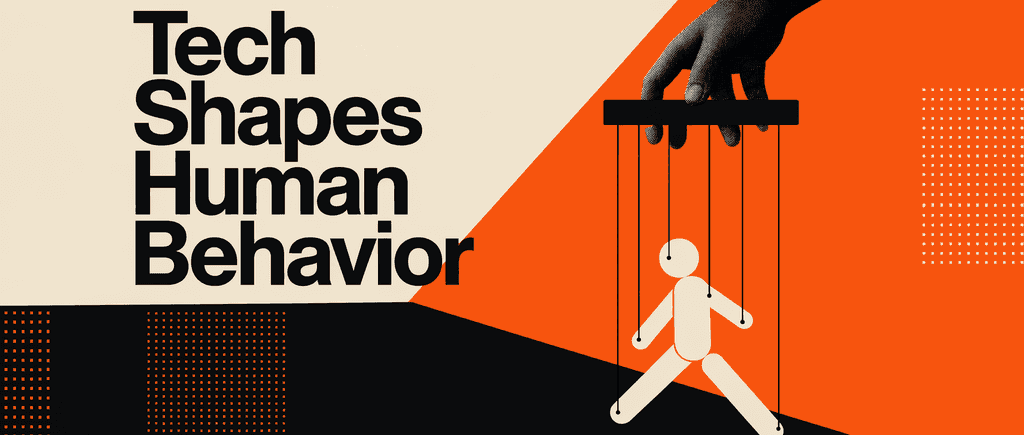
This conflict symbolizes the central argument of Douglas Rushkoff's "Throwing Rocks at the Google Bus" - our extractive, growth-driven economic operating system has reached its limits, yet we continue running it on digital networks that amplify its harmful effects. The book has become required reading in Silicon Valley boardrooms and progressive economic circles alike, with tech leaders like Joi Ito and Jimmy Wales praising its vision of a more sustainable digital economy. As wealth inequality reaches historic levels and platform monopolies dominate our economic landscape, Rushkoff's call to reprogram our economy for human flourishing rather than arbitrary growth ideals feels increasingly urgent.
Capitolo 2
Digital Industrialism: Removing Humans from the Equation
The human cost of our digital industrial economy manifests in both obvious and subtle ways. In the late 1980s, I witnessed this firsthand as a word processor transcribing industrial accident depositions while earning more than the injured workers whose stories I typed - simply because I understood computers when few did. The digital transition's contradictions became clear when an artsy receptionist I admired was replaced by an auto-attendant system, demonstrating how "what digital giveth, digital taketh away."
Auto-attendant systems exemplify how companies externalize costs to create the illusion of growth. While businesses save on salaries and benefits, callers pay with their time and frustration, navigating endless menus only to get disconnected. The efficiency gained by one company is offset by efficiency lost throughout the network of businesses and customers. Yet refusing to automate creates competitive disadvantage.
In a connected digital economy, these externalized costs eventually return as reduced sales, higher costs, and less feedback. Human interfaces provide valuable intelligence that automated systems miss, as they force every request into preconfigured categories. The calls that don't fit predetermined options represent lost customers and missed insights - casualties of applying industrial-age thinking to digital technology.
The problem isn't digital technology itself but a business model that prioritizes efficiency and growth over human needs. Business should create value for customers, employees, and owners alike. Instead, growth has become an end in itself, with people seen as impediments. This industrial-age mindset treats digital technology as just another way to remove humans from the equation.
The true opportunity of our digital environment is to retrieve human values abandoned during industrialization. Digital refers to our fingers - the human digits we use to build and program. The current maker movement and artisanal renaissance reflects this shift toward production from the periphery and lateral trade. Digital transparency can expose industrialism's workings while providing tools to reprogram business for human stakeholders rather than mere extraction.
Capitolo 3
From Bazaars to Brands: The Loss of Human Connection
Before industrialism, the business landscape resembled something like Burning Man - a peer-to-peer economy of exchange. The Crusades had opened European trade routes, exposing soldiers to new crafts and techniques. They replicated the Middle Eastern bazaar model, where people exchanged not just goods but ideas, spurring innovations in milling, fabrication, and finance.
The bazaar operated without middlemen, fostering interdependencies that promoted better commerce. Transactions were informed by multiple values - Pete the wainwright bought good oats from Joe not just to keep a customer but because he needed Joe's wife's wagon wheels made properly. Quality was maintained by guild systems that standardized prices, trained apprentices, and shared best practices. Guild members could collectively decide rules like taking Sundays off without competitive disadvantage.
This late Middle Ages economy expanded rapidly - people ate more, worked less, and grew healthier. But as merchants gained wealth, the aristocracy lost their feudal advantage. Nobles, seeing growth elsewhere while their own wealth stagnated, sought to capture this new economic energy through artificial means. Using their lawmaking power, they taxed bazaars, broke up guilds, outlawed local currencies, and granted monopoly charters to favored merchants.
The peer-to-peer economy transformed into today's top-down system. Craftspeople became employees selling hours instead of wares. Business owners sought unskilled workers who demanded less pay than skilled artisans. Industrialization wasn't primarily about efficiency but about minimizing the value and price of human labor to restore power to those at the top.
This system was marketed as technological triumph rather than worker disempowerment. From Prince Albert's 1851 Great Exhibition to today's technology fairs, the public sees wondrous machines but not the human costs - lost fingers, displaced workers, slave miners, or polluted regions. Like Jefferson's dumbwaiter that hid slave labor from dinner guests, industrial production conceals human effort.
Mass marketing replaced human connections with brand mythology. The Quaker on the oatmeal box provided a consistently friendly face compared to the real miller. Mass media completed industrialism's human cost - isolating consumers from each other, creating millions of markets of one person each. Television evolved from family hearth to individual programming, atomizing society into lonely consumers most susceptible to advertising.
Capitolo 4
Winner Takes All: The Digital Marketplace's Power Law
The digital marketplace creates extreme divides between winners and losers not simply as an expression of human nature, but by amplifying one aspect of human nature through machines at the expense of others. Large distribution platforms like Amazon, Netflix, and iTunes create these distortions by attempting to imitate human social reality while being highly centralized. Everyone passes through the same digital turnstiles, sees the same recommendations, and is subjected to the same algorithms. These aren't true peer-to-peer systems but growth machines where many purchase from few.
In contrast, platforms like eBay connect buyers directly to sellers in an anti-industrial model. Most sellers are real humans with used items to sell, and while ratings matter, they're more about ensuring seller integrity than driving consumers to particular products. Peer-to-peer platforms distribute the ability to create and exchange value rather than monopolizing it.
Some online marketplaces intentionally work against power-law dynamics. Bandcamp, for instance, caters to less-established artists, charges lower commissions, and eschews download counts and leaderboards in favor of discovery tools that let users browse genres like they would in a physical record store. While marketing dogma suggests this creates a "tyranny of choice," people managed to shop in record stores before algorithms made choices for them.
Sites like Bandcamp, eBay, Maker's Row, Etsy, and Indiegogo prove digital platforms don't have to lead to power-law distributions. They only do so because we program them to support inherited mass production strategies: directed consumer choice, minimal human intervention, volume sales, and monopoly control. We further devalue human contributions by expecting people to provide reviews, comments, and content to corporations for nothing in return, creating a system where many work for nothing-another manifestation of income disparity.
Capitolo 5
The Economy of Likes: Social Media's False Promise
Despite its interactive appearance, the digital economy continues the industrial practice of preventing real people from participating in the growth economy as beneficiaries. As internet companies struggle to extract value from users who have little money left, they've developed a new currency: likes.
Social media initially seemed like an alternative to marketplace ethos after the dot-com bust. Platforms like Friendster, Blogger, and Myspace appeared to return to peer-to-peer sensibilities. But the alternative value systems they created-likes, views, reblogs, favorites-became a new currency that companies are valued by. Brands constantly monitor social media traffic, and research (mostly by social media companies) suggests these "social" recommendations from trusted "friends" mean more than traditional advertisements.
This economy of likes is most valuable to social media companies themselves. Instagram was purchased by Facebook for $1 billion despite generating zero revenue, valued instead for its 49.6 million daily likes. Similarly, Tumblr netted negative $13 million the year Yahoo bought it for $1.1 billion, valued for its 900 posts per second. Snapchat, with no revenue, declined Facebook's $3 billion offer while generating 400 million daily disappearing messages.
The real value isn't in advertising but in the data these companies mine from our social activity and sell to research firms like Acxiom, Claritas, and Datalogix. To maintain growth, social platforms must extract increasingly more of our attention, time, and data. Users are slowly realizing they aren't Facebook's customers but its product-as evidenced by the controversy when Facebook conducted psychological experiments on users, proving it could simulate and stimulate human emotion in a controlled setting.
This simulated bazaar rewards quantity of friendships over quality. We engage not with humans but with metrics, trusting "peer" recommendations over professional expertise. Market extremes spin out of control while real experts, journalists, and reviewers lose jobs. Social media companies grow at the expense of users.
In this landscape, everything matters less for what it is than for how many likes it generates. Artists and entertainers perform not for human audiences but for big data computers, often resorting to sensationalism to maintain attention. The career path becomes circular: creators build social networks to "make it," then what they sell is the network itself rather than their talent.
Capitolo 6
Big Data: The Illusion of Innovation
The relationship between users and social networks is intentionally covert and one-sided - digital networks simulate human social dynamics to generate goodwill and excitement for corporate clients, while platforms learn more about us than we learn about them. Social marketing creates the illusion of organic interest while providing marketers with valuable social graphs - maps of connections and influences that form the building blocks of big data analysis.
Big data is positioned as the solution to everything from terrorism to tuberculosis and the supposed payoff for otherwise unprofitable tech businesses. Nearly every startup claims to be a "big data play," but the revenue supporting these ventures must come from the same limited 5% of GDP associated with marketing and advertising - an impossible equation.
The reduction of people to manageable data sets began before digital technology, when marketers used public records to target physical mailings. With computers, statisticians developed sophisticated demographic categories, allowing firms like Acxiom to arm marketers with psychological profiles of target audiences. But researchers soon discovered that data could predict future choices - who might go to college, get pregnant, or develop health problems.
What makes big data truly unsettling is its reliance on correlations that make no human sense. While people worry about surveillance of their content, the metadata is far more valuable - when you make calls, their duration, your location, even how long your cursor hovers over parts of a webpage. With hundreds of millions of people each generating tens of thousands of data points, researchers can make predictions with alarming accuracy without understanding why these predictions work.
The web's ability to track individual users enables true one-to-one marketing. Rather than buying ads seen by everyone, advertisers can target specific consumers based on their data profiles. This technology can predict almost anything - from political party changes to sexual orientation shifts - not from what people say in their communications, but from seemingly innocuous data patterns.
For marketers, mere prediction isn't enough. While big data might reveal that 80% of people sharing certain data points will go on a diet, algorithms target the remaining 20% with weight-loss messaging to push them in that direction too. These algorithms use trial and error to increase probability rates, effectively reducing consumer spontaneity and corralling people toward limited outcomes that match their statistical profiles - a digitally complexified version of industrial one-size-fits-all values.
The big data approach ultimately stifles true innovation. Companies increasingly abandon unpredictable R&D in favor of data analysis, believing they can predict what consumers want next quarter. But using big data to develop new products is like looking in the rearview mirror to drive forward. All data is history - it can't reveal what could be, only what likely will be based on past patterns. Without human ingenuity, companies lose competitive advantage, becoming only as good as the data science firms they hire - often the same ones their competitors use. The only long-term winners are the big data firms themselves.
Capitolo 7
The Sharing Economy: A Trojan Horse
Digital industrialism transforms human data into a new commodity that's harvested for free while only platform owners profit. The value we create - through content contributions or passive data trails - remains "off the books," benefiting only those with the technology to capture it. This raises a fundamental question: are humans merely impediments to economic growth?
Jaron Lanier proposes that people should be paid whenever their data is used. He envisions a system where two-way links would allow content to be traced to its source, enabling micropayments to creators whenever their data contributes to valuable correlations. This solution aims to reinstate a middle class killed by power laws.
However, this approach might further dehumanize us by reducing our value to only what can be quantified. We'd be performing for machines rather than each other, with our worth determined solely by data-intensive activities. The fundamental problem is the accounting system itself - the double-entry ledger that frames everything as credits and debits in a zero-sum game, an artifact from the Renaissance that wasn't designed for human flourishing.
The "sharing economy" exemplifies this issue. Services like Airbnb and Uber create peer-to-peer commerce but ultimately serve corporate growth by monetizing previously idle assets. Despite marketing that emphasizes community, these platforms primarily enable commercial transactions - 87% of Airbnb hosts leave their homes to rent them out. They transform homes into amateur hotels and car owners into unlicensed taxi drivers, exploiting regulatory arbitrage rather than true innovation.
These platforms undermine professionals who've invested in training and regulatory compliance. Uber's "cheaper than a taxi" pricing isn't technological magic but predatory pricing funded by $3.3 billion in venture capital. The London cabbie with encyclopedic street knowledge can't compete with an amateur using GPS. What appears to restore human connection actually replaces skills and relationships with automated solutions while central servers extract the majority of revenue.
The ultimate goal becomes clear when considering that Uber investor Google is developing self-driving cars. The "sharing economy" isn't about including more people as value creators but transitioning toward full automation - first replacing skilled workers with unskilled ones, then eliminating humans entirely, as Netflix did when evolving from DVD-by-mail to streaming.
Capitolo 8
Rethinking Employment: Beyond the Jobs Paradigm
Digital technology accelerates the industrial drive to remove humans from the value equation. When technology increases productivity, companies eliminate jobs and reward shareholders with the savings. The middle class hollows out, with only those living off passive investment returns making money.
As Piketty's research shows, capital grows faster than the economy - those with money get richer simply because they have money, while workers get a smaller piece of the economic pie despite working more efficiently. Leading digital businesses generate ten times the revenue per employee as traditional companies, with platform and algorithm owners becoming the new landlords.
Perhaps we're asking the wrong question. Instead of obsessing over job creation, we should examine why employment has become our society's highest moral good. People need food, shelter, entertainment, healthcare, connection, and purpose - but do they actually need jobs?
Jobs themselves are relatively new historically - hourly wage employment only appeared in the late Middle Ages with chartered corporations. Previously independent craftspeople were forced to sell their time rather than their goods, a form of servitude previously known only to slaves. The mechanical clock made buying and selling human hours standard.
Our industrial capabilities now exceed our requirements - we make more than we can use, with middle-class Americans renting storage units while banks demolish foreclosed homes to maintain market values. We have surplus food and housing, yet don't give them to the homeless or hungry because they "don't have jobs."
The problem isn't scarcity but distribution. We expect consumers to fuel production of unnecessary goods so people can work jobs they'd rather not do. We employ people not because we need more things, but because we have no other way to justify letting them share in abundance created without their labor. Alternatives require challenging this system's underlying assumptions and connecting what people need with what they can provide.
Capitolo 9
Corporations as Programs: Rewriting the Code
Corporations can be understood as media programs written for specific historical purposes. Using Marshall McLuhan's "tetrad" analysis reveals that corporations were invented to amplify shareholder power and capital primacy, allowing feudal lords to preserve wealth in an emerging free market. Kings granted exclusive industry monopolies to merchants in exchange for investment rights.
Corporations made obsolete the local bazaar and peer-to-peer value creation, actively working against marketplace innovation and competition. Their core programming is to repress exchange and innovation while extracting value. They retrieved imperial values, leading to colonialism that reduced places to territories and people to resources.
When pushed to extremes, corporations flip into seeking personhood-as seen in the Hobby Lobby and Citizens United cases-while limiting investor liability. Today's corporations still follow this original programming: extract value, eliminate local markets, expand empire, and seek personhood to grow capital. Walmart exemplifies this pattern by extracting value from communities, replacing local economies with one-way distribution, undercutting local merchants, and externalizing costs to workers and communities.
Despite Costco's better worker treatment yielding superior long-term outcomes, Wall Street punishes this deviation from traditional corporate programming. The extractive economic model has fundamental limits - like draining an aquifer faster than replenishment. Since the 1950s, corporations have faced expansion limits as colonial territories pushed back and consumers became saturated with choices.
Corporate profit over net worth has declined since the mid-1960s despite technology advances. The "Big Shift" study by Deloitte reveals that while labor productivity improves, corporate performance has deteriorated for decades, with return on assets falling to just one-quarter of 1965 levels. Companies attempt to please shareholders through financial tricks, defunding R&D, acquiring startups, outsourcing core competencies, and cost-cutting - all short-term tactics that further erode long-term value creation capability.
Capitolo 10
The Steady-State Enterprise: Beyond Growth
CEOs are increasingly ready to listen to alternatives to growth-based economics. Behind closed doors, they ask the crucial questions: How do I transition from a postwar growth corporation to what we really are? How do I tell my shareholders?
The steady-state enterprise rejects the infinite growth imperative, focusing instead on generating sufficient revenue to pay employees. Rather than pursuing IPOs or acquisitions, companies aim for sustainable equilibrium - less like a football game with winners and losers and more like a video arcade where the goal is to play as long as possible.
Family businesses exemplify this approach, thinking in generations rather than quarters. They carry little debt, make smaller acquisitions, retain talent better, and enter markets more patiently. According to Harvard Business Review, their long-term financial performance exceeds non-family businesses by several percentage points.
Running a steady-state business means working against the extractive bias of traditional corporations. Instead of accumulating war chests (dead zones of wasted capital), companies should maximize ongoing revenue, stable profits, healthy workforces, and satisfied customers. CEOs should be suspicious of sudden growth spikes, using temporary facilities to test market sustainability rather than building permanent infrastructure.
The natural world demonstrates that perpetual growth isn't necessary - ecosystems find optimal ranges, and organisms reach "full grown" states. Businesses should function more like coral reefs, still innovating but within a stable matrix. Toyota exemplifies this philosophy, with President Akio Toyoda rejecting aggressive expansion: "If a tree suddenly grows very fast, the rings of the trunk will be unstable and the tree will be weak."
Even CEOs willing to challenge the growth imperative can't immediately transform their corporations without angering shareholders or violating fiduciary duties. The solution is a hybrid approach - testing sustainable strategies with limited resources while maintaining traditional operations.
Companies like Walmart can hedge against their own extractive policies by facilitating more local, peer-to-peer marketplaces. As America's middle class declines and the Chinese middle class rises, importing cheap goods from China is becoming less viable. Instead of resisting with aggressive tactics, Walmart could repurpose some assets to support peer-to-peer digital marketplaces, creating real-world analogues to platforms like Etsy. Their sales floors could become hybrids of local crafts alongside Walmart's offerings, while leveraging their logistics network to distribute popular local items. This approach would help sustain the very markets on which their retail business depends.
Capitolo 11
Digital Distributism: A Human-Centered Alternative
Instead of digitizing industrial extraction to grow capital, our new technologies can distribute value creation for a sustainable economy. The artisanal economy was replaced by an industrial one designed to decrease human contributions' value. Digital technology then amplified these industrial priorities to new extremes.
But in digital distributism, these mechanisms are reprogrammed to serve people and businesses. Where digital industrialism extracts value, digital distributism distributes new capabilities to small businesses and communities. Where industrial approaches yield platform monopolies like Uber and Amazon, a distributed approach creates worker-owned cooperatives with unprecedented complexity and security.
Digital distributism promotes money circulation through peer-driven currencies rather than abstracted derivatives, and recycles money within bounded real-world communities instead of expanding markets infinitely. Unlike digital industrialism's unattainable infinite growth, digital distributism aims for sustainable prosperity-an actually achievable goal given our current abundance.
Pope Francis made similar arguments in his 2015 encyclical, noting that belief in infinite growth is incompatible with limited planetary resources. He argued that economic growth that deteriorates the environment and depletes resources "cannot be considered progress," challenging both climate change deniers and defenders of industrial capitalism. His critique of the industrial economy promoted "productive diversity and business creativity" through small-scale food production systems that use modest land and produce less waste, arguing that economies of scale force smallholders to sell land or abandon traditional crops.
The principles of distributism originated in papal encyclicals from 1891 and 1931, which sought a middle path between Gilded Age capitalism and Marxism. They argued that while private property is a human right (as capitalism claims), gross inequality is immoral (as communism argues). Distributism advocates for the widest possible distribution of the means of production, with workers owning their tools and earning ownership stakes in businesses. It discourages externalization of costs, privatization of currency, and the draining of market liquidity by big business and government.
Unlike leftism, distributism doesn't call for redistribution after the fact, but for pre-distributing the means of production. It follows the principle of subsidiarity - granting power to the maximum number of smallest possible nodes, with no business being bigger than needed to serve its purpose. Family businesses are considered ideal due to their limited size, long-term sustainability focus, and dignified treatment of workers.
A digital renaissance isn't regression but recursion-rediscovering old values in contemporary contexts. As Pope Francis noted, "Nobody is suggesting a return to the Stone Age, but we do need to slow down... to recover the values and the great goals swept away by our unrestrained delusions of grandeur."
This economic transition resembles childbirth-painful yet potentially creating new life. If we're experiencing a genuine renaissance, we should see widespread rebirth of lost values across society. Where Renaissance perspective painting emphasized a single correct viewpoint, digital holograms recover holism and relativity. Renaissance ships mapped channels for conquest; our satellite views reveal a finite biosphere to protect. Renaissance literature celebrated individual heroes; our era promotes collective storytelling through gaming and social media.
A digital distributist business would amplify distributed creativity, obsolesce centralized monopolies, and retrieve medieval marketplace values. Companies can implement these principles incrementally-letting users create value, sharing ownership with workers, establishing networked guilds, and valuing human labor. Success should be measured not by growth but by competence, value creation, participation, community investment, and business sustainability.
It's an economy we want to own.