Capitolo 1
From Refugee to Representative: A Journey of Resilience and Hope
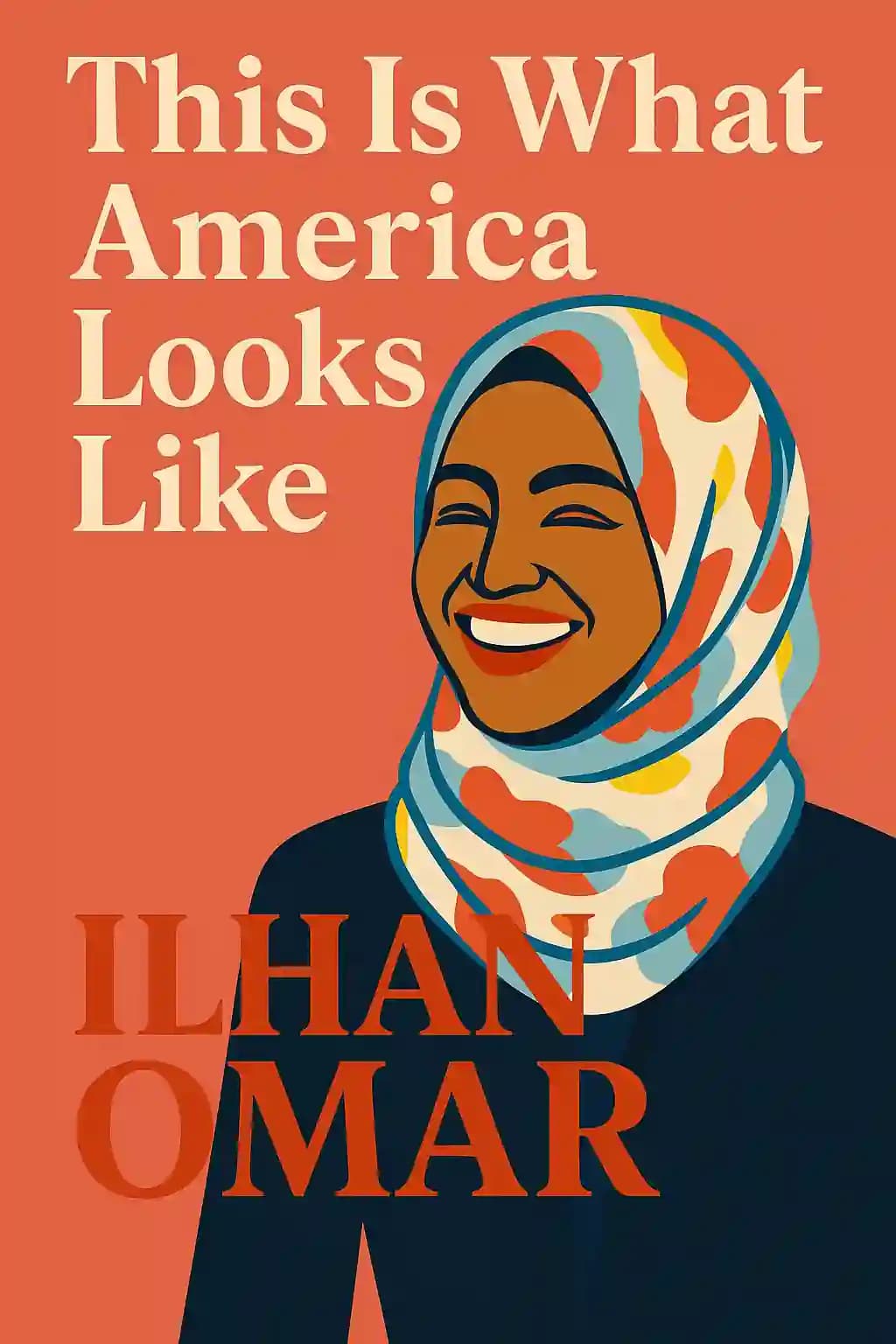
Ilhan Omar's memoir "This Is What America Looks Like" isn't just another political biography-it's a testament to the American dream that has captivated readers across political spectrums. Since its 2020 release, the book has become a cultural touchstone, praised by figures ranging from Oprah Winfrey to Trevor Noah for its unflinching honesty and inspiring narrative. As the first Somali-American elected to Congress and one of the first Muslim women to serve in the House, Omar's journey from refugee camp to the Capitol has resonated deeply with immigrant communities while offering all Americans a powerful window into the refugee experience. The memoir has become required reading in many university courses on immigration, identity politics, and American government. What makes Omar's story so compelling isn't just her remarkable rise, but how she embodies the quintessential American narrative of reinvention and possibility-a reminder that America's greatest strength has always been its capacity to welcome those seeking refuge and allow them to contribute to the nation's ongoing story.
Capitolo 2
The Fighter: Roots of Resilience in Mogadishu
Long before Ilhan Omar became a congresswoman, she was a tiny but fierce defender of the vulnerable. In her third-grade classroom in Mogadishu, she confronted a bully who was humiliating a smaller, poorer orphan. Despite her size, she challenged him to meet after school, where she pulled him down and rubbed his face in the sand. This early incident wasn't just childhood bravado-it revealed a core aspect of her character that would define her life's trajectory.
Omar grew up in an unconventional Somali household that shaped her independent spirit. Living in her mother's family compound-unusual in patrilineal Somalia-she was raised in a multigenerational family where everyone's opinion mattered, even hers as the youngest. Her grandfather Baba, who worked with lighthouses and prepared excellent Italian food, had raised her mother as an equal to her brothers-a progressive stance in traditional Somali society.
This upbringing created a foundation for Omar's later advocacy. She never quite fit conventional expectations-not fully Somali because of her mixed heritage, not traditionally feminine with her tree-climbing and soccer-playing. Yet within her family's walls, these differences weren't deficiencies but strengths. Like her grandfather, she developed an early indifference to others' expectations-a quality that would later sustain her through political attacks and cultural criticism.
What's striking about Omar's childhood is how these early experiences cultivated her sense of justice. Her willingness to confront that schoolyard bully foreshadowed her later political courage, challenging power structures and defending marginalized communities. The little girl who refused to stay silent in the face of injustice carried that same spirit into congressional hearings and policy debates decades later. Her childhood in Somalia wasn't just a prelude to her refugee experience-it was the crucible that forged her fighting spirit.
Capitolo 3
When War Shatters Childhood: Somalia's Collapse
The sudden eruption of Somalia's civil war in 1991 transformed eight-year-old Ilhan's world overnight. One day, life proceeded with normal routines; the next, bullets rained from the sky. The disintegration happened with terrifying speed-schools closed, then mosques, postal services, television stations, and markets followed. Their house, positioned between a major thoroughfare and the Makka Al Mukarama hotel (headquarters of self-declared president Ali Mahdi Muhammad), became a dangerous location as mortars flew overhead, hitting their home multiple times.
The war's impact extended beyond physical danger into the fabric of daily life. Food scarcity became the new normal-the family survived on beans, rice, and occasional bread with halwa, while across the country, 350,000 Somalis died of starvation and disease. Perhaps most devastating was how the conflict transformed neighbors into potential threats. The war pitted two commanders from the same Hawiye clan against each other, with militias targeting Omar's father's Majerteen clan. Suddenly, the family had to hide their identities from neighbors who had once been like extended family.
The psychological toll of this transformation was immense. When Omar and her brother ventured out once to deliver a message, militia at a checkpoint questioned their clan lineage. Despite Omar's quick thinking, they were never allowed outside again. The family clung to the hope that they might weather the storm, until attackers directly targeted their home, climbing their gate and surrounding their windows. Only then did her grandfather finally accept they weren't safe in Mogadishu anymore.
What makes Omar's war experience particularly poignant is how it mirrors the experiences of millions of refugees worldwide today. The sudden collapse of normalcy, the transformation of familiar neighborhoods into danger zones, and the painful realization that home is no longer safe-these are universal elements of the refugee experience that transcend specific conflicts. For Omar, these childhood memories weren't just traumatic history but became foundational to her later advocacy for refugees and immigrants, informed by lived experience rather than abstract policy considerations.
Capitolo 4
Fleeing Home: The Perilous Journey to Safety
"When the mouth of the shark is safer than home"-this Somali saying captures the desperate calculus that drove Omar's family to flee Mogadishu after militia members attacked their home. Their escape was harrowing-packed tightly with thirty neighbors in scorching cattle trucks, Omar was crushed beneath an older woman who didn't notice her. The journey was repeatedly interrupted by gunfire, forcing them to flee barefoot toward the makeshift border.
The psychological trauma matched the physical hardship. While sleeping on the beach at Baraawe, rumors circulated that Omar's father and siblings had been murdered. As a child, she mentally prepared herself for life as an orphan-a stark reflection of how quickly children in conflict zones must confront adult realities. Miraculously, she found her father alive at dawn-he had backtracked to find them after reaching Kismayo.
In Kismayo, they faced different dangers-flying bullets, food blockages, and persistent hunger. When fighting intensified, they evacuated to the airport, eventually being smuggled into Kenya on small planes carrying contraband shrimp. The arrival at Utange refugee camp near Mombasa brought no relief-just red dust and tents stretching to the horizon. Here, Omar experienced another devastating loss when her aunt Fos, who had been like a mother to her since her own mother died, contracted malaria. Despite Omar's desperate search for help, Fos died after briefly rallying one morning.
This loss taught Omar a devastating lesson about the refugee experience-that there is no escape from destiny, as her father sadly confirmed. The randomness of survival and death, the arbitrary nature of who lives and who dies, became a reality she confronted at a young age. This understanding later informed her political perspective-the knowledge that many refugees never get the chances she eventually received, not because they were less deserving, but because of circumstances beyond their control.
What's remarkable about Omar's refugee narrative is how it captures both the universal and the specific. The particulars of her journey from Somalia to Kenya differ from Syrian refugees crossing the Mediterranean or Central Americans at the southern border, yet the fundamental experience-fleeing violence, facing uncertainty, and struggling to maintain dignity-connects refugee experiences across time and geography. This perspective gives her immigration advocacy a depth and authenticity that transcends political talking points.
Capitolo 5
Life in Limbo: The Reality of Refugee Camps
The Utange refugee camp presented a cruel paradox-having survived war and a perilous journey, refugees now faced death from disease and starvation in a place meant to provide safety. For Omar, the camp meant witnessing death more constantly than during the war itself. The human tragedy unfolded daily as parents visibly sacrificed to feed their children first, and orphaning became commonplace. One day she would play with children who became orphans the next.
The community's response to this suffering revealed humanity's resilience. When six siblings lost both parents within two weeks, the community rallied to help them. Years later, Omar was stunned when one of those siblings, Amina, contacted her after her congressional win in 2018, revealing that baby Umi-whom Omar had assumed had died-was thriving. Such moments of unexpected connection across decades highlight how the bonds formed in extreme circumstances can endure.
While hope was scarce in the camp, survival became the focus. Everyone except Omar's grandfather and herself contracted malaria. Her father and grandfather often seemed like shells of themselves, consumed by helplessness and despair. Despite these hardships, the family gradually adapted. Omar played cards with the men, sneaked into town to watch movies despite the dangers, and served as her family's "errand boy"-fetching water, standing in bathroom lines, and collecting food rations.
The camp experience transformed Omar from a child into a caretaker. Multiple fires destroyed sections of the camp, and through these disasters, she witnessed both the worst and best of humanity. The greatest lesson she internalized was that today doesn't determine tomorrow-the only option for the human spirit is to keep going. This philosophy would later sustain her through political challenges and personal attacks.
What makes Omar's refugee camp narrative particularly valuable is how it humanizes an experience often reduced to statistics or distant news footage. She captures the tedium, the fear, the small joys, and the constant uncertainty that characterize refugee life. Her account helps readers understand why refugees aren't simply people seeking economic opportunity but individuals fleeing untenable circumstances and desperately trying to rebuild shattered lives. This lived experience gives her immigration advocacy a moral authority that transcends partisan politics.
Capitolo 6
American Dreams and Harsh Realities
The path to America began with Omar's grandfather advocating for resettlement there, saying "Only in America can you ultimately become an American. Everywhere else we will always feel like a guest." The resettlement process was rigorous-beginning with registration with the United Nations High Commissioner for Refugees (UNHCR), followed by extensive background checks, interviews, and medical screenings. In the early 1990s, the U.S. began issuing visas to Somali refugees, though in limited numbers-only about 10,464 Somalis entered America between 1986 and 1996.
The family's preparation for America was shaped by orientation videos showing idyllic American scenes-amber waves of grain, beautiful homes with white picket fences, and families gathered around enormous meals. They dressed in their finest clothes for the journey, wearing ill-fitting but respectable outfits purchased from a flea market in Nairobi, hoping to make a good impression in their new country.
The reality of America shattered these idealized visions when they landed in New York. Seeing trash-lined streets and homeless people sleeping on benches, young Ilhan told her father, "This isn't America." His weary reply-"This isn't our America. We'll get to our America"-captured the gap between immigrant expectations and American realities.
After arriving in Arlington with minimal English knowledge, Omar struggled through middle school with only two phrases: "hello" and "shut up." Placed in sixth grade after a four-year education gap, she faced constant cultural confusion and isolation. Unlike her siblings who had each other for support, she was alone. Her frustration manifested in frequent fights-she'd strike first when students stared at her, misinterpreting their looks as threats.
These confrontations landed her in detention regularly, forcing her father to leave work for school meetings where he tried explaining her defensive mindset. Despite quickly learning English through her father's home language requirements, her reputation as a fighter persisted. Her worst altercation came in eighth grade when five girls attacked her in the locker room during PE. Even when told one girl was pregnant, she continued fighting as they pulled out clumps of her hair.
This wasn't just aggression-it was a survival strategy. Without protection, she chose to establish respect through fighting rather than becoming a perpetual victim. This early American experience reveals the complex reality many immigrants face-the gap between the American dream and American reality, the challenges of cultural adaptation, and the strategies young people develop to navigate hostile environments.
Capitolo 7
Finding Community: Minnesota and Cultural Identity
After eighth grade, Omar's father moved the family from Arlington to Minnesota, home to the largest Somali population in America. This transition followed significant changes-all her siblings had moved away for jobs and education, leaving just her father and her. More importantly, her grandfather Baba had resettled there after the Utange camp closed.
Starting at Edison High School as a freshman, classmates nicknamed her "Virginia." Unlike her previous schools, Edison had dozens of Somali students, providing an overwhelming sense of belonging after three years of isolation. She finally had peers who understood her existence without explanation, sharing language and cultural references. Having dedicated herself to academics during her detention hours in Arlington, she was placed in advanced classes rather than ELL programs with most other Somali students.
Edison's incredible diversity came with challenges-racial tensions and fights between different ethnic groups were common. Rather than joining these conflicts, Omar became part of a student coalition called Unity in Diversity that worked to improve cultural relations. They created leadership training programs and organized activities that successfully brought peace to their school environment.
Meanwhile, her home life grew more complicated. She clashed with her sister Shankaron, who disapproved of her American teenage habits like staying up late watching TV with her grandfather. Her father incentivized good grades with money for clothes, but struggled between his progressive beliefs and community pressure about raising a Somali Muslim daughter. Though he never imposed strict rules like curfews or dress codes, he expected her to maintain moral standards that wouldn't embarrass him in the community.
At sixteen, Omar met Ahmed at a Somali independence celebration. Beginning as friends when she showed him around Minneapolis during his visit, their relationship eventually deepened into something more serious. Dating was culturally prohibited in their Somali community, creating tension with her family despite their obvious connection. Omar didn't hide her relationship from her family, though her father was caught between his progressive values and cultural expectations.
This period of Omar's life illustrates the complex navigation of multiple identities that many immigrant children face-balancing traditional cultural expectations with American teenage experiences, finding community while maintaining individuality, and building bridges across cultural divides. Her work with Unity in Diversity foreshadowed her later political approach of finding common ground amid difference.
Capitolo 8
Building a Life: Marriage, Motherhood, and Education
Though Omar found the concept of marriage bizarre-a social construct based on respectability rather than devotion-she and Ahmed eventually married before she turned nineteen. The decision wasn't just about their relationship but navigated cultural expectations and family dynamics. Her father was conflicted-he wanted her to complete college before marriage but also preferred she have a legitimate reason to spend time with a man. The marriage process followed tradition, with Ahmed's male relatives formally asking for her hand, and a religious ceremony attended only by male family members where her father represented her.
Their transition to married life was seamless. They rented a one-bedroom apartment near her father, continued working and attending school, and maintained close ties with their families. The only difference was now having private time together. Her grandfather Baba particularly loved Ahmed, bonding with him over basketball games.
With good grades and extra credits from high school, Omar had many college options but knew little about higher education. She enrolled in a two-year accounting program at a school in the Mall of America after seeing a TV commercial promising flexible scheduling. The enrollment process was suspiciously easy, with administrators handling all her loan paperwork-a situation she would later recognize as predatory.
Shortly after starting school, the September 11 attacks occurred, forcing evacuation of the mall. Beyond the shock and mourning all Americans felt, Muslim Americans like Omar faced additional fear as their religion was suddenly deemed dangerous and their American identity questioned.
A year after her wedding, Omar became pregnant and transformed into an obsessively excited mother-to-be. Two weeks past her due date, during a blizzard, she went into labor surrounded by female relatives and her doula. Despite her high pain tolerance, she delivered her daughter Isra without time for an epidural. Though they had expected a boy, they named her Isra after a Quranic surah describing a night journey.
Motherhood proved challenging-her caffeine habit produced an unexpectedly sleepy baby who couldn't stay awake to nurse properly. She developed mastitis and suffered high fevers while refusing medication because she was breastfeeding. Eventually, these difficulties passed, and Isra proved to be a pleasant, healthy child.
During this period, the U.S. invaded Iraq-a war Omar believed was illegal and would bring only destruction. Having experienced war firsthand as a child, she knew it would rob the Iraqi people of normalcy for decades to come. This personal understanding of war's impact would later inform her foreign policy positions in Congress.
Capitolo 9
Crisis and Renewal: Finding Faith and Purpose
When Omar discovered she was pregnant again in early summer 2004, she was already exhausted as a working mother trying to finish school. Her educational situation had become problematic-the two-year program wasn't fully accredited, meaning courses wouldn't transfer to traditional institutions. As a refugee with a single parent, she lacked the traditional family support system to navigate the college process.
When she learned she was carrying twins while weighing only 89 pounds and anemic, she felt overwhelmed rather than blessed. Then at thirteen weeks, she miscarried. The trauma was worsened by her inability to prioritize self-care, leading to hospitalization for dehydration.
During her third pregnancy in 2005, she became introverted and traveled to Sweden to stay with her mother's religious cousins. Despite family worries about cultural clashes, their quiet, pious home provided the therapeutic environment she needed. Her cousin Aliyah explained their approach to faith-worship to the maximum while avoiding wronging others, including not pushing beliefs. This opened her mind to a radically different concept of devotion.
After Adnan's birth in fall 2005, she embraced wearing the hijab as a personal choice rather than external obligation. Her faith became her strength, though she respected her daughter Isra's journey with the hijab, which mirrored her own back-and-forth relationship with it.
As Barack Obama campaigned on hope and change in 2008, Omar found herself trapped in hopelessness. With two children under five and overwhelming responsibilities, she felt like she was drowning. She struggled with her identity, constantly trying to meet others' expectations while feeling scrutinized by "five hundred eyes" watching her every move. Physical symptoms manifested as severe headaches, insomnia, and emotional instability. She realized she was finally confronting all her unprocessed losses-her mother's death, the war, her homeland, her language, her promised future.
In summer 2008, Omar and Ahmed divorced quietly. Her breakdown culminated in an impulsive second marriage and shaving her head under her hijab. Seeking a concrete goal and new environment, she applied to North Dakota State University and, without telling anyone, packed up her children and left for Fargo to start fresh.
This period of crisis and renewal illustrates the long-term psychological impact of trauma and displacement. Omar's experience shows how refugees often must process their losses years after the immediate danger has passed, when the demands of survival no longer suppress emotional needs. Her journey through this personal crisis-finding strength in faith, education, and eventually political engagement-demonstrates the resilience that would later define her public life.
Capitolo 10
Political Awakening: From Nutrition Educator to Organizer
Omar's life in Fargo followed a strict routine-waking at 4 AM to study before preparing her children for their day. Away from family judgments, she created a controlled environment where she could explore new ideas freely. She joined numerous campus organizations, from the black students association to the college Democrats, and helped organize Muslims and Hijab Day with her friend Jaylani Hussein.
Though she initially enrolled to study nutrition, building on her previous work experience, her coursework became increasingly political. Her nutrition background came from working with Simply Good Eating, a University of Minnesota program for underserved communities, where she'd started as a translator before becoming an instructor. Teaching nutrition to immigrant communities and recovery groups revealed how politics and policy affected real people's lives-while she taught them not to refrigerate potatoes, they struggled with basic survival needs like finding employment and obtaining driver's licenses.
After completing her work in a Kenyan refugee camp, Omar returned to the US with profound gratitude for being allowed to live when so many others didn't survive. One woman's story particularly affected her-Jija had lost five children and her husband during their journey to the camp, with her three youngest surviving only because they drank cooled urine while the older ones who refused had died. This perspective transformed Omar's anger about her family's separation during their escape from Somalia into understanding-they were singularly focused on survival.
After returning to Minneapolis as her father had requested, she sought reconciliation with her family members, allowing her to come home without lingering sadness. Ahmed and she repaired their marriage as she learned to exist fully as herself, questioning gendered parenting roles and finding new balance. Their third child Ilwad, born in summer 2012, brought unexpected joy to their family-her name means "to see beauty" in Somali.
After returning to Minneapolis, Omar threw herself into political organizing while pregnant with Ilwad. Through clever messaging around freedom and civil liberties, she helped defeat both Republican ballot measures in 2012-the voter ID requirement and the marriage amendment defining marriage as between one man and one woman. Minnesota became the first state ever to defeat a constitutional marriage amendment at the ballot box, paving the way for nationwide marriage equality.
This period marked Omar's transition from personal struggle to political engagement. Her work in nutrition education had shown her how policy directly affects vulnerable communities, while her organizing work demonstrated the power of collective action to create change. These experiences laid the foundation for her later political career, combining practical understanding of community needs with strategic organizing skills.
Capitolo 11
Breaking Barriers: From City Hall to Congress
In 2014, Omar began working as senior policy aide to newly-elected Councilmember Andrew Johnson-her first full-time government position. She'd managed Johnson's underdog campaign the previous year despite initial hesitation due to her three small children and Baba's illness. The campaign faced enormous challenges-initially against a 16-year incumbent, then against her chosen replacement. With minimal support from progressive leaders, their small team worked twelve-hour days for months.
Working at City Hall required adjusting to lost autonomy, as her opinions now represented Andrew's. They successfully removed outdated ordinances monthly, including the "spitting and lurking" prohibition that disproportionately targeted young men of color. Omar learned to balance passion with pragmatism, and Johnson trusted her counsel because he knew she'd stand by him through implementation.
Her belief that "if you aren't making someone uncomfortable, you aren't doing your job" led to physical conflict at a caucus between incumbent Phyllis Kahn and Mohamud Noor. Despite threats to stay away, Omar attended as the neutral site coordinator and only bilingual party official. Chaos erupted when someone pulled her hijab over her face and she was attacked from all directions, suffering a concussion. Rather than backing down, she had her injury photographed and declared in an op-ed that she wouldn't be silenced by those suggesting a woman should be "put in my place" for political involvement.
After Noor's defeat by Kahn, Omar was devastated. When David Gilbert-Pederson arranged for her to meet his mother as a "focus group of one," this led to a series of home gatherings that quickly grew from 4 to 30 people-significant growth that made her emotional about the possibility of real change.
By October 2015, when she formally launched her campaign for state representative, they had their "Time for Ilhan" slogan, $13,000 in donations, and surrogates in every neighborhood. Her success quickly triggered opposition from Somali community elders who summoned her father, demanding she withdraw in favor of Noor. They claimed it wasn't appropriate for a woman to lead and threatened to use all their resources against her. Her father defended her fiercely, even when they warned him she would be shunned.
Despite vicious smear campaigns through the Somali community, Omar continued campaigning, meeting everyone from LGBTQ students to skeptical Somali elders. She even won over Ali Ganey, an influential Somali community leader who initially laughed at her candidacy but became one of her strongest champions after seeing her determination and the unfair tactics used against her.
The April 2016 convention became a twelve-hour ordeal as Noor's and Kahn's campaigns tried every tactic to undermine hers. Despite their hope that her young delegates would leave, they remained steadfast. Though no candidate secured the required 60 percent for endorsement, Omar led with 55 percent to Kahn's 35 percent and Noor's 11 percent.
On August 9, 2016, despite all the attacks, Omar's organization and hard work paid off with a primary victory. After anxiously refreshing the Minnesota secretary of state's website to confirm the Twitter announcement, she collapsed to the floor as six months of emotions hit her at once-all the stress, tiredness, slammed doors, debates, helping hands and beautiful faces.
Capitolo 12
America's Hope: Representing the Marginalized in Washington
Just days before Omar's primary win, a Somali blog published misleading facts about her past marriages that unleashed conspiracy theories claiming she had married a relative for immigration purposes. Though initially ignored, the story was later picked up by conservative websites and mainstream media. This was a last-gasp effort by those who couldn't accept her refusal to "kiss the ring" of established power structures.
The personal toll was immense. Her father was warned she would be imprisoned for forty years. Her husband endured people suggesting he should be embarrassed. The scrutiny created distance between Omar and her loved ones, as they worried about becoming liabilities while she struggled with having her private life exposed.
Trump's election was devastating, especially after he had singled out Somali immigrants at a Minnesota rally days before the vote. Twenty-four days into her first term in the Minnesota legislature, Trump signed his "Muslim ban" targeting seven predominantly Muslim countries, including Somalia. After announcing a small community gathering to address concerns, Omar was overwhelmed when 13,000 people RSVP'd. She was increasingly becoming not just a representative for those under attack, but a counternarrative to Trump himself.
Her profile grew rapidly as Minnesota Democrats embraced her as a symbol of hope. Her September 2017 Time magazine cover and appearance on The Daily Show, where she called herself "America's hope and the president's nightmare," made international news. The hate mail and death threats intensified with every national appearance, requiring coordination with local police and the sergeant at arms.
Entering the Minnesota state house created a two-tiered existence for Omar. While 90% of her time in 2017 was spent responding to Trump's policies, her actual job was creating Minnesota laws. Standing before the Democratic members, she acknowledged their fears but emphasized she was there to work. Without begging or pleading, she made her case for assistant minority leader-and won all but two votes.
This victory unsettled some colleagues, with one legislator remarking what made her different was that she "walk in like a white man"-a perception of confidence he couldn't reconcile with her being a "ninety-pound refugee hijabi." By focusing on shared values rather than recognition, she successfully incorporated her higher education bills into Republican-led legislation.
In early summer 2018, Omar received a life-changing call from Keith Ellison, informing her he was leaving his congressional seat open. Despite the impossible timing-just thirty hours before the filing deadline-momentum built instantly. On June 5, 2018, she filed to run for the U.S. House of Representatives, facing an unexpected obstacle: since 1837, headwear had been banned on the House floor, potentially preventing her from wearing her hijab if elected.
Her congressional primary was a stunning success, winning by over 20,000 votes and breaking turnout records. Thanks to Representative Jim McGovern, she was eventually able to author an amendment overturning the 181-year ban on headwear, allowing for hijabs, yarmulkes, and medical head coverings on the House floor when she was sworn in on January 3, 2019.
Capitolo 13
The World Belongs to Those Who Show Up
Omar's father still calls her Iron Lady because he thinks she's fearless, though her strength comes not from lack of fear but from moral outrage. Her election victory was for every marginalized person-the refugee child, the young woman forced into marriage-anyone told their dreams have limits.
Her mission is helping those who feel small to feel large, giving strength to those who believe they're weak, and amplifying voices of those who think they're voiceless. That's the American dream to her.
When they first arrived in America and her father said "This isn't our America," she thought they'd arrived in the wrong America. She's still searching for that idealized America-the one with abundant turkey dinners in beautiful homes with welcoming schools and safe neighborhoods.
Most refugees will never experience the America shown in those orientation videos, yet the constant aspiration for a better society fuels immigrants' hustle. While striving is enshrined in the Constitution, Omar worries many Americans have become complacent, normalizing inequities while avoiding discussions about systemic biases that allow wealth concentration at the top.
Our economic anxieties are often misdirected as identity-based hatred when they should target societal structures. The America we deserve isn't just a myth-it's achievable if we work together through community organizing, finding common goals and advocating collectively.
Omar's philosophy as a legislator centers on interconnectedness-rejecting scarcity mindsets that pit minority groups against each other. When we shift from "I" and "they" to "us," we find compassion through listening to different perspectives. Government representatives must understand the daily struggles of those they serve, as she learned while teaching nutrition to immigrants who couldn't access fresh food.
Democracy is like a baby learning to walk-progress takes time. As a refugee who's seen civilization collapse, Omar recognizes how systems erode when people stop paying attention. That's why she's committed to improving democratic access for all Americans, just as her grandfather did when helping Somali immigrants navigate their first caucuses. Those conscious of what isn't working must make it better, but it all starts with showing up.