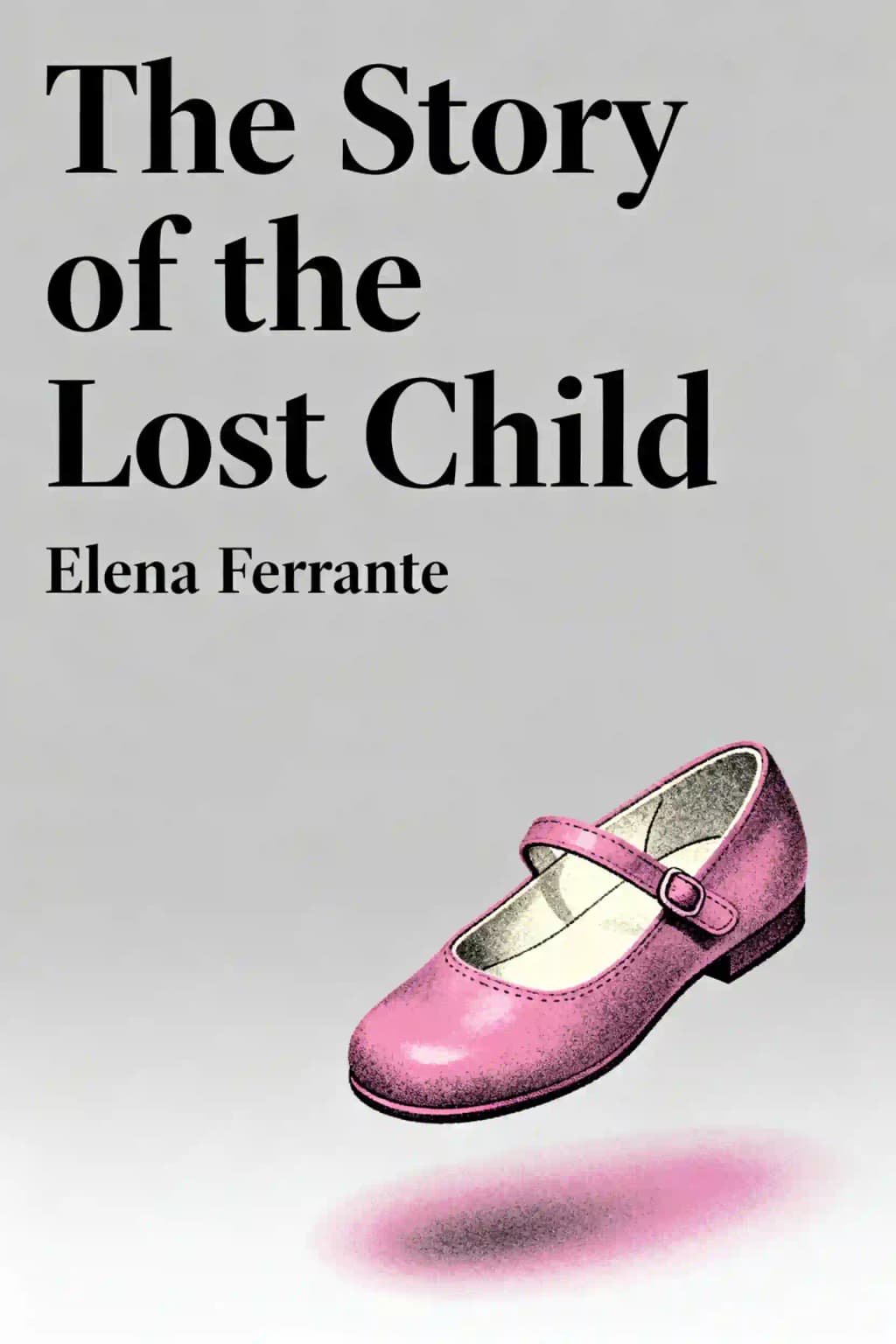
The Story of the Lost Child book cover

The Story of the Lost Child

Elena Ferrante
4.46 (187510 Reviews)

Panoramica di The Story of the Lost Child

The epic conclusion to Ferrante's 14-million-copy Neapolitan Quartet - named "the series of the decade" by Entertainment Weekly. What makes this finale so magnetic that readers gave it the highest ratings despite declining readership? Time magazine's influential storyteller delivers her masterpiece.

Temi chiave in The Story of the Lost Child

  • female friendship dynamics
  • neapolitan social history
  • maternal guilt
  • intellectual class mobility
  • toxic male infidelity

Citazioni da The Story of the Lost Child

  • Naples as "disgusting" and unchanged.

  • Marriage in Ferrante's world is rarely a sanctuary.

  • possessed of "the worst kind of meanness, that of superficiality."

  • "the expansive sweep of the great 19th-century novels."

  • "an intoxicatingly furious portrait of enmeshed friends"

Personaggi di The Story of the Lost Child

  • Elena GrecoThe narrator and an ambitious writer
  • Lila CerulloElena's brilliant and volatile lifelong friend
  • Nino SarratoreA charismatic intellectual and Elena's lover
  • PietroElena's husband and an academic
  • Immacolata (Imma)The daughter of Elena and Nino

Sull'autore

Sull'autore di The Story of the Lost Child

Elena Ferrante is the pseudonymous Italian novelist behind The Story of the Lost Child, the powerful conclusion to her internationally bestselling Neapolitan Novels quartet. Renowned for her psychologically intense literary fiction, Ferrante explores female friendship, identity, ambition, and betrayal through the decades-spanning relationship between two brilliant women, Elena and Lila, in postwar Naples from the 1950s to 2010s.

Born in Naples, Ferrante's other critically acclaimed works include Troubling Love, The Days of Abandonment, and The Lost Daughter—all adapted into award-winning films. The Neapolitan Novels, beginning with My Brilliant Friend, became a global literary phenomenon translated into dozens of languages.

The series was adapted into a critically acclaimed HBO television series that premiered in 2018. Maintaining strict anonymity and communicating only through her publisher, Ferrante has captivated millions of readers worldwide, establishing her as one of contemporary literature's most compelling and influential voices.

Scarica il riassunto di The Story of the Lost Child

Ottieni il riassunto di The Story of the Lost Child in formato PDF o EPUB gratuito. Stampalo o leggilo offline quando vuoi.

FAQ su questo libro

The Story of the Lost Child is the fourth and final novel in Elena Ferrante's Neapolitan Novels series, chronicling the lifelong friendship between Elena and Lila from midlife into their sixties. Set primarily in 1980s Naples, the book explores motherhood, betrayal, and loss as both women navigate complicated relationships with their children and lovers. The title refers to the mysterious disappearance of Lila's daughter Tina in 1984, an event that profoundly impacts both women's lives and ultimately leads Elena to write a memoir about their friendship.

Elena Ferrante is a pseudonymous Italian novelist born in Naples in 1943 who has maintained her anonymity since publishing her first novel in 1992. She uses a pseudonym to distance her writing from personal identity and public scrutiny, preferring to communicate with media only through email. Ferrante has stated that anonymity allows her work to stand on its own without the distractions of celebrity culture. Despite speculation and investigative attempts to uncover her identity, she has never confirmed who she is, making her one of contemporary literature's most intriguing mysteries.

The Story of the Lost Child is worth reading if you've completed the first three books in the Neapolitan Novels series, as it provides essential closure to Elena and Lila's decades-long friendship. The novel tackles profound themes of motherhood, jealousy, loss, and the complexities of female relationships with Ferrante's signature emotional intensity. However, it's not a standalone work—readers should begin with My Brilliant Friend to fully appreciate the character development and layered narrative. The book offers a devastating yet realistic exploration of how childhood friendships evolve and sometimes fracture over time.

The Story of the Lost Child appeals to readers interested in literary fiction exploring complex female friendships, Italian culture, and multigenerational storytelling. It's ideal for those who appreciate character-driven narratives with psychological depth and social commentary about class, gender, and political upheaval in postwar Italy. Fans of domestic fiction, feminist literature, and writers like Rachel Cusk or Deborah Levy will find resonance here. However, this book requires reading the previous three Neapolitan Novels first, making it best suited for readers committed to the complete quartet.

Tina, Lila's daughter, mysteriously vanishes on September 16, 1984, while outside with Elena's children and Nino during a visit. Despite extensive searches by police and neighbors, Tina is never found and her fate remains unknown throughout the novel. Lila believes Tina is still alive somewhere, while Enzo suspects the Solara crime family killed her as revenge. The disappearance destroys Lila and Enzo's relationship and haunts both women for decades. Later, Lila develops a theory that someone meant to kidnap Elena's daughter Imma but took Tina by mistake.

Elena leaves her husband Pietro for Nino Sarratore, her teenage crush, but discovers he continues living with his wife Eleonora and maintains numerous affairs throughout their relationship. Despite learning about Nino's infidelity from Lila—including that he repeatedly propositioned Lila herself—Elena initially continues the relationship and bears his daughter Imma. The relationship deteriorates as Nino proves unreliable and inattentive, culminating in Elena catching him with their children's caregiver. Elena finally leaves Nino permanently and moves back to the neighborhood to be near Lila, raising Imma largely without his involvement.

The Story of the Lost Child ends with Elena in old age, having written a memoir called A Friendship about her relationship with Lila, breaking a promise she made never to write about her. The book restores Elena's literary reputation but causes Lila to cut off all contact permanently. In the final timeline, set after 2010, Lila mysteriously disappears at age 60, leaving no trace of herself behind. Elena has become a grandmother with her daughters living abroad, while reflecting on their "splendid and shadowy" friendship and Lila's ultimate erasure of herself from the world.

The Story of the Lost Child explores female friendship as both sustaining and destructive, examining jealousy, competition, and codependency between Elena and Lila. Motherhood emerges as a central theme, contrasting the two women's relationships with their daughters and questioning maternal adequacy and identity. The novel addresses class mobility, showing how Elena's intellectual success fails to provide emotional fulfillment. Loss—of children, relationships, identity, and time—permeates the narrative. Political and social transformation in 1980s-90s Italy provides backdrop, with Ferrante examining the return of capitalist exploitation and the deterioration of leftist ideals.

Elena writes A Friendship, her memoir about Lila, despite promising never to betray her privacy because she feels compelled to give Lila "a form whose boundaries won't dissolve" after decades of their turbulent relationship. The act is both tribute and betrayal—Elena wants to preserve Lila, defeat her self-erasure, and process the trauma of Tina's disappearance and their complicated friendship. The book also serves Elena's career, restoring her literary reputation after her work fell out of print. Writing allows Elena to calm herself by controlling the narrative of their lives, even as it permanently destroys their relationship.

Both Elena and Lila name their daughters after their mothers—Tina for Nunzia and Imma for Immacolata—representing attempts to honor their origins and reconcile with their complicated maternal relationships. The naming occurs as Elena's mother is dying of cancer, bringing Elena closer to her despite their fractious history. This parallel naming emphasizes the cyclical nature of female identity and generational patterns in the Neapolitan Novels. The names also highlight the women's simultaneous escape from and return to their neighborhood roots, as both become mothers while navigating complex class positions and personal ambitions.

Critics note The Story of the Lost Child can feel emotionally exhausting, with relentless betrayals and disappointments that may overwhelm readers seeking resolution or redemption. Some find the pacing uneven, particularly the extensive focus on Elena's domestic struggles and professional anxieties. The unresolved mystery of Tina's disappearance frustrates readers expecting concrete answers, though Ferrante intentionally leaves it ambiguous. Elena's continued involvement with Nino despite his obvious flaws tests reader patience. Additionally, the novel's bleakness about political progress and personal relationships offers little hope, which some readers find too pessimistic or nihilistic for a series conclusion.

The Story of the Lost Child differs from earlier Neapolitan Novels by focusing on middle age and loss rather than youthful ambition and possibility. While My Brilliant Friend emphasized intellectual competition and The Story of a New Name explored marriage and early motherhood, this final installment confronts mortality, failure, and the limits of transformation. The tone is darker and more reflective, with less dramatic social mobility and more examination of what success costs. Elena's narrative voice becomes more self-aware and critical, acknowledging her own complicity in destructive patterns. The mystery of Tina's disappearance provides a devastating focal point absent from previous volumes.

Esplora il Tuo Modo di Imparare

The Story of the Lost Child non è solo un libro — è una masterclass in Fiction. Per aiutarti ad assorbire le sue lezioni nel modo che funziona meglio per te, offriamo cinque modalità di apprendimento uniche. Che tu sia un pensatore profondo, un apprendista veloce o un amante delle storie, c'è una modalità progettata per il tuo stile.

Modalità Riassunto Rapido

Leggi o ascolta il riassunto di The Story of the Lost Child in 9 minuti

Scomponi le idee chiave di The Story of the Lost Child in punti facili da capire per comprendere come i team innovativi creano, collaborano e crescono.

play
00:00
00:00

Modalità Divertente

Lezioni da The Story of the Lost Child Raccontate in Storie di 25 Min

Vivi The Story of the Lost Child attraverso narrazioni vivide che trasformano le lezioni di innovazione in momenti che ricorderai e applicherai.

play
00:00
00:00

Modalità Personalizza

Vivi The Story of the Lost Child nel tuo stile di apprendimento

Chiedi qualsiasi cosa, scegli il tuo stile di apprendimento e co-crea intuizioni che risuonano davvero con te.

Personalize Mode

Creato da alumni della Columbia University a San Francisco

BeFreed Riunisce Una Community Globale Di 1,000,000 Menti Curiose

"Instead of endless scrolling, I just hit play on BeFreed. It saves me so much time."

@Moemenn
platform
star
star
star
star
star

"I never knew where to start with nonfiction—BeFreed’s book lists turned into podcasts gave me a clear path."

@Chloe, Solo founder, LA
platform
comments
12
likes
117

"Perfect balance between learning and entertainment. Finished ‘Thinking, Fast and Slow’ on my commute this week."

@Raaaaaachelw
platform
star
star
star
star
star

"Crazy how much I learned while walking the dog. BeFreed = small habits → big gains."

@Matt, YC alum
platform
comments
12
likes
108

"Reading used to feel like a chore. Now it’s just part of my lifestyle."

@Erin, Investment Banking Associate , NYC
platform
comments
254
likes
17

"Feels effortless compared to reading. I’ve finished 6 books this month already."

@djmikemoore
platform
star
star
star
star
star

"BeFreed turned my guilty doomscrolling into something that feels productive and inspiring."

@Pitiful
platform
comments
96
likes
4.5K

"BeFreed turned my commute into learning time. 20-min podcasts are perfect for finishing books I never had time for."

@SofiaP
platform
star
star
star
star
star

"BeFreed replaced my podcast queue. Imagine Spotify for books — that’s it. 🙌"

@Jaded_Falcon
platform
comments
201
thumbsUp
16

"It is great for me to learn something from the book without reading it."

@OojasSalunke
platform
star
star
star
star
star

"The themed book list podcasts help me connect ideas across authors—like a guided audio journey."

@Leo, Law Student, UPenn
platform
comments
37
likes
483

"Makes me feel smarter every time before going to work"

@Cashflowbubu
platform
star
star
star
star
star

"Instead of endless scrolling, I just hit play on BeFreed. It saves me so much time."

@Moemenn
platform
star
star
star
star
star

"I never knew where to start with nonfiction—BeFreed’s book lists turned into podcasts gave me a clear path."

@Chloe, Solo founder, LA
platform
comments
12
likes
117

"Perfect balance between learning and entertainment. Finished ‘Thinking, Fast and Slow’ on my commute this week."

@Raaaaaachelw
platform
star
star
star
star
star

"Crazy how much I learned while walking the dog. BeFreed = small habits → big gains."

@Matt, YC alum
platform
comments
12
likes
108

"Reading used to feel like a chore. Now it’s just part of my lifestyle."

@Erin, Investment Banking Associate , NYC
platform
comments
254
likes
17

"Feels effortless compared to reading. I’ve finished 6 books this month already."

@djmikemoore
platform
star
star
star
star
star

"BeFreed turned my guilty doomscrolling into something that feels productive and inspiring."

@Pitiful
platform
comments
96
likes
4.5K

"BeFreed turned my commute into learning time. 20-min podcasts are perfect for finishing books I never had time for."

@SofiaP
platform
star
star
star
star
star

"BeFreed replaced my podcast queue. Imagine Spotify for books — that’s it. 🙌"

@Jaded_Falcon
platform
comments
201
thumbsUp
16

"It is great for me to learn something from the book without reading it."

@OojasSalunke
platform
star
star
star
star
star

"The themed book list podcasts help me connect ideas across authors—like a guided audio journey."

@Leo, Law Student, UPenn
platform
comments
37
likes
483

"Makes me feel smarter every time before going to work"

@Cashflowbubu
platform
star
star
star
star
star

"Instead of endless scrolling, I just hit play on BeFreed. It saves me so much time."

@Moemenn
platform
star
star
star
star
star

"I never knew where to start with nonfiction—BeFreed’s book lists turned into podcasts gave me a clear path."

@Chloe, Solo founder, LA
platform
comments
12
likes
117

"Perfect balance between learning and entertainment. Finished ‘Thinking, Fast and Slow’ on my commute this week."

@Raaaaaachelw
platform
star
star
star
star
star

"Crazy how much I learned while walking the dog. BeFreed = small habits → big gains."

@Matt, YC alum
platform
comments
12
likes
108

"Reading used to feel like a chore. Now it’s just part of my lifestyle."

@Erin, Investment Banking Associate , NYC
platform
comments
254
likes
17

"Feels effortless compared to reading. I’ve finished 6 books this month already."

@djmikemoore
platform
star
star
star
star
star

"BeFreed turned my guilty doomscrolling into something that feels productive and inspiring."

@Pitiful
platform
comments
96
likes
4.5K

"BeFreed turned my commute into learning time. 20-min podcasts are perfect for finishing books I never had time for."

@SofiaP
platform
star
star
star
star
star

"BeFreed replaced my podcast queue. Imagine Spotify for books — that’s it. 🙌"

@Jaded_Falcon
platform
comments
201
thumbsUp
16

"It is great for me to learn something from the book without reading it."

@OojasSalunke
platform
star
star
star
star
star

"The themed book list podcasts help me connect ideas across authors—like a guided audio journey."

@Leo, Law Student, UPenn
platform
comments
37
likes
483

"Makes me feel smarter every time before going to work"

@Cashflowbubu
platform
star
star
star
star
star

Vuoi vedere altre storie?

Come le persone parlano di BeFreed in giro per il web
1.5K Ratings4.7
Inizia il tuo percorso di apprendimento, ora


