Capitolo 1
The Sobering Truth About America's Addiction Treatment Industry
Every year, over five million Americans recite the Serenity Prayer in church basements, rehab centers, and community halls across the country. Alcoholics Anonymous has become so deeply embedded in American culture that it's practically synonymous with addiction recovery itself. The 12-step approach has expanded to over 300 different organizations addressing everything from smoking to social phobia. Courts mandate attendance, celebrities publicly credit it with saving their lives, and an entire $15 billion treatment industry has been built around its principles.
There's just one problem: it doesn't work for most people who try it.
Despite its cultural dominance and quasi-religious status in American society, peer-reviewed studies consistently show AA's success rate is only 5-10% - barely better than no treatment at all. The prestigious Cochrane Collaboration, after examining eight controlled studies with over 3,400 subjects, concluded there was no experimental evidence demonstrating AA's effectiveness. Yet this approach remains the foundation of nearly all addiction treatment in America, costing thousands of lives and billions of dollars annually.
Capitolo 2
The Surprising Origins of a Cultural Institution
AA began not as a scientifically developed treatment protocol but as a nonprofessional attempt to address its founders' personal struggles with alcoholism. The organization's core principles - the famous Twelve Steps - were borrowed directly from the Oxford Group, a fundamentalist religious organization focused on spiritual rebirth through confession, surrender to God, and proselytizing.
William Wilson, AA's charismatic founder, was a fascinating study in contradictions. While preaching abstinence from alcohol, he maintained lifelong addictions to cigarettes, coffee, and sex. His tobacco habit was so severe that even when requiring oxygen in old age, he consistently chose cigarettes instead. His sexual compulsions were legendary, prompting AA members to form a "Founder's Watch" committee to steer him away from young women at events. When confronted about these behaviors, Wilson would acknowledge the problem but admit, "I can't give it up."
Wilson's pivotal conversion experience came during his fourth stay at Towns Hospital. After crying out in despair, he experienced a vision of bright light followed by euphoria and calm - a moment remarkably similar to his grandfather's religious conversion and possibly influenced by the hallucinogenic "Belladonna Cure" he was receiving at the time. This experience convinced Wilson he'd been touched by God, and he never drank again.
AA's rise to prominence wasn't inevitable but rather the result of Wilson's tireless efforts to enlist America's most powerful institutions. He secured support from the Rockefeller family, Yale University, and eventually the American Medical Association. Marty Mann, one of AA's first female members, became a powerful advocate through her National Council on Alcoholism and Drug Dependence, often testifying without disclosing her AA membership.
By 1951, AA received the prestigious Lasker Award despite no scientific validation of its efficacy. The organization's legitimacy accelerated when the American Medical Association publicly praised it in 1955, and courts began mandating attendance for offenders by 1966. AA had achieved remarkable influence on public opinion and policy without any rigorous studies supporting its efficacy claims.
Capitolo 3
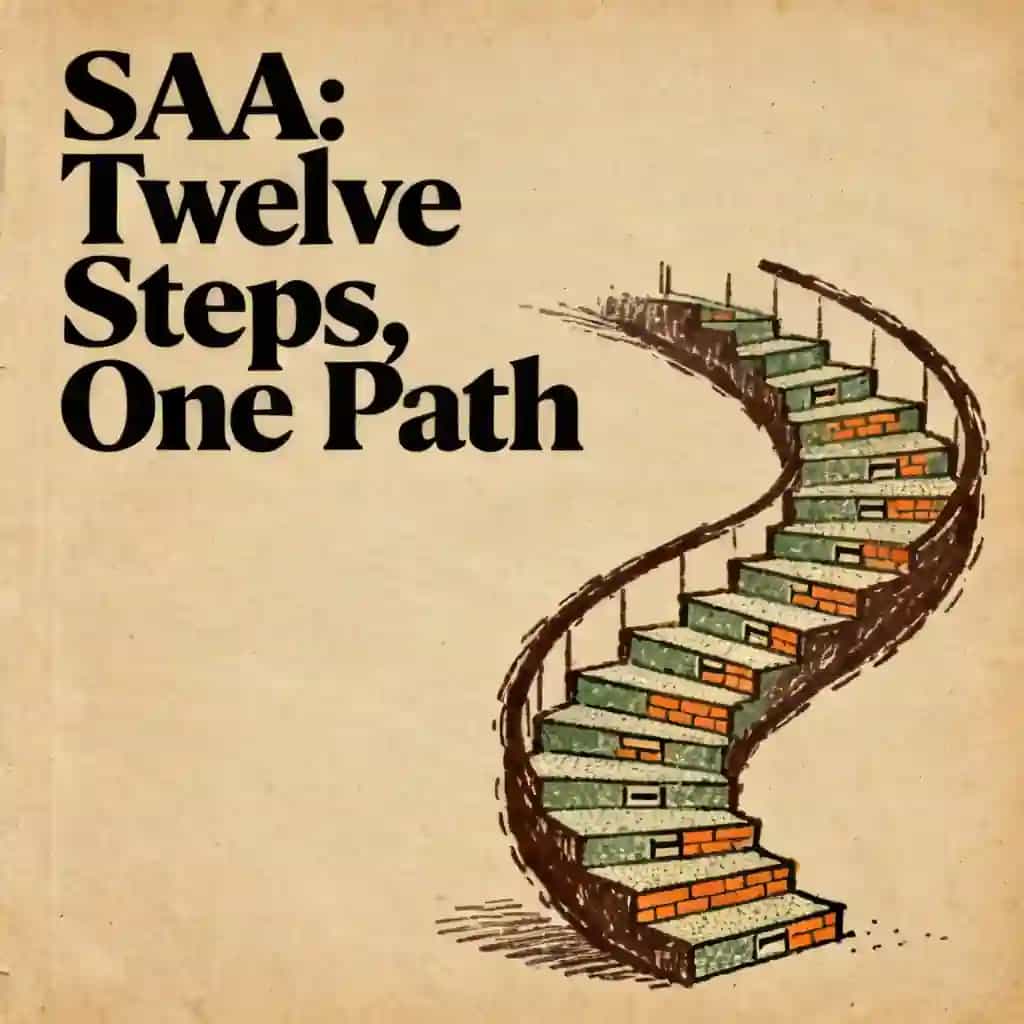
Walking the Twelve Steps: A Closer Look at AA's Program
AA offers a comforting appearance of actionable change with its twelve steps, but closer examination reveals dubious ideas and potentially harmful myths. The first step demands admitting powerlessness over alcohol - a concept that lacks clinical merit despite its narrative appeal. This notion of powerlessness contradicts modern addiction science, which emphasizes the brain's neuroplasticity and capacity for change through evidence-based treatments. Research shows that individuals who believe they have agency in their recovery often achieve better outcomes than those who view themselves as powerless.
The second and third steps invoke belief in a "Power greater than ourselves" and turning one's will over to "God as we understood God" - revealing AA's religious foundations despite claims of a secular approach. While AA maintains these steps can be interpreted non-religiously, the language and concepts remain deeply rooted in Protestant Christian theology. This presents particular challenges for atheists, agnostics, and those from different religious backgrounds who seek help for addiction.
The fourth through seventh steps focus on moral inventory, character defects, and shortcomings, incorrectly framing addiction as a moral failure rather than a medical disorder. This approach can intensify shame and guilt, emotions that often fuel addictive behaviors. Modern addiction medicine recognizes substance use disorder as a complex brain disease influenced by genetic, environmental, and social factors - not a reflection of moral character. The emphasis on character defects can deter individuals from seeking evidence-based medical treatments that might better serve their recovery.
Steps eight through eleven continue this religious framework of confession, penance, and prayer, closely mirroring religious practices. These steps require individuals to make amends and develop conscious contact with God through prayer and meditation. While spiritual practices can support recovery for some, positioning them as essential steps marginalizes those who prefer secular approaches. Studies show that secular cognitive behavioral therapy (CBT) and motivational enhancement therapy often produce comparable or better outcomes.
The twelfth step's emphasis on proselytizing has contributed to AA's worldwide spread while making open dialogue about alternative treatments nearly impossible. This creates a self-perpetuating system where success stories are amplified while failures are attributed to individual shortcomings rather than program limitations. AA's structure ensures that those who succeed become vocal advocates, while those who don't succeed often leave silently, creating a significant selection bias in perceived effectiveness.
AA survives partly because successful members proselytize regularly - the twelfth step explicitly instructs this - creating a sampling error where we mainly hear from the small percentage who succeeded. The organization's foundational "Big Book" makes inflated claims about success rates, essentially blaming those who fail rather than examining the program's effectiveness - a standard no legitimate medical treatment could maintain. Recent studies suggest actual success rates may be as low as 5-10%, far below the rates claimed in AA literature.
Despite its claims of being nonreligious, multiple courts have ruled that AA is indeed religion-based due to its emphasis on surrendering to a higher power. Federal courts have consistently held that state-mandated AA attendance violates the First Amendment's Establishment Clause. This religious foundation creates significant barriers for many seeking help with addiction but uncomfortable with spiritual approaches, potentially delaying or preventing them from getting the help they need.
Capitolo 4
The Rehab Fiction: Expensive Treatment With Poor Results
The rehabilitation industry deserves special scrutiny, charging exorbitant rates while delivering the same ineffective AA approach with expensive add-ons. Prestigious facilities like Hazelden, Sierra Tucson, and Betty Ford Center charge between $30,000 and $90,000 monthly while offering questionable therapies like equine therapy (suggesting horses help recovery through being "non-judgmental"), Reiki (described as "energy transfer"), and adventure therapy - none with evidence of effectiveness.
Despite these prices, most facilities don't track outcomes, and when they do, the results are disappointing. Hazelden, more transparent than most, published studies showing that at one month after discharge, over 20% resumed drinking; by six months, over 40%; and by one year, almost 50%. When accounting for dropouts, the real figures suggest between 51-63% resumed drinking within a year.
Most rehab programs explicitly borrow their philosophy from AA and proudly advertise this connection. Hazelden describes its "Minnesota Model" as a "Twelve Step facilitation model utilizing the philosophy of Alcoholics Anonymous." Betty Ford states "All our programs are based on the 12-steps of Alcoholics Anonymous." This raises the question of why people spend fortunes on programs fundamentally similar to free church basement meetings.
The primary difference between rehabs and AA meetings is institutionalization itself - being removed from ordinary life while receiving constant care. However, unlike medical hospitalization which follows specific criteria based on patient needs, rehab admission decisions are largely subjective, depending primarily on desire for admission and ability to pay. Similarly, the standard 28-30 day stay has no scientific basis - it's simply a convenient lunar month that became standard when insurance companies set maximum coverage at thirty days.
When expensive rehab programs fail, the consequences extend beyond continued addiction. The industry's overwrought marketing creates unrealistic expectations of transformation and "new life," making relapse especially devastating. When patients inevitably relapse, families who made significant financial sacrifices often direct resentment at the patient rather than the program: "How could he return to drinking after we put him through that wonderful/famous program at such expense?"
Capitolo 5
The Psychology of Addiction: What Science Actually Tells Us
The fundamental nature of addiction has been historically misunderstood, with early approaches conflating physical addiction with the true psychological nature of addictive behavior. This confusion led to treatments like AA that emphasized the power of substances and moral improvement through spiritual means, while missing the deeper psychological drivers of addiction.
Lee Robins' landmark 1970s study of Vietnam veterans revealed that over 90% quit heroin easily upon returning home, while stateside addicts couldn't quit after detox. This showed addiction wasn't about the drug's power but psychological needs - soldiers used heroin for external circumstances, while true addicts used for enduring internal reasons. Similarly, millions quit smoking when warning labels appeared, further proving addiction isn't simply about physical dependency but psychological compulsion.
NIDA scientists claimed to discover addiction's biological basis, declaring it a "chronic brain disease" after finding permanent brain changes in heroin-addicted rats. Despite the scientific veneer, this theory contradicts human experience: Vietnam veterans who quit heroin easily, millions who stopped smoking despite heavy use, and countless young heavy drinkers who never become alcoholics. The researchers' critical error was assuming humans respond like rats, ignoring our complex psychology.
Addiction is best understood as a compulsion - a displacement behavior that substitutes for more direct action. Like Lady Macbeth's handwashing, addictive behaviors serve to relieve overwhelming feelings of helplessness. The psychological function of addiction is to reverse this helplessness, with the powerful drive behind it being rage. When people learn to address their feelings directly, addiction becomes unnecessary.
Marion's case illustrates this mechanism perfectly. When her husband demanded she prepare dinner for business guests, she felt trapped but unable to refuse. This overwhelming helplessness triggered her urge to take Percodan. The pills provided relief not through their chemical effects but by giving her a sense of control - she felt better the moment she decided to take them. Later, when faced with the same situation, Marion found a more direct solution by ordering Chinese food instead, which immediately eliminated her pill craving.
Understanding addiction as a psychological mechanism provides a clear treatment approach. People can learn to identify what triggers their feelings of helplessness and develop more direct responses. The key moment is when the addictive thought first appears - analyzing what happened immediately before reveals the underlying issue.
Capitolo 6
Real Voices: What Addiction Sufferers Say About AA
Personal accounts from those who've experienced 12-step programs reveal important insights about what works and fails in this approach. While some find value in AA's community support, many describe harmful experiences that actually hindered their recovery.
Alan describes feeling entrapped and coerced at an expensive rehab facility where counselors insisted he was an alcoholic despite being four years sober from alcohol. He found the treatment dogmatic, confrontational, and excessively focused on religion. Eventually, he learned to moderate his substance use by addressing his emotional needs directly rather than through substances.
James, a former homeless addict, tried AA for five years but felt it did more harm than good. AA convinced him he couldn't have even one drink without losing control completely, which frightened him into staying. After studying psychology in college, he concluded AA was harmful to his recovery and left. He found greater fulfillment outside the program and eventually became a moderate drinker.
Sharon recounts losing her high school sweetheart to suicide after he had achieved over ninety days of sobriety through AA. While his family celebrated his apparent progress - making amends, repaying debts, donating to charity - Sharon noticed concerning behavior that seemed "frantic" and "off." When she expressed worry, she was dismissed and told to attend Al-Anon. Her boyfriend ultimately hanged himself while clean. Sharon believes AA prevented his family from recognizing suicide warning signs, as his behaviors were interpreted as positive "working the steps" rather than as the warning signs they were.
After seventeen years of heavy drinking, Cheryl entered therapy and eventually AA, where she's remained sober for nineteen years. Despite disliking the religious aspects, she valued AA's honesty and support. She notes that AA works best when combined with therapy, as many members switch to other compulsive behaviors after quitting alcohol. She's concerned about newcomers choosing dysfunctional sponsors and the program's inability to address underlying issues. Cheryl observes that many members commit suicide despite sobriety, highlighting alcohol as merely a symptom of deeper problems.
These accounts reveal AA's strength in providing social support for newly abstinent people, but also expose serious problems. With no governance, AA's quality varies dramatically between groups - some led by thoughtful individuals, others by unsophisticated fundamentalists. A critical issue is misdiagnosis, where AA members often assume all psychological problems stem from alcoholism and believe themselves competent to make such assessments.
Capitolo 7
When AA Works: Understanding the Exceptions
Despite AA's overall success rate of only 5-10 percent, some people genuinely benefit from the program, raising important questions about why it works for certain individuals while failing others. Research suggests its effectiveness comes primarily from social support mechanisms rather than its specific philosophy or spiritual components. Studies by McKellar, Kaskutas, and Moos found several key benefits: sharing struggles with others who truly understand, increased motivation to maintain sobriety through peer accountability, and developing robust friendship networks comprised of non-drinking individuals who model successful recovery.
The social support framework operates through multiple channels. Regular meeting attendance provides structure and routine, while sponsorship relationships offer personalized guidance and emergency support during moments of crisis. The fellowship aspect creates a sense of belonging and community for individuals who often feel isolated in their struggle. These practical benefits appear more significant than the program's ideological elements.
Research consistently challenges the notion that AA's spiritual emphasis drives its effectiveness. Harris's comprehensive study found that even among those generally positive about AA, the explicitly spiritual steps were often described as "off-putting" or "unnecessary," with only 2.8 percent reporting a genuine spiritual awakening. Tonigan's longitudinal research concluded that "contrary to AA doctrine, spirituality does not appear to exert a main effect on drinking reductions," while Owen's study demonstrated that increased spiritual endorsement "was not predictive of increased abstinence." These findings suggest the program's success relies more on its social and psychological components than its spiritual framework.
The author provides a compelling psychological explanation for how AA functions, framing addiction as a quest for empowerment to replace deep-seated feelings of helplessness. This key insight helps bridge the gap between what AA claims and how it actually works, particularly regarding the concept of "higher power." People naturally identify with powerful figures throughout their lives, from parents in childhood to mentors, celebrities, or even sports teams in adulthood. For some addicts, embracing AA's higher power concept provides a psychological reservoir of strength they can draw upon, effectively replacing their dependence on substances with a more constructive form of reliance.
However, this solution proves precarious for many participants. When the higher power (whether embodied by a sponsor who relapses, the organization itself, or a spiritual concept) inevitably disappoints, the addict is left without emotional recourse or alternative coping mechanisms. AA's institutional framework fails to fully understand or address this psychological mechanism, instead continuing to repeat the same approaches despite mounting evidence of their ineffectiveness for many participants. The heavy reliance on external power sources often prevents addicts from developing lasting self-understanding and internal coping mechanisms, making their sobriety fundamentally fragile and dependent on continued program participation.
This analysis helps explain both AA's successes and limitations - while some individuals find genuine help through its social support structure and power dynamics, others require more comprehensive approaches that foster true psychological independence and self-reliance.
Capitolo 8
Harmful Myths That Hinder Recovery
Myths about addiction have become deeply embedded in American culture through AA's widespread influence, with many harmful ideas perpetuated as facts through repetition. These myths not only impair efforts to develop more effective approaches to addiction treatment but also create significant barriers for individuals seeking help. The persistence of these myths has led to a one-size-fits-all approach that fails to acknowledge the complex, individualized nature of addiction and recovery.
The "hit bottom" myth falsely suggests addicts must reach absolute despair before recovery can begin. This moralistic notion suggesting addicts must suffer before recovery often excuses ineffective treatment, with counselors telling patients to return after they've "hit bottom." Some treatment centers even refuse to admit patients they deem "haven't suffered enough." In reality, nobody can identify their "bottom" except in retrospect, and the concept implies addiction is merely stubbornness or stupidity. Research shows earlier intervention leads to better outcomes, making this myth particularly dangerous as it delays necessary treatment.
The "surrender" myth, embedded in AA's Steps 1 and 3, asks addicts to admit powerlessness and turn their lives over to God. Since addiction often stems from feelings of helplessness, asking addicts to surrender their will is precisely opposite to what they need - empowerment. This religious concept alienates many and undermines personal agency by suggesting one is incapable of self-management. For individuals struggling with control issues or trauma, the concept of surrender can be particularly problematic and may even trigger additional psychological distress.
The practice of counting days sober creates an additive reward system with tokens marking progress. While this can provide motivation and structure, this system's dark side emerges when addicts slip and must "go back to zero," wiping out all previous progress. This creates unnecessary shame and failure, despite slips being common in recovery. Rather than viewing lapses as catastrophic failures, they can provide valuable insights into the personal nature of addiction. Each slip can reveal triggers, emotional patterns, and environmental factors that contribute to addictive behavior, making them valuable learning opportunities rather than moral failures.
AA's use of the term "drunks" attempts to create community but ultimately reduces diverse individuals to a single identity. This terminology ignores the tremendous variety among addicts across socioeconomic levels and emotional health spectrums. The underlying distress causing feelings of helplessness varies widely - from competitive failure to relationship losses, childhood trauma to work-related stress, making the uniform label counterproductive to individualized treatment. This oversimplification can prevent people from seeking help if they don't identify with the stereotypical "drunk" image and can hinder the development of personalized treatment approaches that address specific underlying causes and circumstances.
These myths also perpetuate stigma around addiction, making it harder for individuals to seek help openly and for society to develop more nuanced, evidence-based approaches to treatment. Modern addiction science suggests that recovery paths are as diverse as the individuals seeking them, requiring flexible, personalized approaches rather than rigid adherence to traditional myths and methods.
Capitolo 9
The Path Forward: Reimagining Addiction Treatment
Despite addiction treatment's many failings, surprisingly little research actively pursues better solutions. The field has largely settled on 12-step programs as useful and sufficiently studied, while mainstream addiction research has retreated into genetics and biochemistry - approaches that reduce complex human behavior to molecular interactions. These studies, typically conducted by scientists with limited psychological training, fail to address addiction's crucial human dimensions including trauma, relationships, and personal meaning.
Most addiction studies suffer from serious methodological flaws that undermine their validity. Common problems include compliance bias (only counting successful participants), lack of proper control groups, inadequate study duration (often just 30-90 days), and systematic ignoring of dropout data. Even more concerning, researchers frequently pursue irrelevant questions, confirming obvious correlations (like addiction's hereditary component) while neglecting critical psychological dimensions such as attachment patterns, emotional regulation, and identity formation.
A proper scientific study of addiction treatment would require randomly assigning large populations (1000+ participants) across multiple treatment centers to four distinct approaches: cognitive behavioral therapy with trauma-informed care, modern psychodynamic therapy focusing on underlying psychological issues, traditional 12-step outpatient treatment, and a minimal-intervention control group. Follow-up would need to extend to twenty years to assess long-term outcomes including quality of life measures beyond just sobriety. Despite its vital importance, no such comprehensive study exists due to lack of institutional interest and funding. Organizations with the deepest pockets - insurance companies, pharmaceutical firms, and large treatment chains - have strong financial incentives to maintain the current system.
A truly effective rehabilitation program would differ markedly from today's standard model. Key features would include: flexible treatment lengths based on individual progress rather than preset timeframes; multiple weekly sessions with qualified therapists trained in trauma and attachment theory; authentic group therapy focused on self-understanding and interpersonal growth rather than confrontation or preset agendas; optional rather than mandatory AA participation; and basic but effective services without expensive amenities - making treatment financially accessible to ordinary people. Programs would emphasize building psychological resilience and addressing root causes rather than just managing symptoms.
Until sufficient public pressure mounts for better addiction research and evidence-based treatments, individuals struggling with addiction should seek therapists with solid psychological training and without rigid 12-step bias. These practitioners should understand both addiction's neurobiological aspects and its psychological dimensions. By reconceptualizing addiction as a complex psychological adaptation rather than simply a disease or moral failing, we can develop more effective, compassionate approaches to helping those who struggle with substance use. This shift requires moving beyond simplistic models toward an integrated understanding that acknowledges addiction's biological, psychological, and social components while prioritizing human dignity and agency in recovery.




![[PDF] The Twelve Step Program - Big Book Guide](/_next/image?url=https%3A%2F%2Fd1y2du6z1jfm9e.cloudfront.net%2Fassets%2Fpodcast%2Fyellow.png&w=1024&q=50)