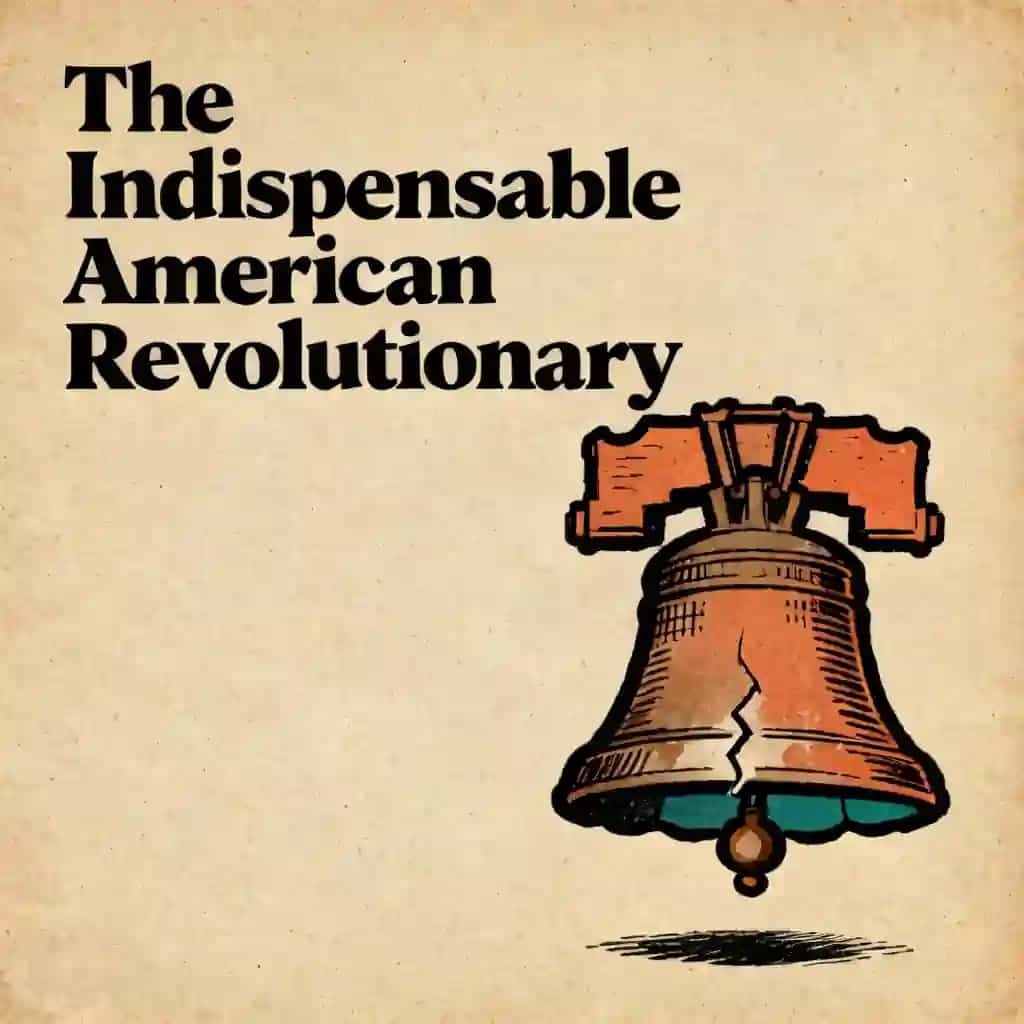
Stacy Schiff's masterful biography resurrects Samuel Adams - the "most essential Founding Father" according to Ron Chernow. TIME's "Must-Read of 2022" reveals how this enigmatic revolutionary, whose personal documents were intentionally destroyed, became what Thomas Jefferson called "the true leader of the Revolution."
Stacy Madeleine Schiff, Pulitzer Prize-winning author of The Revolutionary: Samuel Adams, is renowned for her meticulously researched biographies of iconic historical figures. A Williams College graduate and former Simon & Schuster senior editor, Schiff specializes in illuminating complex personalities and pivotal moments in history, from ancient Egypt to America’s founding.
Her expertise in blending rigorous scholarship with narrative flair has earned accolades, including the 2000 Pulitzer for Véra (Mrs. Vladimir Nabokov) and widespread praise for Cleopatra: A Life, a #1 bestseller translated into 30 languages.
The Revolutionary—hailed as "enthralling" by The New York Times and named a 2022 favorite by President Obama—showcases Schiff’s ability to revitalize foundational narratives, cementing her reputation as a master of biographical storytelling. Her other works, including The Witches: Salem, 1692 and A Great Improvisation, further demonstrate her command of historical drama and political intrigue.
Schiff’s books have been finalists for the George Washington Book Prize and featured in top media outlets like The Wall Street Journal and NPR. A Guggenheim Fellow and American Academy of Arts and Letters honoree, she resides in New York City, where she continues to transform archival detective work into critically acclaimed bestsellers.
The Revolutionary: Samuel Adams explores the life of Samuel Adams, a pivotal but often overlooked Founding Father who orchestrated colonial resistance through propaganda, political strategy, and grassroots organizing. The book highlights his role in events like the Boston Tea Party and his ability to unify colonies against British rule, framing him as the "moral backbone" of the American Revolution.
History enthusiasts, American Revolution scholars, and readers interested in leadership tactics will find this book compelling. Schiff’s vivid storytelling appeals to those seeking a deeper understanding of pre-revolutionary politics, propaganda’s role in social movements, and the complexities of founding-era figures.
Yes—Schiff’s Pulitzer-winning prose and meticulous research make this biography both authoritative and engaging. Praised as a "tour de force" (Wall Street Journal) and "enthralling" (NYT), it balances scholarly depth with narrative flair, revitalizing Adams’s legacy for modern audiences.
Adams masterminded colonial unity through writings, protests, and covert networks. He leveraged events like the Boston Massacre and Tea Party to galvanize anti-British sentiment, authored influential essays, and co-founded the Sons of Liberty. His ability to frame grievances as moral crises proved critical to mobilizing resistance.
Schiff depicts Adams as a pragmatic idealist: a cautious strategist who avoided public confrontations but excelled at behind-the-scenes manipulation. His use of pseudonyms, newspapers, and symbolic acts (e.g., the Tea Party) positioned him as a revolutionary architect rather than a traditional figurehead.
Some historians argue Schiff overemphasizes Adams’s centrality to the Revolution, downplaying collaborators like John Hancock. Others note the book’s narrow focus on Boston-specific events, which may oversimplify broader colonial dynamics.
Unlike older biographies, Schiff emphasizes Adams’s psychological complexity and mastery of propaganda. She challenges his "radical rabble-rouser" stereotype, instead framing him as a calculated dissident who balanced idealism with political realism.
Adams covertly orchestrated the Tea Party as political theater, using the destruction of British tea to protest taxation without representation. The act cemented colonial solidarity and forced Britain into punitive measures that further unified resistance.
Schiff analyzes Adams’s essays, pamphlets, and letters as deliberate propaganda tools. His works, often published under pseudonyms, framed British policies as existential threats to liberty, skillfully blending Enlightenment philosophy with populist rhetoric.
While not explicitly stated, Schiff’s portrayal of Adams’s media manipulation and grassroots organizing invites comparisons to modern activism. His tactics—using symbolic acts, controlling narratives, and leveraging public outrage—mirror contemporary political strategies.
The book details Adams’s alliances and rivalries, notably his fraught partnership with John Hancock. Schiff contrasts Adams’s austere, ideological demeanor with Franklin’s diplomacy and Washington’s military focus, underscoring his unique role as a revolutionary catalyst.
The title reflects Adams’s unmatched ability to radicalize colonial sentiment through incremental steps. Unlike peers who sought compromise, Adams viewed independence as inevitable, relentlessly pushing boundaries until revolution became the only viable path.
Senti il libro attraverso la voce dell'autore
Trasforma la conoscenza in spunti coinvolgenti e ricchi di esempi
Cattura le idee chiave in un lampo per un apprendimento veloce
Goditi il libro in modo divertente e coinvolgente
Adams insisted on a crucial equation: a corrupt people could not remain free.
Liberty was his anthem—"a charming sound" that mankind fought for with zeal.
"This Samuel Adams...is the most dangerous man in Massachusetts."
"Let the people keep a watchful eye over the conduct of their rulers..."
"He therefore is the truest friend to the liberty of his country who tries most to promote its virtue"
Scomponi le idee chiave di Revolutionary Samuel Adams in punti facili da capire per comprendere come i team innovativi creano, collaborano e crescono.
Vivi Revolutionary Samuel Adams attraverso narrazioni vivide che trasformano le lezioni di innovazione in momenti che ricorderai e applicherai.
Chiedi qualsiasi cosa, scegli il tuo stile di apprendimento e co-crea intuizioni che risuonano davvero con te.

Creato da alumni della Columbia University a San Francisco
"Instead of endless scrolling, I just hit play on BeFreed. It saves me so much time."
"I never knew where to start with nonfiction—BeFreed’s book lists turned into podcasts gave me a clear path."
"Perfect balance between learning and entertainment. Finished ‘Thinking, Fast and Slow’ on my commute this week."
"Crazy how much I learned while walking the dog. BeFreed = small habits → big gains."
"Reading used to feel like a chore. Now it’s just part of my lifestyle."
"Feels effortless compared to reading. I’ve finished 6 books this month already."
"BeFreed turned my guilty doomscrolling into something that feels productive and inspiring."
"BeFreed turned my commute into learning time. 20-min podcasts are perfect for finishing books I never had time for."
"BeFreed replaced my podcast queue. Imagine Spotify for books — that’s it. 🙌"
"It is great for me to learn something from the book without reading it."
"The themed book list podcasts help me connect ideas across authors—like a guided audio journey."
"Makes me feel smarter every time before going to work"
Creato da alumni della Columbia University a San Francisco

Ottieni il riassunto di Revolutionary Samuel Adams in formato PDF o EPUB gratuito. Stampalo o leggilo offline quando vuoi.
Samuel Adams remains history's most consequential revolutionary hiding in plain sight. While Washington commanded armies and Jefferson penned declarations, it was Adams who meticulously engineered the American Revolution through sheer political genius. In 1775, a British officer identified him as "the most dangerous man in Massachusetts" - evasive yet blunt, gracious yet inflexible, poor yet incorruptible. Despite being hailed by Jefferson as "truly the man of the Revolution," Adams has faded from our founding mythology, partly by his own design. He destroyed his papers to protect associates and focused on collective action rather than personal glory. Unlike his cousin John Adams or Thomas Jefferson, Samuel never sought the spotlight after independence, allowing his pivotal role to be obscured. Today, historians are rediscovering the mastermind who calculated exactly what was needed to upend an empire - a failed businessman who, at forty-one, transformed into America's premier revolutionary strategist.
Who could have predicted that a Harvard-educated failed entrepreneur would become the architect of American independence? Born in 1722 to a successful Boston malster, Adams pursued Enlightenment studies at Harvard before experiencing directionless years-abandoning theology, law, and losing a fortune in business. Yet these apparent failures cultivated valuable traits: equanimity, immunity to flattery, rejection of social pretension, and unwavering principles. His 1743 master's thesis asked: "Is it lawful to resist the supreme magistrate if the republic cannot otherwise be preserved?" His affirmative answer-that subjects must obey lawful rulers but are "discharged from all obedience" when natural rights are threatened-foreshadowed his revolutionary future. During this period, Massachusetts faced economic decline with oppressive taxes and currency shortages. When Parliament declared the Land Bank illegal (a venture in which Adams's father had invested heavily), his family was financially ruined. This crisis established a pattern: distant Parliament overreaching its authority, raising fundamental questions about who truly controlled Massachusetts.
At twenty-four, Adams became Boston's market clerk, connecting with vendors to ensure fair trade. This role developed what we'd now call retail politics - engaging with ordinary citizens whose opinions he deemed essential. His political convictions solidified after witnessing the 1747 Knowles Riot, when Bostonians resisted forced naval recruitment, showing him that defying authority could be both necessary and effective. Adams found his voice in January 1748 by helping establish the Independent Advertiser newspaper. His writing was distinctive: calm, deliberative, precise, and logically unassailable. Liberty became his anthem, though he lamented it was "more often admired than understood." He wrote, "He therefore is the truest friend to the liberty of his country who tries most to promote its virtue," establishing the moral foundation for his revolutionary work. By 1764, Adams appeared headed toward obscurity - a graying 41-year-old widower in threadbare clothes with a deteriorating house and failing business. Yet his fortunes would soon change as Parliament's overreach created perfect conditions for his unique talents to flourish.
When Parliament passed the Stamp Act in 1765, Adams transformed from failed businessman to revolutionary strategist. In the Massachusetts House, he coordinated resistance across social classes by creating an organic network without a clear chain of command - what enemies called his "black art" of connecting like-minded men under his influence. Adams democratized politics by arranging a public gallery in the House, allowing citizens to observe their representatives for the first time. With an audience present, representatives played to the crowd. He also published House deliberations, fulfilling Governor Bernard's fear of bringing government "nearer to the common people." His most brilliant innovation was creating the illusion of widespread dissent through pseudonymous writing. While his wife Betsy fell asleep to "the incessant motion of the pen," neighbors saw his candlelit window where "Samuel Adams was hard at work writing against the Tories." Using over thirty pseudonyms, he spoke as a one-man multitude, testing radical ideas too dangerous to publish under his own name.
On March 5, 1770, British soldiers fired into a Boston crowd, killing five men. The next day, Adams led a committee that secured the removal of both British regiments from the city after delivering a forceful ultimatum to acting governor Hutchinson. Adams shaped the narrative by naming it the "horrid massacre." The town held elaborate funerals that attracted thousands, while Paul Revere's dramatic engraving depicted soldiers firing on unarmed civilians - propaganda that omitted the crowd's provocations. When the soldiers' trial ended with mostly acquittals, Adams challenged the verdict through newspaper essays. To preserve the event in public memory, Adams established annual March 5th commemorations featuring church bells and illuminated displays. These continued until 1783 when July Fourth celebrations replaced them - an early example of revolutionary memory being simplified.
In 1773, Parliament's Tea Act gave Adams his perfect opportunity. When the Dartmouth arrived with tea, Adams faced a twenty-day deadline before customs could seize the cargo. He organized massive meetings at Old South Church, arguing that collective action would be more effective than individual restraint. On December 16, with just fourteen hours remaining before the tea would transfer to authorities, thousands gathered as Governor Hutchinson refused to let the ship leave without paying duties. After the meeting, a small group broke away silently. Soon, war whoops echoed outside as men disguised as Indians destroyed 342 chests of tea with remarkable precision in about two hours. The next morning, Adams noted with satisfaction the "height of joy that sparkles in the eyes" of citizens. In his accounts, he described the event without naming participants, stating only that "in a very little time" the tea "was immersed in the Bay." When news reached Britain, it delivered "an electrical shock," prompting punitive measures that only accelerated the march toward independence.
As the Continental Congress approached in 1774, Adams prepared to leave Massachusetts for the first time at nearly fifty-two. His journey south became a triumphal procession, with crowds gathering to glimpse the "obstreperous, rock-ribbed Massachusetts men." Yet in Philadelphia, Adams displayed remarkable restraint, strategically allowing Virginians to lead while working behind the scenes. By April 1776, Adams began openly advocating for independence, finding alignment between South and North while middle colonies hesitated. When Richard Henry Lee introduced the resolution to dissolve ties with Great Britain, Adams delivered what colleagues considered his finest speech in support. He signed the Declaration of Independence after having "labored upwards of twenty years to accomplish the measure." Adams's later years proved challenging as revolution gave way to nation-building. His talent for grievance-sharpening served rebellion better than statesmanship. Though he struggled with the federal Constitution, he insisted on a Bill of Rights. When Washington visited Boston, onlookers exclaimed of Washington, Adams, and his cousin John: "Behold three men who can make a Revolution when they please." Adams's enduring legacy lies in his role as a strategic orchestrator who translated grievance into action. Through political genius and principle, this failed businessman transformed a colonial tax dispute into history's most consequential revolution - Jefferson aptly called him "the earliest, most active, and persevering man of the Revolution."