Capitolo 1
When Crisis Strikes: Leadership Lessons from the Prepared
Imagine you're the leader of a major organization when an unprecedented crisis hits. As COVID-19 swept across the globe, NBA Commissioner Adam Silver faced exactly this scenario. With cases mounting and uncertainty growing, Silver made the extraordinary decision to suspend the entire NBA season on March 11, 2020-the same day the WHO declared a pandemic. This bold move, costing hundreds of millions in lost revenue, wasn't just reactive leadership; it was prepared leadership in action. Silver had consulted experts, built alignment within his organization, and prioritized public health over profit. His subsequent creation of the NBA "bubble" would save $1.5 billion in revenue while keeping players and staff completely COVID-free. This is the power of prepared leadership-the ability to anticipate crises, build the right systems, and emerge stronger when disaster strikes.
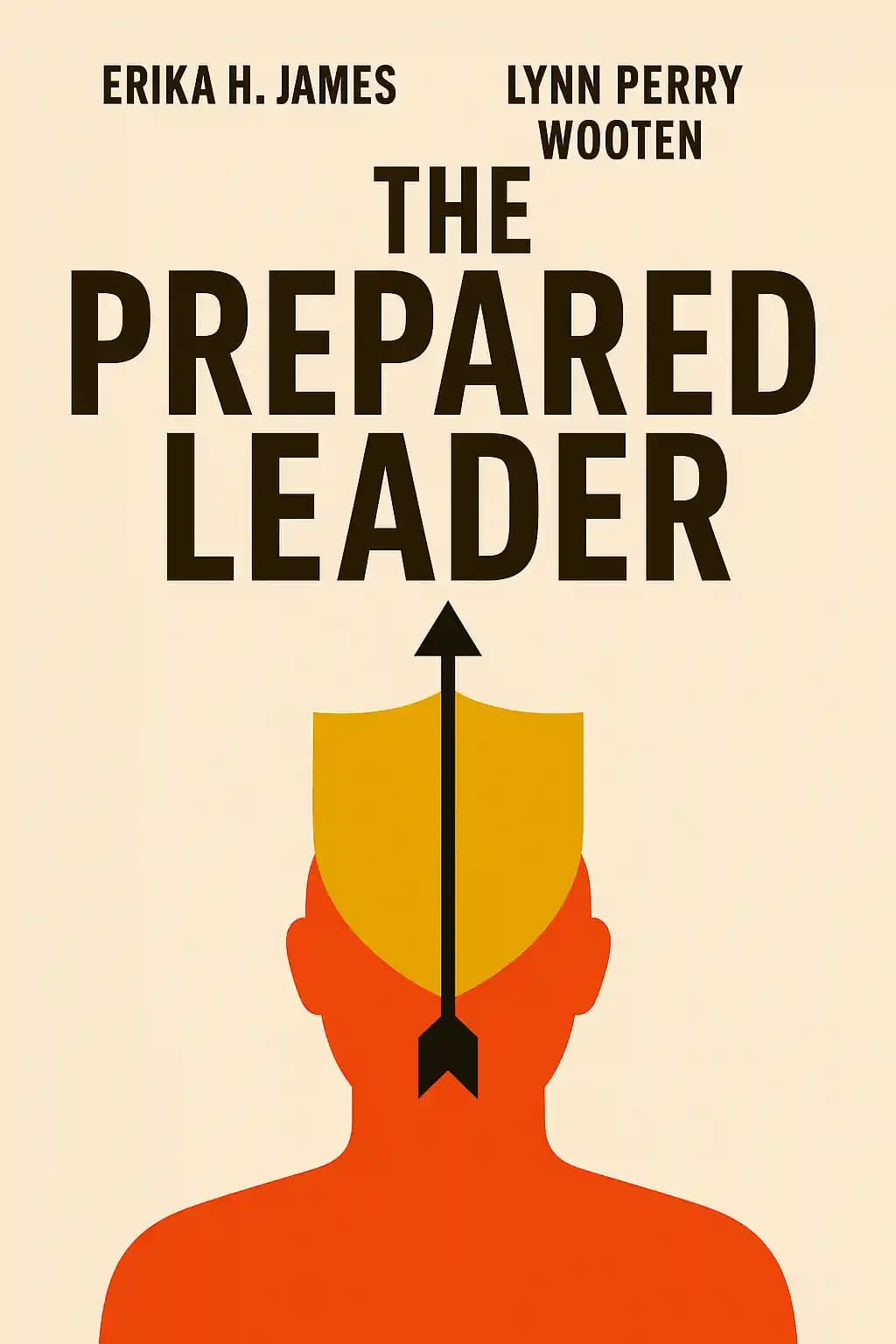
"The Prepared Leader" by Erika H. James and Lynn Perry Wooten couldn't be more timely. As the first African American leaders of their respective institutions (The Wharton School and Simmons University), they stepped into historic roles just as COVID-19 transformed the landscape of higher education. Their book, drawing on 30 years of research and their lived experience navigating organizational crisis, has been hailed as essential reading by leaders across industries. Beyond academic circles, it's become a favorite among Fortune 500 executives seeking to build more resilient organizations in our increasingly volatile world.
Capitolo 2
The Inevitable Nature of Crisis in Our Connected World
We live in an age of unprecedented risk. The COVID-19 pandemic demonstrated how quickly crisis can spread in our interconnected world, collapsing economies, emptying cities, breaking supply chains, and fundamentally altering how we live and work-all in just two months. The pandemic's costs were staggering: the Brookings Institution valued human life lost at around 17% of global GDP, while the World Bank noted global economic contraction of 3.4% in 2020 with over 100 million people pushed into extreme poverty.
Yet the most shocking aspect wasn't the devastation itself, but how fundamentally unprepared we were despite decades of warnings. Nobel Laureate Joshua Lederberg predicted similar catastrophes during the AIDS epidemic in the 1980s. Journalist Robin Marantz Henig warned in 1990 about new pathogens linked to climate change and urbanization. Bill Gates gave a widely-viewed TED talk in 2015 about the "inevitability" of another pandemic, calling for immediate preventive action.
Why didn't we listen? Former World Bank president Jim Yong Kim identified a consistent pattern he called the "cycle of panic, neglect, panic, neglect." After each health crisis, international support and vigilance quickly collapsed. By 2017, the World Bank's pandemic financing facility had lost nearly all its donors. This pattern perfectly captures how humans deal with sudden, devastating events-we respond with alarm during crises but immediately relax afterward, allowing critical surveillance and response mechanisms to atrophy.
Our cognitive biases make it difficult to rationalize these threats effectively. We underestimate the probability of negative events affecting us (probability neglect), prioritize immediate needs over future concerns (hyperbolic discounting), cling to our first impression of a threat (anchoring effect), struggle to imagine non-linear growth patterns (exponential growth bias), and resist changing direction once committed to a strategy (sunk-cost fallacy).
Breaking free from this cycle requires understanding what stops us from contemplating the unthinkable. Planning for the unlikely and unknowable isn't just possible-it can be integrated into everyday leadership practice. Because of our interconnected world, crises evolve with unimaginable speed and stealth, spreading globally in days. But there's enormous power in your leadership before, during, and after a crisis to reshape events and build toward positive outcomes.
Capitolo 3
The Five Phases of Crisis Management
Crises aren't single events but processes that unfold across five distinguishable phases. Understanding these phases is your first step toward becoming a Prepared Leader who can act proactively at each stage.
The first phase-Early Warning and Signal Detection-involves scanning your environment for potential threats. Most crises don't appear without warning; they're preceded by signals you should be able to detect and interpret. Consider Volkswagen's emissions scandal ("Dieselgate"), which cost the company approximately $30 billion. Warning signs existed for years before the crisis exploded, but cognitive biases prevented leaders from acknowledging them. Continuous scanning of your environment, organization, and culture for cues and signals is crucial to avoiding similar disasters.
Once you've detected warning signs, the second phase-Preparation and Prevention-involves enacting proactive measures. New Zealand's Prime Minister Jacinda Ardern demonstrated this by screening travelers from China as early as January 2020, ensuring her country had one of the lowest rates of COVID-19 cases initially. While not all crises can be prevented, you can prepare by creating crisis policies and procedures, identifying response teams, and building crisis drills into your operations.
The third phase-Damage Containment-focuses on limiting financial, reputational, or existential threats when a crisis hits. This typically occupies most time during a crisis and is what people generally think of as "crisis management." How you communicate during this phase is critical. UK pub chain JD Wetherspoon emerged with its reputation tarnished after chairman Tim Martin announced his 43,000 workers would receive no salary during lockdown, creating what PR experts called a "chasm that will be hard to close."
The fourth phase-Recovery-means recouping time, resources, and revenue lost to bounce back or bounce forward. When social network Nextdoor faced a reputational crisis in 2015 over racial profiling on its platform, leadership assembled a diverse taskforce to analyze data and implement solutions. They provided diversity training, overhauled community guidelines, and redesigned their app, reducing racial profiling by 75% within months.
The fifth phase-Learning and Reflection-involves extracting lessons from the crisis experience. Without learning capabilities, organizations remain vulnerable to future threats, unable to leverage the shifts in attitudes, skills, processes and systems that build resilience. This phase is often neglected but is perhaps the most important for long-term organizational health.
Breaking crisis management into these five phases helps rationalize what's at stake at each phase and allows you to develop specific skills for each stage of the process.
Capitolo 4
Nine Essential Skills for the Prepared Leader
Navigating the five phases of crisis requires nine critical leadership skills. Mark Aslett, CEO of Mercury Systems, exemplified these during COVID-19. Drawing from early career experiences during economic downturns, he established clear priorities: employee wellbeing, business risk mitigation, and customer commitment fulfillment. His approach included flattened communication hierarchies, employee support programs, and a $1 million relief fund. Despite $2.6 million in pandemic costs, Mercury posted record financial results.
The first skill-sense-making-involves deciphering warnings from noise and identifying imbalances that could lead to crisis. This requires pushing back against cognitive biases by asking: Could these warning signs develop into real problems? What implications might exist for stakeholders? What actions can we take right now?
Perspective-taking, the second skill, helps leaders avoid cognitive distortions by seeing threats from multiple angles. Without diverse viewpoints, leaders risk anchoring to one interpretation even as situations evolve. NBA Commissioner Adam Silver exemplified this by assembling diverse advisors including medical experts when deciding to suspend the league season.
The third skill-influence-becomes critical when crisis hits and you need stakeholders to follow instructions outside routine procedures. This requires transparent decision-making that builds trust. Leaders should assess their influence by asking: Do you prioritize trust and transparency? Do you delegate to those with different expertise? Do you clearly explain your decisions?
Organizational agility allows teams to respond and change course quickly. Prepared Leaders must simultaneously lead "in the weeds" while thinking strategically about longer-term goals, delegating with certainty and removing bottlenecks that prevent teams from making critical decisions autonomously.
Creativity enables leaders to spot opportunities, solve problems, and recognize organizational vulnerabilities. Adam Silver demonstrated this by creating a "bubble" system with comprehensive health protocols that allowed the NBA to resume play during COVID-19.
Effective communication becomes even more vital during crises, requiring leaders to communicate with multiple stakeholders seamlessly, convey urgency amid uncertainty, and inspire confidence while addressing emotional needs. Mercury Systems flattened their communication hierarchy during COVID-19, using live video calls where managers provided prepared remarks followed by open forums.
Risk-taking is essential precisely when leaders feel least inclined to take chances. Mistakes are inevitable during crises, yet Prepared Leaders must act decisively despite uncertainty, using iterative and agile approaches.
Promoting resilience means empowering people with autonomy, opportunity and support to grow, learn, experiment and make decisions confidently. This requires diverse teams with different experiences and expertise, ensuring varied perspectives are welcomed and valued.
Finally, individual and systemic learning is the lynchpin of Prepared Leadership. Without learning capabilities, organizations remain vulnerable to future threats, unable to leverage the shifts in attitudes, skills, processes and systems that build resilience.
Capitolo 5
Decision-Making Under Pressure
When COVID-19 devastated the restaurant industry, Burger King's parent company made a bold decision that would reshape their entire business model. CEO Jose Cil unveiled the "Restaurant of Tomorrow"-a revolutionary redesigned concept reducing physical footprints by 60%, eliminating traditional dining spaces, creating elevated kitchens above drive-in access points, and adding multiple pickup cubbies and curbside delivery spots. This strategic gamble aligned with emerging industry trends showing pickup and delivery services growing exponentially, with digital orders increasing by over 200% during the pandemic's first year.
How leaders frame a crisis fundamentally affects their decision-making approach and subsequent outcomes. When framing situations as threats, leaders typically hunker down, turn focus inward, and adapt themselves to external pressures-often by changing organizational structures, implementing new procedures, or reducing costs through layoffs and budget cuts. Conversely, opportunity framing opens us up, making our decisions more externally focused and encouraging exploration beyond comfort zones. Leaders who view crises as opportunities tend to invest in innovation, seek new markets, and reimagine their business models. Most crises are inherently ambiguous-simultaneously presenting both threats AND opportunities-yet our subjective framing determines our response and shapes the actions we take.
Prepared Leaders employ four distinct but overlapping frames to fully assess crisis dimensions and make more comprehensive decisions. The design frame sees situations as systems-rational and mechanistic components that can be disassembled and reassembled according to changing demands, much like engineering a new product. The political frame creates environments enabling constructive conflict and addressing problems directly, recognizing that different stakeholders have competing interests and limited resources. The human resource frame focuses on organizational capabilities and people's performance during crisis, emphasizing talent development, motivation, and engagement. The cultural frame asserts the importance of organizational identity, norms, values, behaviors, and ideology, understanding that sustainable change must align with company culture.
To counter cognitive biases in crisis decision-making, Prepared Leaders must deliberately broaden their perspective through diverse inputs and systematic analysis. Jose Cil's bold "Restaurant of Tomorrow" decision exemplifies this comprehensive approach. Rather than deciding in isolation, Cil relied on "a wide range of voices and perspectives" including frontline workers, franchise owners, technology experts, and customer feedback that made Restaurant Brands International "stronger." He assembled cross-functional teams, conducted extensive market research, and tested concepts in multiple markets before rolling out the new design. Prepared Leaders understand that no single person possesses all the knowledge or skills to manage a crisis's complexity and relentlessness, making collaborative decision-making essential for success.
Capitolo 6
Building Effective Crisis Teams
When crisis strikes, effective teams outperform individuals but can easily unravel under pressure. The UK's National Health Service demonstrated remarkable agility during the pandemic by expanding their crisis leadership team to include frontline physicians. By creating "elective hubs" where physicians could perform procedures for patients across London regardless of administrative boundaries, NHS London cleared patient backlogs while preparing for the second COVID wave.
Building an effective crisis team requires four key steps. First, compose your team by capturing multiple perspectives and expertise to understand all dimensions of a crisis. This means being diverse, strategic, and inclusive in your thinking-sourcing varied competencies to overcome blind spots and looking beyond the usual suspects.
Second, establish purpose and accountability by articulating the team's purpose, establishing assessable goals, and making clear that everyone shares responsibility for achieving them. NHS London's "focused factory" approach used clearly delineated protocols shared across teams, ensuring everyone understood their responsibilities.
Third, create a culture that empowers teams to experiment, bounce back from setbacks, and leverage learning opportunities. This requires building trust, acknowledging you don't have all answers, encouraging new connections, and inspiring respectful idea-sharing without blame.
Fourth, empower your team to respond and adapt by minimizing bureaucracy, remaining accessible, sharing both good and bad news, and knowing when to step away. NHS leaders recognized that managing the crisis didn't require more bureaucrats but rather empowering those who ran the services with decision-making authority.
Perhaps most importantly, Prepared Leaders must defer to expertise-recognizing that the necessary knowledge may exist outside the C-suite or even outside your organization entirely. This doesn't mean abdicating responsibility-you must still make the final decisions, but with the benefit of diverse perspectives and specialized knowledge.
Prepared Leadership resembles jazz performance-collaborative, improvisational, and responsive. Like jazz musicians who rotate leadership based on the music's needs, crisis leaders must know when to step back and let others with specific expertise lead. Improvisation becomes essential when facing unprecedented challenges, requiring simultaneous creation and execution of plans rather than sequential planning.
Capitolo 7
Building Trust When Inheriting Teams Mid-Crisis
When Wonya Lucas became CEO of Crown Media Family Networks during the pandemic, she faced the dual challenge of inspiring a team she didn't know while navigating a global health crisis. Unable to rely on traditional face-to-face transitions, Lucas connected with team members via Zoom, focusing on their personal aspirations rather than just roles or problems. Within weeks, she scheduled over 30 calls with key employees, prioritizing human connection over sharing her vision or strategy.
In mid-crisis scenarios, trust must be established rapidly through what psychologists call the Three C's: communication, contract, and competence. Communication requires transparency and integrity in all interactions. Contract involves following through on commitments. Competence means having confidence in your own abilities and your team's skills to execute critical tasks quickly.
Crisis situations actually facilitate "swift trust"-a presumptive, circumstantial bond around shared purpose-for three key reasons. First, crises create collective vulnerability, a core component of trust. Second, the inherent ambiguity of crises means people have less time to second-guess others' trustworthiness. Third, since crises and trust both involve risk-taking, the heightened risk environment makes people more willing to trust strangers when facing common threats.
Structured meetings are crucial when leading through crisis as a new leader. Effective practices include setting clear learning objectives before meetings, utilizing frameworks that balance inclusion with results, and assessing team performance using the three C's of trust. Meeting frequency should adapt to circumstances-perhaps daily at first, then less often as the crisis evolves.
Importantly, Prepared Leaders must know when to extract themselves from crisis meetings to focus on long-term strategy, delegating immediate crisis management to their empowered teams. This transition demonstrates bidirectional trust while allowing leaders to consolidate learning into strategic direction.
Capitolo 8
Managing Global Crises in a Connected World
Today's crises transcend borders and boundaries, creating interconnected challenges across regions. Leaders like HSBC's Peter Wong found themselves caught between competing geopolitical interests during the Hong Kong protests, while CrossFit's Greg Glassman's controversial tweets about George Floyd demonstrated how tone-deaf responses to global social justice movements can devastate an organization's reputation and market position within hours. Similar challenges faced tech giants like Apple and Google as they navigated complex relationships between Chinese markets and Western values.
When facing a globalized crisis, leaders must operate across multiple dimensions simultaneously. This requires understanding how the crisis impacts different operational contexts-people, processes, systems, and capabilities-both internally and externally across markets. For instance, during the semiconductor shortage of 2021, automotive manufacturers had to rapidly reconfigure global supply chains while managing workforce challenges across multiple continents. Leaders must anticipate how situations might evolve in various cultural contexts, identify opportunities and threats both locally and globally, and deploy differentiated resources and strategies as needed. Companies like Unilever demonstrated this by adapting their product lines and distribution strategies differently across developed and emerging markets.
A global mindset extends beyond working across countries-it requires understanding that cultural differences permeate every aspect of identity including race, ethnicity, gender, generation, and political orientation. During the pandemic, these cultural differences manifested in how countries responded: Southeast Asian nations like South Korea and Singapore implemented uniform lockdowns while the United States experienced significant resistance to mask-wearing, reflecting its individualistic framework. Similar patterns emerged in vaccine acceptance rates, with collectivist societies showing higher compliance than individualistic ones.
Interestingly, countries led by women suffered six times fewer COVID-19 deaths than those with male leadership. Leaders like New Zealand's Jacinda Ardern and Taiwan's Tsai Ing-wen demonstrated how clear communication and decisive action could effectively contain the virus. Female business leaders rated higher across leadership competencies during the crisis, excelling at what employees needed: pivoting to learn new skills, emphasizing development during tough times, displaying integrity, and showing sensitivity to people's stress and anxiety. Companies with greater gender diversity in leadership positions showed more resilient performance during the crisis.
When facing collective threats, humans assemble into diverse "mega communities" that transcend differences, bridge silos, and span organizations or societies. During COVID-19, mega communities of scientists, pharmaceutical companies, government bodies, and volunteers developed multiple effective vaccines in record time. The collaboration between Pfizer and BioNTech exemplified how cross-border partnerships could accelerate innovation. Similar mega communities emerged to address climate change, with initiatives like the Glasgow Financial Alliance for Net Zero bringing together financial institutions representing $130 trillion in assets. Prepared Leaders should recognize the power of these communities and actively facilitate their formation within and beyond their organizations, creating platforms for collaboration and knowledge sharing across traditional boundaries.
Capitolo 9
Learning: The Core of Prepared Leadership
Prepared Leadership is fundamentally about learning-the willingness to learn from crises and convert those lessons into action. Without identifying and integrating the lessons from today's crisis into decision-making processes, leaders leave their organizations vulnerable to tomorrow's challenges, perpetuating cycles of panic and neglect.
The contrasting pandemic leadership of NBA Commissioner Adam Silver and CrossFit's Greg Glassman illustrates the importance of learning from crises. Silver, who proactively learned from other leagues' experiences with domestic violence issues, sought diverse perspectives and implemented transparent processes. Glassman, despite experiencing a social media crisis in 2018, failed to learn those lessons when he made insensitive comments about George Floyd two years later.
Since crises are rare events, leaders often become complacent, believing "it won't happen to us." Prepared Leaders overcome this through vicarious learning-studying others' experiences to compensate for their own limited crisis exposure. Research shows people typically focus on specific steps when learning from others' successes, but extract broader patterns when studying failures. This broader pattern recognition is actually more valuable in crisis preparation, as crises rarely repeat in identical ways.
Learning must happen throughout all phases of crisis management. Before a crisis, drive a culture of learning through constant analysis of successes and failures, scenario planning, and capability assessment. During a crisis, remain open to information from diverse stakeholders. After a crisis, conduct thorough reviews that include multiple perspectives, document lessons learned, build workforce resilience, and develop emotional intelligence alongside technical skills.
Crises offer powerful opportunities for organizational change and innovation by exposing vulnerabilities in practices, processes, and culture. They create moments to pause, reset, and leverage technology for new solutions and greater resilience. However, this transformation requires moving from anxiety and despair to optimism and hope-a shift that depends entirely on learning.
Capitolo 10
Becoming a Prepared Leader Today
In our desperately uncertain world, it's not enough to have a triple bottom line focused on people, planet, and profit. You need to make Prepared Leadership your fourth bottom line-and make it an urgent priority for your leadership and organization today. This means developing a comprehensive approach that anticipates challenges while creating opportunities for growth and innovation.
Prepared Leadership isn't about expecting the worst but being optimistic, willing to learn and take risks, with the belief that people and organizations can emerge stronger after crisis. It demands a mindset that balances cautious planning with bold action. Leaders must cultivate resilience while maintaining the agility to pivot when circumstances demand it. This includes developing multiple scenario plans, stress-testing systems regularly, and creating adaptive strategies that can evolve as conditions change.
The prepared leader maintains a robust early warning system through continuous scanning for threats, establishing systems to take evasive action, and assembling the right teams with diverse expertise. This means building networks of information sources, from industry analysts to front-line workers, and creating cross-functional teams that bring together different perspectives and skill sets. It also involves regular crisis simulation exercises and maintaining updated emergency response protocols.
Communication becomes paramount in this framework. Leaders must ensure uninterrupted communication through established protocols, creating redundant channels and clear chains of command. This includes developing both internal and external communication strategies, maintaining stakeholder relationships, and ensuring transparency while managing sensitive information appropriately.
Building toward recovery requires both resilience and creativity. Prepared leaders invest in organizational capabilities that enable quick rebounds from setbacks while identifying opportunities within challenges. This might involve maintaining strategic reserves, developing flexible supply chains, or creating innovative solutions to emerging problems. They also emphasize learning from every experience, conducting thorough after-action reviews, and implementing improvements based on lessons learned.
Some leaders do this instinctively; others need conscious effort. For all, it requires dedicated work today to withstand whatever tomorrow holds. This means allocating resources, time, and attention to preparedness even when immediate pressures seem more urgent. Leaders must balance short-term demands with long-term resilience building.
Despite living in extraordinary times of unprecedented risk-from geopolitical tensions to climate change, cybersecurity threats to public health emergencies-learning remains our greatest tool for adaptation and innovation. Prepared leaders create cultures of continuous learning, encouraging experimentation, accepting calculated risks, and viewing failures as opportunities for improvement.
The next crisis is already heading your way, whether it's a market disruption, natural disaster, or technological breakthrough. You need to think about it now, even as everyday demands consume your attention. Success depends on building the capabilities, relationships, and mindset that enable effective response before they're needed.