Capitolo 1
The Power of Unwavering Belief: How Self-Confidence Transforms Your Life
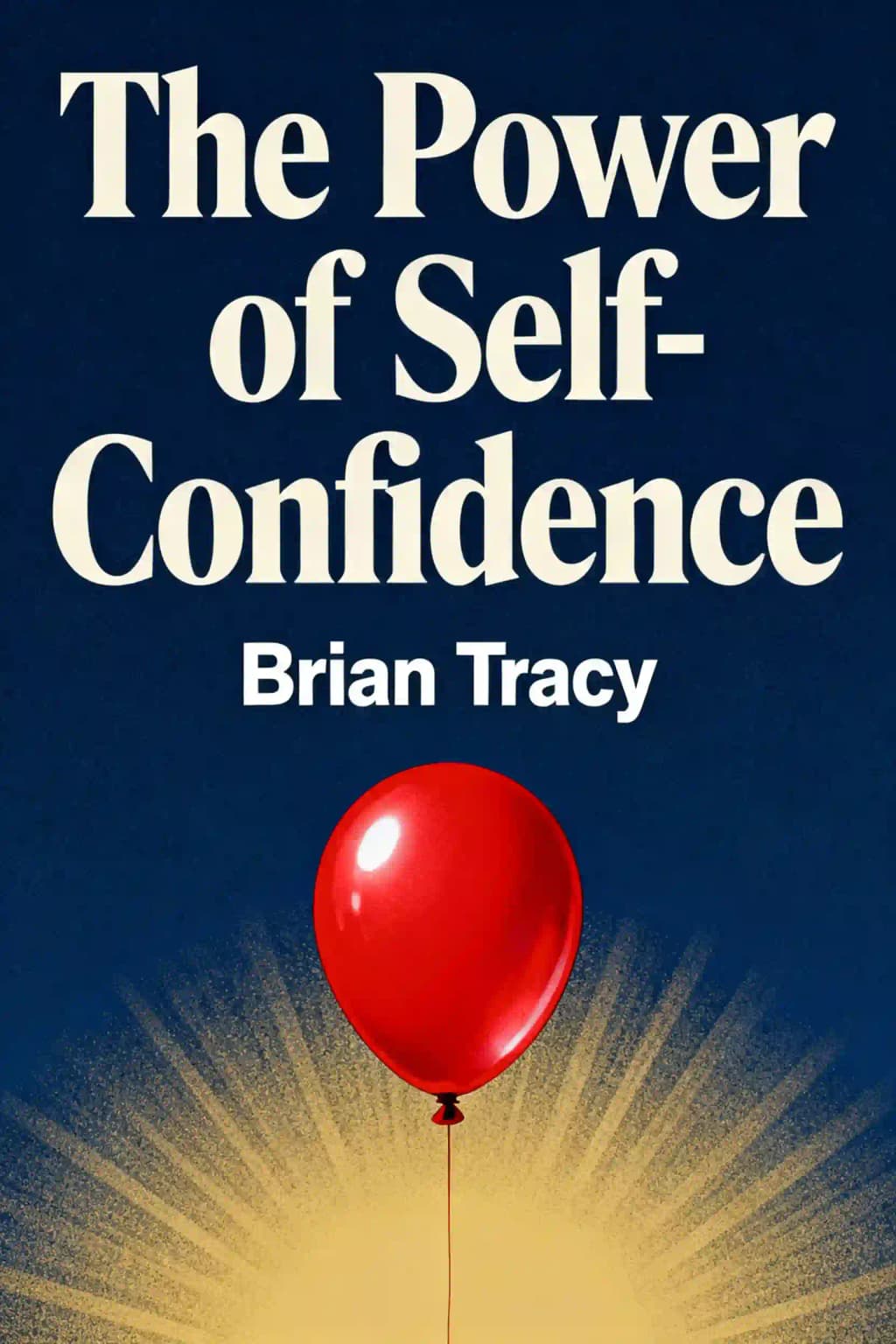
What would you dare to dream if you knew you couldn't fail? This question transformed one woman's entire outlook on life, revealing that only fear and self-doubt were holding her back from extraordinary achievement. Brian Tracy's "The Power of Self-Confidence" explores this transformative concept, showing how unlimited self-confidence can revolutionize every aspect of your existence. The book has become a favorite among high-performers across industries, with figures like Tony Robbins and Richard Branson citing it as influential in their development. Since its publication, it has sold over a million copies worldwide and been translated into 42 languages, demonstrating its universal appeal and timeless wisdom about human potential.
Capitolo 2
The Foundation of Unshakable Self-Confidence
Your thoughts and feelings about yourself are the result of a lifetime of conditioning, often bearing little relationship to what's truly possible for you. You are constantly evolving in the direction of your dominant thoughts. Whatever you dwell upon grows in your reality-thoughts of boldness and courage make you bolder and more courageous. You literally become self-made through your habitual thinking patterns.
The most intelligent approach to life is persistently thinking thoughts aligned with the person you aspire to be, rather than dwelling on what you fear. Most people continue thinking about what they don't want, then wonder why those very things keep happening. The profound truth is that thought is creative-your thoughts become your realities.
The law of correspondence states that your outer world reflects your inner world. People who seem pleasant but experience continuous problems have inner conflicts we rarely see. True happiness comes from living in harmony with natural laws which, though invisible, cannot be violated without consequences.
Self-confidence begins with living in alignment with your innermost values. Those with rock-solid confidence know exactly what they believe to be right and worthwhile, and live accordingly. Even when your world collapses around you, knowing you're doing the right thing provides an inner calm that manifests as confidence in any situation.
Superior individuals have clearly decided what they believe in and organize their lives to reflect those values. One successful company demonstrated this by creating a values statement that guided all decisions-employees would review their plasticized value cards when making choices, ensuring alignment with company principles. Companies with clear written values earn dramatically higher profits-700 percent greater over 25 years in one study-than those without such codes.
Your journey to self-confidence begins by clarifying what you stand for and won't stand for. What values would you sacrifice for, pay for, or even die for? When you select a value, it becomes inviolable-all or nothing. You cannot have "a little bit of integrity." By declaring your values, you're stating exactly how you'll live your life going forward.
A powerful exercise is writing your own eulogy. Imagine everyone you care about gathered at your funeral, hearing the minister describe not just your accomplishments but the virtues and qualities you were known for. This vision of who you wish to become will unconsciously guide your future actions.
Your true values are revealed not by what you say but by what you do, especially under stress when pulled in multiple directions. Your choices in difficult moments show what values are uppermost-or whether you have any values at all. When you act consistent with higher values, you feel terrific and your self-confidence soars.
Capitolo 3
Purpose and the Power of Clear Direction
Self-confidence is the hinge on which individual achievement turns. When your confidence becomes unlimited, you can realize more of your potential than under any other circumstances. As Aristotle noted, happiness isn't achieved directly but results from engaging in purposeful activities. The development of unshakable self-confidence opens possibilities you cannot yet imagine.
The law of indirect effort states that most things involving people and emotional experiences come to us indirectly rather than directly. We achieve self-confidence not by wishing for it, but by setting and achieving ever-higher goals. As we advance step by step, we feel stronger and more capable of taking on bigger challenges.
True self-confidence doesn't come from positive thinking alone but from positive knowing-proving to yourself repeatedly that you have what it takes to get from where you are to where you want to go. While self-confidence is a state of mind, it must be based on facts to be reliable in difficult situations.
You are not what you think you are, but what you think, you are. As you deliberately change your thinking about yourself, your outer reality conforms to it. The law of cause and effect governs everything in your life-success or failure, wealth or poverty, happiness or unhappiness. Like the biblical principle of sowing and reaping, positive thoughts yield positive experiences, and clear goals produce clear results.
The law of attraction states that you inevitably attract into your life the people, ideas, circumstances, and opportunities that harmonize with your dominant thoughts. Like a magnet drawing iron filings, you pull toward you whatever matches what you think about most. Fuzzy goals bring fuzzy results; clear goals bring clear results.
Whatever you dwell upon continually grows in your reality. Focusing on a subject is like watering a seed-the more attention you give it, the faster it manifests in your experience. This explains why unwavering dedication to a single purpose accompanies all great achievement. When an average person concentrates all their mental powers on one goal, they often accomplish more than seemingly more talented individuals whose energies are dispersed across multiple objectives.
Your conscious mind can hold only one thought at a time. Whatever thought you maintain continuously will eventually be accepted by your subconscious as a command. Your subconscious then works constantly to bring that dominant thought into reality. To develop unshakable self-confidence, you must deliberately program confidence-building thoughts into your subconscious mind.
Setting clear goals activates all mental laws in your favor, freeing you from randomness and giving you direction, power, purpose and focus. Goals make you feel that everything happening to you is part of an organized plan moving you toward your highest ideals. They transform your life from accidental to self-determined.
The greatest enemy of achievement is the comfort zone-our natural tendency to settle into unchallenging, easy patterns of behavior and performance. We develop habits leading to underachievement, waste time, and eventually convince ourselves we're doing our best. Our attitude, personality, income, standard of living, and fitness levels all become comfort zones we resist changing.
Capitolo 4
Mastering Competence: The Path to Unshakable Confidence
True self-confidence comes from knowing you're excellent at something important to yourself and others. Everyone has the inborn ability to achieve peak performance in their chosen field. Developing lasting self-confidence requires nothing less than becoming exceptional at what matters most to you.
In test pilot terminology, the "envelope" represents the upper limits of an aircraft's capabilities. Test pilots expand this edge by flying faster and higher until reaching the plane's absolute limits. Unlike aircraft, humans have no fixed "outer edge" to their potential. As Emerson said, "The power which resides in man is new in nature, and none but he knows what that is which he can do, nor does he know until he has tried."
Self-confidence connects closely to self-esteem-"your reputation with yourself." The flip side is "self-efficacy"-how effective and competent you feel at performing tasks or achieving goals. This creates "performance-based self-esteem." When you quickly solve problems, your self-efficacy and self-esteem rise, making you more willing to take on challenges.
To attain optimal performance, you need clear goals, challenging standards, regular feedback, total concentration, step-by-step success, and a feeling of expanding capabilities. This puts you at the edge of your personal envelope, stretching yourself while working within your capabilities. In this state, you lose track of time, feel euphoric, and your brain releases endorphins.
One of life's greatest joys is finding your "true place"-the occupation ideally meant for you-and throwing your whole heart into it. The most fortunate people are those so absorbed in their work they don't distinguish between work and play. Many would do what they love for free. Spiritual teacher Emmet Fox called this your "heart's desire"-something special only you can do, without which you'll never be truly fulfilled.
When Grandma Moses was a young farm girl, she dreamed of painting but was discouraged and told to focus on farm life instead. She married, had children, and only at age 75, after her husband died and she was too old for farm work, did she finally pursue her heart's desire. Starting at age 78, she began creating "primitive American landscapes" that eventually sold for over $100,000 each. By age 101, she had a major New York gallery showing. Had she started in her teens as she wanted, she might have become one of America's richest women.
Finding your ideal work begins with self-analysis. Ask yourself what talents come naturally to you, what you've done well that others find difficult, what subjects you gravitated toward in school, what you enjoyed between ages 7-14, what parts of work you love, and what activities give you a natural high. Every person has unique talents that make them different from anyone else.
Victor Frankl suggested dividing work activities into four quadrants: Quadrant One contains activities hard to learn and hard to do-these aren't your natural talents; Quadrant Two holds things easy to learn but hard to do, like physical labor; Quadrant Three includes activities hard to learn but easy to do once mastered, like driving; and Quadrant Four-the most important-contains work easy to learn and easy to do, things you excel at effortlessly while others struggle. This fourth quadrant represents the work you should ideally be doing with your life.
Two simple tests determine if you're in the right job: First, would you continue working there if you won a million dollars tomorrow? If you'd immediately quit, you're in the wrong position. Second, the "clock test"-people in the wrong jobs constantly watch the clock, while those in the right jobs barely notice it except to realize how little time remains to do work they enjoy.
Once you've chosen your ideal occupation, your biggest responsibility is becoming excellent at it. Gallup research found that "expertise"-being recognized by peers as among the best in your field-is essential for American success. Self-confidence comes from positive knowing rather than positive thinking; only when you know you're outstanding do you truly feel terrific about yourself.
The law of accumulation explains that every great career is built from hundreds or thousands of small efforts nobody sees. Everything counts-each positive action adds credits to your personal balance sheet, while each wasted opportunity creates debits. Nothing is neutral. A successful, self-confident person consciously accumulates many positive credits through consistent effort and preparation.
Capitolo 5
The Inner Game: Programming Your Mind for Success
Self-confidence is fundamentally a state of mind based on your belief systems. As Aristotle noted in his Nichomachean Ethics, all humans aim to be happy, and the more confident we feel about ourselves, the happier and more effective we become. Belief and faith enable bold action despite uncertainty, allowing you to face challenges with calmness and clarity.
The law of belief states that "your beliefs become your realities." You don't believe what you see; rather, you see what you already believe. William James said that "Belief creates the actual fact," and the Bible says, "According to your belief, it is done unto you." Your world today largely reflects your innermost beliefs and convictions.
A businessman whose company was near bankruptcy once met an older man in a park who gave him a check for $500,000, claiming to be John D. Rockefeller. Rather than cashing it, the businessman kept the check in his safe, using the confidence it gave him to negotiate with creditors, extend payment terms, and close several large sales. Within months, his business recovered completely. A year later, he discovered the check-writer was actually an escaped mental patient who falsely believed he was Rockefeller. The businessman realized his success came from his own confidence and belief, not from the check itself.
The world largely accepts you at your own estimation-it's yourself you must convince first. Once you're absolutely certain you have what it takes to master any situation, you'll act accordingly, making your beliefs your reality. Mental fitness follows the law of cause and effect; you can develop unshakable self-confidence by repeatedly practicing certain thoughts and actions until they penetrate your subconscious mind.
To maintain high self-confidence, you must take control of your own thinking and suggestive environment. Ensure that what enters your mind aligns with your goals and desired identity, while filtering out negative influences. External suggestions-from media, conversations, work experiences, family interactions, and even traffic problems-can significantly impact your state of mind.
Negative emotions are usually unconscious, unthinking reactions triggered by external events. No one deliberately chooses to feel negative or upset. Many emotional responses are conditioned-automatic reactions when someone pushes one of your "hot buttons." These are habitual negative reactions to specific experiences or comments.
Take control of your mind by identifying factors that typically make you angry or upset. List everything that triggers negative responses, then consciously decide to respond calmly when these issues arise. When something normally triggers negativity, choose not to react-smile, breathe deeply, stay calm. With practice, this becomes easier, making you more positive and optimistic.
Self-suggestion puts you in control of your mental life, allowing you to consciously program your subconscious mind with desired thoughts and feelings. This works because of the law of substitution-your conscious mind can only hold one thought at a time. By deliberately choosing positive thoughts, you block negative external inputs.
Taking control of your mind begins with accepting complete responsibility for everything you think, say, and do-especially your responses to life's inevitable ups and downs. As Eleanor Roosevelt said, "No one can make you feel inferior without your consent." Before setting goals or making plans, you must first accept that no one is coming to rescue you.
Success begins with accepting reality. "What cannot be cured must be endured." When facing challenges, ask yourself: "Is this a problem or a fact?" This simple question helps distinguish between situations you can change and those you must accept. Problems are amenable to solutions-something you can actively change. Facts, however, like weather or past events, simply exist.
The foundation of happiness, confidence and optimism is making positive responses automatic regardless of circumstances. This is achieved through specific, proven steps that begin with accepting complete responsibility for every aspect of your life. Millions have used these methods with virtually unfailing certainty.
Your inner dialogue determines your emotional life. High-performers talk to themselves differently than low-performers. How you interpret events to yourself-like being cut off in traffic-determines whether you experience positive or negative emotions. You can choose to become angry about the "bad driver" or excuse them by thinking they must be late or distracted-same external event, entirely different emotional response.
Capitolo 6
Leveraging Your Natural Strengths
Self-confidence goes hand-in-hand with winning and success in everything you do. The more you have, the more things you'll try and achieve. You'll be less affected by setbacks and more likely to enjoy a rewarding life. One starting point is recognizing your tremendous strengths-you're extraordinary, with odds of 50 billion to 1 against anyone having your unique combination of talents.
Each person has one or more areas of excellence that, if properly exploited, would enable them to achieve almost anything they want. The most successful people in every field are those who've identified their greatest strengths and capitalized on them continuously. What holds your attention indicates what you should be doing more of.
A study of 1,500 professionals found that only 83 became millionaires over 20 years. Their common trait? They chose fields they enjoyed and became totally absorbed in them. They found areas that held their complete attention, developed the necessary strengths, and continually improved. They never set out to make money-they pursued what they loved, and wealth followed as an afterthought.
You'll never be truly happy until you apply your unique capabilities to your life and career. Over 80 percent of Americans feel their full potential isn't utilized at work. This "divine discontent" arises when you're not fully challenged. To enjoy high self-confidence, you must work at the edge of your capabilities, stretching them continually.
People with clear values who live consistently with their highest aspirations have deep self-confidence. Integrity-the unwillingness to compromise on what you believe is right-is essential for capitalizing on your strengths. It means looking at yourself honestly and recognizing you're an extraordinary human being.
Courage combined with integrity is crucial for happiness and self-confidence. If integrity means being honest with yourself, courage means having the strength to follow where your heart leads. As Churchill said, "Courage is rightly considered the foremost of the virtues, for upon it, all others depend." Fear is the greatest enemy of self-fulfillment, but by building courage act by act, your world opens up and your self-confidence increases dramatically.
Paul Gauguin exemplifies following one's heart. Working as a postal inspector in Paris with a family, he was fascinated by painting. Eventually, he made the shocking decision to leave his job and family to paint in Tahiti. Though his early work was poor, he improved steadily. Today his paintings hang in the finest museums and are worth millions. Like Grandma Moses, he finally pursued what had interested him for years.
Strong people have strong weaknesses too. Most people have far more weaknesses than strengths-you may excel in a few areas but be weak in hundreds of others. Unsuccessful people focus too much on these weaknesses, losing sight of their potential strengths. As Peter Drucker noted, "All innovations must be simple if they are to work, because there are only incompetent people to carry them out."
Leaders view themselves as bundles of resources that can be utilized in different ways. They apply themselves only where they can perform well and make a significant difference. Ask yourself: "What can I, and only I, do that, if done well, will make an extraordinary difference?" Great success comes from single-minded concentration on doing one thing or a few things extremely well.
Strategic self-assessment is crucial for leveraging your personal strengths. Just as corporations must concentrate their power to achieve extraordinary results in competitive markets, you must determine where to focus your resources. The customer-or whoever you serve-must be central to every calculation and decision.
Your personal strategic planning should maximize your return on energy-your most precious resource. Just as companies seek to increase return on equity, you must organize your efforts to yield maximum rewards and satisfaction. This requires establishing clear values, a vision of your future, and a mission statement describing your strategic objectives.
Every company needs a unique selling proposition to differentiate itself from competitors. Similarly, you must determine your competitive advantage-how you differ from others competing for the same opportunities. What makes you special or different? What is your area of superiority that would make someone hire you rather than someone else?
Capitolo 7
Overcoming Adversity: The Ultimate Test of Self-Confidence
True self-confidence comes from positive knowing, not just positive thinking. Your goal should be developing unshakable self-confidence that makes you an unstoppable force of nature-someone able to accomplish any goal you set your mind to. This requires absolute faith in your ability to overcome any adversity life throws at you.
Napoleon Hill wrote that "Persistence is to the character of man, as carbon is to steel." Your persistence measures your belief in yourself and your ability to succeed. When you absolutely believe, without question, that persevering long enough will lead to victory, nothing can stop you. With this absolute assurance, virtually anything becomes possible and your self-confidence soars.
Robert Ringer calls the "reality habit" the most important habit for achievement. Successful people are intensely realistic, never allowing themselves the luxury of self-delusion. They face the world as it is rather than how they wish it would be. They accept unalterable facts and work around them.
Anyone can feel confident when everything's going well, but your true character shows when you keep functioning while things fall apart around you and others are blaming you. Stanford Business School research identified two qualities that predict executive success: team performance and crisis management ability.
Your self-esteem and self-confidence are closely tied to your ability to be effective when problems hit you like a punch to the solar plexus. Your capacity to pick yourself up and keep fighting is the real measure of your character. As Robert W. Service wrote in "The Quitter": "It's the plugging away that will win you the day... It's the keeping your chin up that's hard."
Historian Arnold Toynbee's Nobel-nominated work on civilization lifecycles revealed that of 21 great civilizations in history, 20 eventually collapsed. His challenge-response theory showed that civilizations begin as small groups facing external threats. Those that respond positively grow stronger and face increasingly larger challenges. The turning point comes when a civilization loses the will or ability to rise to challenges, triggering decline.
Toynbee's theory explains our personal lives perfectly. Despite parental protection, we inevitably face challenges in relationships, work and activities. When we respond positively and constructively, keeping calm and dealing effectively with problems, we grow stronger. Our self-confidence rises, our belief in our abilities increases, and we become more self-assured and optimistic.
Almost everything in your life is determined by how you respond to daily ups and downs. As Thomas Huxley said, "Experience is not what happens to a man; it is what a man does with what happens to him." The Stanford study confirmed this, stating that "The proven ability to function in a crisis is the absolute prerequisite for promotion to a senior position."
Without adversity, you cannot develop stronger character, become a better person, or build resilience and perseverance. You cannot become someone with high self-confidence who feels capable of meeting any challenge. This creates a paradox: we must face the very adversity we try to avoid in order to grow.
Frederick Robertson said, "It is not the situation that makes the man, but the man who makes the situation." Dr. Abraham Zaleznik of Harvard found that how people respond to disappointment largely predicts their future success. Most people are unprepared for inevitable setbacks and become emotionally overwhelmed, interpreting disappointments as evidence of personal inadequacy.
High achievers respond to disappointment differently. They mentally prepare for setbacks in advance, considering possible courses of action before problems arise. They view setbacks as specific to particular situations rather than as evidence of general incompetence or character flaws. Most importantly, they develop mental tools they use automatically when things go wrong.
The first mental technique is reassessing your attitude toward failure. Fear of failure-a conditioned response from childhood criticism-is the greatest obstacle to success and happiness. But this learned fear can be unlearned. Accept that no success is possible without failure; all achievement is preceded by failure, often repeated over long periods.
Thomas Watson, IBM's founder, advised, "Do you want to be successful? Then, double your rate of failure. Success lies on the far side of failure." Every great achiever was once a magnificent failure. On the David Susskind Show, four millionaire entrepreneurs revealed they'd started an average of 17 businesses each before finding success-the previous 16 weren't failures but essential learning experiences that prepared them for eventual success.
Capitolo 8
Self-Confidence in Action: Becoming Unstoppable
Identifying your limiting step-the one factor determining the speed of goal achievement-demonstrates intelligence, while eliminating it proves your competence. Self-confidence is the critical factor in accomplishment; with enough of it, you'll try almost anything, dramatically increasing your probability of success through the law of averages.
After studying everything written about personal success, I concluded that self-confidence is the critical factor in achievement. With sufficient self-confidence, you'll try almost anything, and since success is largely a matter of probabilities, the more you try, the more likely you'll achieve greatly. Amoco Petroleum became an industry leader simply because they "drilled more holes" than competitors, proving that quantity of attempts often leads to greater success.
When you set more goals, try more things, and explore more opportunities, your probability of success increases dramatically. The only real limiting factor is your level of self-confidence. Once you believe in yourself absolutely, external barriers cannot stop you. The major obstacles to success always lie within your mind, not in external circumstances or people.
My third turning point came when I discovered the importance of setting goals and making clear decisions about what I really wanted. At first, with my low self-esteem, I set modest goals, viewing the exercise as entertainment rather than a stepping-stone to success. But after writing goals on hotel stationery with deadlines and simple plans, I was astonished when they all came true exactly 31 days later through remarkable coincidences. I felt I'd discovered a secret power I could use to accomplish almost anything.
I learned three important ideas: accept complete responsibility for yourself; understand you can change your situation only by working on yourself; and set clear goals with timelines and work daily to achieve them. For years I used these ideas sporadically, experiencing bursts of success when I did, then abandoning them to return to merely reacting to daily events. It took several years before I finally began practicing these ideas consistently, which led to systematic and consistent results.
Our natural tendency is to work hard until we find a technique that works, then perversely abandon it and return to our old haphazard ways. Success principles, like physical exercise, require persistent daily practice. My frequent abandonment of these principles stemmed from lack of self-confidence. My conscious mind knew they made sense, but my subconscious-my storehouse of memories and emotions-told me I wasn't good enough.
My fourth turning point was discovering I could develop any quality necessary for my success and happiness. Through hard work and repetition, I could overcome feelings of inferiority and build up self-esteem and self-confidence. I could identify and remove my own bottlenecks by working on myself daily to become the high-achieving, happy person I wanted to be. The key was conscious and purposeful development of high levels of self-confidence.
Four Ds determine success in anything you want to accomplish. First is desire-you must intensely want to become self-confident, overriding fears of failure and rejection. Second is decision-making an unequivocal commitment to do whatever it takes. Third is determination-persisting despite slow progress when your internal gyroscope tries pulling you back to your comfort zone. Fourth is discipline-making yourself do what you should do, when you should do it, whether you feel like it or not. With these four Ds, your self-confidence and success are inevitable.
Self-confidence comes from positive knowing rather than just positive thinking. Only when you have firm conviction in your abilities based on experience do you truly know your self-confidence isn't an act. Every success builds further self-confidence and ability to achieve more. Every mental exercise to improve your personality strengthens your self-confidence. Everything you learn from other self-confident people improves your self-image and raises your own self-confidence.
After months of research, Gallup isolated five key qualities for success and self-confidence in America, consistent with other research in this area. The first and most important quality was common sense-the ability to cut to the core of a matter and deal with essential elements rather than getting sidetracked by smaller issues. It also meant learning from experience and applying those lessons to subsequent situations.
After every experience, ask yourself: "What did I do right?" and "What would I do differently?" Writing down everything you did correctly accelerates your development of common sense. Analyzing what you'd do differently reveals possibilities for improvement. Both questions yield positive, constructive answers that program your subconscious for better future performance.
The second quality for success was expertise. Most successful, happy people are very good at what they do and know it. They've learned, practiced, reflected, and improved until they're recognized by peers as among the best in their fields. This feeling of being the best is absolutely essential for deep, lasting self-confidence.
Intelligence isn't about IQ, but rather acting in ways that align with your goals. When you do things that move you toward your self-professed goals, you're behaving intelligently. Conversely, when you act in ways that move you away from your goals, you're behaving stupidly. Everything you do either advances or hinders your progress-nothing is neutral. Everything counts.
The final success quality identified in the Gallup study was result orientation. Highly respected individuals are known for getting jobs done, whatever they might be. They're decisive, action-oriented, and performance-focused with a sense of urgency. They've trained themselves to be extremely capable, which naturally attracts bigger responsibilities. The world makes way for people who know what they're doing and where they're going.