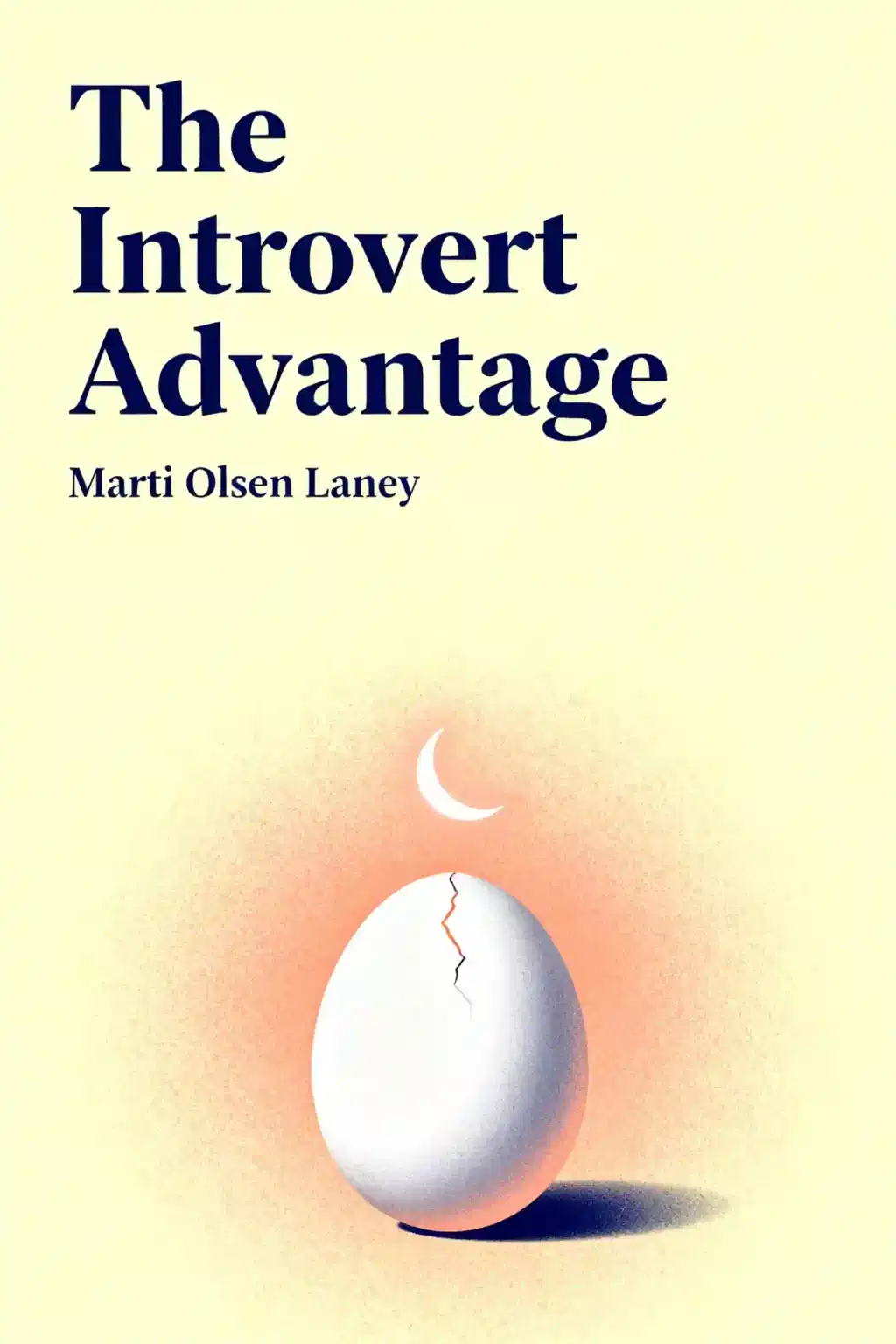
In a world favoring extroverts, "The Introvert Advantage" reveals why being quiet is your superpower. Did you know introverts are outnumbered 3:1 yet often live longer? Diane Sawyer and Laura Bush prove it - your thoughtful nature isn't a weakness, it's your competitive edge.
Marti Olsen Laney, Psy.D., is the acclaimed author of The Introvert Advantage: How to Thrive in an Extrovert World and a pioneering psychotherapist specializing in introversion research. A licensed marriage and family therapist based in Portland, Oregon, Laney combines decades of clinical experience with personal insights as an introvert to create transformative self-help guides. Her work, rooted in psychology and neuroscience, empowers introverts to harness their innate strengths in communication, relationships, and creativity.
Laney’s expertise extends to her other notable book, The Hidden Gifts of the Introverted Child, which offers strategies for nurturing introverted children in an extrovert-centric society. A sought-after speaker, she leads workshops across the U.S. and Canada and shares resources through her platform, TheIntrovertAdvantage.com.
Recognized for blending scientific rigor with actionable advice, Laney’s books have sold over one million copies worldwide and been translated into multiple languages, cementing their status as essential reads for understanding introversion.
The Introvert Advantage explores how introverts can thrive in a world favoring extroversion. Marti Olsen Laney, a psychotherapist, explains introverts’ unique brain wiring, energy needs, and strengths like deep focus and analytical thinking. The book provides strategies for managing social energy, workplace communication, and relationships, emphasizing self-acceptance and leveraging introverted traits.
This book is ideal for introverts seeking self-understanding, extroverts wanting to support introverted loved ones, and professionals managing introverted teams. Parents of introverted children will also find insights into nurturing their temperament.
Yes, for its validation of introverted experiences and practical advice. Readers praise its “aha moments” about energy management and social preferences, though some critique its repetitive sections or overly simplistic writing style.
Laney details physiological contrasts: introverts have longer neural pathways for processing stimuli, leading to deeper reflection but quicker overstimulation. Extroverts’ shorter pathways prioritize rapid responses, making them crave external interaction for energy.
Key strategies include scheduling downtime after events, preparing conversation topics in advance, and setting boundaries. Laney advises introverts to prioritize quality interactions over quantity to conserve energy.
The book suggests leveraging strengths like listening and preparation. Tips include requesting agendas before meetings, using written communication, and advocating for quiet workspaces to maximize productivity.
Some readers find the writing style overly clinical or repetitive, particularly in later chapters. Critics note the book’s focus on individual adaptation over systemic change in extrovert-centric environments.
While both validate introversion, Laney’s book emphasizes actionable self-help strategies and neurobiological explanations, whereas Quiet focuses more on cultural analysis. Readers recommend both for complementary insights.
Laney guides parents in nurturing introverted children by respecting their need for solitude, avoiding over-scheduling, and reframing shyness as thoughtful observation. She stresses the importance of validating their emotional depth.
The book advises communicating energy needs to partners, choosing low-key activities, and balancing social time with recovery. Laney highlights introverts’ capacity for loyalty and deep connection when boundaries are honored.
Notable quotes include:
Laney argues success stems from aligning environments with innate traits—valuing depth over breadth, solitude over constant collaboration, and leveraging introverts’ creativity in problem-solving.
Senti il libro attraverso la voce dell'autore
Trasforma la conoscenza in spunti coinvolgenti e ricchi di esempi
Cattura le idee chiave in un lampo per un apprendimento veloce
Goditi il libro in modo divertente e coinvolgente
Introversion isn't a character flaw or social inadequacy-it's how your brain is naturally wired.
Introverts aren't antisocial-they're differently social.
Introverts typically think before speaking.
Introverts draw energy from their internal world.
Extroverts are energized by the external world.
Scomponi le idee chiave di The Introvert Advantage in punti facili da capire per comprendere come i team innovativi creano, collaborano e crescono.
Distilla The Introvert Advantage in rapidi promemoria che evidenziano i principi chiave di franchezza, lavoro di squadra e resilienza creativa.

Vivi The Introvert Advantage attraverso narrazioni vivide che trasformano le lezioni di innovazione in momenti che ricorderai e applicherai.
Chiedi qualsiasi cosa, scegli la voce e co-crea spunti che risuonino davvero con te.

Creato da alumni della Columbia University a San Francisco
"Instead of endless scrolling, I just hit play on BeFreed. It saves me so much time."
"I never knew where to start with nonfiction—BeFreed’s book lists turned into podcasts gave me a clear path."
"Perfect balance between learning and entertainment. Finished ‘Thinking, Fast and Slow’ on my commute this week."
"Crazy how much I learned while walking the dog. BeFreed = small habits → big gains."
"Reading used to feel like a chore. Now it’s just part of my lifestyle."
"Feels effortless compared to reading. I’ve finished 6 books this month already."
"BeFreed turned my guilty doomscrolling into something that feels productive and inspiring."
"BeFreed turned my commute into learning time. 20-min podcasts are perfect for finishing books I never had time for."
"BeFreed replaced my podcast queue. Imagine Spotify for books — that’s it. 🙌"
"It is great for me to learn something from the book without reading it."
"The themed book list podcasts help me connect ideas across authors—like a guided audio journey."
"Makes me feel smarter every time before going to work"
Creato da alumni della Columbia University a San Francisco

Ottieni il riassunto di The Introvert Advantage in formato PDF o EPUB gratuito. Stampalo o leggilo offline quando vuoi.
You walk into a bustling networking event, and within thirty minutes, you're mentally calculating escape routes. Meanwhile, your colleague is energized, working the room like it's oxygen. What's happening here isn't a character flaw-it's neuroscience. About 25% of us are wired as introverts, navigating a world that often mistakes our reflective nature for weakness. Yet some of history's most influential figures-Oprah Winfrey, Bill Gates, J.K. Rowling-have transformed their introversion into extraordinary success. The distinction between introverts and extroverts isn't about shyness or social skills-it's fundamentally about energy flow. Introverts recharge through solitude and internal reflection, while extroverts gain energy from external stimulation and social interaction. This isn't preference or personality quirk; it's biology. Brain imaging reveals that introverts have significantly more blood flow to their brains, indicating heightened internal stimulation. This blood travels a longer, more complex pathway focused on memory, problem-solving, and planning. Extroverts' blood follows a shorter route directed toward sensory processing of external stimuli. The neurotransmitter differences are equally striking. Extroverts run primarily on dopamine, which creates an energized rush from external activity. Because they're less sensitive to it, they need more stimulation to feel satisfied-hence the constant desire for action and interaction. Introverts, however, are highly sensitive to dopamine and easily overstimulated by it. Instead, they operate mainly on acetylcholine, which produces pleasant feelings during quiet, reflective activities. Your nervous system plays a role too. Introverts function predominantly through the parasympathetic system-the "rest and digest" mode that conserves energy and promotes internal focus. Understanding this biological foundation transforms everything. You're not defective or antisocial-you're simply operating with different neural circuitry that offers distinct advantages when properly understood and managed.