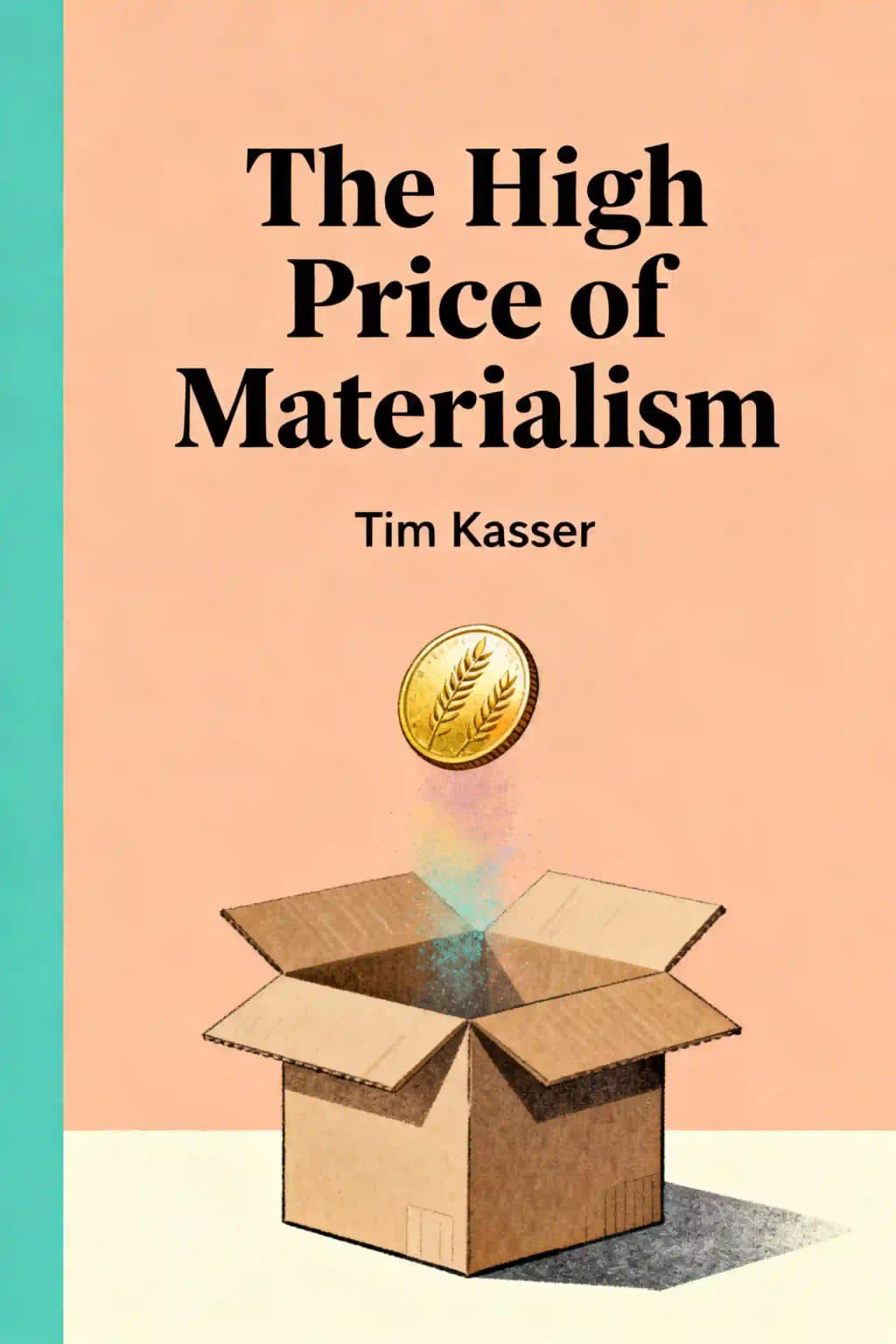
In "The High Price of Materialism," psychologist Tim Kasser reveals how our obsession with wealth and possessions undermines happiness. What if the secret to fulfillment isn't buying more, but wanting less? Discover why minimalists report 20% higher life satisfaction.
Senti il libro attraverso la voce dell'autore
Trasforma la conoscenza in spunti coinvolgenti e ricchi di esempi
Cattura le idee chiave in un lampo per un apprendimento veloce
Goditi il libro in modo divertente e coinvolgente
A teenager stares at her Instagram feed, counting likes on a photo of her new sneakers. A middle-aged executive refreshes his bank app for the third time that morning, calculating how many more months until he hits seven figures. A mother browses online stores at midnight, her cart filled with things she doesn't need, searching for something she can't name. We live in a world that promises happiness through acquisition, yet depression and anxiety have never been widespread. What if the very pursuit we've been told leads to fulfillment is actually draining it away? Research spanning four decades and forty-one countries reveals a troubling pattern: people who strongly value wealth, possessions, and status consistently report lower well-being than those who don't. This isn't about whether rich people are happier-it's about how organizing your life around material goals fundamentally undermines psychological health. Studies of teenagers, college students, working adults, and retirees all show the same result. Whether in America, Singapore, Russia, or Denmark, the correlation holds: prioritize materialism, experience diminished life satisfaction. Researchers developed tools to measure not just what people own, but how much they value owning. The Aspiration Index asks individuals to rate the importance of various life goals-financial success versus self-acceptance, image versus intimacy, fame versus community contribution. Those who rank materialistic aims highest consistently score lower on measures of vitality, self-actualization, and positive emotion. They report more depression, anxiety, and physical symptoms like headaches and stomachaches.
Scomponi le idee chiave di The High Price of Materialism in punti facili da capire per comprendere come i team innovativi creano, collaborano e crescono.
Distilla The High Price of Materialism in rapidi promemoria che evidenziano i principi chiave di franchezza, lavoro di squadra e resilienza creativa.

Vivi The High Price of Materialism attraverso narrazioni vivide che trasformano le lezioni di innovazione in momenti che ricorderai e applicherai.
Chiedi qualsiasi cosa, scegli la voce e co-crea spunti che risuonino davvero con te.
Creato da alumni della Columbia University a San Francisco
"Instead of endless scrolling, I just hit play on BeFreed. It saves me so much time."
"I never knew where to start with nonfiction—BeFreed’s book lists turned into podcasts gave me a clear path."
"Perfect balance between learning and entertainment. Finished ‘Thinking, Fast and Slow’ on my commute this week."
"Crazy how much I learned while walking the dog. BeFreed = small habits → big gains."
"Reading used to feel like a chore. Now it’s just part of my lifestyle."
"Feels effortless compared to reading. I’ve finished 6 books this month already."
"BeFreed turned my guilty doomscrolling into something that feels productive and inspiring."
"BeFreed turned my commute into learning time. 20-min podcasts are perfect for finishing books I never had time for."
"BeFreed replaced my podcast queue. Imagine Spotify for books — that’s it. 🙌"
"It is great for me to learn something from the book without reading it."
"The themed book list podcasts help me connect ideas across authors—like a guided audio journey."
"Makes me feel smarter every time before going to work"
Creato da alumni della Columbia University a San Francisco

Ottieni il riassunto di The High Price of Materialism in formato PDF o EPUB gratuito. Stampalo o leggilo offline quando vuoi.