Capitolo 1
When Life Demands a Financial Revolution
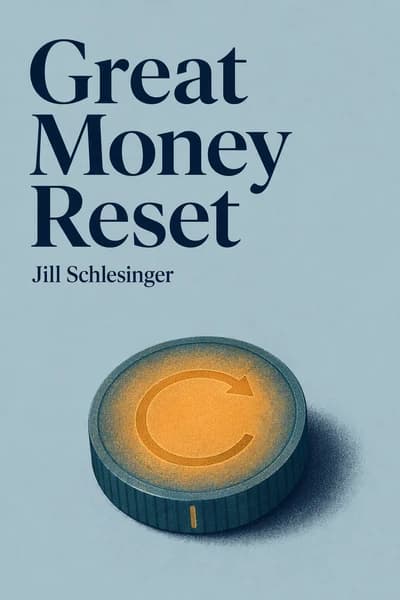
The Great Money Reset isn't just another financial self-help concept-it's a powerful recognition of a fundamental shift happening across America. When media professional Melissa quit her demanding job during the pandemic to reassess her priorities, she joined millions making similar bold moves. Despite uncertainty and difficult days during her sabbatical, she discovered something profound: with proper planning, transformative life changes are possible. Jill Schlesinger's book arrives at the perfect cultural moment, as a record 4.5 million Americans quit their jobs in November 2021 alone, seeking more fulfilling work-life arrangements. This "Great Resignation" represents more than job-hopping-it signals a collective reevaluation of what truly matters. Schlesinger, whose "Jill on Money" podcast has guided countless listeners through financial crossroads, provides a practical roadmap for aligning finances with values. As Oprah Winfrey noted when featuring Schlesinger's advice, "Even amid devastation, we have a rare opportunity to snatch control back and build lives we truly want-if we do it wisely."
Capitolo 2
Know Your Numbers Before Making Your Move
Before embarking on any major life transition, you must thoroughly understand your current financial position. Consider Ross, a burned-out corporate worker in his mid-fifties planning to leave his company. Like many contemplating a Great Money Reset, Ross needed to organize his financial life before making such a significant change. This is where Schlesinger's "Fabulous Five" framework proves invaluable-a structured approach to analyzing your finances through five key steps.
First, calculate all resources at your disposal, including salary, bonuses, retirement accounts, property, and emergency funds. Pay special attention to which assets are liquid, as transitions often require more cash than anticipated. Don't overlook expenses previously covered by employers, like health insurance (potentially $12,000-15,000 annually for a healthy couple).
Next, catalog all debts and liabilities-mortgages, credit cards, loans, and tax obligations. Schlesinger cautions against prioritizing mortgage payoff over maintaining liquidity, noting that even substantial retirement savings may not provide adequate accessible funds during transitions.
Third, evaluate your housing situation beyond just calculating home value. Consider ongoing maintenance costs and whether downsizing or renting might better support changing circumstances. Challenge the concept of a "forever home," recognizing that maintaining an expensive property converts liquid assets into illiquid ones-potentially problematic during transitions.
Fourth, track current monthly expenses and evaluate potential lifestyle changes. Many people underestimate future spending needs when planning transitions. Base estimates on current spending patterns rather than optimistic projections, and remember that fifty-somethings might need funds for another forty years.
Finally, account for financial responsibilities to family members, including children's college expenses, aging parents' care, and potential support for other relatives. Make conservative estimates for these obligations, as they may increase unexpectedly.
After gathering this data, develop three scenarios: best case, middling, and worst case. When Schlesinger contemplated her own career change, she analyzed each thoroughly. For her worst case (failing in media, relationship problems, hating NYC), she'd activate plan B-returning to financial planning. For the middling scenario (career transition working but with less income), she'd still manage financially.
Rather than making dramatic changes immediately, consider incremental steps. If you hate your job, explore lateral moves or negotiating alternative work arrangements before quitting outright. These smaller steps let you test dreams with less financial risk while potentially discovering what truly satisfies you-like Lynnda who left sales to pursue acting only to discover audiobook narration was her true calling.
Capitolo 3
Transform Your Relationship with Spending
You might think making big life changes requires blowing your life savings, but disciplined spending habits can make your dreams more accessible. The secret is simple yet powerful: spend less. Julie from Salt Lake City exemplifies this approach-she retired nine years earlier than planned at 61 by consistently living on just $2,500 monthly, even in expensive Boston. With her university's severance package, health insurance coverage, and $500,000 from selling her house, she could afford her dream move to Salt Lake City.
The pandemic prompted many Americans to fundamentally reconsider consumption patterns. Beyond shifting from in-store to online shopping, people questioned whether longtime spending habits were necessary at all. Schlesinger personally abandoned a work-induced fashion addiction that had been costing thousands annually on clothes for television-realizing she didn't need $750 shoes that viewers barely noticed for seconds. Her fashion budget is now just a quarter of what it was, allowing redirection toward more meaningful investments.
MIT professor Drazen Prelec studies the psychology behind buying behavior, noting that people deploy a "jungle-gym-like accumulation of rules" when they consume, giving spending a moral dimension. We create self-imposed guidelines-never buying certain expensive brands, limiting restaurant meals to once weekly-but inconsistently follow them. These rules often operate subtly, adopted unconsciously from parents, friends, or culture.
To transform your relationship with spending, ask yourself four key questions. First, what do you really need versus what do you only think you need? While essentials like food, shelter, and healthcare are obvious, our "required" purchases become less clear when addressing higher-order needs like connection and self-actualization. Second, do you feel guilty, insecure, or anxious about certain purchases? These emotions can reveal problematic money rules you've internalized. Third, do you make impulsive purchases? If so, when and why? Impulse spending often stems from emotional triggers-buying that unnecessary sweater to distract from sadness. Finally, are relationship dynamics influencing your spending? Money decisions in relationships reveal hidden spending rules shaped by each partner's background.
Testing potential spending adjustments before making major life changes can reveal whether your financial plans are realistic. Blair, a corporate marketer considering a career switch to podcast production that would halve his $140,000 salary, experimented with his husband by living on the reduced income for several months. They discovered they'd been spending mindlessly to distract from Blair's job dissatisfaction and could comfortably save $50,000 annually with more intentional habits.
Capitolo 4
Negotiate Your Way to a Better Work Life
After decades of employers holding all the cards, workers have finally gained advantage in the labor market. Even in tighter conditions, knowing how to effectively negotiate with your boss remains essential for creating the life you want. As Schlesinger's mother says, "If you don't ask, you don't get."
To effectively negotiate, don't wing it. By doing your homework, you can approach negotiations with rigor and increase your chances of success. Schlesinger's five-step BULLY framework provides a structured approach: Button up your Big Ask, Understand the full picture, Lose the ego (sort of), Leave time to practice the conversation, and Don't Yuck it Up.
Before approaching your boss, clarify what you want. Consider the full array of possible requests beyond just salary-flexible scheduling, tuition reimbursement, sabbaticals, loan repayment, and even creative perks like bringing your dog to work. Identify your deeper motivations and priorities. What truly excites you about a job? Formulate specific requests with best-case scenarios, acceptable compromises, and deal-breakers.
Once clear about your Big Ask, research thoroughly to support your pitch. Examine the broader employment market in your industry and beyond. Mobilize your network, noting that people reveal more in conversation than email. Assess your true value by cataloging all contributions, including those outside your job description. Schlesinger once brought in a million dollars for an employer through her connections, which her boss didn't know about until she mentioned it at bonus time.
Be bold and confident in your pitch without appearing arrogant. Begin by acknowledging what your boss and organization have done for you-even if you feel mistreated, express gratitude. Present your case with crisp logic and quantitative data where possible, while empathizing with your boss's position and concerns. Avoid accusatory tones like "You've been underpaying me for years."
Before approaching your boss, practice your pitch thoroughly. Record yourself or role-play with someone who resembles your boss in age and experience. Make the practice session realistic-dress appropriately and arm your practice partner with counterarguments. This preparation helps you speak more fluidly and understand your boss's perspective better.
No matter how your boss responds, maintain your composure and professionalism. Avoid ultimatums or lashing out, even if provoked. If treated poorly, end the conversation respectfully rather than burning bridges. Similarly, avoid venting frustrations in exit interviews-as one friend advises, "Lie like hell... Never leave on bad terms because you never know what's going to happen next."
While some negotiations may lead to leaving your job, others find success by staying put after negotiating better terms. David, an attorney earning $150,000, received a $200,000 offer from another firm but chose to approach his current employer first. By respectfully presenting the situation without ultimatums, his firm matched the offer. A Great Money Reset might include changing jobs, but it doesn't have to-advocating for yourself can transform your current position into something better.
Capitolo 5
Smart Investing for Life Transitions
When navigating a Great Money Reset or volatile economic times, smart investing makes all the difference. The key is balancing proven investment strategies with calculated risks that might transform your life.
Despite market volatility, index investing works consistently. While individual stocks like Tesla might see dramatic gains, nobody knows in advance which companies will perform best. Robin Wigglesworth confirms "the math around indexing is irrefutable"-actively managed funds rarely outperform indices consistently over long periods. During major life changes, it's comforting to know your investments don't need constant attention.
While Schlesinger once avoided cryptocurrency entirely, she now suggests allocating a small portion (around 5%) to speculative investments like crypto, NFTs, or SPACs. Taylor from Virginia Beach exemplifies this approach-after investing just $10,000 in bitcoin years ago, that sum grew to $1 million, allowing him flexibility for a career downshift at age 40. The key was risking only money he could afford to lose while keeping the majority of his portfolio in traditional investments.
Be cautious with company stock. Mike and Erin from New York had accumulated $800,000 in company stock-25% of their $3.2 million net worth. This is far too risky! A sound investment strategy should limit any single holding to 10% of your portfolio. Despite Mike's company performing well with a 70% gain over five years, the S&P 500 had risen 110% during that same period. If your company falters, you could lose both your job and your investments simultaneously.
Bonds remain essential despite rising interest rates. They're not about betting on interest rates but about reducing portfolio volatility and providing predictable returns. Historical data shows that a balanced 60/40 stock-to-bond portfolio yielded 9.1% annually from 1926-2020, while an all-stock portfolio returned 10.3%. That small performance difference acts as "insurance" against emotional mistakes during market downturns.
When considering debt reduction versus investing, focus on the type of debt. High-interest debt like credit cards or 6% student loans? Absolutely pay those off with non-retirement investments. But liquidating retirement accounts to pay off a low-interest mortgage (around 3%)? "No friggin' way." You'd sacrifice potential 5-7% investment returns, incur tax liabilities, and lose liquidity-crucial during life transitions.
For "fun money" investments, social media communities can provide ideas, but approach with skepticism. For serious accounts like retirement plans, seek credible sources. If your finances are straightforward, consider algorithm-based platforms like Vanguard Personal Advisor Services or Betterment. For complex situations, professional advisors can make an enormous difference. During a Great Money Reset, even if you love your current advisor, consider getting a second opinion-it could uncover significant opportunities.
Capitolo 6
Leverage Tax Strategies for Your Great Reset
Despite its unsexy reputation, understanding tax strategies can significantly fund your big life changes. When facing temporary income dips during a Great Money Reset, you may have unique opportunities to optimize your tax situation.
Consider Steve and Christina's situation: when Christina lost her job, their income temporarily dropped. With $1.8 million in retirement savings and strong overall finances, they wondered about converting traditional retirement funds to Roth IRAs. This made perfect sense-with their temporarily lower tax bracket, they could pay taxes now at a lower rate than they might face in retirement. By converting about $100,000 without bumping into the next tax bracket and using non-retirement investments to pay the taxes, they could save thousands in future tax obligations.
When your income temporarily drops, consider strategically taking capital gains. With long-term capital gains rates tied to income (ranging from 0% to 23.8%), a lower-income year presents an opportunity to realize gains at reduced tax rates. For example, a couple whose income dropped from $150,000 to $75,000 might qualify for the 0% capital gains rate on a $300,000 cryptocurrency profit-potentially saving tens of thousands compared to selling later when their income rebounds.
Self-employment often offers attractive tax benefits including business expense deductions and generous retirement options. During the pandemic, Rachel and Larry purchased their hoarder neighbor's apartment for $300,000 and spent $100,000 renovating it into dedicated office space. By keeping it separate from their living quarters, they gained significant tax advantages: they could depreciate the property over time, deduct renovation costs, and write off ongoing expenses like utilities and maintenance.
Charitable giving can provide tax advantages during a money reset, particularly for the 15% of Americans who itemize deductions. Instead of donating cash, consider gifting highly appreciated stock to charity. The organization can sell it tax-free, while you deduct the full value without paying capital gains taxes. "Bunching" involves concentrating multiple years' worth of charitable donations into a single tax year to exceed the standard deduction threshold, allowing you to itemize and receive tax benefits.
A donor-advised fund offers another strategic giving approach during a financial windfall. By depositing money into this vehicle, you can take an immediate tax deduction while distributing the funds to charities gradually over years. Despite sounding like a rich person's tool, these funds are now easily accessible through financial services firms like Fidelity Charitable, with user-friendly interfaces that make charitable giving simple.
For those over 7012 years old facing Required Minimum Distributions (RMDs), Qualified Charitable Distributions offer a powerful tax advantage. By directing your RMD (up to $15,000 in the example) directly to charities, you completely avoid paying taxes on that distribution. This works particularly well for retirees whose other income sources already cover their expenses.
Capitolo 7
Rethink Your Real Estate Strategy
When contemplating a Great Money Reset, your home-likely your biggest asset-may need reevaluation. Marilyn from Buffalo exemplifies this challenge after losing her husband of forty years. Facing pandemic isolation at 65, she decided to pursue her dream of moving to Florida. Though emotionally difficult to sell the home she'd built with her late husband, the financial advantages were compelling: high property taxes in New York, a seller's market, and the opportunity to purchase both a Florida condo and a smaller Buffalo townhouse with the proceeds. After selling for $375,000 and paying off her $100,000 mortgage, she established a comfortable snowbird lifestyle with mortgage payments just one-third of her previous housing costs.
Real estate can enable life changes even when you don't have a specific plan. Healthcare workers Tom and Pam, burned out from the pandemic and drowning in debt, sold their Pennsylvania home when they heard the market was hot. With their children grown, they seized the opportunity, selling for $40,000 over asking price. Rather than immediately buying another property, they found a rental on a horse farm that rekindled Pam's childhood passion for riding. The sale allowed them to pay off all debts and bank $250,000, reducing their work hours and increasing quality time.
For some, home equity becomes a lifeline from financial disaster. Alan and Marie, a New York City couple earning $320,000 annually, found themselves drowning in $110,000 of credit card debt despite their high income. The culprit: $35,000-$40,000 in private school tuition for their three children, plus pressure to maintain an affluent lifestyle. With their pattern of repeatedly refinancing their mortgage to pay off credit cards, they needed drastic action. Rather than tapping their retirement savings, selling their $1.3 million apartment allowed them to pay off debt, establish an emergency fund, and break their destructive financial cycle.
Many homeowners hesitate to use their equity due to emotional attachments or fear of making mistakes. We often justify inaction by citing various real estate "rules" that may be outdated or simply not applicable to our specific situations. For example, the rule that fixer-uppers are always advantageous may no longer apply-during the pandemic, renovation costs skyrocketed, with one $600,000 estimate ballooning to $1.4 million just two years later.
The idea that you should never sell when real estate prices are falling ignores the fact that you'll likely be buying in the same market conditions. One Chicago couple wanted to upgrade from a studio to a two-bedroom during COVID when prices were falling. They initially hesitated, not realizing that while their sale price would be lower, so would the purchase price of their new home.
When considering real estate moves, tune out others' opinions and think for yourself. Consider Beth and Irma, who nearly spent $2.2 million on a neighboring beach property (well above its $1.5 million value) because friends urged them to prevent potential development. A financially savvy relative questioned this decision, helping them realize they weren't comfortable spending that much just for a bigger yard. Trust your instincts and become introspective about what truly matters to you.
Capitolo 8
Entrepreneurship as a Path to Freedom
Whether you want to escape working for others or capitalize on a crisis, entrepreneurship offers powerful reset opportunities. Cheri Ruane, a Boston landscape architect, had previously watched good business ideas slip away-including a bumper protection device someone else successfully marketed as the "Bumper Bully." When the pandemic hit in 2020, she finally took entrepreneurship seriously, first creating a mask-making business that generated $20,000 in side income. Later, inspired by her experiences with online dating after separating from her husband, she began developing an even more promising business idea.
When starting a business, begin cautiously. Like Cheri who kept her day job while launching Bl@ckbook (a dating organizer app funded with $10,000 from her "facelift fund"), test your idea as a side hustle first. Andrea Meyerson followed this approach, starting Women on a Roll as a lesbian bicycling club while maintaining her corporate career, only quitting when her events business proved viable. Before diving in, honestly assess whether entrepreneurship suits your personality-the freedom comes with total responsibility for success. Minimize risk by keeping overhead low and seeking trusted advice.
Freelancing offers flexibility but comes with challenges. While you might charge higher rates, you'll pay for your own benefits and handle both employer and employee payroll taxes. The biggest hurdle is income instability-clients can disappear, payments arrive late, and you must constantly hustle for new business. Before transitioning to freelance work, secure at least one "anchor client" to provide steady revenue. When Schlesinger left her employee position at CBS, she first ensured they would hire her as a contractor for television appearances.
When your business faces decline, consider evolution rather than simply selling or shutting down. Andrea, who ran Women on the Roll organizing events for the lesbian community, saw her business collapse when COVID hit in 2020. Instead of giving up, she pivoted to hosting virtual events on Zoom. Within a week, she was producing three shows nightly, five nights weekly. Five months later, she relaunched as Women on the Net, a subscription service featuring top talent like the Indigo Girls, Lily Tomlin, and Billie Jean King. The service became profitable within two months and created a vital community connection during isolation.
Similarly, Tamara, unable to sell her technology business at her desired price, partnered with a larger company that handled sales while she provided technical expertise, creating passive income. These stories demonstrate how entrepreneurial spirit can transform adversity into opportunity through resilience and adaptation.
Capitolo 9
Building Your Future Through Strategic Planning
The Great Money Reset isn't just about immediate changes-it's about building long-term financial resilience that creates future options. Schlesinger's father exemplified this approach when, after a health scare, he planned a gradual exit from his business. By planning ahead, he enjoyed twenty fulfilling years of retirement on his own terms. Planning for potential money resets gives us more options and emotional readiness when life changes arrive.
Many people are now embracing "FINE" (Financial Independence, New Endeavor) rather than the more extreme "FIRE" (Financial Independence, Retire Early) movement. Instead of seeking radical early retirement through extreme frugality, FINE adherents aim for more control over their work conditions and flexibility. Preparing for a "next endeavor" requires assessing spending patterns, calculating savings needs, considering retirement benefits, and building non-retirement accounts.
Estate planning is an essential part of any Great Money Reset. Steven's parents had outdated wills that hadn't been updated in thirty years, which led to family conflict over their marina property. When contemplating major life changes, we must consider potential worst-case scenarios like death or illness. This means updating wills, securing appropriate life insurance (especially before leaving employer coverage), obtaining disability insurance for freelancers, and ensuring adequate health coverage.
Emotional readiness is just as important as financial readiness when making major life changes. John and Maggie, a couple who had achieved their FIRE goals at 38 with substantial savings, found themselves emotionally unprepared to actually retire despite having the financial means. Many people resist change due to fear of losing security, relationships, or identity. Dr. Sharon Melnick notes that people often avoid change because of scarcity mindsets or "fixed" mindsets that prevent them from envisioning new possibilities.
The author explores how to emotionally prepare through gradual change. Kurt's story demonstrates the power of deliberate process-building a stone wall during time off allowed him to discover what he truly wanted (returning to sales) rather than retirement. Unlike hasty decisions, Kurt's approach included multiple conversations with his family about financial sacrifices and discussions with his CEO. This gradual approach built clarity and emotional readiness.
Whatever direction we ultimately choose, we need to position ourselves both financially and emotionally for the next phase of our lives. The Great Money Reset isn't just about changing our financial circumstances-it's about aligning our money with our values to create lives of greater meaning and fulfillment. By following Schlesinger's practical framework, we can navigate these transitions with confidence, turning potential disruption into opportunity for growth and renewed purpose.