Capitolo 1
Want Happiness? Stop Scrolling and Start Talking!
Imagine you're on your deathbed (cheery start, I know) and you're reflecting on your epic life journey. Do you think you'll be counting your Instagram followers or remembering that time you got 10,000 likes on TikTok? According to the longest study on happiness ever conducted, probably not! While 76% of millennials believe "getting rich" will make them happy and 50% are banking on "becoming famous," Harvard researchers have spent EIGHTY YEARS discovering what actually brings joy, and spoiler alert: it's not your bank account or your blue checkmark.
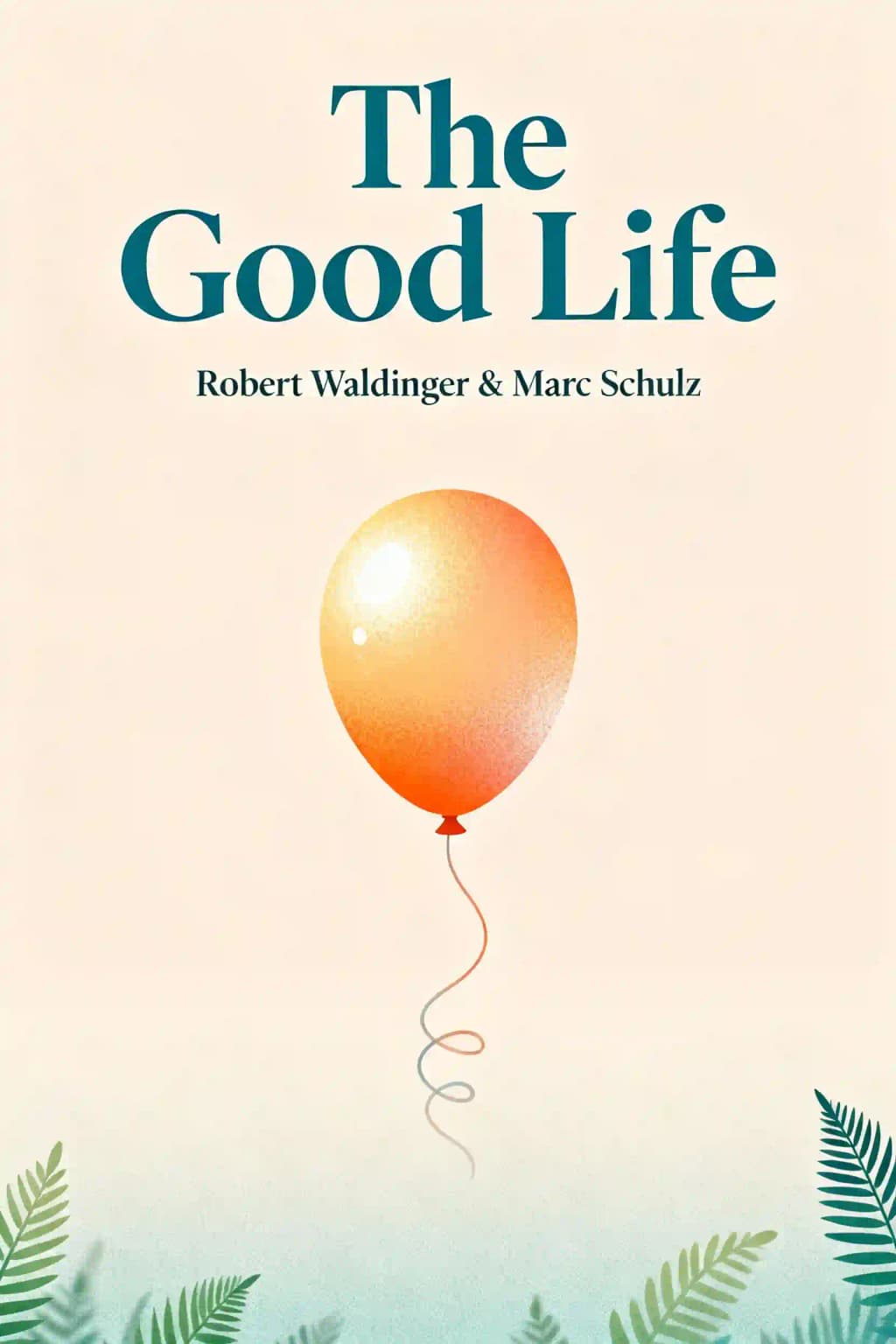
"The Good Life" by Robert Waldinger reveals the findings from this mind-blowing research project that's been following hundreds of men since the Great Depression. We're talking regular interviews, questionnaires, medical exams, blood samples, brain scans-they've even collected 25 donated brains! (Talk about dedication to your job-"Hey, when you're done with that brain, can I have it for science?")
This isn't just some random study nobody cares about. Waldinger's TED talk on this research has over 40 MILLION views. That's more views than most cat videos! The research has become so influential that even Oprah featured it on "Super Soul Sunday," which basically makes it the scientific equivalent of being knighted by the Queen.
The big revelation that's blowing everyone's minds? The single most powerful predictor of happiness and health isn't wealth, achievement, or even having good genes-it's the quality of your relationships. Yes, those annoying people you're related to and those friends who keep asking you to help them move might actually be your ticket to a longer, happier life. Who knew?
Capitolo 2
Your Brain is a Relationship Junkie (Science Says So)
Our brains are basically relationship addicts, and evolution is their dealer. When we experience love, friendship, or social support, our brains release a cocktail of feel-good chemicals that make us happier than a dog with a new bone. Meanwhile, negative social interactions flood us with stress hormones like cortisol and adrenaline, which is why that passive-aggressive comment from your coworker can ruin your entire day.
But here's the funny thing-we're TERRIBLE at predicting what will make us happy, especially when it comes to relationships. In one hilarious University of Chicago experiment, train commuters were asked what would make their journey better: chatting with strangers or keeping to themselves. Most predicted that talking to random people would be as pleasant as sitting next to someone eating tuna salad in an enclosed space. But surprise! The people who actually talked to strangers had significantly better experiences. It's like we're all convinced vegetables taste terrible until someone finally makes us try them.
Our ancient caveman brains are obsessed with what's visible and countable-money in the bank, trophies on the shelf, followers on social media-while the value of relationships remains invisible and hard to quantify. It's like trying to explain why a sunset is beautiful by counting the colors. We can't put "had a deeply meaningful conversation with my best friend" on our resume, so we prioritize the stuff we can brag about instead.
Take the tale of two Harvard grads from the study-John Marsden and Leo DeMarco. Both had similar privileged backgrounds and served in WWII. John became a hotshot lawyer making three times Leo's salary as a teacher. But when researchers checked in at age 55, John reported feeling "starved for affection" while Leo was living his best life surrounded by family and community. John had the corner office and fancy car; Leo had dinner with his family every night. Guess who was happier? Plot twist: not the rich guy!
Capitolo 3
Life Stages: From Teenage Drama to Midlife Crisis
Understanding life's developmental stages isn't just for psychology nerds-it's like having the cheat codes for the video game of life. The Harvard Study mapped entire life journeys, showing that while each person's path is unique, we all hit surprisingly similar milestones regardless of our backgrounds. It's comforting to know that even Jeff Bezos probably had an awkward phase and existential crises.
Adolescence (ages 12-19) is basically "Walking the Tightrope"-a chaotic time when teenagers need adults to "hold but don't baby; admire but don't embarrass; guide but don't control; release but don't abandon." Teenagers are like cats: they want independence but also food and shelter and occasional affection (but only on their terms). They're figuring out who they are through an endless series of identity experiments, which explains the regrettable haircuts and even more regrettable boyfriends/girlfriends.
Young adulthood (20-40) is when we're supposed to answer the question "Who am I?" which is slightly terrifying considering most of us can barely decide what to watch on Netflix. This is the time for creating bonds beyond family, establishing financial independence (or at least pretending to), and developing intimate relationships. The trap here is becoming so obsessed with self-sufficiency and achievement that you end up socially isolated, eating ramen alone in your apartment while refreshing LinkedIn.
Midlife (41-65) brings the sobering realization that you're no longer young, which hits about the same time you make that weird grunting noise when you stand up from the couch. Your roles change, your possibilities narrow, and you suddenly understand that life is probably more than halfway over (cue existential crisis and possibly a convertible purchase). The developmental task here is expanding beyond self-interest toward "generativity"-investing in the world beyond yourself, which sounds noble but often translates to "realizing the world doesn't revolve around you."
Late life (66+) is when time becomes precious, and despite society viewing aging as decline, research shows older adults are often the happiest humans around. They've developed emotional wisdom that helps them maximize joy and minimize stress. They're basically relationship ninjas who no longer waste time on drama and have mastered the art of saying "I'm too old for this nonsense" with dignity.
Capitolo 4
Social Fitness: The Gym Membership Your Heart Needs
Just like your body needs regular exercise in our modern couch-potato world, your relationships need intentional maintenance-what the authors call "social fitness." Think of your friendships like muscles: neglect them, and they turn into sad, flabby versions of what they could be. Your social life is a living system that needs regular workouts, not something you can put on autopilot while you binge-watch seven seasons of a show about dragons.
Loneliness isn't just an unpleasant feeling-it's actually dangerous for your health. It suppresses your immune function (hello, endless colds), messes with your brain performance (where did I put my keys?), disrupts your sleep (3 AM anxiety, anyone?), and makes pain feel worse (as if paper cuts weren't bad enough already). For older adults, loneliness is TWICE as harmful as obesity, increasing mortality risk by 26% annually. That's right-your social life could literally be killing you.
Here's a sobering calculation: If you're 40 years old and see a good friend weekly for coffee until you're 80, that amounts to just 87 total days together. Monthly meetings? A measly 20 days. Annual get-togethers? A pathetic 2 days. Meanwhile, the average American spends 11 hours daily consuming media-that's 18 YEARS of waking life between ages 40-80. We're basically in a committed relationship with our screens while our actual relationships get the equivalent of a annual Christmas card.
The Harvard Study identified seven types of support that form the keystones of relationships: Safety and Security (who you'd call when your car breaks down at 2 AM); Learning and Growth (who encourages you to try that weird hobby); Emotional Closeness (who knows about your embarrassing childhood nickname); Identity Affirmation (who reminds you you're not crazy); Romantic Intimacy (self-explanatory); Practical Help (who will actually help you move); and Fun and Relaxation (who makes you laugh until you snort).
The good news is that generosity creates a positive feedback loop in relationships. By giving the support we hope to receive, we create systems where care flows both ways. It's like the relationship version of "you scratch my back, I'll scratch yours," except less itchy and more emotionally fulfilling. As the Dalai Lama suggests, being "wisely selfish" means recognizing that caring for others ultimately serves our own interests too. It's like buying someone coffee and finding out they've already paid for yours-everybody wins!
Capitolo 5
Your Attention: The Currency You're Wasting on TikTok
Imagine starting life with all the time you'll ever have in one account. Every activity-even sleep-depletes this account, and when it's empty, game over. The catch? You have no idea how much time you started with. Terrifying, right? Well, that's not a hypothetical-it's literally how life works! When Harvard Study participants in their 80s reflected on regrets, they consistently mentioned wishing they'd spent less time upset about "silly things" and more time with people they loved.
Even when we finally make time for important relationships, our minds are often elsewhere-planning dinner while our kid tells us about their day, or mentally drafting emails while our partner shares something important. Research shows that nearly HALF our waking moments are spent thinking about something other than what we're doing. This human superpower of thinking about past and future helps us plan and make connections, but in our overstimulated world, it keeps our brains in a state of perpetual distraction.
We feel busy not just because we have a lot to do, but because of the sheer number of things competing for our attention. Neuroscience shows our conscious minds cannot truly multitask-we're actually switching between tasks, which is about as efficient as trying to cook dinner while simultaneously changing a tire. Each mental switch requires recalibration, leaving us in what researcher Linda Stone calls "continuous partial attention"-basically, being halfway present for everything and fully present for nothing.
Human awareness is more like an owl than a hummingbird: we're designed to notice something, turn our attention to it, and focus deeply. This focused state enables our most powerful thinking. But in our screen-dominated world, we treat our owl-minds like hummingbirds, forcing them to flit ineffectively between stimuli. It's like trying to use a hammer as a screwdriver-you might eventually get the screw in, but you'll make a mess and probably hurt yourself in the process.
Our most intimate connections are now mediated through technology-there's often a device and software between us and the people we care about. How we use social media significantly impacts our wellbeing: those who actively engage with others online feel better than passive scrollers who merely observe other people's seemingly perfect lives. It's the difference between being at the party versus watching the party through the window while eating ice cream alone in your car.
Mindfulness-paying attention purposefully to the present moment without judgment-offers an ancient solution to modern attention challenges. Being alert to the present moment is more than meditation; it's about noticing what's happening right now, from physical sensations to environmental details. This practice counters our tendency to dwell on past regrets or future anxieties, which makes life feel like it's racing by faster than a toddler who's just spotted an open door.
Capitolo 6
The WISER Way to Not Ruin Your Relationships
Relationships are key to happiness, but they're also where many of our biggest struggles happen. As George Vaillant wrote about the Harvard Study: "There are two pillars of happiness... One is love. The other is finding a way of coping with life that does not push love away." In other words, relationships make us happy, but we often sabotage them through our reactions to stress and conflict.
Many relationship difficulties stem from automatic, reflexive behaviors so deeply woven into our lives we don't even notice them. Like knee-jerk reactions, emotional responses trigger action tendencies-fear creates an urge to escape, anger makes us want to attack, and shame makes us want to hide under the bed and never come out. While these rapid responses evolved for survival (that rustling in the bushes could be a tiger!), they're less adaptive when your partner asks why you forgot to take out the trash again.
Avoidance-turning away rather than confronting what troubles us-often feels easier but carries serious consequences. Harvard Study data revealed that participants who avoided thinking and talking about difficulties in middle age showed poorer memory and less life satisfaction thirty years later compared to those who faced challenges directly. It turns out that "sweeping things under the rug" doesn't actually make them disappear-it just creates a lumpy rug you'll eventually trip over.
The W.I.S.E.R. model breaks down emotional responses into five critical stages:
• Watch: Gather contextual information before reacting. ("My partner looks upset. My heart is racing. I feel defensive.")
• Interpret: Name what's at stake personally. ("I'm feeling criticized, which makes me feel inadequate.")
• Select: Choose from available options based on your goals. ("I could defend myself, change the subject, or ask questions to understand better.")
• Engage: Implement your chosen strategy. ("I'll take a deep breath and ask what's bothering them.")
• Reflect: Examine outcomes and lessons learned. ("That conversation went better than expected. Listening first helped.")
Many relationship stresses involve chronic patterns where we encounter the same arguments repeatedly-like a bad movie you've seen so many times you can recite the dialogue. ("Here comes the part where they bring up what I did three Christmases ago!") We create our own reality through the stories we tell ourselves, often "fighting the last battle" by anticipating that past hurts will repeat. Breaking free requires gaining perspective and approaching situations with a "beginner's mind" that remains open to new possibilities-like considering that maybe, just maybe, your partner isn't actually trying to ruin your life by loading the dishwasher "incorrectly."
Capitolo 7
Love Actually: The Science Behind Why Relationships Matter
The Harvard Study reveals that vulnerability is essential for true intimacy, as seen in Joseph Cichy's life. Despite having a stable 59-year marriage, Joseph maintained emotional distance that frustrated his wife Olivia, who felt "shut out." Though Joseph was an excellent listener who valued empathy, he struggled to reveal himself, believing self-sufficiency was a virtue learned during his farm childhood. His story demonstrates how keeping the peace and maintaining independence can create stability but at the cost of deeper connection-it's like having a beautiful swimming pool you never actually swim in.
From birth, humans seek close connections for survival and comfort. Mary Ainsworth's "Strange Situation" experiment reveals how infants respond when briefly separated from caregivers in unfamiliar settings. The child's reaction when the caregiver returns-their attachment style-reveals fundamental patterns that persist into adulthood. It's like we get relationship operating systems installed in childhood that continue running in the background of our adult relationships.
James Coan discovered the physiological power of touch accidentally while studying PTSD. When a Vietnam veteran became agitated in an MRI machine, his wife's hand-holding calmed him instantly. Intrigued, Coan designed an experiment where participants received mild electric shocks while either alone, holding a stranger's hand, or holding their spouse's hand. The results were striking: holding a loved one's hand significantly reduced both brain activity in fear centers and perceived pain-equivalent to a mild anesthetic. Basically, love is a drug, and it's legal in all 50 states!
Relationships literally live inside us-even thinking about important people generates hormones and chemicals that affect our bodies. These effects span a lifetime, as George Vaillant found in the Harvard Study: marital happiness at age 50 predicted physical health in late life better than cholesterol levels at the same age. So next time your doctor asks about your cholesterol, you could reasonably respond, "Never mind that-let me tell you about my marriage!"
In research studying couples discussing relationship conflicts, observers with no special psychological training could predict with 85% accuracy which couples would still be together five years later, simply by rating their emotional expressions. Two emotional qualities stood out as particularly important: affection and empathy. Partners who showed affection even during difficult discussions were more likely to stay together, and men who demonstrated empathy-showing interest in understanding their partner's perspective-contributed significantly to relationship stability. The lesson? Even when arguing about whose turn it is to clean the bathroom, a little affection goes a long way.
Capitolo 8
Family: You Can't Live With 'Em, Can't Stop Them From Calling
Family relationships are uniquely significant, often spanning our entire lives whether we like it or not. The Harvard Study captures an enormous range of family experiences-from close bonds to feuds that would make the Hatfields and McCoys look like best friends. Family relationships inevitably change as members move through different life stages, requiring constant adaptation. How families navigate these transitions largely determines relationship quality.
Family extends beyond traditional definitions, shaped by culture and individual experience. While some view family as biological parents and children, others include step-relationships, extended relatives, or even non-blood connections (like that college roommate who still shows up for Thanksgiving twenty years later). Cultural contexts influence these definitions-from China's collectivist, multigenerational households to the Western "nuclear family" model.
We carry psychological heirlooms from our families just as surely as physical ones. Objects like Bob's mother's ice cream scoop or Marc's grandfather's desk plaque connect us to family memories and values. Beyond objects, we inherit perspectives, habits, and philosophies. But darker inheritances also shape us: Marc's father's Holocaust experience, or childhood trauma that leaves psychological imprints deeper than that tattoo you got in college.
Emmy Werner's groundbreaking 1955 study of 690 children on Kauai demonstrated clear connections between adverse childhood events and later life outcomes. Children who experienced illness, poor caretaking, or abuse were more likely to develop mental health problems. Yet remarkably, one-third of children with difficult childhoods still developed into well-adjusted adults. The key protective factor was having at least one caring, consistent adult presence-proof that sometimes it just takes one person who believes in you to make all the difference.
Neal McCarthy's story illustrates how childhood family environments shape adult relationships. Growing up in 1940s Boston's West End, Neal was part of a warm Irish immigrant family where he helped support his siblings and contributed financially from age 10. His mother, described as "kind and good-natured," fostered respect and warm affection. This positive childhood environment created a foundation for Neal's later secure attachment. Sixty years later, Neal and his wife Gail demonstrated a loving, communicative relationship. When Gail developed Parkinson's disease, Neal adjusted his accounting practice to care for her, while she encouraged him to maintain his birdwatching hobby-their mutual support reflecting the secure attachment patterns established in his childhood.
Even those with difficult childhoods can find hope through corrective experiences later in life. Any powerful, positive experience can counterbalance earlier negative ones-like becoming close with someone whose father behaves differently than your own domineering father did. Life offers continuous opportunities for these corrective experiences, whether through finding the right partner or through therapy with a caring, consistent adult. It's never too late to rewrite your relationship story!
Capitolo 9
Plot Twist: It's Never Too Late for a Happy Ending
The good life is found in the journey and those who share it with you. You can direct your attention daily, prioritize relationships weekly, and find purpose yearly through your connections. The treasure, as science confirms, lies in the relationships we build.
Study participants' reactions varied from seeing no impact to valuing its role in regular self-reflection. For many, it became a way to address the fundamental question: "Do I matter?"
The authors advocate adding relationships as a fourth R to traditional education's reading, writing, and arithmetic. Social fitness should be as essential as physical health. Schools implementing social and emotional learning programs show improved peer relationships, academic performance, and reduced behavioral issues.
Andrew Dearing's transformation exemplifies that change is always possible. After decades of isolation, a controlling marriage, and suicidal thoughts, he found connection at 67. Forced retirement led him to therapy, separation from his wife, and eventually joining a health club. By his 80s, the man who once answered "Never" to socializing was engaging with others daily.
The COVID-19 pandemic emphasized our need for connection, revealing that schools, theaters, and public spaces were primarily about togetherness. While future challenges are inevitable, our relationships will help us persevere.
The good life emerges through facing challenges, loving and being loved, and standing with others through life's ups and downs. The secret to happiness is simply showing up for people who matter and letting them do the same for you.