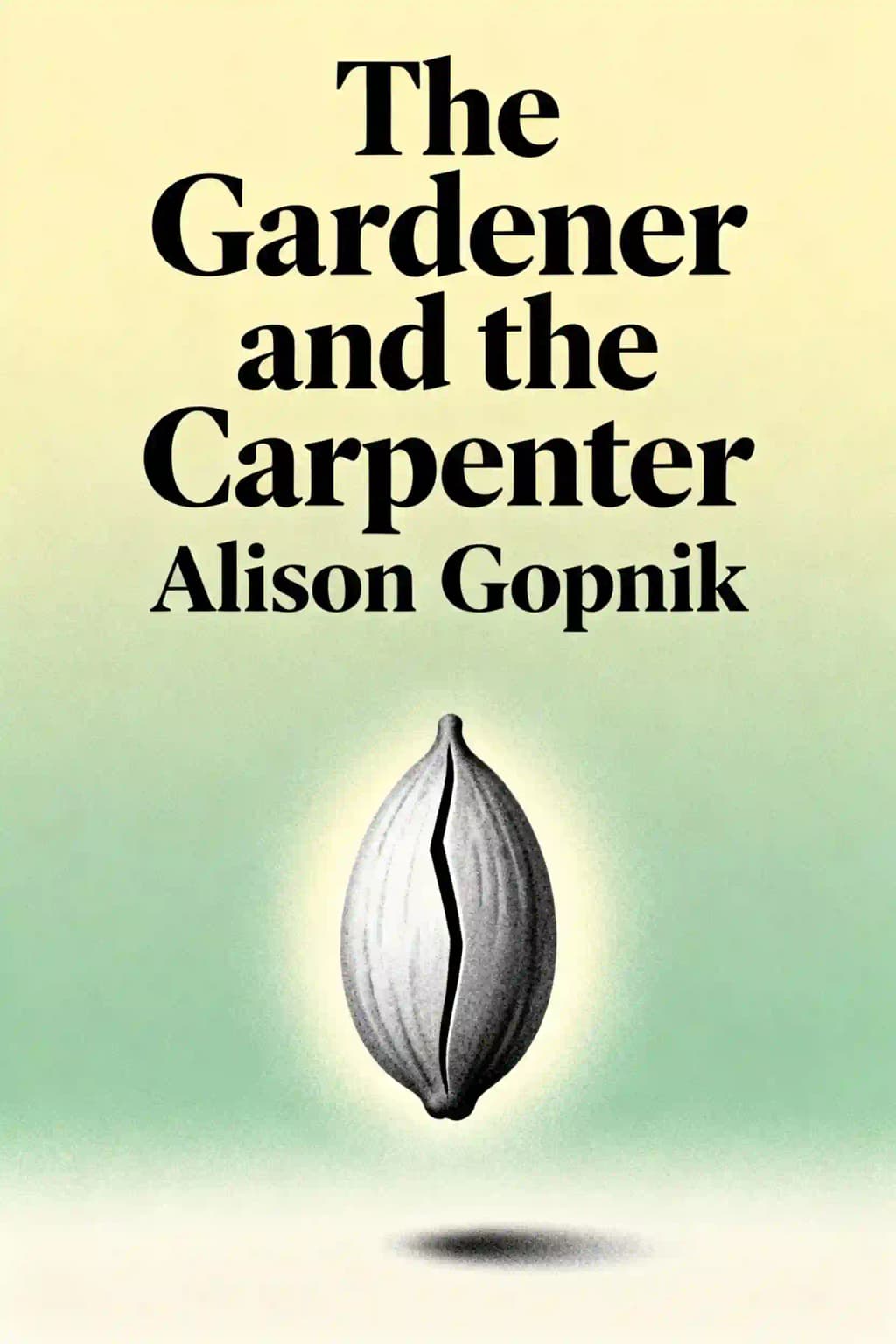
Alison Gopnik challenges modern parenting with a revolutionary metaphor: be gardeners, not carpenters. Endorsed as "required reading" by entrepreneur Derek Sivers, this book asks: What if controlling your child's development is actually preventing their growth? Discover why unpaid care work matters more than achievement.
Senti il libro attraverso la voce dell'autore
Trasforma la conoscenza in spunti coinvolgenti e ricchi di esempi
Cattura le idee chiave in un lampo per un apprendimento veloce
Goditi il libro in modo divertente e coinvolgente
Parents and children aren’t in the business of manufacturing particular kinds of people; the relationship is more like that of a gardener and a plant.
Scomponi le idee chiave di The Gardener and the Carpenter in punti facili da capire per comprendere come i team innovativi creano, collaborano e crescono.
Distilla The Gardener and the Carpenter in rapidi promemoria che evidenziano i principi chiave di franchezza, lavoro di squadra e resilienza creativa.

Vivi The Gardener and the Carpenter attraverso narrazioni vivide che trasformano le lezioni di innovazione in momenti che ricorderai e applicherai.
Chiedi qualsiasi cosa, scegli la voce e co-crea spunti che risuonino davvero con te.

Creato da alumni della Columbia University a San Francisco
"Instead of endless scrolling, I just hit play on BeFreed. It saves me so much time."
"I never knew where to start with nonfiction—BeFreed’s book lists turned into podcasts gave me a clear path."
"Perfect balance between learning and entertainment. Finished ‘Thinking, Fast and Slow’ on my commute this week."
"Crazy how much I learned while walking the dog. BeFreed = small habits → big gains."
"Reading used to feel like a chore. Now it’s just part of my lifestyle."
"Feels effortless compared to reading. I’ve finished 6 books this month already."
"BeFreed turned my guilty doomscrolling into something that feels productive and inspiring."
"BeFreed turned my commute into learning time. 20-min podcasts are perfect for finishing books I never had time for."
"BeFreed replaced my podcast queue. Imagine Spotify for books — that’s it. 🙌"
"It is great for me to learn something from the book without reading it."
"The themed book list podcasts help me connect ideas across authors—like a guided audio journey."
"Makes me feel smarter every time before going to work"
Creato da alumni della Columbia University a San Francisco

Ottieni il riassunto di The Gardener and the Carpenter in formato PDF o EPUB gratuito. Stampalo o leggilo offline quando vuoi.
Imagine a world where raising children isn't about molding them into predetermined adults, but creating fertile soil where they can flourish in their own unique ways. This revolutionary perspective forms the heart of developmental psychologist Alison Gopnik's work. The very word "parenting" first appeared in America only in 1958, reflecting a profound shift in how we view our relationship with children. This modern approach treats raising children as goal-directed work aimed at producing successful adults-what Gopnik calls the "carpenter" model, where parents attempt to shape raw material into a predetermined final product. This shift coincided with smaller families, greater mobility, and older first-time parents. Throughout most of human history, people grew up in extended families with many children, gaining extensive childcare experience before having their own. As these traditional support systems disappeared, parenting guides emerged to fill the gap-creating unprecedented anxiety for both children and parents. The irony? America, the epicenter of parenting expertise, provides less institutional support for children than any other developed nation, with the highest rates of infant mortality and child poverty in the developed world. From an evolutionary perspective, parents aren't designed to shape children's lives. Rather, they provide protected spaces where children can develop new ways of thinking and acting. While parents deeply influence children by providing stability and care, there's little evidence that specific parenting techniques reliably determine adult outcomes.