Dr. Nadeau's groundbreaking program offers hope to reverse food allergies, challenging conventional avoidance strategies. Praised by medical experts, this revolutionary approach has transformed countless lives, proving that early exposure to allergens might be the key to prevention rather than the cause.
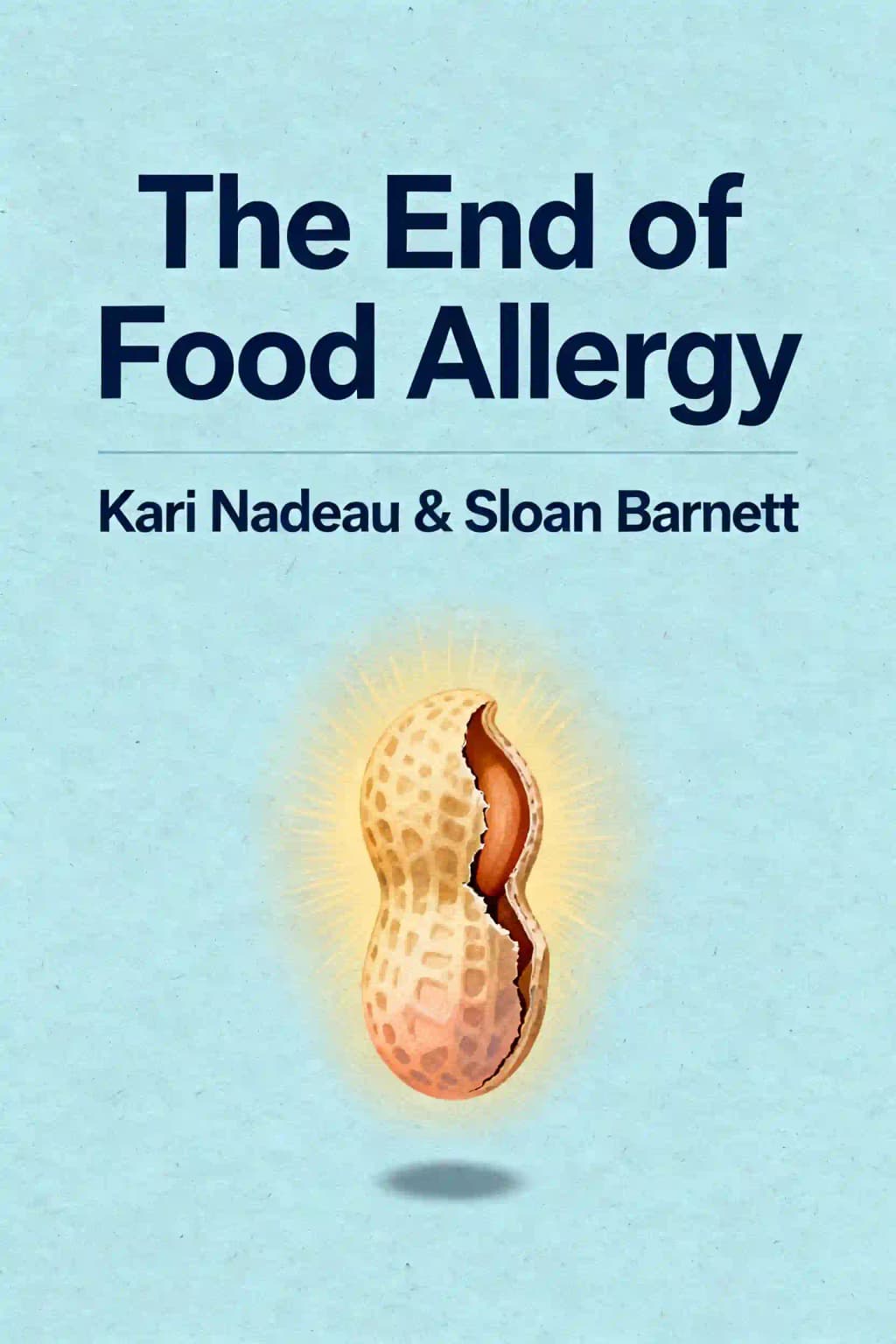
Kari Nadeau, MD, PhD, and Sloan Barnett are the authors of The End of Food Allergy: The First Program to Prevent and Reverse a 21st-Century Epidemic, a groundbreaking work blending clinical expertise with compassionate guidance for managing food allergies.
Dr. Nadeau, a Harvard-trained immunologist and director of Stanford University’s Sean N. Parker Center for Allergy and Asthma Research, brings decades of pioneering research in immunotherapy and allergy reversal. Her co-author, Barnett, a New York Times bestselling writer and advocate, draws from her experience as a parent of children with food allergies, offering relatable insights into navigating daily risks and emotional challenges.
Barnett’s prior bestseller, Green Goes with Everything, established her as a trusted voice in health and sustainability, while Dr. Nadeau’s 400+ peer-reviewed papers and role as a National Academy of Medicine member underscore her scientific authority.
Together, they merge rigorous science with actionable strategies, addressing themes like immune retraining, fear management, and global allergy trends. The book has been endorsed by figures like Adam Grant and acclaimed as a vital resource by clinicians and families, solidifying its status as a definitive guide in wellness and parenting literature.
The End of Food Allergy by Dr. Kari Nadeau and Sloan Barnett offers a science-backed plan to prevent, diagnose, and reverse food allergies using immunotherapy and early dietary interventions. It combines clinical research, patient stories, and practical advice, emphasizing strategies like controlled allergen exposure to retrain the immune system.
This book is essential for parents of children with food allergies, adults managing allergies, and healthcare providers. It also benefits anyone interested in allergy prevention, as it explains how early introduction of allergenic foods (like peanuts or eggs) can reduce risks.
Yes—it provides hope through cutting-edge research, including immunotherapy techniques that have successfully desensitized patients. The blend of Dr. Nadeau’s expertise and Barnett’s relatable parenting perspective makes complex science accessible.
The book advocates for oral immunotherapy (OIT), where tiny, controlled doses of allergens are gradually introduced to build tolerance. Studies cited show this method can reduce severe reactions and even eliminate allergies in some cases.
Dr. Nadeau’s "six D’s" include:
Yes. The authors provide tools to reduce fear, such as carrying epinephrine, understanding food labels, and joining support groups. They stress that immunotherapy can alleviate both physical and emotional burdens.
SpoonfulOne, a product developed by Dr. Nadeau, is highlighted as a proactive way to introduce allergenic foods to infants. Clinical trials show it safely builds tolerance when used as early as 4–6 months.
The book explains how outdated advice (e.g., delaying allergenic foods) worsened the epidemic. Current research supports early, diverse diets to prime the immune system—a shift endorsed by the American Academy of Pediatrics.
Yes. While focused on prevention in children, the book details immunotherapy plans for adults, including multi-allergen therapies tested in Dr. Nadeau’s Stanford trials.
Some note that immunotherapy requires medical supervision and isn’t universally accessible. Others caution that results vary, and full remission isn’t guaranteed.
Unlike anecdotal guides, this book prioritizes peer-reviewed science and clinical protocols. It’s often compared to The Allergy Solution but stands out for its focus on long-term prevention.
With food allergies rising globally, the book’s evidence-based strategies—like environmental adjustments and immunotherapy—remain critical. Its insights align with modern approaches to allergy management.
Senti il libro attraverso la voce dell'autore
Trasforma la conoscenza in spunti coinvolgenti e ricchi di esempi
Cattura le idee chiave in un lampo per un apprendimento veloce
Goditi il libro in modo divertente e coinvolgente
Imagine a world where a peanut butter sandwich is a weapon of mass destruction.
Food allergy is an immune system malfunction.
Parents who choose formula feeding need not feel stigmatized.
Diversity matters tremendously.
Modern living has compromised our microbial diversity.
Scomponi le idee chiave di End of Food Allergy in punti facili da capire per comprendere come i team innovativi creano, collaborano e crescono.
Distilla End of Food Allergy in rapidi promemoria che evidenziano i principi chiave di franchezza, lavoro di squadra e resilienza creativa.

Vivi End of Food Allergy attraverso narrazioni vivide che trasformano le lezioni di innovazione in momenti che ricorderai e applicherai.
Chiedi qualsiasi cosa, scegli la voce e co-crea spunti che risuonino davvero con te.

Creato da alumni della Columbia University a San Francisco
"Instead of endless scrolling, I just hit play on BeFreed. It saves me so much time."
"I never knew where to start with nonfiction—BeFreed’s book lists turned into podcasts gave me a clear path."
"Perfect balance between learning and entertainment. Finished ‘Thinking, Fast and Slow’ on my commute this week."
"Crazy how much I learned while walking the dog. BeFreed = small habits → big gains."
"Reading used to feel like a chore. Now it’s just part of my lifestyle."
"Feels effortless compared to reading. I’ve finished 6 books this month already."
"BeFreed turned my guilty doomscrolling into something that feels productive and inspiring."
"BeFreed turned my commute into learning time. 20-min podcasts are perfect for finishing books I never had time for."
"BeFreed replaced my podcast queue. Imagine Spotify for books — that’s it. 🙌"
"It is great for me to learn something from the book without reading it."
"The themed book list podcasts help me connect ideas across authors—like a guided audio journey."
"Makes me feel smarter every time before going to work"
Creato da alumni della Columbia University a San Francisco

Ottieni il riassunto di End of Food Allergy in formato PDF o EPUB gratuito. Stampalo o leggilo offline quando vuoi.
A mother watches her child's birthday party from across the room, scanning every plate, every hand, every crumb. A teenager checks restaurant menus online before agreeing to meet friends, mentally cataloging safe options. A father carries an EpiPen everywhere like others carry their phone-because for his daughter, a single bite of the wrong food could mean the difference between life and death. This is the hidden reality of food allergies, affecting 32 million Americans who've transformed the simple act of eating into a calculated risk assessment. Yet something remarkable is happening: after decades of rising rates and mounting fear, science is finally rewriting the rules. What was once considered incurable is becoming treatable. What seemed inevitable is becoming preventable.