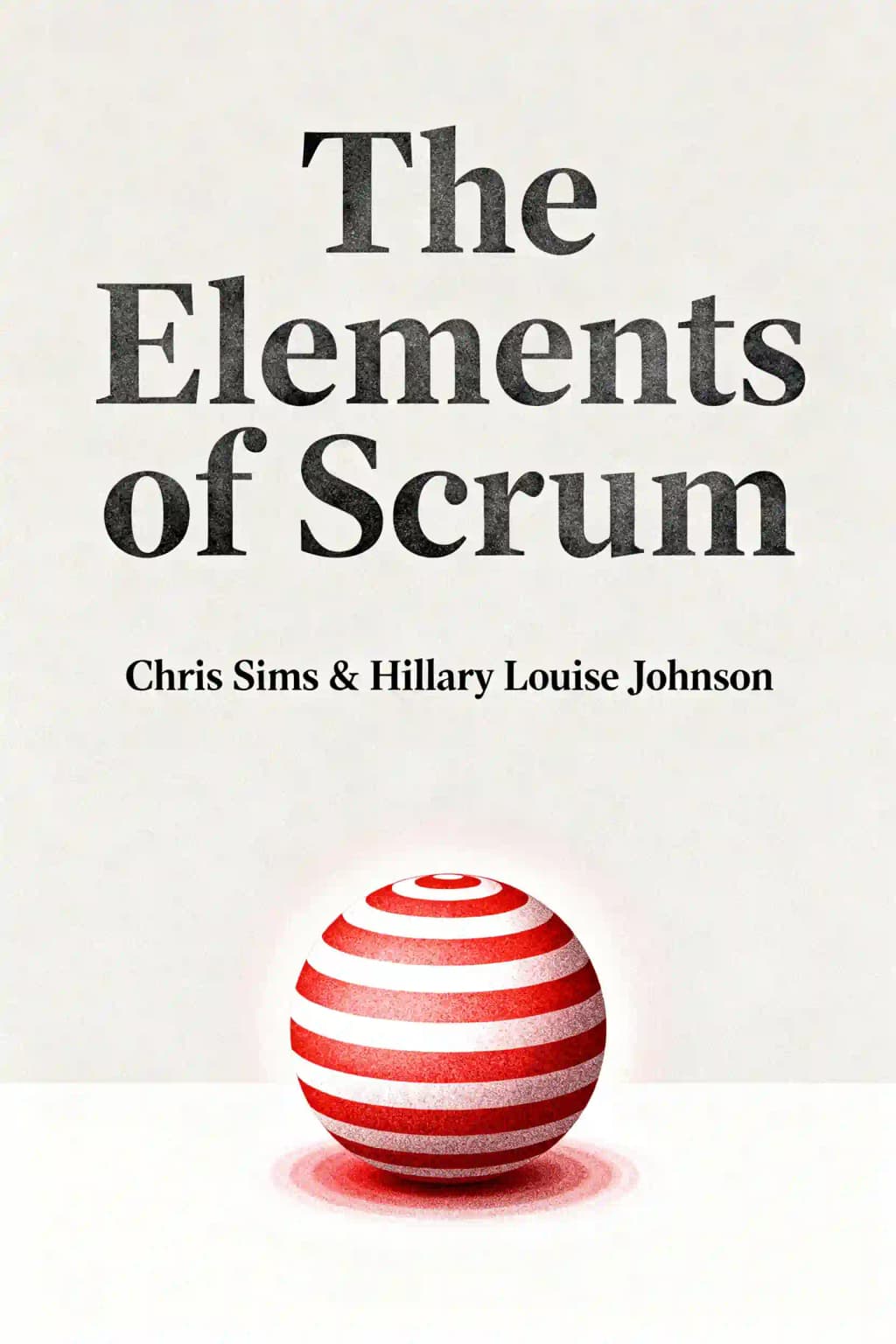
The elements of scrum
Panoramica di The elements of scrum
Revolutionize project management with "The Elements of Scrum," the globally adopted guide taught in universities worldwide. Through engaging storytelling, Sims and Johnson transform complex agile principles into practical wisdom. What if your team's greatest productivity breakthrough was just 40 pages away?
Temi chiave in The elements of scrum
- agile manifesto
- iterative software development
- cross-functional teams
- scrum framework
- adaptive project management
Citazioni da The elements of scrum
The waterfall's fatal flaw.
Agile doesn't eliminate tools...but rather prioritizes human elements and adaptability.
Software development is fundamentally a journey of discovery.
The agile project delivers more than double the profit of waterfall.
Scrum: The framework that changed everything.
Personaggi di The elements of scrum
- Chris SimsAuthor and agile expert
- Hillary Louise JohnsonAuthor and business writer
- Jeff SutherlandCo-creator of Scrum at Easel Corporation
- Winston W. RoyceComputer scientist who described Waterfall
Sull'autore
Sull'autore di The elements of scrum
Chris Sims and Hillary Louise Johnson, co-authors of The Elements of Scrum, are renowned experts in agile methodologies and Scrum frameworks. Sims, a Certified Scrum Trainer and founder of Agile Learning Labs, brings over two decades of experience coaching teams in software development and project management. Johnson, a novelist and business journalist, has contributed to publications like Inc Magazine and the Los Angeles Times, blending narrative clarity with technical insight. Their collaboration merges practical Scrum guidance with engaging storytelling, demystifying agile principles for professionals across industries.
Beyond this international bestseller, they co-wrote Scrum: A Breathtakingly Brief and Agile Introduction, a concise guide adopted by universities including UCLA and Arizona State. Sims’ hands-on expertise as a scrum master and Johnson’s background in intellectual property and fiction enrich their approach to translating complex frameworks into accessible practices. The Elements of Scrum has been translated into Mandarin and serves as a cornerstone text in academic and corporate training programs worldwide, reflecting its enduring impact on agile project management.
Scarica il riassunto di The elements of scrum
Ottieni il riassunto di The elements of scrum in formato PDF o EPUB gratuito. Stampalo o leggilo offline quando vuoi.
FAQ su questo libro
The Elements of Scrum provides a comprehensive guide to the Scrum framework, blending theory with real-world examples to explain roles, artifacts, and events like sprints, backlogs, and daily standups. It contrasts Scrum with traditional methodologies like waterfall, emphasizes Agile principles, and covers supporting practices like Test-Driven Development. The book is widely used in academia and industry for its clear, example-driven approach.
This book is ideal for software developers, project managers, and Agile coaches seeking practical insights into Scrum. It’s also valuable for educators and students in courses on software development or project management, as it’s taught at universities like UCLA and Arizona State. Beginners and seasoned practitioners alike benefit from its actionable frameworks.
Yes, the book is praised for its engaging, narrative-driven style that simplifies complex concepts. It offers actionable advice for implementing Scrum, addresses common pitfalls, and includes technical practices like Pair Programming. Readers appreciate its balance of foundational theory and real-world application.
Unlike drier technical manuals, The Elements of Scrum uses storytelling and vivid examples to demystify Scrum. It focuses specifically on Scrum (rather than Agile broadly) and is frequently compared to Jeff Sutherland’s Scrum for its depth on team dynamics and workflow. Its academic adoption sets it apart.
The book details three core roles:
- Product Owner: Defines goals and prioritizes the backlog.
- Scrum Master: Facilitates processes and removes impediments.
- Development Team: Executes tasks during sprints.
It emphasizes cross-functional, self-organizing teams as critical to Scrum’s success.
Key artifacts include the product backlog, sprint backlog, and burn charts. Ceremonies like sprint planning, daily standups, sprint reviews, and retrospectives are explained with examples. The book stresses the importance of a clear “definition of done” to ensure quality.
It explains user stories as tools to clarify what to build, for whom, and why. Stories are framed in non-technical language (e.g., “As a user, I want…”) to foster collaboration and prioritize customer-centric outcomes. The book also covers estimation techniques like story points.
The authors advocate for Test-Driven Development (TDD), Pair Programming, and continuous integration to maintain code quality. These practices align with Scrum’s iterative approach, ensuring deliverables meet functional requirements.
Some note its primary focus on software contexts, requiring adaptation for non-tech industries. Critics also mention limited coverage of scaling Scrum for large organizations. However, its practical examples and clarity are widely praised.
It breaks down the Agile Manifesto into relatable concepts, stressing individuals over processes, working software over documentation, and responsiveness over rigid planning. Real-world anecdotes illustrate how these principles resolve common project hurdles.
With remote work and AI-driven tools reshaping collaboration, the book’s emphasis on adaptability, team autonomy, and iterative progress remains vital. Its academic use and translations into Mandarin ensure ongoing global relevance.
Notable insights include:
- “Scrum is a lightweight framework designed to help small, close-knit teams develop complex products.”
- “The Scrum Master acts as an impediment bulldozer, not a taskmaster.”
These emphasize Scrum’s flexibility and servant-leadership ethos.