Capitolo 1
The Sacred Journey Through Darkness: A Path to Spiritual Liberation
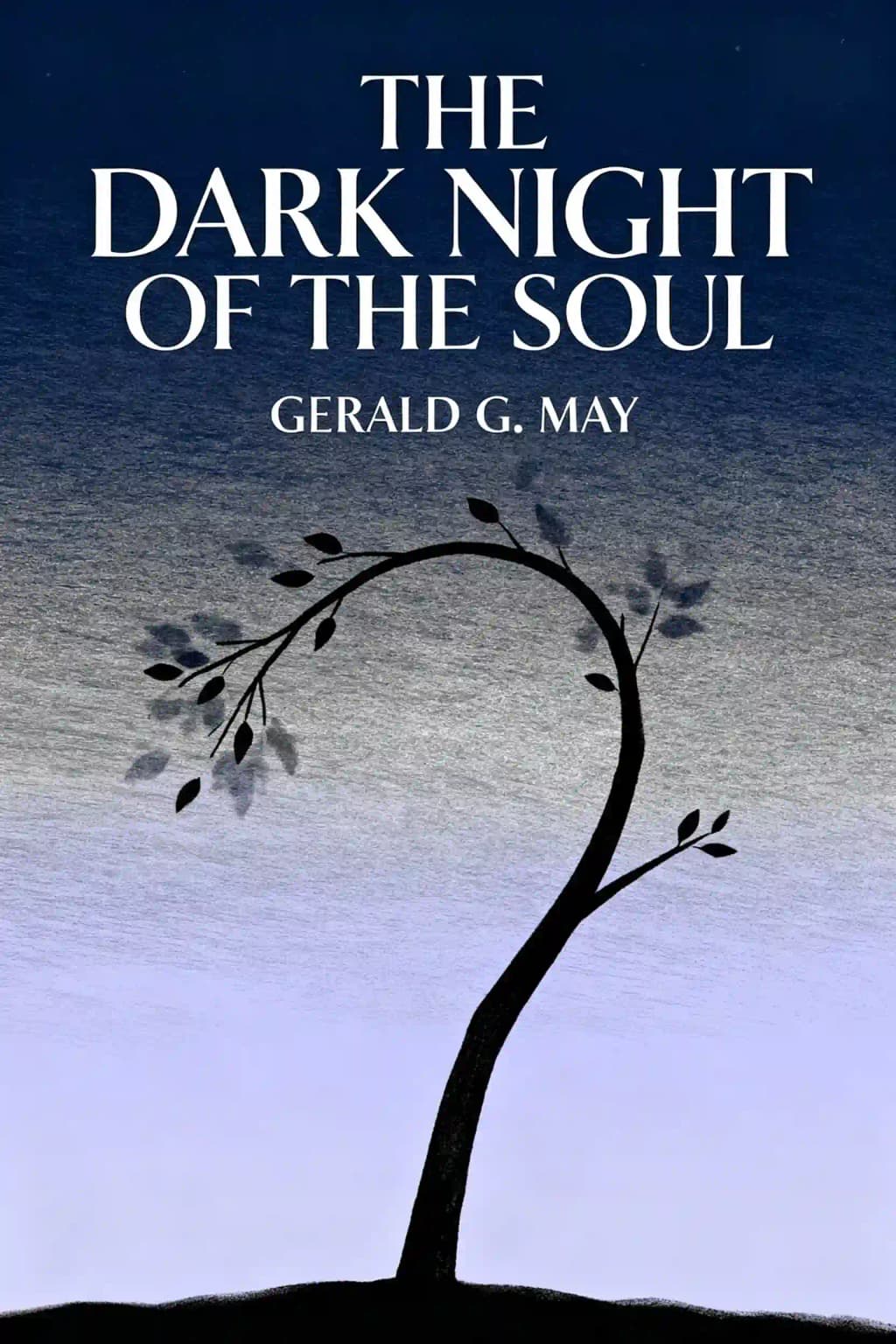
In a world obsessed with instant gratification and quick fixes, Gerald G. May's "The Dark Night of the Soul" offers a profound counternarrative that has captivated spiritual seekers for decades. This exploration of the mysterious process of spiritual transformation draws from the 16th-century mystical writings of John of the Cross and Teresa of Avila, yet speaks directly to our modern condition. Oprah Winfrey once cited this work as "transformative" during a period of personal struggle, while contemplatives from Thomas Merton to Richard Rohr have acknowledged its enduring wisdom. The dark night concept has permeated popular culture, appearing in everything from U2 lyrics to mindfulness retreats, yet few truly understand its depth. May's unique contribution-bringing together his psychiatric expertise with contemplative wisdom-reveals that what we often perceive as failure or abandonment might actually be the sacred process of liberation unfolding in our lives.
Capitolo 2
The Mysterious Darkness That Liberates
The dark night of the soul represents a profound spiritual process of liberation from our attachments and compulsions, enabling us to live and love more freely. Though sometimes painful, it's called "dark" not because it's sinister, but because it works mysteriously, beneath our conscious understanding and control. This transformation happens to everyone in various ways throughout life, not just to spiritual elites or during dramatic tragedies. It might manifest as a period of questioning long-held beliefs, the dissolution of a meaningful relationship, or a crisis of identity that leads to deeper self-knowledge.
What makes this process so challenging is precisely its obscurity-we cannot comprehend what is happening while we're in it. The darkness keeps us vulnerable to divine guidance, protecting us from our own tendency to control outcomes. If we truly knew what we were being called to relinquish, our defenses would prevent us from taking the first step. As John of the Cross explains, while in worldly matters light helps us avoid stumbling, in spiritual matters our own certainty is precisely what causes us to stumble. This paradox reveals itself in countless ways - the academic who must abandon intellectual pride to find wisdom, the helper who must acknowledge their own neediness to truly serve others, or the spiritual seeker who must let go of their image of God to find authentic faith.
Contrary to popular belief, dark night experiences aren't always painful. Some liberations feel joyful, as with the person freed from perfectionism who found himself "free just to be." For others, the same liberation process brings intense pain before eventual freedom. A businessman might experience elation in leaving a prestigious but soul-crushing career, while another person might struggle through depression before finding their authentic path. All liberation involves relinquishment and loss, whether pleasurable or painful, often accompanied by both emptiness and fresh possibility. This duality manifests in various life transitions - leaving home, ending relationships, changing careers, or surrendering long-held beliefs.
The dark night isn't a temporary event to get beyond, but an ongoing process characterizing our spiritual life-our hidden relationship with God. John goes further, saying the night is God, "an inflow of God into the soul." Though we may not recognize this presence in our obscurity, as we become freer, we glimpse more of the dawn-those moments when we realize the union with God that has always existed. These glimpses might come through unexpected sources: a moment of profound connection with a stranger, a sudden insight during meditation, or a deep sense of peace in the midst of uncertainty. The darkness ultimately reveals itself as the very path to light, teaching us that transformation often comes not through our striving, but through our surrender to the mystery that guides us.
Capitolo 3
The Spiritual Masters Behind the Concept
The dark night concept emerged from Spain's rich multicultural history, where Jews, Christians, and Muslims once lived in harmony during the convivencia ("living together"). Though John of the Cross is credited with the "dark night of the soul," he built upon earlier mystics' work, especially Teresa of Avila's writings, which contained nearly all his imagery and fundamental insights.
Teresa was born in 1515 in Avila, Spain, during a transformative period in world history. Born into a wealthy family of textile merchants with Jewish ancestry, she was bright, spirited, and adventurous. After her mother died when Teresa was twelve, her father noticed her passion shifting from spirituality to romance and sent her to convent school. Despite her father's opposition, Teresa felt called to religious life. After a serious illness and paralysis that lasted three years, she experienced what she felt was a miraculous recovery at age twenty-seven.
John, born in the same year as Teresa's recovery, came from poverty. His father, disowned for marrying John's poor mother, died shortly after John's birth. Following his brother's death from malnutrition, John's mother placed him in a church orphanage school where he excelled academically. Despite opportunities to become a hospital chaplain or join the Jesuits, John desired a more contemplative lifestyle and joined the Carmelite novitiate in 1563.
Teresa and John eventually formed a powerful spiritual partnership. Despite their differences-Teresa lacked formal theological training but was rich in spiritual experience, while John was brilliant intellectually but valued direct spiritual experience over intellect-they were united by their burning passion for God. Teresa's prayers for "at least one friar" to help with her reform of the Carmelite order were answered when she met John, whom she affectionately called "mi Senequita" ("my little Seneca") due to his small stature.
Their relationship would transform not only their lives but Christian spirituality for centuries to come.
Capitolo 4
The Human Soul's Deepest Reality
Teresa and John shared profound convictions about human nature's relationship to God. Their theology centers on the understanding that union with God already exists-we are born in it and cannot exist without it. This essential unity applies to all beings, even "the greatest sinner in the world." The spiritual journey isn't about getting closer to God but deepening our consciousness of the union that already exists.
For Teresa and John, "soul" isn't something a person has but who they most deeply are-their essential spiritual nature seen with spiritual eyes. As Teresa heard in prayer: "Seek yourself in Me, and in yourself seek Me." This union is our very nature, so fundamental that John claimed we couldn't exist without it.
Most people fail to recognize this union, experiencing separation where unity actually exists. This happens partly through defensive mechanisms-direct experience of union requires sacrificing our self-image as separate and controlled-and partly through dualistic thinking that makes God an "object" separate from ourselves. John describes this using the metaphor of a stone in earth-already united yet capable of sinking deeper toward the "deepest center," drawn not by gravity but by love.
Teresa and John believed humans are created to seek and find God, born with both God at our center and hearts full of desire for God. This fundamental yearning is our motive force-the human spirit behind all aspirations. In divine reality, this love can't be precisely distinguished as our love for God, God's love for us, or love for each other-it's the core of everything, "the sole purpose of all creation."
They envisioned the human soul as concentric circles. In Teresa's imagery, the soul is a beautiful castle with seven inner mansions, with God dwelling at the center while also surrounding and permeating everything. The spiritual journey involves moving consciousness inward from the outer sensory realm toward God at the center, with prayer serving as the pathway.
For Teresa and John, every human is essentially a living desire for God. Each sense and faculty is an "appetite" for God-our senses seek divine beauty, our mind seeks divine truth, our will seeks divine goodness. Yet our human capacities are too limited to fully apprehend God, who is simultaneously too immanent and too transcendent to be grasped. This creates a spiritual frustration John calls the "wound of love," where our souls yearn for what our faculties cannot directly perceive.
Capitolo 5
The Problem of Attachment
Most people remain unconsciously driven by their fundamental desire for God, instead pursuing pleasure and avoiding pain in an endless cycle of temporary satisfactions. We become deeply attached to things that reflect divine qualities - beauty, truth, goodness, love - without recognizing that these are merely shadows that "whisper of their Creator." These attachments gradually transform into compulsions that rob us of authentic freedom - we cling desperately to relationships, achievements, material possessions, and belief systems not from genuine love but from deep-seated fear of losing them and facing the void they mask.
While many attachments serve practical and developmental purposes in human life - like the bond between parent and child or commitment to meaningful work - they can insidiously become idolatries that divert our deepest devotion from God. Our natural capacity to fulfill the two great commandments - loving God with all our heart, soul, mind and strength, and loving our neighbors as ourselves - becomes compromised as our hearts grow captive to lesser gods. We might worship success, security, reputation, or relationships, usually while adamantly denying our idolatry. This denial manifests in rationalization, defensiveness, and an inability to examine our attachments honestly.
As humans journey through life, cracks inevitably appear in this carefully constructed denial. We experience moments of dawning awareness - perhaps during major life transitions, losses, or periods of questioning - when we glimpse our deeper spiritual longing and recognize the fundamental dissatisfaction beneath our pursuits. These realizations can come at any age - some people seem born with this awareness, displaying an early sensitivity to life's deeper dimensions, while others discover it gradually through accumulated disappointments and the collapse of cherished illusions.
The dark night's primary function is liberating desire by systematically diminishing attachment, resulting in expanded human freedom. This liberation occurs through a series of letting-go experiences that strip away false securities and idolatrous attachments. This newfound freedom isn't an end in itself but exists for love - it creates space for authentic relationship with God and others. In Christian understanding, everything genuine in spiritual life points toward fulfilling the two great commandments: loving God and others in a completely unfettered way, free from the distortions of need and fear.
Along this transformative path, desire itself undergoes a profound evolution. Bernard of Clairvaux systematically describes this progression: from "love of self for one's own sake" (natural self-interest) to "love of God for one's own sake" (spiritual self-interest), then "love of God for God's sake" (pure devotion), and finally "love of self for God's sake" (sanctified self-love). Self-knowledge deepens too - initially painful as we confront our selfishness, compensatory behaviors, and hidden motivations, but eventually revealing our inherent goodness and beauty as beings created in God's image. Throughout this journey, autonomous striving and self-effort gradually give way to receptivity, surrender, and willing participation in divine action.
Capitolo 6
The Journey Through Prayer
The transformations of the dark night that free us in daily life similarly transform our prayer experience. As we become emptier-knowing less and having less than when we started-we discover a freedom beyond expectation. Teresa and John both offer insights into the transitions between meditation and contemplation.
Christian mysticism distinguishes clearly between meditation and contemplation. Meditation encompasses what we can do on our own-the "acts and exercises" of spiritual practice. Contemplation, however, cannot be practiced or achieved-it comes solely as God's gift. While meditation requires our intentionality, contemplation is independent of human will except for a hidden willingness.
Teresa uses the metaphor of an interior garden to illustrate the differences. The soul is a garden with God dwelling at its center, filled with exquisite flowers representing virtues. Teresa makes radical assumptions: God has already planted virtues within us and dealt with unwanted weeds. Our only task is providing water through prayer-loving attentiveness.
She describes four ways of watering, representing four degrees of prayer: hauling water from a well (meditation, a "great labor" that helps virtues sprout); using a waterwheel (prayer of quiet, beginning of contemplation, bringing virtues to bud); letting a nearby stream do most of the work (saturating the ground more completely, bringing virtues to flower); and rain (prayer of union, requiring no effort, where virtues bear fruit).
Meditation, the first way of prayer, involves drawing water from a well through our own effort. Teresa was flexible about meditation forms-reflecting on scripture, imagining Jesus's life, contemplating art or nature, or practicing the presence of God. She advocated whatever method best aroused love.
The second way of watering-using a waterwheel-represents the prayer of quiet, characterized by "passive recollection," the first taste of contemplative experience. Here, with less effort, "the faculties are recollected within the soul" bringing greater delight. Yet the transition to contemplation is often confusing and unpleasant, preceded by "dryness, dislike and distaste"-the dark night experience in Teresa's writing.
In the third way of watering-from a nearby stream or spring-God does "practically everything" in prayer. The delicate stillness of the prayer of quiet relaxes, allowing one to be both Martha and Mary simultaneously-active in the world yet deeply aware one's "best part is elsewhere." Attention remains open and unfocused while remaining responsive to situations.
Teresa struggles most to describe the fourth degree of prayer-the "heavenly rain that saturates the whole garden in abundance." In this prayer of union, one may feel as if swooning, fading in delight, or losing touch with body and senses. Though perceptions continue, there's no understanding of them, and speech becomes impossible.
Capitolo 7
Recognizing the Dark Night
John of Cross's greatest concern centers on those experiencing the obscure and often distressing transition between meditation and contemplation. With profound compassion for their confusion and suffering, he meticulously outlines three distinctive signs to help spiritual directors and individuals differentiate an authentic dark-night experience from other potential causes like sin, clinical depression, physical illness, or spiritual acedia.
The first sign manifests as a profound dryness and impotence in both prayer and daily life-a comprehensive diminishment of spiritual consolation where previously rewarding practices now seem empty and lifeless. Meditation techniques that once yielded insight become barren; relationships that provided spiritual nourishment lose their spark. Even increased effort and dedication bring no satisfaction; the old ways become not just empty but seemingly impossible to access. This spiritual aridity differs from ordinary distraction because it persists despite sincere attempts to engage.
Second, despite repeated and earnest attempts to recreate former practices, one discovers a peculiar lack of desire for these old ways-importantly, not from laziness or spiritual tepidity but accompanied by genuine, often painful concern about not serving God properly. This creates a paradoxical situation where the person simultaneously cannot find satisfaction in spiritual practices yet feels deep anguish about this inability.
The third sign, which John considers "most certain," manifests as a simple yet profound desire to remain in loving attentiveness to God, characterized by inward peace without particular understanding or the usual exercises of meditation. This contemplative inclination persists even when specific thoughts or images are absent. This third sign crucially distinguishes the dark night from psychological or physical disorders that might similarly interfere with focused thinking.
John identifies three "spirits" that commonly visit during this night, each presenting unique challenges. The spirit of blasphemy emerges when spiritual consolations evaporate and previously secure images of God disappear, leading to natural but disturbing outcries like "Why me, God?" and "Where were You in my suffering?" These thoughts, though distressing, are not sinful but natural responses to spiritual desolation. The spirit of fornication represents desperate attempts to regain lost gratification through any means available, whether through intensified spiritual practices or worldly consolations. The third spirit, spiritus vertiginis (the "dizzy spirit"), particularly afflicts intellectuals and those who believe they could resolve their situation if they could just understand it properly, leading to endless analysis that yields no relief.
These three spirits work in concert with the fundamental dryness and emptiness to simultaneously invigorate and refine all human faculties: intellect, memory, will, imagination, and senses. These faculties become paradoxically energized through their futile attempts to manage the situation, and in their repeated failures, grow more delicate and sensitive-preparing them for the exquisite gifts of contemplation to come. This purification process, though painful, serves as a necessary preparation for deeper union with God.
Capitolo 8
Modern Applications of the Dark Night
Teresa and John demonstrated remarkable psychological understanding centuries before Freud, accurately describing phenomena later known as defense mechanisms, behavioral conditioning, addictive disorders, and psychosis. Their insights remain relevant in five contemporary contexts: depression, addiction, personality and gender, spiritual companionship, and social systems.
The dark night's potential confusion with depression concerned Teresa and John, who were determined that people suffering from "melancholia or some other bad humor" receive proper treatment. While there are distinctions-humor, effectiveness, and compassion often remain intact in the dark night but diminish in depression-the reality is that people frequently experience both simultaneously.
With modern understanding of depression's causes and treatments, the wisest approach is to identify and treat depression appropriately regardless of whether it accompanies a dark-night experience. Clinical depression's symptoms should never go untreated. Contrary to some spiritual circles' beliefs, psychiatric medications never interfere with authentic spiritual processes like the dark night.
Teresa and John's language of attachment spans from simple enjoyment to what we now call addiction-enslavement from which the dark night works to free us. Modern neuroscience has illuminated how attachments form in the nervous system but hasn't produced a cure for addiction. People recovering from addictions often understand the dark night profoundly, sometimes calling themselves "grateful alcoholics" because their addiction brought them to their knees, revealing their souls' true depths.
While modern psychology categorizes people by personality types and gender characteristics, Teresa and John would likely disapprove of extending such categorizations to prescribe spiritual practices. They consistently emphasized the uniqueness of each person's nature and how God's "esteeming love" respects each individual's precious identity.
Teresa and John offered profound wisdom about spiritual companionship, recommending directors who are both "learned" and "experienced" in prayer. They warned that misdirection happens frequently and can be harmful. Their greatest concern was directors who meddle with God's work in souls, a problem even more prevalent today with our psychological tools tempting us to control spiritual life.
Though Teresa and John were immersed in social and political conflicts, they focused primarily on individual souls' relationships with God rather than analyzing social systems. Like the Dalai Lama's observation that "attempting to bring about world peace through the internal transformation of individuals is difficult, it is the only way," they believed social transformation happens through changing individual hearts.
Capitolo 9
The Promise of Dawn
The dawn brings a muted light that continues to partake of the night's mystery. Though comprehension remains absent, there is an awakening to who we really are in relation to God and the world. Most importantly, the dawn is an awakening in love-the sole purpose of the dark night.
The morning light reveals three key developments that have been happening within us. First is growing freedom, as desire is liberated from attachment. Second is the transition from meditation to contemplation-a metamorphosis from self-determination to willingness to be led. Third is the awakening to our essential union with God and creation.
These changes prepare us for deeper participation in love: freedom from attachment enables noncompelled love; contemplative willingness gives freedom its direction; and realization of our union with God empowers practical living of love. Though these moments are often brief and easily overlooked, they reveal what we are meant for-our reason for being.
The dark night isn't a single event we move beyond, but an ongoing spiritual process with periodic conscious experiences. Similarly, we have intermittent experiences of dawn. Teresa notes that no one becomes so advanced they don't often return to the beginning, and John describes how God brings souls "at times and for short periods" into contemplation, "causing the night to come upon them, and then dawn, frequently."
It's striking that people can maintain hope even when they can name nothing specific to hope for. This transformed hope evades comprehension. What I can say is that discovering these transformed qualities of faith, hope and love-in oneself or another-brings the deepest reassurance I've ever experienced.
If I could make divine suggestions, I'd ask God to make things easier, or at least clearer. I wish I could offer practical guidance for identifying the transformative qualities of the dark night in your life, to make hard times easier and bring meaning to suffering. But the dark night's nature doesn't permit that. It comes as gift and in obscurity, taking us where we couldn't go on our own. All we have in our hands is our desire-simultaneously our prayer, our yes, and our hope. With repeated experiences of touching that desire, we learn to recognize it as who we truly are.
People typically think of God as the Supreme Being, Lord of Creation, omnipotent and transcendent-separate from us and capable of giving good and bad things. But contemplatives like Teresa and John emphasize God's immanence-God as our center, closer to us than we are to ourselves. We're immersed in God, and God in us. This suggests that God may not be invulnerable; most contemplatives see God as wounded when we're wounded, sharing our sufferings and joys.
If God is Love, that love must temper God's omnipotence, transforming power into something softer and deeper. True omnipotence may not be power over others but the intimate experience of being wounded for and with them. This vision transforms intercessory prayer into "keeping God company" in whatever God experiences-sharing God's joy and sorrow. Teresa captures this intimate relationship in her poem "Seeking God," where she writes of souls seeking themselves in God, and God seeking God's self in us.