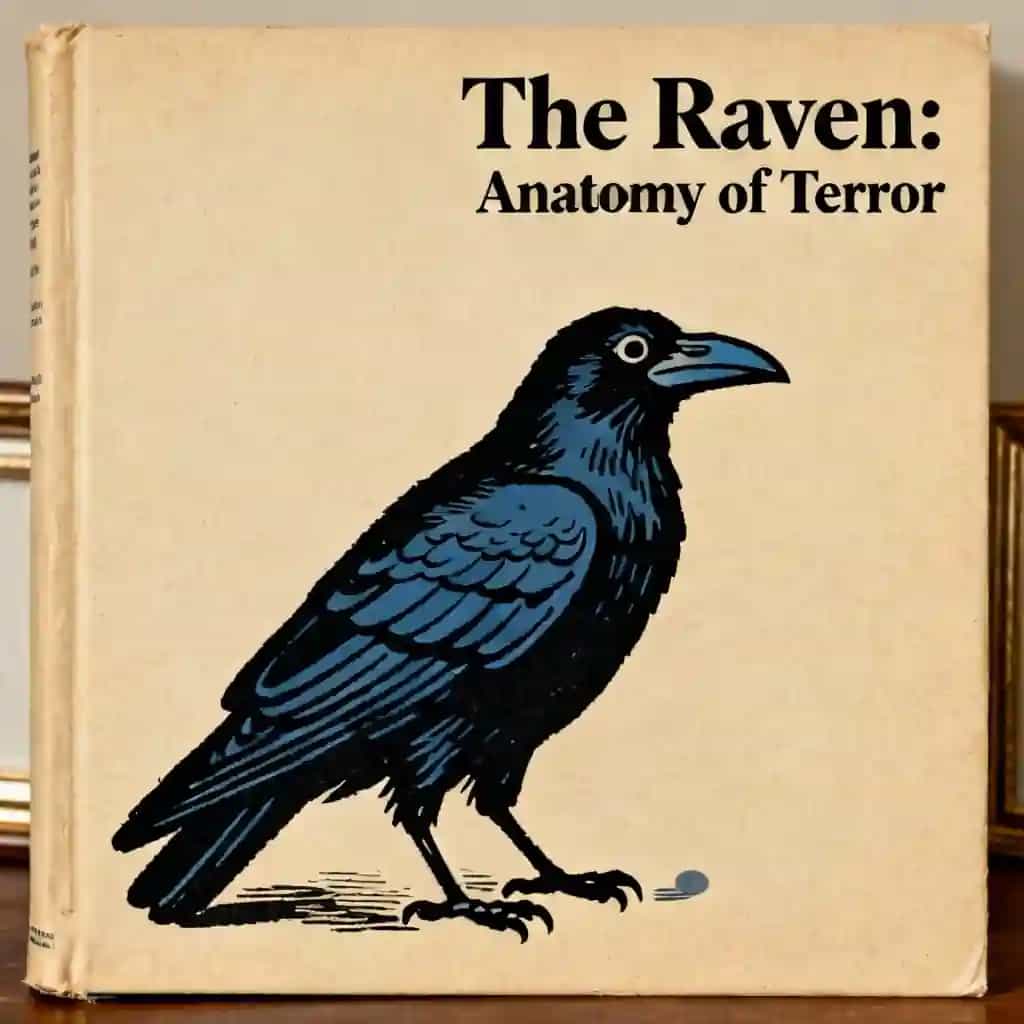
In Poe's chilling masterpiece, a vengeful narrator lures his enemy into catacombs for the ultimate betrayal. This gothic tale of calculated revenge has inspired countless psychological thrillers and remains the perfect exploration of humanity's darkest impulses. What drives someone to such meticulous malice?
Edgar Allan Poe (1809–1849), author of The Cask of Amontillado, remains a towering figure in Gothic literature and a master of macabre storytelling.
A pioneer of detective fiction and psychological horror, Poe’s works, including The Tell-Tale Heart and The Fall of the House of Usher, explore themes of vengeance, mortality, and the fragility of the human psyche. His own life—marked by personal tragedy and financial hardship—deeply influenced his dark, atmospheric narratives.
Poe’s innovative use of unreliable narrators and suspenseful pacing revolutionized short fiction, cementing his legacy as a foundational voice in American Romanticism. His poetry, such as The Raven, further showcases his lyrical precision and preoccupation with loss.
Translated into over 50 languages and adapted across film, music, and theater, Poe’s tales continue to captivate global audiences, solidifying his status as a cornerstone of literary horror.
The Cask of Amontillado is a Gothic tale of revenge where Montresor lures Fortunato, a wine connoisseur, into catacombs under the guise of evaluating a rare cask of Amontillado. Montresor chains Fortunato to a wall and entombs him alive, exacting vengeance for unnamed insults. The story explores themes of betrayal, pride, and the psychology of murder, concluding with Montresor revealing his crime 50 years later.
Fans of psychological horror, Gothic literature, and classic short stories will appreciate this chilling narrative. It’s ideal for readers interested in themes of revenge, irony, and unreliable narrators, as well as students studying Poe’s use of suspense and symbolism.
Key themes include revenge (Montresor’s calculated retaliation), deception (the false pretense of friendship), and mortality (symbolized by the catacombs). Poe also critiques pride through Fortunato’s arrogance and Montresor’s manipulative brilliance, underscoring the destructive consequences of unchecked emotions.
The Amontillado represents both temptation and deception. Fortunato’s obsession with verifying its authenticity blinds him to Montresor’s treachery, serving as a metaphor for pride and the dangers of succumbing to one’s weaknesses.
Poe uses dramatic irony (readers know Montresor’s intent before Fortunato does), ominous settings (damp catacombs lined with bones), and repetitive dialogue (“Amontillado?”) to heighten tension. The methodical brick-by-brick entombment amplifies the story’s claustrophobic dread.
The chaotic Carnival atmosphere contrasts with the catacombs’ eerie silence, emphasizing Fortunato’s vulnerability. The festive masks and costumes also symbolize hidden motives, allowing Montresor to conceal his malice beneath a guise of camaraderie.
Montresor never specifies Fortunato’s “thousand injuries,” leaving his motives ambiguous. His cold, detached recounting of the murder—and pride in its execution—questions his sanity and objectivity, inviting readers to doubt his version of events.
Fortunato’s demise underscores the futility of pride and vengeance. Despite his expertise, he falls for Montresor’s ruse, while Montresor’s empty victory (“For the half of a century no mortal has disturbed [him]”) suggests revenge ultimately consumes the avenger.
Poe’s signature elements—tight pacing, psychological depth, and macabre imagery—are evident. The story’s brevity and single-minded focus on a chilling climax exemplify his mastery of the short story form.
Both stories feature unreliable narrators and obsessive vengeance, but The Cask lacks the supernatural elements of The Tell-Tale Heart. Instead, it relies on calculated cruelty and irony, offering a colder, more methodical exploration of guilt and confession.
Critics argue Montresor’s motive is underexplored, making his brutality feel disproportionate. Others note the story’s lack of moral resolution, though this ambiguity is often praised for deepening its psychological complexity.
Its exploration of human darkness—pride, revenge, and moral decay—resonates in modern discussions about toxic relationships and unchecked ambition. The story’s compact structure and enduring suspense also make it a staple in literature curricula.
Yes, multiple short films and theatrical productions have adapted the story, often emphasizing its visual horror (e.g., the claustrophobic catacombs) and psychological tension. Notable versions include The Cask of Amontillado (2014) and Edgar Allan Poe’s Mystery Theater (1980).
Senti il libro attraverso la voce dell'autore
Trasforma la conoscenza in spunti coinvolgenti e ricchi di esempi
Cattura le idee chiave in un lampo per un apprendimento veloce
Goditi il libro in modo divertente e coinvolgente
The thousand injuries of Fortunato I had borne as I best could; but when he ventured upon insult, I vowed revenge.
“My dear Fortunato, you are luckily met. How remarkably well you are looking to-day! But I have received a pipe of what passes for Amontillado, and I have my doubts.”
“Come,” I said, with decision, “we will go back; your health is precious. You are rich, respected, admired, beloved; you are happy, as once I was. You are a man to be missed. For me it is no matter.”
“For the love of God, Montresor!”
Against the new masonry I re-erected the old rampart of bones. For the half of a century no mortal has disturbed them. In pace requiescat!
Scomponi le idee chiave di The Cask of Amontillado in punti facili da capire per comprendere come i team innovativi creano, collaborano e crescono.
Distilla The Cask of Amontillado in rapidi promemoria che evidenziano i principi chiave di franchezza, lavoro di squadra e resilienza creativa.

Vivi The Cask of Amontillado attraverso narrazioni vivide che trasformano le lezioni di innovazione in momenti che ricorderai e applicherai.
Chiedi qualsiasi cosa, scegli la voce e co-crea spunti che risuonino davvero con te.

Creato da alumni della Columbia University a San Francisco
"Instead of endless scrolling, I just hit play on BeFreed. It saves me so much time."
"I never knew where to start with nonfiction—BeFreed’s book lists turned into podcasts gave me a clear path."
"Perfect balance between learning and entertainment. Finished ‘Thinking, Fast and Slow’ on my commute this week."
"Crazy how much I learned while walking the dog. BeFreed = small habits → big gains."
"Reading used to feel like a chore. Now it’s just part of my lifestyle."
"Feels effortless compared to reading. I’ve finished 6 books this month already."
"BeFreed turned my guilty doomscrolling into something that feels productive and inspiring."
"BeFreed turned my commute into learning time. 20-min podcasts are perfect for finishing books I never had time for."
"BeFreed replaced my podcast queue. Imagine Spotify for books — that’s it. 🙌"
"It is great for me to learn something from the book without reading it."
"The themed book list podcasts help me connect ideas across authors—like a guided audio journey."
"Makes me feel smarter every time before going to work"
Creato da alumni della Columbia University a San Francisco

Ottieni il riassunto di The Cask of Amontillado in formato PDF o EPUB gratuito. Stampalo o leggilo offline quando vuoi.
"The thousand injuries of Fortunato I had borne as best I could, but when he ventured upon insult, I vowed revenge." With these chilling words, Edgar Allan Poe plunges us into the mind of Montresor, a man consumed by vengeance. "The Cask of Amontillado" isn't just a tale of murder-it's a psychological journey into the darkest corners of human nature, where perceived slights fester until they justify the unthinkable. What makes this story so disturbing isn't the violence itself, but how meticulously planned it is. Montresor doesn't act in passion but with cold calculation, revealing how revenge can transform a person into something monstrous while they remain convinced of their righteousness. The story forces us to confront uncomfortable questions: How easily might our own resentments spiral into something destructive? What invisible line separates justice from vengeance? And perhaps most disturbingly-could we recognize a Montresor if we met one, smiling at us while harboring deadly intentions?