Capitolo 1
A Journey Through Life's Wilderness with Unlikely Companions
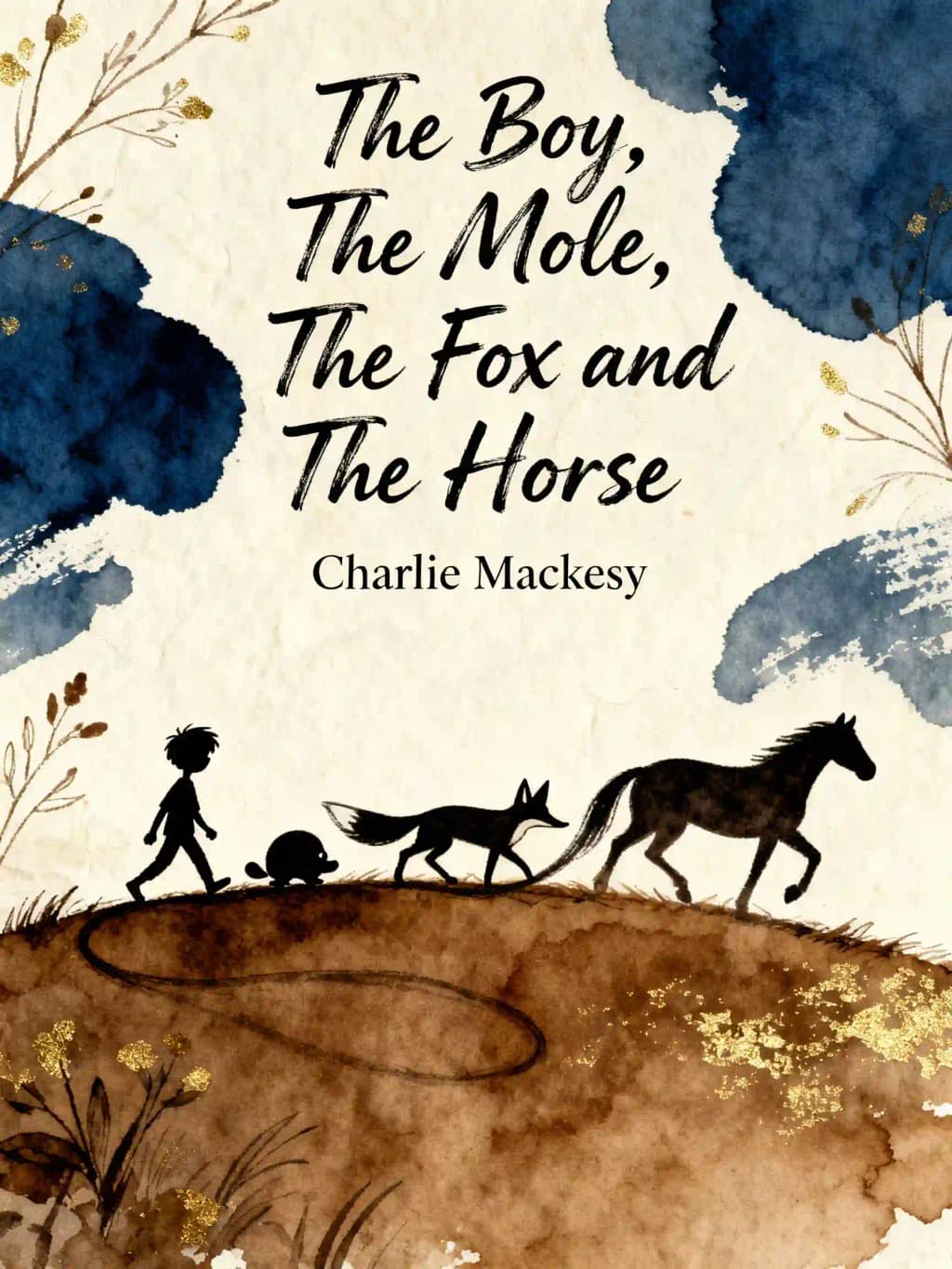
In a world where self-help books dominate bestseller lists, Charlie Mackesy's "The Boy, the Mole, the Fox and the Horse" stands apart as a quiet revolution. This deceptively simple illustrated book has captivated millions worldwide, including celebrities like Reese Witherspoon and Oprah Winfrey, who have championed its gentle wisdom. Since its 2019 publication, it has become a cultural touchstone, selling over 8 million copies and being translated into 46 languages. What makes this modest collection of ink drawings and handwritten conversations so powerful? Perhaps it's because Mackesy's work arrived precisely when the world needed it most-offering compassion and connection in an increasingly divided landscape. The book's universal messages transcend age, culture, and circumstance, speaking to the human condition with such authenticity that readers often describe feeling as though the book found them, rather than the other way around.
Capitolo 2
The Power of Simple Questions in a Complex World
The journey begins with a boy wandering alone in the wilderness, full of questions about life and his place in it. This boy represents our innate curiosity and vulnerability-the part of ourselves that never quite grows up, that continues to wonder about life's big questions regardless of our age or experience. When he meets the cake-loving mole, their connection forms through simple questions that reveal profound truths.
"What do you want to be when you grow up?" the mole asks the boy.
"Kind," the boy replies.
This exchange exemplifies how Mackesy uses straightforward dialogue to challenge conventional thinking. In a society obsessed with achievement, status, and material success, the boy's answer redirects us to what truly matters. Kindness isn't presented as a secondary virtue but as a primary aspiration-a life goal worthy of our highest ambition.
As they journey together, the mole's questions continue to probe life's fundamentals: "What is the bravest thing you've ever said?" he asks. "Help," responds the boy. This counterintuitive wisdom challenges our cultural narratives about strength and independence. The conversation suggests that vulnerability-admitting we need others-requires more courage than self-sufficiency.
The questions these characters ask each other mirror our own unspoken wonderings: What matters most in life? How do we find courage? What does it mean to be successful? Through their simple exchanges, we're invited to reconsider our own answers to these essential questions. The mole's insatiable curiosity reminds us that questioning itself is valuable-that sometimes asking the right question matters more than having all the answers.
When the boy worries about the future, the mole offers another piece of wisdom: "One of our greatest freedoms is how we react to things." This gentle reminder about the power of perspective shows how simple questions can lead to profound insights about personal agency and resilience.
Capitolo 3
Finding Strength in Vulnerability
Throughout their journey, the characters repeatedly demonstrate that true strength often emerges from acknowledging vulnerability rather than denying it. This theme represents one of the book's most countercultural messages in a world that frequently equates strength with invulnerability.
When the fox joins their journey, he initially remains silent and distant. Having been hurt by life and trapped in snares, he embodies wariness and self-protection. His reluctance to speak reveals how past wounds can lead to isolation. "Being honest is always interesting," the horse tells him gently, creating space for authenticity without pressure. This approach gradually allows the fox to lower his defenses and join their conversation.
The horse, despite being physically strongest of the companions, demonstrates emotional vulnerability most freely. "Sometimes I feel lost," the magnificent creature admits. This juxtaposition challenges our assumptions about strength and weakness. The horse's willingness to acknowledge uncertainty doesn't diminish his strength-it enhances it by making connection possible.
When the boy confesses his fears, the horse responds, "Sometimes just getting up and carrying on is brave and magnificent." This reframes courage not as fearlessness but as perseverance despite fear. It validates the everyday bravery required to face life's challenges when we feel inadequate or afraid.
Perhaps most powerfully, when the boy asks, "What's the bravest thing you've ever said?" and receives the answer "Help," the book directly confronts our cultural reluctance to admit need. This exchange suggests that acknowledging dependence on others isn't weakness but a profound form of courage.
The characters' journey illustrates that vulnerability creates the conditions for genuine connection. When the boy admits, "I'm so small," the horse responds, "Yes, but you make a huge difference." This exchange captures how acknowledging our limitations opens us to discovering our unique significance. By embracing vulnerability rather than hiding from it, the characters find not only connection but also their individual strengths.
Capitolo 4
The Unexpected Wisdom of Imperfection
One of the most liberating themes woven throughout the journey is the celebration of imperfection. In a culture obsessed with flawlessness-from filtered social media images to curated life narratives-Mackesy's characters offer refreshing permission to be gloriously imperfect.
"The greatest illusion," the mole declares, "is that life should be perfect." This simple statement challenges the exhausting pursuit of an unattainable ideal. The mole, with his unabashed love of cake and occasional blunders, embodies joyful self-acceptance. His wisdom comes not despite his imperfections but through them.
The horse, who appears majestic and confident, confesses, "Everyone is a bit scared. But we are less scared together." This revelation that even the most seemingly composed among us experience fear normalizes the universal experience of uncertainty. When the boy sees others who seem to have everything figured out, the horse wisely observes, "Beneath their apparent perfection is a lot of frantic paddling." This metaphor of ducks on water-serene above the surface while paddling frantically below-captures the hidden struggles beneath polished exteriors.
The characters' journey takes them through storms and difficulties, yet these challenges aren't portrayed as obstacles to overcome on the way to perfection. Rather, they're presented as integral to the landscape of a meaningful life. When facing a river crossing, the boy worries about getting his feet wet. "Getting your feet wet is the price of crossing," the horse tells him-a metaphor for how discomfort often accompanies growth and progress.
The fox, having experienced life's harshness, initially believes his scars make him less worthy of connection. Yet as the journey progresses, his companions' acceptance helps him recognize that his experiences, even the painful ones, contribute to who he is. His imperfections and wounds become not something to hide but part of what makes him uniquely valuable to the group.
This embrace of imperfection extends to the book's illustrations themselves-rendered in ink with visible brushstrokes, splashes, and the occasional smudge. The handwritten text varies in size and alignment, sometimes flowing around the images rather than appearing in neat rows. This visual approach reinforces the message that beauty exists not in flawlessness but in authenticity.
Capitolo 5
Navigating Life's Storms with Resilience
Life's challenges appear throughout the journey as storms, rivers to cross, and dark clouds-metaphors that make abstract concepts of adversity tangible and visual. Through these trials, the characters demonstrate resilience not as a fixed trait but as a practice developed in community.
When dark clouds gather overhead, the horse offers practical wisdom: "Keep going. When the clouds come... keep going." This simple advice acknowledges that avoiding storms isn't always possible-sometimes the only way is through. The horse adds, "This storm will pass," offering perspective that difficult times, however overwhelming they feel in the moment, are temporary.
The companions face a particularly daunting river crossing that represents life's inevitable challenges. Rather than seeking a way around it, they help each other through it. When the boy hesitates, worried about getting wet, the horse carries him across-a beautiful illustration of how sometimes resilience means accepting help rather than struggling alone.
"When the big things feel out of control," the horse advises, "focus on what you love right under your nose." This guidance offers a practical approach to overwhelm-bringing attention back to immediate experiences of connection and beauty rather than becoming paralyzed by circumstances beyond our control.
The journey itself becomes a metaphor for resilience. When the boy sighs about the long way still to go, the horse gently redirects his attention: "Look how far we've come." This shift in perspective from future challenges to past progress fosters resilience by acknowledging growth and movement, even when the destination remains distant.
The fox, having survived being caught in snares, embodies resilience born from hardship. His initial silence and wariness gradually give way to cautious participation in the group. His transformation suggests that resilience isn't about emerging from difficulties unscathed, but about maintaining the capacity for connection despite past wounds.
Together, the companions weather various storms-literal and metaphorical-demonstrating that resilience flourishes in community. Their example suggests that supporting others through their difficulties and accepting support through our own creates a sustainable form of strength that isolated self-sufficiency cannot match.
Capitolo 6
The Transformative Nature of Friendship
The unlikely bond between these four different creatures-a boy, a mole, a fox, and a horse-forms the emotional core of their journey. Their evolving relationship demonstrates how friendship transforms not just circumstances but identity itself, as each character grows through their connection to the others.
Initially, the boy wanders alone, embodying the isolation many experience in modern life despite being surrounded by people. His meeting with the cake-loving mole begins a process of connection that gradually expands to include the wary fox and the gentle horse. This progression illustrates how friendship often begins with a single connection that opens the door to wider community.
The diverse nature of this friendship group challenges conventional ideas about who belongs together. The fox and the mole would typically be predator and prey; the horse towers over the others in size. The boy, as the only human, might be expected to dominate. Yet their differences become strengths rather than barriers, with each bringing unique perspectives and abilities to their shared journey.
"We have such a long way to go," sighs the boy at one point. "Yes, but look how far we've come," replies the horse. This exchange captures how friendship provides both perspective and encouragement, helping us recognize progress we might otherwise miss when focused solely on the challenges ahead.
The transformative power of their friendship appears most dramatically in the fox's evolution. Initially silent due to past hurts, he gradually finds his voice through the patient acceptance of his companions. When he finally speaks, admitting he feels he has nothing interesting to say, the horse's gentle response-"Being honest is always interesting"-creates space for authentic participation without pressure to perform.
Their friendship also transforms how each character sees themselves. When the boy confesses, "I'm so small," the horse responds, "Yes, but you make a huge difference." This exchange illustrates how being truly seen by friends can shift our self-perception, helping us recognize value we might otherwise miss in ourselves.
Perhaps most powerfully, their friendship creates a context where vulnerability becomes strength rather than weakness. "Everyone is a bit scared," the horse admits, "but we are less scared together." This simple observation captures how friendship doesn't eliminate life's challenges but makes them more manageable through shared experience.
Capitolo 7
Finding Meaning Through Connection
As the journey progresses, the companions discover that meaning emerges not from grand achievements or accumulations but through their connections to each other and the world around them. This theme offers a counterpoint to individualistic narratives of success and fulfillment.
When the boy asks, "What do you think is the biggest waste of time?" the mole responds, "Comparing yourself to others." This exchange highlights how comparison diminishes our capacity for genuine connection by keeping us focused on relative status rather than relationship. The mole's wisdom redirects attention from competition to appreciation, suggesting that meaning comes not from outperforming others but from authentic engagement.
"What is the point of it all?" the boy asks during a reflective moment. After considering various possibilities, they arrive at a simple conclusion: "To love and be loved." This distillation of life's purpose centers connection as the ultimate source of meaning, challenging achievement-oriented definitions of a worthwhile life.
The characters find meaning not only in their relationships with each other but also in their engagement with the natural world. Their journey takes them through changing landscapes that mirror life's seasons. Rather than rushing toward a destination, they notice beauty along the way-stopping to watch sunsets, observe wildlife, or simply rest together under trees. This attentiveness to their surroundings suggests that meaning emerges partly from presence to the world's wonders.
When the boy worries about his insignificance, saying "I'm so small," the horse acknowledges this reality but adds, "Yes, but you make a huge difference." This paradoxical truth-that we can be simultaneously small in the cosmic scale yet significant through our connections-offers a nuanced understanding of meaning that transcends both grandiosity and despair.
The fox, having experienced life's harshness, initially struggles to find meaning beyond survival. His gradual integration into the group illustrates how connection can restore a sense of purpose even after profound disillusionment. When he finally speaks, his honesty creates new depth in their shared journey, suggesting that authentic self-expression contributes to collective meaning-making.
Throughout their adventures, the companions discover that meaning isn't something to be found at the journey's end but is created through the journey itself-through questions asked, challenges faced together, and moments of beauty shared. Their experience suggests that a meaningful life isn't about arriving at some final state of accomplishment but about walking attentively with others through changing landscapes.
Capitolo 8
Embracing Self-Worth Beyond Achievement
In a culture that often equates worth with productivity, appearance, or social status, the companions discover a more fundamental source of value-simply being themselves. This radical message of inherent worth challenges performance-based identities and offers liberation from exhausting cycles of proving and striving.
"What is the biggest waste of time?" asks the boy. "Comparing yourself to others," replies the mole. This exchange identifies comparison as not merely unhelpful but actively wasteful-consuming energy that could be directed toward living authentically. The mole's wisdom suggests that worth isn't relative but intrinsic, not dependent on how we measure up against others.
The boy's journey toward self-acceptance culminates in a profound realization: "The greatest illusion is that life should be perfect." This insight liberates him from impossible standards and opens the possibility of embracing his actual life rather than constantly striving for an idealized version. When asked what his greatest discovery has been, he answers simply, "That I'm enough as I am." This declaration represents a revolutionary shift from worth based on doing to worth based on being.
The horse, despite his impressive stature and wisdom, admits to sometimes feeling lost-demonstrating that even those who seem most confident experience doubt. This vulnerability doesn't diminish his worth but humanizes it, suggesting that worth encompasses our uncertainties as well as our strengths.
When the boy worries about his smallness, the horse acknowledges this reality but reframes it: "Yes, but you make a huge difference." This response separates size from significance, challenging the assumption that importance correlates with physical presence, power, or visibility. It suggests that worth manifests not through dominance but through impact, however subtle.
The fox's journey particularly illustrates evolving self-worth. Initially silent due to past wounds and the belief that he has nothing valuable to contribute, he gradually discovers that his presence matters to his companions. When he finally speaks, admitting his insecurity about having nothing interesting to say, the horse's response-"Being honest is always interesting"-validates authenticity over performance as the basis for connection and worth.
The book concludes with the horse's powerful affirmation: "Always remember you matter, you're important and you are loved, and you bring to this world things no one else can." This statement locates worth not in achievement but in existence itself, in the unique constellation of qualities each being brings to the world simply by being who they are.
Capitolo 9
The Courage to Live with an Open Heart
As their journey concludes, the companions embody a particular kind of courage-not the bravado of fearlessness but the quiet bravery of remaining open-hearted despite life's uncertainties and hurts. This theme offers a nuanced understanding of courage that encompasses vulnerability rather than rejecting it.
When asked about the bravest thing he's ever said, the boy answers, "Help." This response redefines courage, suggesting that acknowledging need requires more bravery than projecting self-sufficiency. The exchange challenges cultural narratives that equate courage with independence, offering instead a vision of bravery that includes interdependence and vulnerability.
The fox demonstrates another dimension of courage-the willingness to trust again after being hurt. Having been caught in snares, his initial wariness represents a natural protective response to past wounds. His gradual opening to friendship illustrates the courage required to risk connection despite previous disappointments. When he finally speaks, sharing his insecurity about having nothing interesting to say, he exhibits the courage of authentic self-expression without guarantee of acceptance.
"Sometimes just getting up and carrying on is brave and magnificent," the horse observes. This statement honors the everyday courage required to face life's challenges-the unglamorous persistence that rarely receives recognition but forms the backbone of a life lived with integrity. It suggests that courage often looks less like dramatic heroism and more like quiet continuance despite difficulty.
The horse's admission that "everyone is a bit scared" normalizes fear as part of the human experience rather than something to be overcome or hidden. His addition that "we are less scared together" suggests that courage flourishes in community rather than isolation. This collective dimension of courage challenges individualistic narratives of the solitary hero, offering instead a vision of bravery sustained through connection.
As they face various challenges together-crossing rivers, weathering storms, navigating unknown territories-the companions demonstrate courage not as the absence of fear but as the choice to move forward despite it. Their journey suggests that an open heart requires ongoing courage-the willingness to remain receptive to both joy and sorrow rather than armoring against potential pain.
The book's final wisdom embraces this courageous openness: "Always remember you matter, you're important and you are loved, and you bring to this world things no one else can." Living from this place of inherent worth requires the courage to believe in one's value regardless of external validation-perhaps the most fundamental bravery of all.
Capitolo 10
Embracing Life's Journey One Step at a Time
As their adventure draws to a close, the companions reflect on the nature of journeying itself. Their experience suggests that meaningful progress happens not through grand leaps but through patient, attentive movement-one step followed by another, each taken with awareness and care.
"What is the bravest thing you've ever said?" asks the mole. "Help," replies the boy. This exchange captures how the journey toward connection often begins with the courage to acknowledge need-to take the first step toward others rather than remaining isolated in self-sufficiency. The boy's answer suggests that meaningful journeys frequently start with vulnerability rather than strength.
When the boy sighs about the long way still to go, the horse gently redirects his attention: "Look how far we've come." This shift in perspective illustrates how journey-minded thinking balances awareness of the distance ahead with appreciation for distance already traveled. Rather than fixating solely on the destination, this approach finds meaning in the process itself.
"One step at a time is all it takes to get you there," the horse advises when the path seems overwhelming. This wisdom applies both to physical journeys and to personal growth, suggesting that transformation happens not through sudden metamorphosis but through consistent small movements in a chosen direction. The horse adds, "The horizon will look after itself," encouraging presence to the immediate step rather than anxious fixation on distant outcomes.
Their journey takes them through changing landscapes-open fields, forests, rivers, hills-mirroring life's varying seasons and circumstances. Rather than seeking to control these changes or rush through challenging terrain, they adapt to each environment, finding beauty and meaning in diverse experiences. This flexibility suggests that meaningful journeys involve responsiveness to changing conditions rather than rigid adherence to predetermined routes.
When they encounter obstacles like rivers to cross, they help each other through rather than turning back or attempting to find paths of least resistance. The horse carries the boy across difficult passages, illustrating how journey companions make possible what would be insurmountable alone. Their experience suggests that meaningful journeys include both giving and receiving support as circumstances require.
As they prepare to part ways, having shared significant terrain together, there's no sense of finality or completion. Their journey doesn't conclude with arrival at some ultimate destination but continues beyond the book's pages-just as life's journey continues beyond any single chapter or achievement. This open-endedness honors the ongoing nature of growth and connection, suggesting that meaningful journeys don't end but evolve.
The book's final wisdom embraces this perpetual unfolding: "Always remember you matter, you're important and you are loved, and you bring to this world things no one else can." This affirmation sends readers forth on their own continuing journeys with the companions' central discovery-that worth exists not in arriving but in being, not in perfection but in authentic presence to each step along the way.