Capitolo 1
The Spy Who Forgot Himself
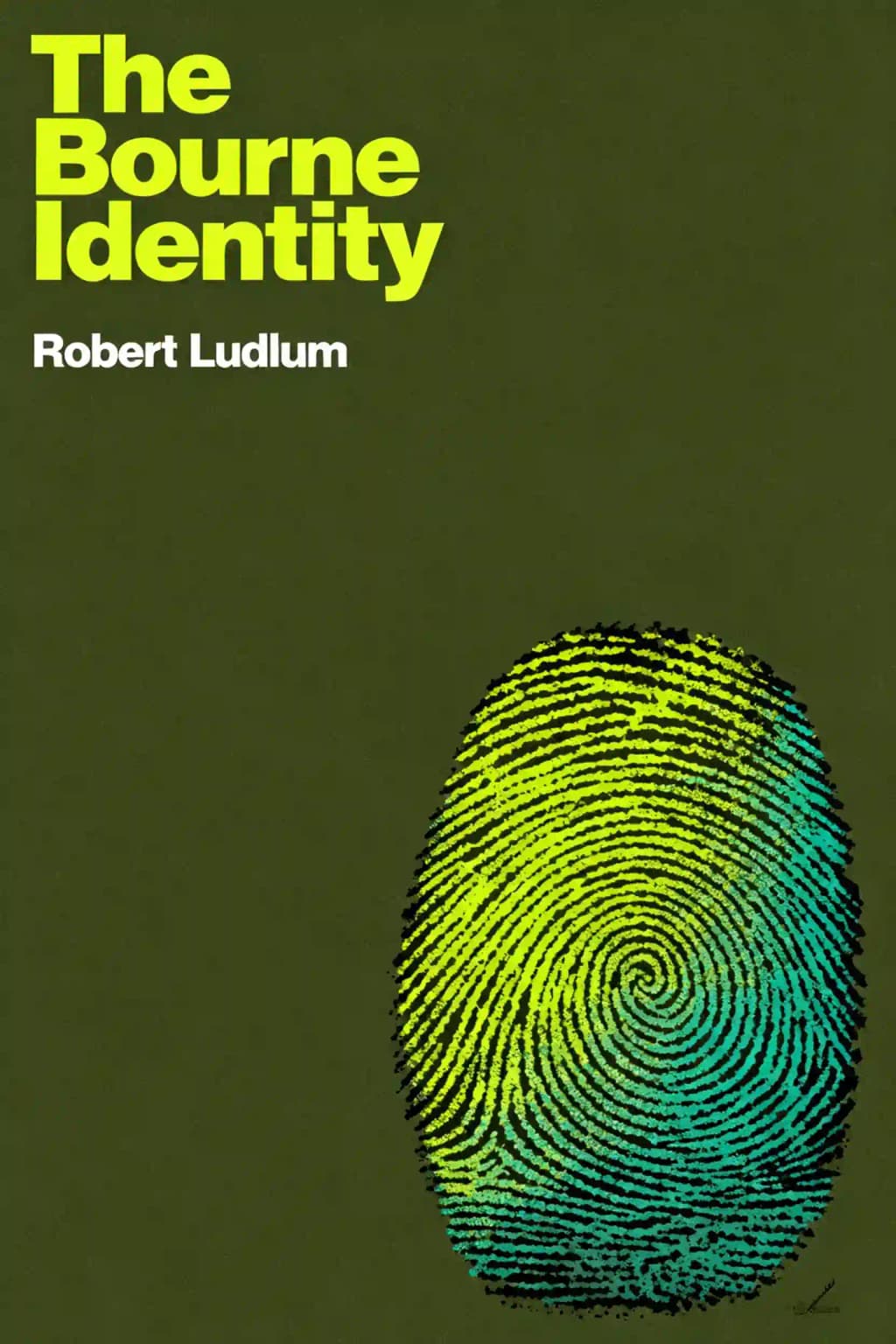
In the dimly lit world of international espionage, few novels have captured the imagination quite like "The Bourne Identity." When Robert Ludlum published this thriller in 1980, he created not just a bestseller but a cultural phenomenon that would later inspire a blockbuster film franchise starring Matt Damon. The book's exploration of identity, memory, and the shadowy world of intelligence operations resonated deeply with readers during the Cold War era. Ludlum, a former Marine and theatrical producer, drew on his fascination with covert operations to craft a protagonist unlike any other-a man with extraordinary skills but no memory of who he is. The novel's labyrinthine plot and psychological depth elevated it beyond typical spy fiction, establishing it as a cornerstone of the genre that continues to influence thriller writers decades later.
Capitolo 2
A Man Without a Past
The Mediterranean waves crash against a fishing boat as Dr. Geoffrey Washburn tends to a man pulled from the sea-a man riddled with bullets and clinging to life. When the patient finally regains consciousness, he faces a terrifying reality: he has no idea who he is. The doctor explains that physical trauma has destroyed the memory structures in his brain, leaving him with skills and languages but no identity. The only clue to his past is a tiny piece of microfilm surgically implanted beneath his hip, containing account information for the Gemeinschaft Bank in Zurich.
As weeks pass, the patient's body heals while his mind remains fractured. Washburn secures him work on a local fishing boat under the name Jean-Pierre, believing harsh conditions will prepare him for whatever awaits. When provoked by hostile crewmen, the patient responds with astonishing combat skills, instinctively neutralizing three men while strange words-"Tao," "Che-sah," "Mee-sah"-escape his lips. These deadly reflexes suggest a violent past at odds with his gentle nature.
Forced to flee after injuring the crew, the patient makes his way to mainland France with Washburn's help. In La Ciotat, he demonstrates remarkable criminal skills, stealing from a wealthy marquis and acquiring funds through theft and deception. His facility with these activities disturbs him-who was he before the amnesia? The question becomes more urgent when, in a Marseilles cafe, a stranger attacks him with a knife, exclaiming, "You're dead!" Someone who believed him dead now knows he lives.
With a forged passport identifying him as George P. Washburn, the patient boards a flight to Zurich, determined to follow his only lead. During the flight, a memory surfaces-parachuting into darkness, waiting for a signal before plunging into the void. It's his first glimpse into his mysterious past, but raises more questions than answers.
Capitolo 3
The Chameleon in Zurich
In Zurich, the pieces begin falling into place. At the Carillon du Lac hotel, the clerk recognizes him as "Herr Bourne"-Jason Bourne from New York, revealing both his name and his connection to something called the Treadstone Seventy-One Corporation. The revelation brings relief but also confusion. Why would he require such elaborate security measures, screening all visitors except his employer?
At the Gemeinschaft Bank, Bourne accesses his account, discovering four million dollars and a leather attache case containing multiple passports, each with his photograph but different names. Before he can process this information, bank officials alert security, having received instructions to detain anyone claiming to be Jason Bourne. He narrowly escapes, taking Canadian economist Marie St. Jacques hostage in the confusion.
Marie initially fears Bourne as a violent kidnapper, but when assassins attack them at their hotel, she witnesses his protective instincts. Despite his injuries, he saves her life, killing the assassin who was ordered to execute her. This act of protection creates the first crack in her perception of him as a monster. When Bourne later risks his life to rescue her from men falsely claiming to be police, Marie begins to question everything she thought she knew about her captor.
Their relationship transforms as Marie recognizes the contradiction between Bourne's gentle nature and his deadly skills. "The man I've come to know couldn't be what they say," she tells him. Her economic expertise proves invaluable as she helps him navigate the financial maze surrounding his identity. Together, they discover that someone is hunting Bourne-not just local authorities but a sophisticated network connected to a legendary assassin named Carlos.
In the rundown Trois Alpenhauser restaurant, Bourne encounters a terrified proprietor who recognizes him, revealing that police have established a confidential tip line through Interpol with substantial rewards for information about him. The man directs Bourne to someone named Chernak, who might have answers about his past. When they find Chernak murdered, it becomes clear that powerful forces are eliminating anyone who might help Bourne discover his identity.
Capitolo 4
The Hunter and the Hunted
As Bourne and Marie flee through Europe, a complex picture emerges. Bourne isn't just running from authorities-he's being hunted by Carlos, the world's most feared assassin. In Paris, they implement an audacious plan to access Bourne's funds at the Banque de Valois, where Marie's financial expertise allows them to outmaneuver both the bank and Carlos's network.
Through careful manipulation, they extract information from bank vice-president d'Amacourt, who reveals that Bourne's account came with sealed confidential instructions. Originally, activity on the account triggered calls to New York, but recently these instructions were altered to direct calls to Paris instead-specifically to a fashion house called Les Classiques.
This elegant boutique becomes the center of their investigation. Bourne infiltrates the establishment, discovering it serves as a communications hub for Carlos's network. The managing partner, Jacqueline Lavier, unwittingly reveals that "Cain"-a name repeatedly connected to Bourne-is an assassin who emerged from Asia two years earlier, building his reputation through high-profile killings before challenging Carlos by moving to Paris.
The revelation hits Bourne like a physical blow: he is Cain, a killer who deliberately challenged Carlos on his home territory. Yet this identity feels wrong, at odds with his internal moral compass. Marie refuses to accept this conclusion, arguing that his actions-saving her life repeatedly, showing compassion when violence would be easier-contradict the cold-blooded killer Cain is supposed to be.
"The man called Cain would never do what you just offered to do. For anyone," Marie insists when Bourne offers to surrender himself to clear her name. She develops an alternative theory: what if Bourne isn't Cain at all, but has been manipulated into believing he is? What if his amnesia is protecting him from a false identity imposed upon him?
Meanwhile, in Washington D.C., we glimpse another dimension of the mystery. A Pentagon intelligence committee discusses the threat posed by Cain versus Carlos, revealing that "Cain" emerged from a clandestine Vietnam War operation called Medusa. These units, composed of military personnel alongside criminals and fugitives, conducted behind-enemy-lines operations with specialized assassination techniques. They believe Cain is a Medusa operative gone rogue, now challenging Carlos for supremacy in the assassination world.
Capitolo 5
The Conspiracy Unravels
The hunt intensifies as Bourne discovers Les Classiques is indeed Carlos's communications center. He methodically disrupts the network, spreading contradictory information among Carlos's associates to create chaos and force the assassin into the open. His strategy works-panic spreads through Carlos's organization as Bourne intercepts one courier after another.
During this cat-and-mouse game, Bourne encounters Philippe d'Anjou, who addresses him as "Delta"-triggering fragmented memories of a codename from his past. D'Anjou reveals they share a history in Medusa, confirming Bourne's connection to the clandestine operation. More importantly, he explains that Bourne agreed to become the fictional assassin "Cain" to draw out Carlos-a strategy created by Treadstone Seventy-One, an American intelligence unit.
The most shocking revelation comes when d'Anjou explains that the real Jason Bourne was executed at Tam Quan on March 25, 1968-by Delta himself. The name Bourne has been wearing belongs to a man he killed.
Meanwhile, in Washington, we learn the truth behind Treadstone. Jason Bourne is actually an American intelligence officer impersonating a killer to lure Carlos into the open. For three years, this agent lived as "Cain," building a reputation to rival Carlos, even undergoing surgery to alter his appearance. However, Bourne disappeared six months ago, and his handlers are uncertain if the man with Marie is still their agent or if he's been compromised.
The operation collapses when Carlos infiltrates the Treadstone brownstone in New York, killing everyone there and planting Bourne's fingerprints to frame him. Alexander Conklin, Bourne's handler, becomes convinced Bourne has betrayed them, stealing millions and murdering his colleagues. He orders a termination order against his former agent.
When Bourne attempts to contact Treadstone through the American Embassy in Paris, Conklin sets a trap, planning to eliminate him. Their confrontation in a Paris cemetery ends in violence when Conklin refuses to believe Bourne's claims of amnesia. During the struggle, Conklin mentions "Gordon Webb" and "Phnom Penh," triggering painful memories that suggest a deeper personal connection to the operation than Bourne realized.
Capitolo 6
The General's Gambit
Desperate for allies in his hunt for Carlos, Bourne forms an unlikely partnership with General Andre Villiers, a decorated French military commander whose distinguished career spans three decades of service. The general's son was brutally murdered by Carlos two years earlier - a killing that haunts Villiers and drives his desire for justice. Their alliance is built on shared loss and a mutual enemy, though Villiers remains unaware of Bourne's complicated past and uncertain identity.
The situation becomes exponentially more complex when Bourne uncovers a shocking truth: Villiers' young wife Angelique - whom the general married just eighteen months after his son's death - is Carlos's cousin and trusted operative. She has been feeding information to Carlos's network while maintaining her facade as a devoted spouse. Bourne faces an excruciating dilemma: revealing Angelique's treachery would devastate the already-grieving Villiers, yet concealing it allows a dangerous enemy to remain embedded in their midst.
Fate intervenes when Villiers discovers the betrayal independently, finding incriminating correspondence between Angelique and Carlos's network. In a confrontation charged with raw emotion, he forces her to confess her role in Carlos's organization. The revelation that she had indirect involvement in his own son's death triggers a violent response - Villiers strangles her in a moment of uncontrollable rage. The proud general, now broken by shame and grief, contemplates ending his own life until Bourne intervenes, convincing him that redemption lies in helping to bring down Carlos.
Together, they craft an intricate strategy to draw Carlos out of his Paris sanctuary. Bourne deliberately leaves his fingerprints on Angelique's throat, shouldering blame for her death. He then composes a carefully worded message for Carlos, filled with loaded references to their shared history - particularly "seventy-one streets in the jungle" and "Tam Quan," phrases that carry deep significance from their violent past in Southeast Asia. Signing it "Delta," his former operational codename, Bourne knows these specific details will enrage Carlos, who responds exactly as anticipated, vowing brutal revenge and declaring "Jason Bourne will not leave this Tam Quan alive" and "Cain will be dead, and Delta will die for what he's done."
As the trap is set, Bourne departs for New York under the alias George P. Washburn - a name he knows will trigger surveillance alerts. Meanwhile, in Washington, CIA Deputy Director Alexander Conklin begins questioning the narrative he's believed about Bourne's betrayal. The use of Washburn's name seems too obvious, the choice of New York over Washington too deliberate. Reviewing the timeline of events, Conklin fixates on a crucial date - March 25, the anniversary of the original Jason Bourne's death by execution. This revelation forces him to confront an uncomfortable truth: he's been wrong about Bourne's motivations and identity from the start, and this mistake has set in motion a potentially catastrophic chain of events.
Capitolo 7
The Final Confrontation
On the morning of March 25, Jason sits in a Yellow Cab moving east on Seventy-first Street in New York, watching the familiar neighborhood through dark sunglasses. As they approach a brownstone with distinctive purple-blue windows, his pulse quickens with recognition. This place connects deeply to his past-not as a home, but as the beginning point of his existence as Jason Bourne.
Fragmented memories assault him-being in a dark room, staring at a screen, voices drilling information into him: "You are not Delta, you are not you! You are Cain." He realizes Marie was right-perhaps he only knows what he's been told repeatedly until it became his reality.
His carefully planned trap for Carlos is disrupted when he discovers movers dismantling Treadstone. As he exits the taxi to call Washington, a shot rings out, killing the driver. Carlos has found him first. Despite being wounded in the initial attack, Bourne disguises himself as a laborer and infiltrates the brownstone, determined to confront his nemesis.
Inside the building where "Cain was born," memories overwhelm him-the projector in the ceiling, voices drilling information, the systematic erasure of his true self. On the third floor, Carlos ambushes him with a knife, slashing his throat. Despite this injury, Bourne fights back ferociously, breaking the assassin's wrist before Carlos shoots him in the chest.
Their deadly dance continues throughout the building, with Carlos systematically killing the movers to eliminate witnesses. Wounded and bleeding heavily, Bourne realizes he's trapped but determined-he will die today, but he'll take Carlos with him.
In the final confrontation, Bourne ignites flares to illuminate the darkened room where his transformation began. The enormous silver projection screen creates blinding, disorienting light as the two assassins exchange gunfire. With his ammunition spent, Bourne hurls his weapon at Carlos, who returns fire, wounding him again.
As Carlos aims for the kill shot, government agents break into the building. The assassin escapes in the confusion, leaving Bourne critically wounded. Conklin approaches, admitting he was wrong, but Bourne's mind fractures completely, plunging him back to Tam Quan. As darkness takes him, Marie's voice reaches through his confusion: "Jason, my love. My only love. Take my hand. Hold it. Tightly, Jason."
Capitolo 8
The Man Behind the Mask
Two weeks after the violent confrontation in Paris, the complex truth finally emerges about the man known as Jason Bourne. He is revealed to be David Webb, a distinguished Foreign Service officer who had built his career specializing in Far Eastern affairs. His transformation from diplomat to lethal operative began with an unspeakable tragedy - his Thai wife and their two young children were killed when an unidentified aircraft strafed and bombed their family dock on the Mekong River during a peaceful afternoon. The senseless violence of their deaths shattered Webb's world, driving him to join Medusa, a covert black ops unit operating in Southeast Asia. His exceptional language skills and deep understanding of regional politics made him an invaluable asset, but it was his newfound rage that made him deadly.
The origin of his adopted name carries its own dark history. During Webb's time with Delta, North Vietnamese intelligence placed an enormous bounty on the unit's head. They orchestrated an elaborate trap by kidnapping Webb's younger brother Gordon and holding him in the treacherous Tam Quan sector. The original Jason Bourne - a notorious white mercenary known for switching sides to the highest bidder - betrayed Delta's position to the enemy. In a display of tactical brilliance and cold fury, Webb managed to break through the enemy lines, rescue his brother, and personally execute Bourne for his treachery.
Years later, when Webb was recruited for the classified Treadstone program, he made an extraordinary psychological choice - he adopted the name of the man who had betrayed him. This decision, laden with complex symbolism and suppressed trauma, likely contributed to his eventual psychological breakdown. Before Treadstone, Webb had retreated from the world, finding refuge as a quiet academic teaching Asian studies at a small New Hampshire college, his past carefully hidden from colleagues and students alike.
Now under permanent CIA protection, Webb represents both an asset and a liability - he is the only living person who has seen Carlos the Jackal's true face, though that crucial identity remains locked in his damaged memory. With Marie's unwavering support and intensive psychiatric care, he begins the painstaking process of psychological healing. Each recovered memory brings both pain and clarity, establishing a pattern of growth, recognition, and discovery that will define his journey forward.
In the poignant final scene, Marie stands at the window of their heavily guarded cottage on the Maine waterfront, watching Webb as he walks along the shore. His physical wounds have healed, and though violent nightmares still plague his nights, moments of genuine laughter have begun to break through. Without warning, he suddenly plunges into the cold Atlantic waters, then races back to the house with unexpected urgency. When he bursts through the door, his eyes hold a clarity she's never witnessed before.
"My name is David..." he says softly, the words carrying the weight of rediscovered truth.
"Hello, David," she replies, embracing both the man and the moment.
The journey of rediscovery - of piecing together not just memories but an entire identity - has only just begun, promising both revelation and redemption ahead.
Capitolo 9
The Labyrinth of Identity
At its core, "The Bourne Identity" explores the fundamental question: What makes us who we are? Is identity formed by our memories, our actions, or the stories others tell about us? Jason Bourne/David Webb stands at this philosophical crossroads-a man with extraordinary skills but no memory of acquiring them, a gentle soul capable of extreme violence, a person whose very name belongs to someone else.
Throughout the narrative, Bourne struggles with contradictory evidence about himself. His combat reflexes and facility with deception suggest a violent past, yet he consistently chooses compassion over expediency. When he discovers he might be Cain, he's horrified rather than accepting. This cognitive dissonance reflects the novel's central theme-that identity is not fixed but fluid, constructed through both personal choice and external forces.
Marie serves as Bourne's moral anchor, consistently believing in his fundamental goodness despite mounting evidence of his violent capabilities. "The man I've come to know couldn't be what they say," she insists, offering an alternative narrative that ultimately proves correct. Her faith in him becomes a counterweight to the identity imposed by Treadstone.
The revelation that Bourne was programmed to believe he was Cain-that his identity was deliberately constructed through psychological manipulation-raises disturbing questions about autonomy and self-determination. Even more unsettling is the realization that his handlers abandoned him when he became inconvenient, ordering his execution rather than extraction.
In the end, Webb's journey from Delta to Cain to Jason Bourne and finally back to David represents more than just a spy coming in from the cold-it's a reclamation of authentic selfhood after years of imposed identity. When he finally says, "My name is David," it's not just a statement of fact but an act of self-determination, the first step in reconstructing an identity based on truth rather than deception.
Capitolo 10
The Legacy of Silence
"The Bourne Identity" remains a masterclass in thriller writing, combining intricate plotting with profound psychological depth. Ludlum's genius lies in creating a protagonist whose internal struggle mirrors the external conspiracy - both involve questions of truth, deception, and the consequences of playing god with human lives. Through masterful pacing and layered revelations, the novel builds tension not just through physical danger but through the psychological warfare waged within Bourne's fractured psyche.
The novel's exploration of government overreach feels remarkably prescient decades later, anticipating contemporary debates about surveillance and black operations. Treadstone's willingness to sacrifice Webb when he becomes inconvenient echoes real-world intelligence scandals where operatives were abandoned for political expediency - from the Bay of Pigs to more recent whistleblower cases. The committee's casual discussion of "creating" Cain reflects a bureaucratic coldness that treats human beings as expendable assets, revealing how institutions can normalize extreme moral compromises in the name of national security.
Perhaps most disturbing is the realization that Webb's handlers never considered the psychological toll of his assignment. Three years living as an assassin, deliberately building a reputation for brutality while severed from his past - it's a recipe for the very fracturing of identity that ultimately occurs. The novel explores how sustained deception, even in service of a mission, inevitably corrupts the deceiver. When Webb disappears for six months, their immediate assumption is betrayal rather than breakdown, revealing a fundamental lack of empathy and understanding of human psychology. This institutional blindness to human factors becomes a recurring theme throughout the series.
The novel's enduring appeal lies in this sophisticated combination of pulse-pounding action and psychological insight. Bourne isn't just running from assassins; he's running toward himself, toward an understanding of who he was and who he might become. His journey from amnesiac to autonomous individual resonates because it reflects our universal quest for authentic selfhood in a world that constantly seeks to define us according to its own agendas. The character's struggle to reconcile his violent capabilities with his moral instincts speaks to broader questions about nature versus nurture, and whether identity is fixed or fluid.
In the final analysis, "The Bourne Identity" isn't just about a spy reclaiming his past - it's about a human being reclaiming his humanity, one fragmented memory at a time. Through Bourne's journey, Ludlum explores how memory shapes identity, how trauma can both destroy and rebuild personality, and how the search for truth becomes inseparable from the search for self. The novel's lasting influence on the thriller genre stems from this perfect marriage of action and introspection, creating a template for character-driven espionage fiction that continues to resonate with readers decades after its publication.