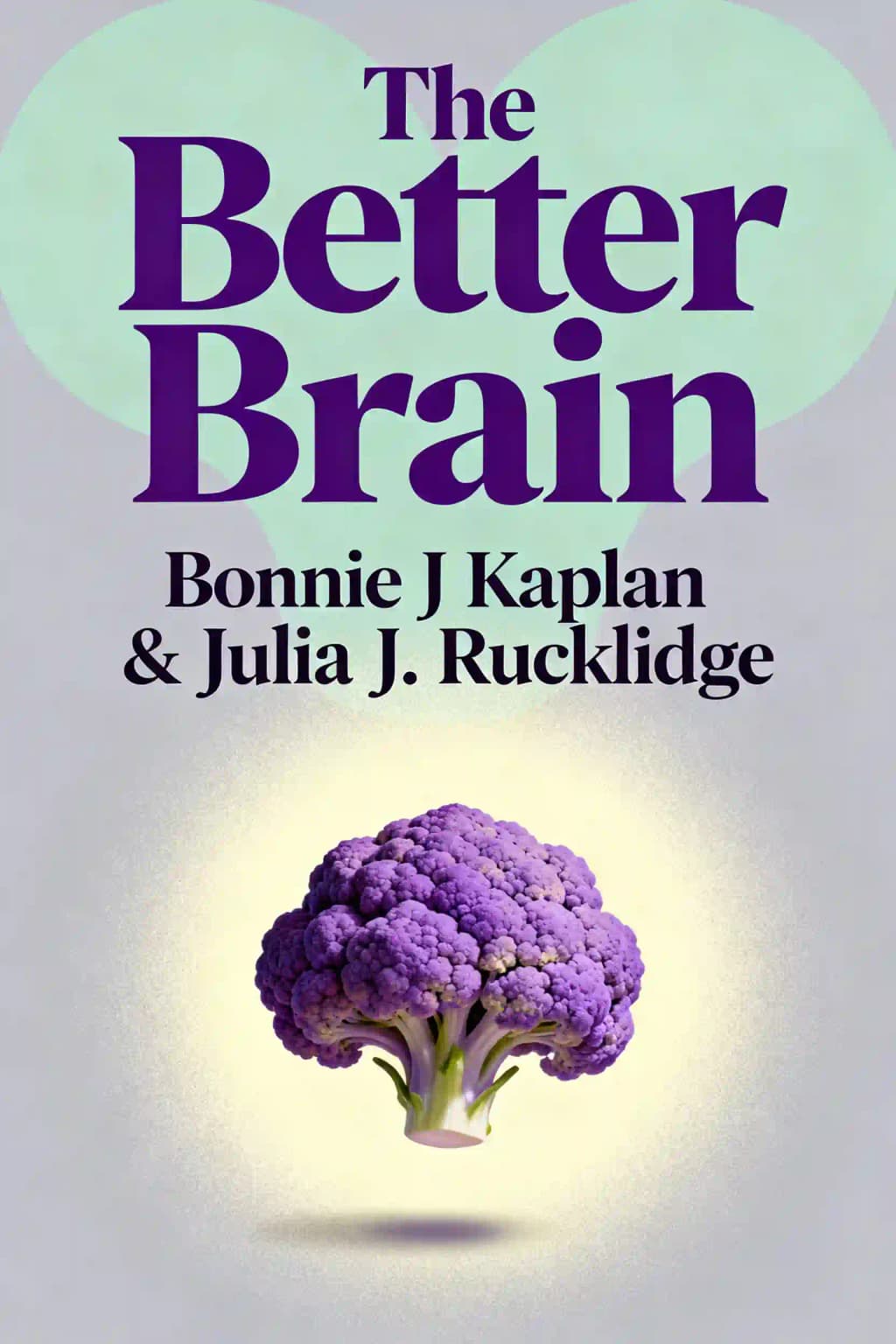
Could your brain's struggles be rooted in nutrition? "The Better Brain" reveals groundbreaking research showing how dietary changes can combat anxiety, depression, and ADHD - challenging Big Pharma's dominance and ranking among 2021's most-read health pieces. What if your mental health solution is on your plate?
Bonnie J. Kaplan, PhD, and Julia J. Rucklidge, PhD, co-authors of The Better Brain: Overcome Anxiety, Combat Depression, and Reduce ADHD and Stress with Nutrition, are pioneering clinical psychologists and researchers in nutritional psychiatry.
Kaplan is a Professor Emerita at the University of Calgary’s Cumming School of Medicine. She has published over 180 studies on nutrition’s role in brain health and founded the Alberta Pregnancy Outcomes and Nutrition study.
Rucklidge is a professor at New Zealand’s University of Canterbury and director of the Mental Health and Nutrition Research Lab. She gained global recognition for her TEDx talk on micronutrients, viewed 1.6 million times.
Their book merges decades of peer-reviewed research—including their landmark studies on post-disaster mental health and ADHD—with practical strategies, featuring 30+ recipes and evidence-based nutrient protocols. Both have received accolades such as the Dr. Rogers Prize and recognition among Canada’s “150 Difference Makers in Mental Health.”
Published by HarperCollins and Penguin Random House, The Better Brain distills their 300+ collaborative papers into a science-backed guide for transforming mental health through diet.
The Better Brain explores the link between nutrition and mental health, arguing that deficiencies in vitamins and minerals contribute to rising rates of depression, anxiety, and ADHD. Authors Bonnie J. Kaplan and Julia Rucklidge present evidence-based strategies to improve brain health through dietary changes, including a Mediterranean-style diet and targeted supplementation, supported by 300+ peer-reviewed studies.
This book is essential for individuals struggling with mental health challenges, parents seeking to support children’s cognitive development, and anyone interested in non-pharmaceutical approaches to well-being. It’s also valuable for healthcare professionals exploring nutrition’s role in mental health.
Yes—the book offers a paradigm-shifting perspective backed by decades of clinical research. It combines scientific rigor with practical tools, including 30+ mood-boosting recipes and supplement guidelines, making it a actionable guide for improving mental resilience.
Key ideas include:
Bonnie J. Kaplan, PhD, is a Professor Emerita at the University of Calgary with 45+ years researching nutrition’s impact on brain health. Co-author Julia Rucklidge, PhD, is a clinical psychologist. Together, they’ve published 300+ studies and pioneered micronutrient treatments for mental disorders.
While not dismissing medication, the authors argue that overreliance on pharmaceuticals ignores root causes like poor nutrition. They advocate integrating dietary changes with conventional therapies for more sustainable outcomes.
Yes—the book includes 30+ recipes designed to boost brain health, such as nutrient-dense meals rich in omega-3s, antioxidants, and minerals. Examples include salmon bowls, leafy green salads, and seed-based snacks.
Unlike titles focusing solely on therapy or medication, The Better Brain emphasizes nutrition’s foundational role. It complements works like Brain Energy by Dr. Chris Palmer but stands out for its specific dietary protocols and clinical case studies.
Readers report improved mood stability, reduced anxiety, and enhanced focus within weeks. Long-term adherence to its guidelines may lower risks of chronic mental health disorders and support cognitive aging.
As mental health crises persist and processed-food consumption rises, the book’s evidence-based approach addresses systemic causes of brain dysfunction. Its focus on soil health and micronutrient gaps aligns with growing interest in sustainable nutrition.
The book challenges the primacy of antidepressants, proposing nutrient therapy as a first-line intervention for mild-to-moderate conditions. Critics argue more large-scale trials are needed, though the authors cite numerous peer-reviewed successes.
“When we eat, we are primarily feeding our brains.” This underscores the authors’ thesis that every meal directly impacts cognitive function, emotional regulation, and mental resilience.
Senti il libro attraverso la voce dell'autore
Trasforma la conoscenza in spunti coinvolgenti e ricchi di esempi
Cattura le idee chiave in un lampo per un apprendimento veloce
Goditi il libro in modo divertente e coinvolgente
Let food be thy medicine.
Money talks.
Your brain needs the full spectrum working together.
Genes aren't fixed determinants of your fate.
Teenagers' enormous appetites reflect their heightened nutritional needs.
Scomponi le idee chiave di Better Brain in punti facili da capire per comprendere come i team innovativi creano, collaborano e crescono.
Vivi Better Brain attraverso narrazioni vivide che trasformano le lezioni di innovazione in momenti che ricorderai e applicherai.
Chiedi qualsiasi cosa, scegli il tuo stile di apprendimento e co-crea intuizioni che risuonano davvero con te.

Creato da alumni della Columbia University a San Francisco
"Instead of endless scrolling, I just hit play on BeFreed. It saves me so much time."
"I never knew where to start with nonfiction—BeFreed’s book lists turned into podcasts gave me a clear path."
"Perfect balance between learning and entertainment. Finished ‘Thinking, Fast and Slow’ on my commute this week."
"Crazy how much I learned while walking the dog. BeFreed = small habits → big gains."
"Reading used to feel like a chore. Now it’s just part of my lifestyle."
"Feels effortless compared to reading. I’ve finished 6 books this month already."
"BeFreed turned my guilty doomscrolling into something that feels productive and inspiring."
"BeFreed turned my commute into learning time. 20-min podcasts are perfect for finishing books I never had time for."
"BeFreed replaced my podcast queue. Imagine Spotify for books — that’s it. 🙌"
"It is great for me to learn something from the book without reading it."
"The themed book list podcasts help me connect ideas across authors—like a guided audio journey."
"Makes me feel smarter every time before going to work"
Creato da alumni della Columbia University a San Francisco

Ottieni il riassunto di Better Brain in formato PDF o EPUB gratuito. Stampalo o leggilo offline quando vuoi.
Imagine a world where depression, anxiety, ADHD, and even psychosis improve significantly through proper nutrition rather than medication. This revolutionary concept forms the backbone of "The Better Brain," challenging our medication-first approach to mental health. While conventional psychiatry has spent decades focusing on chemical imbalances and pharmaceutical solutions, mounting evidence suggests we've been missing something fundamental: the brain's insatiable need for proper nutrients. With mental health issues affecting one in five Americans and suicide rates climbing despite increased medication use, this nutritional approach offers new hope for millions suffering in silence. The connection between nutrition and mental health isn't new - Hippocrates advised "let food be thy medicine" over two millennia ago - but this wisdom was largely forgotten with the explosion of pharmaceutical drugs targeting the brain in the mid-twentieth century.
Though only 2% of your body weight, your brain demands 20-40% of all nutrients you consume. This metabolic glutton requires a quart of blood every minute - ten times what you'd expect for an organ its size - to deliver essential nutrients that power brain metabolism. For example, serotonin production requires three minerals and vitamin B6, while its breakdown pathways need five minerals and three B vitamins. No nutrient works alone; your brain needs the full spectrum working together. Every cell contains mitochondria, tiny energy factories converting nutrients into ATP, the molecule essential for life. This process depends entirely on dietary nutrients working in concert. Meanwhile, your genes function more like dimmer switches that environmental factors, including nutrition, can turn up or down. The methylation cycle transfers methyl groups billions of times per second to DNA, hormones, immune cells and neurotransmitters, requiring nutrient cofactors like zinc, folate, and B vitamins.
Our brains require additional nutrients during specific periods or conditions. During chronic stress, the fight-flight response depletes nutrients as it prioritizes survival over other functions. Modern stressors like work pressures and traffic trigger excessive stress hormones, draining resources needed for concentration, mood regulation, and sleep. Genetic differences may create higher nutrient requirements for optimal brain function. Some people have genetic mutations causing defective enzymes that need larger amounts of nutrients. Biochemist Bruce Ames documented fifty human genetic mutations creating excessive need for vitamin cofactors, each associated with physical ailments correctable through supplementation. Long-term medication use can deplete nutrients - aspirin affects vitamin C, contraceptives decrease folate, and mood stabilizers reduce various micronutrients. The teenage years are metabolically demanding as the brain undergoes massive growth and rewiring. As we age, our brains require more nutrients to combat cognitive decline. A 2019 study of nearly 200,000 individuals found that even those with high genetic risk for dementia had lower disease rates when following healthy diets. The MIND diet has shown remarkable results, with followers appearing 7.5 years cognitively "younger" than non-followers.
The gut-brain connection, intuitively understood for centuries, is now scientifically confirmed. Our gut microbiome influences not just digestion but immune function, metabolism, gene expression, and mental health. In the 1980s, researchers incorrectly assumed mental health caused gut problems, but current research explores the reverse relationship. Communication between gut and brain occurs through multiple pathways including immunity, metabolism, hormones, and the vagus nerve - explaining why "gut feelings" are reliable. Meanwhile, modern agriculture is destroying soil microbiomes, compromising our food's nutrition. Humans can synthesize very few vitamins ourselves, making us dependent on food or supplements. Studies show significant mineral losses since 1940: 19% less magnesium, 29% less calcium, 37% less iron, and 62% less copper in produce. Continuous tilling and inadequate fertilization deplete soil minerals that plants cannot manufacture themselves. A 2018 analysis of western Canadian soil found only magnesium at acceptable levels, with twelve other essential minerals deficient even in organic fields. Beyond soil depletion, modern food production prioritizes appearance and shelf life over nutrition. Climate change further compounds this problem, causing plants to grow larger but with fewer micronutrients - essentially creating nutritionally diminished "sugar bombs."
Cross-cultural studies consistently show people eating whole foods experience fewer mental health symptoms than those on processed diets. Prospective research confirms that poor diets predict future depression and mental health issues, while healthier diets offer protection. Fish consumption stands out as particularly beneficial-countries with high fish intake show markedly lower rates of depression, bipolar disorder, and other psychiatric conditions. Norwegian research revealed mothers consuming more processed food during pregnancy had children with increased behavioral problems at age five, while French studies connected Western diets during pregnancy to childhood hyperactivity and inattention. The SMILES trial demonstrated that adults with depression who improved their Mediterranean-style diet experienced significant mood improvements-32% achieved remission compared to just 8% in the social support group. Similar results emerged in the HELFIMED study and another targeting young adults using only a 13-minute instructional video. Most remarkably, dietary changes can impact mood within just 2-3 weeks of implementation.
While dietary changes are crucial for better mental health, sometimes they aren't enough. Broad-spectrum multinutrient supplements can provide additional support, with research showing they effectively address various psychiatric symptoms without relying on single-nutrient "magic bullet" solutions. Research has demonstrated substantial reduction in ADHD symptoms across multiple studies. Nine-year-old Isaiah exemplifies these benefits - after experiencing medication side effects that left him "zombified," multinutrient treatment dramatically improved his behavior and academic performance, with his mother reporting that the nutrients "absolutely saved our lives as a family." Studies have shown promising results using nutrient formulas for autism, with improvements in sleep, gastrointestinal problems, and trends toward better behavior and language. For bipolar disorder, despite resistance from the psychiatric establishment limiting randomized controlled trials, numerous open-label trials, case studies, and database analyses consistently show improved symptoms and reduced medication needs in both adults and children. Dr. Lewis Mehl-Madrona's research on multinutrient approaches for psychosis and schizophrenia has shown patients with significantly fewer psychosis symptoms at fifteen months compared to standard treatment alone.
The evidence is clear: what we eat directly impacts our mental health. Prioritizing nutrient-dense whole foods and supplementing when necessary builds more resilient brains and reduces dependence on psychiatric medications. This isn't about rejecting conventional treatment, but starting with proper nutrition before more invasive interventions. Mental illness stigma stems largely from fear of the unknown. Viewing mental health problems as nutritional issues would eliminate much of this stigma - there's no shame in needing to improve one's diet. In a healthier future, mental symptoms would first indicate "imperfect nutrition," prompting better eating habits before medication. With 20% of people suffering from mental disorders, businesses facing sick leave costs, schools spending resources on mental health services, and children being medicated with unknown long-term effects, the social burden of poor food choices has become too great. The solution begins on your plate - each meal is an opportunity to nourish both body and mind. Your brain is hungry for nutrients - will you feed it what it truly needs?