Capitolo 1
A Demigod's Perilous Journey Through Ancient Mazes
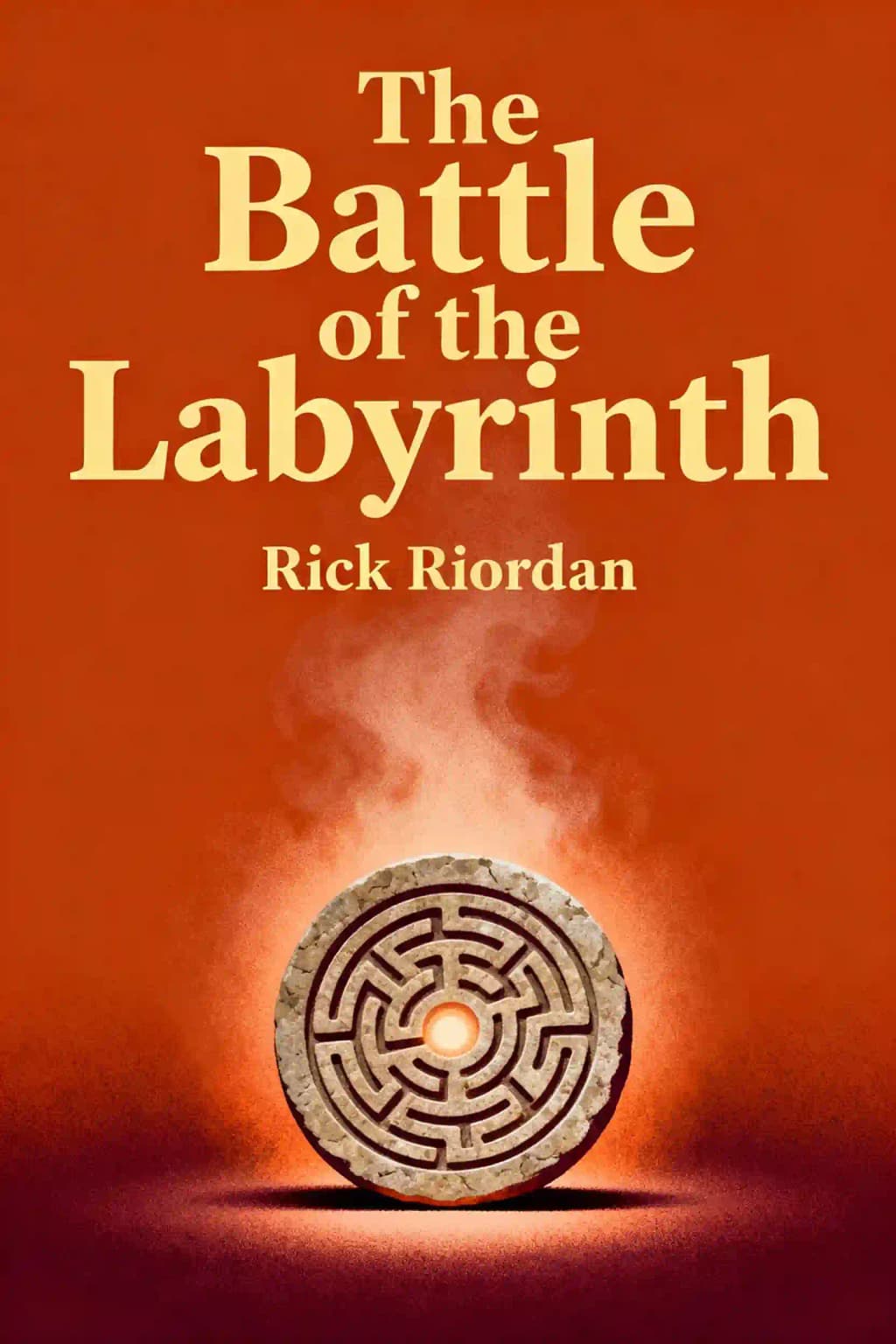
Percy Jackson's life has never been ordinary, but even he didn't expect to battle cheerleader-monsters on the first day of orientation. "The Battle of the Labyrinth" catapulted Rick Riordan's Percy Jackson series to new heights when it was published in 2008, becoming an instant #1 New York Times bestseller. The fourth installment in the Percy Jackson & the Olympians series has sold millions of copies worldwide and cemented Riordan's status as the premier mythological storyteller of our generation. What makes this particular adventure so compelling? Perhaps it's how it weaves ancient Greek mythology into modern adolescent struggles, creating a world where battling monsters serves as a perfect metaphor for navigating the labyrinth of teenage life. As we follow Percy's journey through the legendary maze, we're really exploring something universal-how we find our way when the path forward seems impossible to navigate.
Capitolo 2
When Cheerleaders Attack: The Adventure Begins
High school orientation is stressful enough without discovering your cheerleaders are actually blood-sucking monsters. But that's exactly what happens to Percy Jackson at Goode High School, where two seemingly innocent cheerleaders - Tammi and Kelli - reveal themselves as empousai, ancient vampire-like creatures from Greek mythology who feed on young men's blood. The attack unfolds in the school's band room, where Percy had been trying to blend in as a normal freshman. The empousai's true forms are horrifying: one bronze leg, one donkey leg, flaming hair, and razor-sharp fangs - a stark reminder that monsters can hide anywhere, even in the most mundane settings.
In the ensuing chaos, Percy meets Rachel Elizabeth Dare, a remarkable mortal who possesses the rare ability to see through the Mist - the supernatural veil that obscures the mythological world from human eyes. Rachel's immediate recognition of Percy's true nature and her calm reaction to the monster attack suggest she's far more than just another mortal bystander. Her artistic nature and clear-sighted abilities make her uniquely positioned to understand Percy's world while remaining outside of it.
The encounter takes an even darker turn when Kelli delivers a chilling prophecy: Camp Half-Blood will soon be in flames, and Percy's friends will be enslaved to the Lord of Time, Kronos. After narrowly escaping the attack - and being framed for assaulting what appeared to be innocent cheerleaders to the mortal authorities - Percy reunites with Annabeth outside. The subsequent introduction between Annabeth and Rachel creates immediate tension. Annabeth's evident discomfort with Rachel's ability to see through the Mist, combined with Rachel's natural ease around Percy, establishes a complex dynamic that mirrors the emotional turbulence of adolescent relationships.
This opening sequence brilliantly establishes the heightened stakes of this adventure while weaving together multiple narrative threads. The attack demonstrates how the mythological world is increasingly bleeding into Percy's attempts at normal life, making nowhere truly safe. Unlike previous threats that felt somewhat contained, this danger strikes at the very heart of Percy's safe haven - Camp Half-Blood itself. The warning about the camp burning foreshadows a direct assault on the only place where demigods can truly be themselves, raising the emotional stakes significantly.
As Percy and Annabeth take a taxi to camp, the weight of this threat hangs between them, along with unspoken personal tensions that mirror the larger conflict brewing in their world. Their shared concern for camp's safety is complicated by new emotional undercurrents, particularly after Rachel's appearance. The scene effectively sets up both the external conflict - the impending attack on Camp Half-Blood - and the internal struggles that Percy must navigate as his world grows increasingly complex.
Capitolo 3
The Labyrinth Revealed: An Ancient Threat Emerges
Upon returning to Camp Half-Blood, Percy finds both familiar comforts and troubling changes. The Golden Fleece still shimmers on its branch, campers engage in their usual activities, but an underlying tension permeates the air. This subtle wrongness is personified in Quintus, the mysterious new sword instructor with a strange burn mark on his neck shaped like a bird with folded wings. His hellhound Mrs. O'Leary and crates warning of "excruciatingly painful deaths" add to the camp's unsettled atmosphere.
The camp's problems quickly come into focus during Grover's hearing with the Council of Cloven Elders. The satyr claims to have heard the lost god Pan speak, but the council gives him just one week to prove it or lose his searcher's license. This deadline adds personal urgency to the larger threats facing the camp.
The true danger reveals itself when Percy and Annabeth stumble upon an entrance to the legendary Labyrinth during Quintus's war games. Three giant scorpions force them between two boulders where they fall into an ancient corridor marked with the Greek letter Delta. What seems like minutes in the maze turns out to be an hour in the outside world-their first encounter with the Labyrinth's disorienting nature. Annabeth realizes with horror that they've discovered an invasion route straight into camp's heart.
That night, Percy dreams of Daedalus and his son Icarus imprisoned by King Minos, foreshadowing the ancient inventor's importance to their quest. He also receives a disturbing Iris-message showing Nico di Angelo in the Underworld, speaking with a ghost about bringing his sister back through "an exchange"-a soul for a soul. The implication that Nico might target Percy for this exchange adds a personal threat to the already mounting dangers.
The revelation of the Labyrinth's existence transforms what might have been a standard monster-fighting adventure into something far more complex and psychologically challenging. This isn't just about battling creatures with swords; it's about navigating a maze designed specifically to confuse, mislead, and ultimately destroy demigods. The Labyrinth represents the ultimate test of not just physical strength, but mental resilience and emotional clarity.
Capitolo 4
Into the Darkness: The Quest Begins
During a war council, Annabeth explains that the Labyrinth isn't just under a single building but spread beneath the entire mortal world "like a second skin," connecting everything underground. Luke and his forces are exploring it, seeking Ariadne's string as a navigation tool. If they master the maze, they could move their army with incredible speed directly into Camp Half-Blood, bypassing its magical defenses.
The Oracle delivers a troubling prophecy to Annabeth: "You shall delve in the darkness of the endless maze. The dead, the traitor, and the lost one raise. You shall rise or fall by the ghost king's hand, the child of Athena's final stand." Annabeth notably hesitates when reciting the final lines, claiming not to remember them completely-unusual for someone with her perfect memory. Breaking tradition, she selects four companions instead of the customary three: Percy, Grover, and Tyson.
Before their departure, Quintus gives Percy a dog whistle made of Stygian ice-a one-use item that can summon Mrs. O'Leary from anywhere. Though seemingly a gesture of goodwill, Percy remains suspicious of the new instructor's motives, especially after Juniper reveals she saw him investigating the Labyrinth entrance earlier.
The night before the quest, Percy visits Annabeth in the Athena cabin-a workshop-like space filled with books, maps, and weapons. He finds her researching the Labyrinth, frustrated that none of the stories agree and the maps lead nowhere. In a rare vulnerable moment, she hugs Percy and confesses her fears about leading the quest and endangering her friends. This intimate exchange is interrupted by her half-brother Malcolm, leaving Percy's questions about the prophecy's final line unanswered.
What makes this quest particularly compelling is how it forces each character to confront their deepest fears. For Grover, it's the underground darkness that terrifies him. For Annabeth, it's the weight of leadership and the possibility of failure. For Percy, it's the growing realization that his decisions have life-or-death consequences for those he cares about. The Labyrinth isn't just a physical challenge-it's a psychological one, designed to break the spirit as much as the body.
Capitolo 5
Lost in the Maze: Trials and Revelations
The Labyrinth immediately proves more treacherous than anticipated. Within minutes, the group becomes hopelessly lost as tunnels constantly shift-brick corridors with iron portholes transform into circular chambers with identical exits. Annabeth's "left wall" navigation strategy fails completely as they pass through an ancient Roman mosaic chamber, modern graffiti-covered tunnels, and what sounds like a bar. The discovery of a long-dead milkman's skeleton, who died clawing at the walls, serves as a grim reminder that some wanderers never escape.
Their first significant encounter comes with Janus, the two-faced god of Doorways, Beginnings, Endings, and Choices. He forces Annabeth to choose between two doors-one leading to their destination, the other to certain death. As she hesitates, Hera, Queen of Heaven, intervenes, warning that Annabeth's time of choice has not yet come. This interaction foreshadows crucial decisions Annabeth will face later.
After escaping through a prison cell in Alcatraz, they encounter Kampe-a horrifying monster part woman, part dragon with vipers for hair and legs. She guards Briares, the last of the Hundred-Handed Ones from Greek mythology. Despite his legendary reputation for incredible strength, Briares is broken and terrified, refusing to escape until Percy tricks him with a game of rock-paper-scissors. This disappointing reality crushes Tyson, who had idolized the ancient being.
The group's journey takes them to Triple G Ranch, where they meet the three-bodied monster Geryon who breeds exotic creatures for profit, including Apollo's sacred cattle. They also find Nico di Angelo already there, still blaming Percy for his sister's death. When Geryon reveals he plans to sell them all to Luke, Percy makes a desperate deal: if he can clean the disgusting stables by sunset, Geryon will free them; if not, he can sell them all.
Using his connection to water, Percy ingeniously cleans the stables by creating saltwater geysers that wash away mountains of manure. Despite completing the challenge, Geryon refuses to honor their deal until Percy kills him with a miraculous shot through all three of his hearts. This victory demonstrates Percy's growing resourcefulness and determination when facing seemingly impossible tasks.
The Labyrinth serves as a perfect metaphor for adolescence itself-a confusing time when the rules constantly change, when trusted paths suddenly lead nowhere, and when one must learn to rely on instinct rather than external guidance. Each character responds differently to this challenge, revealing their core personalities and deepest fears.
Capitolo 6
Divine Encounters: Finding Pan and Hephaestus
The quest takes a significant turn when they encounter Hephaestus, the god of forges, who offers them a deal: he will help them find Daedalus if they investigate who is using his forges at Mount St. Helens without permission. During their journey to the volcano, they discover a tunnel lined with tree roots that Grover senses leads to Pan. Despite Annabeth's protests about splitting up, Grover and Tyson follow this path while Percy and Annabeth continue to Hephaestus's forge.
At Mount St. Helens, they discover telekhines-sea demons who once crafted weapons for the gods before being cast into Tartarus by Zeus. Now serving Kronos, these creatures are forging what appears to be a powerful weapon. When they spot Percy, he creates a distraction so Annabeth can escape. Surrounded and under attack, Percy taps into his deepest powers, causing an explosion that blasts him out of the volcano and leaves him severely injured.
Meanwhile, Grover and Tyson's path leads them to Pan himself-the lost god of the Wild whom satyrs have sought for centuries. They find him in a magical cavern surrounded by extinct animals, his form flickering like mist. In a poignant scene, Pan reveals he is dying and has been fading for centuries. The wild has become too small and shattered for even a god to save.
Pan delivers personal messages to each of them before charging Grover with spreading the word that "the great god Pan is dead" and that his spirit must now be carried by everyone-satyrs, half-bloods, and humans alike. "If you would find Pan, take up Pan's spirit," he instructs. "Remake the wild, a little at a time, each in your own corner of the world." As Grover finally releases him, Pan dissolves into white mist that enters each of them, though Grover receives the largest portion.
This encounter represents one of the book's most profound themes-the passing of responsibility from gods to mortals. Pan's death symbolizes how environmental stewardship cannot be left to mythical figures; it requires individual action from everyone. His dissolution into each of them suggests that divinity itself is not separate from humanity but can be internalized through our choices and actions.
Capitolo 7
Paradise and Peril: Calypso's Island and Kronos's Rise
After the Mount St. Helens explosion, Percy awakens on Ogygia, a paradise island where he meets Calypso-a beautiful immortal cursed to fall in love with heroes who can never stay. As Percy recovers under her care, he learns she is Atlas's daughter, under "house arrest" for supporting him in the first Titan war. Though tempted by her offer of immortality and escape from his prophecy, Percy ultimately chooses to return to his friends and responsibilities.
This interlude provides crucial character development for Percy. The choice between personal happiness and duty represents his maturation as a hero. Unlike many mythological figures who might choose immortal paradise, Percy's loyalty to his friends and commitment to his quest reveal his true character.
Upon returning to Camp Half-Blood, Percy discovers they've been holding his funeral-he's been missing for two weeks. After an emotional reunion with Annabeth, he proposes a controversial plan: using Rachel Elizabeth Dare, a mortal who can see through the Mist, to guide them through the Labyrinth. Despite Annabeth's jealousy and objections, Chiron approves the plan.
With Rachel's guidance, they navigate the maze with unprecedented success, eventually reaching an arena where Luke is securing passage for his armies from Antaeus, another son of Poseidon. Percy defeats Antaeus by suspending him above the ground, cutting off his connection to Gaea that heals his wounds. Despite winning, Luke refuses to honor their agreement until Percy uses Quintus's dog whistle to summon Mrs. O'Leary, creating enough chaos for them to escape.
Following Rachel's continued guidance, they finally reach Daedalus's workshop-a modern space with incredible inventions. To their shock, they discover Quintus is actually Daedalus himself, having transferred his consciousness into an automaton-his fifth body. He reveals he's already given Ariadne's string to Luke, betraying them in exchange for Kronos's promise of freedom from Minos.
The confrontation is interrupted when Kelli the empousa arrives with Nico in chains and Minos's ghost. In the ensuing battle, Nico breaks free and banishes Minos, declaring himself the true "ghost king." As more monsters approach, they escape using Daedalus's bronze wings.
Percy's investigation of Mount Othrys leads to the book's most chilling revelation: Kronos has possessed Luke's body. When Percy attacks, his blade deflects off Luke's skin, now invulnerable like steel. Kronos takes up his scythe "Backbiter" and demonstrates his power to slow time. Only Rachel's well-aimed hairbrush to his eye creates enough distraction for their escape.
This confrontation represents the ultimate perversion of the hero's journey-Luke, once a hero himself, has become the vessel for ultimate evil. His transformation serves as a dark reflection of what Percy might become if he made different choices.
Capitolo 8
The Battle for Camp Half-Blood: Sacrifice and Salvation
The quest reaches its climactic finale in an epic battle at Camp Half-Blood when Kronos's forces emerge from the Labyrinth's depths. The camp's defenses are formidable - multiple rings of celestial bronze razor wire, strategically placed pits of volatile Greek fire, and every cabin's warriors positioned with their signature weapons. The Hephaestus cabin deploys automated bronze dragons, while Apollo's archers take up positions in the trees. Yet these preparations prove insufficient against the sheer magnitude of the invasion force.
The enemy advance begins with a wave of giants wielding tree-trunk sized clubs, followed by ranks of dracaenae warriors whose snake trunks leave sinuous patterns in the dirt. The defenders fight valiantly - the Ares cabin charging with spears, Athena's children executing complex battle formations - but they're steadily pushed back. When Kampe herself emerges, her dragon-like form casting shadows across the battlefield, even the bravest heroes falter before her poisonous scimitars and writhing animal heads.
The battle's momentum shifts dramatically with Daedalus's arrival alongside Mrs. O'Leary, his hellhound companion. Their appearance rallies the defenders, but the true turning point comes when Briares - the last of the Hundred-Handed Ones - overcomes his fear and joins the fray. Using his multiple arms to hurl a devastating barrage of boulders, he buries Kampe beneath a mountain of rock, demonstrating how even the most timid can find courage when it matters most.
As Kronos's forces regroup for what appears to be an overwhelming final assault, Grover channels the ancient power he inherited from Pan. The piercing sound he releases - part terror, part wild magic - triggers primal panic in the enemy ranks. This panic, the same force Pan once wielded to help the gods defeat the Titans, sends the entire invasion force fleeing in chaos back into the Labyrinth. The moment transforms Grover from an uncertain seeker into the true successor of Pan's legacy, marking his evolution from anxious satyr to confident Lord of the Wild.
Daedalus's sacrifice provides the battle's final resolution. Understanding that his unnaturally extended life has become a liability, he chooses to end it - knowing this will destroy the Labyrinth, which has become inextricably linked to his life force through ancient magic. His last act is to entrust Annabeth with his laptop, containing millennia of architectural innovations and designs. This transfer of knowledge becomes more than just a gift - it's a bridge across generations, connecting ancient wisdom to modern potential.
The victory's cost becomes clear in its aftermath. The camp holds solemn funeral rites, burning shrouds for the fallen including Lee Fletcher, Apollo's skilled archer-healer, and Castor, whose death brings rare emotion from his father Dionysus. The god's return brings troubling news of minor deities defecting to Kronos's cause - Morpheus, dream-weaver; Hecate, mistress of magic; and Janus, master of choices. Yet Dionysus shows unexpected depth by supporting Grover's account of Pan's passing, dissolving the conservative Council of Cloven Elders and empowering Grover to lead the satyrs into a new era.
The battle's conclusion sees Nico di Angelo wrestling with his place in the camp's hierarchy. His father Hades's absence from Olympus means no cabin exists for children of the Underworld, highlighting the divisions that threaten to tear the gods' family apart. Before departing to unravel the mysteries of his past, Percy's gift of the recovered Mythomagic Hades figurine serves as a small but significant bridge between them - suggesting that even those walking the darkest paths need not journey entirely alone.
Capitolo 9
A Birthday with Dark Omens: The Coming Storm
The book concludes with Percy's fifteenth birthday celebration - a deceptively normal gathering at his Manhattan apartment with his mother Sally, his soon-to-be stepfather Paul Blofis, and his Cyclops half-brother Tyson. The warm domesticity of blue birthday cake and family jokes creates a striking contrast to the supernatural chaos that's defined Percy's summer. Paul, still adjusting to the reality of Greek mythology, handles the presence of a teenage Cyclops with admirable composure - a testament to his genuine love for Percy and Sally.
The celebration's gentle rhythm shatters when Poseidon materializes in the living room, bringing with him the scent of ocean spray and an aura of divine power. In a tense private conversation, the sea god confirms what Percy has dreaded: Kronos has indeed returned in Luke's body. The situation in the oceans has grown dire, with ancient sea deities like Oceanus joining the Titans' rebellion. The once-peaceful underwater realm has become a battlefield, with entire colonies of sea creatures choosing sides in the escalating conflict.
Poseidon presents Percy with a seemingly simple birthday gift - a sand dollar. The god's cryptic advice that Percy "will know when to use it" carries the weight of prophecy, suggesting its significance in battles to come. More troubling still is Poseidon's warning about Mount St. Helens. The volcano's continued activity isn't natural but rather signals the stirring of Typhon - the most fearsome monster in Greek mythology - whose escape would pose a catastrophic threat to Olympus.
After the guests depart, Percy performs a quiet, meaningful ritual on his fire escape. He plants Calypso's moonlace in a window box, its ethereal silver blooms a permanent reminder of the immortal life - and love - he chose to leave behind on Ogygia. The plant represents both sacrifice and choice, threading through Percy's journey like a silver ribbon.
The moment of reflection is broken when Nico di Angelo emerges from the shadows, his mastery over death-related powers now evident in his confident bearing. His announcement that he's discovered a possible way to defeat Luke carries both hope and foreboding, as such solutions often come with terrible prices in the world of gods and monsters.
This conclusion artfully weaves together multiple threads of tension. While Camp Half-Blood stands secure for now, the larger conflict looms like a gathering storm. Percy stands mere months away from his sixteenth birthday - the focal point of the Great Prophecy that has haunted him since learning of his demigod status. This prophecy, suggesting a child of the Big Three will make a choice that determines Olympus's fate, casts a long shadow over his remaining time as a fifteen-year-old.
The moonlace on the fire escape becomes a powerful symbol of the series' core theme: the seamless integration of the mythological and modern worlds. Its otherworldly glow among the city's harsh angles and artificial lights represents how ancient powers persist in contemporary life, how immortal stories continue to shape mortal destinies. As Percy faces his prophesied birthday, he carries multiple burdens: divine expectations, mortal responsibilities, and the universal teenage struggle to define oneself in a world of predetermined paths and prophecies.