Capitolo 1
Parenting as a Path to Personal Awakening
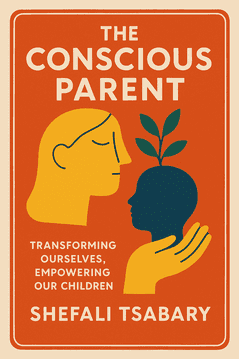
When Oprah Winfrey first encountered Dr. Shefali Tsabary's work, she declared it "revolutionary" and "life-changing" - not just another parenting book, but a complete paradigm shift in how we understand the parent-child relationship. This wasn't hyperbole. The Awakened Family has transformed countless households since its publication, with celebrities like Pink and Penelope Cruz publicly endorsing its wisdom. What makes this approach so groundbreaking? Unlike traditional parenting guides that focus on controlling children's behavior, Dr. Tsabary, with her unique blend of Western psychology and Eastern philosophy, flips the script entirely: the child isn't the problem-the parent's consciousness is. Through this lens, every tantrum, every act of defiance, every parenting challenge becomes not an obstacle but an invitation to personal growth and spiritual awakening.
Capitolo 2
The Ego's Roar: How Our Unresolved Past Shapes Our Parenting
When my preteen daughter refused to attend an event I had my heart set on her joining, I erupted in anger, demanding compliance and respect. Later, after calming down, I recognized two contradictory forces within me: my authentic self that respected her autonomy, and my reactive ego that demanded control. This ego isn't who I truly am, but a collection of protective habits formed in response to childhood wounds.
The ego develops as a shield against pain, creating a false persona we mistake for our identity. When we parent from this fearful, false self, we disconnect from our children's authentic being. Think about it - how often do we react to our children from a place of fear rather than love? That anxiety about your child's test performance, panic about potential bullying, or rage over a small mess - these aren't expressions of concern but manifestations of fear.
These reactions stem from our own childhood templates that we unconsciously repeat. Our children serve as mirrors, reflecting back our unresolved issues. When we feel helpless or anxious with our children, we tend to lash out, projecting our pain onto them. The more emotionally immature we are, the more our children will present us with problems-their way of saying, "I'm showing you what you need to heal."
Most parents have experienced moments of screaming at their children, followed by shame and regret. We typically blame our children for "setting us off," justifying our anger with phrases like "Now look what you made me do!" But our emotional reactivity reveals more about our unresolved issues than about our children's behavior.
Traditional parenting approaches recommend punishments or counting to ten, but these techniques are short-lived because they focus on controlling the child rather than addressing the underlying dynamics. Conscious parenting instead focuses on changing ourselves, recognizing that when we create the right conditions, our children naturally evolve toward higher consciousness.
Our children may be small, but they are mighty in their potential to awaken us. They offer insights not through grand epiphanies but through ordinary moments and humbling situations. Children mirror our immaturity, disorganization, anxieties, and unresolved traumas. Their constant challenge to us is clear: "Wake up, look at yourself, transform yourself. Do this for you, so that I may be free of what burdens you."
Capitolo 3
Children Don't Need Awakening-They Need Us to Stop Putting Them to Sleep
Children don't need us to awaken them-they're already awake. Our role is to foster their natural awareness and create conditions for it to flourish. Parenting must shift from fear-based control to supporting children's development of physical, emotional, and mental capacities.
Control is difficult to relinquish because our ego bombards us with fearful messages. When fourteen-year-old Tonya and her mother Karla came to therapy, Karla presented a long list of her daughter's failures-not studying, doing laundry, exercising, or getting A grades. As Karla's anxiety dominated their relationship, Tonya withdrew completely. Only when Karla recognized how her fear-based instructions buried her genuine caring could their relationship improve.
The fundamental conflict between parents and children stems from different time orientations. Parents fixate on the future, while children naturally inhabit the present. Our culture demands constant busyness and achievement, pushing children from one activity to another in fear they'll "miss out" on future success. This constant rushing disconnects children from their natural ability to be fully present and engaged.
When allowed to experience each moment without constant agenda, children naturally express curiosity, becoming so engrossed in interests that time seems to stop. Children need no external motivation when given space to awaken to their own inclinations. Forcing, rewarding, or using "tough love" may produce short-term results but ultimately creates resentment that prevents children from reaching their true potential.
Beyond material possessions or expensive experiences, what children truly need is to feel seen, worthy, and that they matter for who they are, not just what they accomplish. When these needs are met, children develop natural self-empowerment and enthusiasm. Children's sense of lovability and worth is initially fragile, requiring parents to mirror back their inherent value. If parents hyperfocus on performance rather than affirming their child's authentic self, the child develops a false ego-self.
Only by separating our fantasies of who our children should be from who they actually are can we allow their true essence to flourish. Have you noticed how your child lights up when you truly see them for who they are, rather than who you wish them to be?
Capitolo 4
The Seven Myths That Keep Us Trapped in Fear-Based Parenting
Our parenting beliefs emerge from what I call "parental Kool-Aid"-seven pervasive cultural myths about effective parenting. These myths are so deeply entrenched that we rarely question them, yet they actually prevent meaningful connection with our children.
The first myth-that parenting is about the child-seems obvious but is actually counterintuitive. When we obsess over raising "exceptional" children, we fail to see and accept who they truly are in the present moment. Parents constantly worry their children are "too" something-too shy, too aggressive, too unmotivated, too unfocused. This "tyranny of 'too'" reflects parental anxiety about adequate parenting.
Having children often begins with ego fulfillment, leading to a sense of ownership over our children. This mindset causes parents to feel entitled to raise children as they please, and later victimized when children revolt against parental control. When we shift from power and control to love and kinship, we liberate children from the burden of needing to be "fixed."
The second myth-that successful children must be "ahead of the curve"-has turned childhood into a competitive race where even fun activities have become professionalized. Parents have transformed activities meant to be "fun" into achievement-oriented pursuits from the earliest ages. This trophy-child mentality stems from parents' ego needs for validation rather than concern for the child's authentic development.
The concept of "potential" often communicates to children that who they are in the present moment isn't enough. When we tell children they aren't reaching their potential, we're fixating on an imagined future rather than appreciating their current state of being.
The third myth labels children as "good" or "bad." Society considers "good" children those who are obedient and compliant-essentially those who make our lives easier. When children are labeled as defiant, they're often simply defending themselves. Strong-willed children aren't "bad"-they're clear-minded and powerful, often feeling unheard.
We expect more from our children's behavior than we ever demand of ourselves. When they forget homework, we act like it's the end of the world, forgetting how often we lose our keys or miss deadlines. Instead of focusing on compliance, conscious parents shift attention to whether their child expressed themselves freely, listened to their inner voice, or felt safe telling truth without fear of shame.
Capitolo 5
The Myth of Natural Parenting and the Reality of Love's Complexity
Despite parenting being linked to our biology, we naively assume we're naturally equipped for it, when in reality it requires the highest ability to stay present, grounded, and emotionally regulated. The cultural myth that parenting should be instinctively known, easy, fun, and rewarding places considerable stress on parents who find themselves unprepared for its challenges.
Parents romanticize parenting-mothers imagine blissful breastfeeding and creative activities, while fathers fantasize about teaching skills and raising children who make them proud. When children don't match our fantasies-when their temperament clashes with ours or we struggle to connect with them-the gap between expectation and reality can feel devastating.
The truth is that parenting is not natural-it's a skill requiring years to acquire. Instead of expecting instant connection, new parents would benefit from knowing they're entering a foreign country where no one speaks their language, that each child requires unlearning previous assumptions, and that children don't exist to make us feel good about ourselves.
The myth that loving parents are inherently good parents is deeply ingrained in our culture. While parental love is essential, it's merely the beginning of what children need. Despite our intentions, our love often becomes contaminated by fear, control, and possessiveness, causing our children to experience us as critical rather than loving.
Children often experience their parents' "love" as criticism and control. Parents claim "I'm only doing this because I love you" while punishing or yelling, but children respond to how our actions make them feel, not our intentions. Our unconscious conditioning causes us to manipulate our children to meet our need to feel empowered, creating inevitable clashes.
True love means fully seeing, accepting, and honoring another person for who they are-stepping outside ourselves to consistently connect without conditions or expectations of reciprocation. When we love ourselves with deep insight-embracing both our flaws and darkness with compassion-we naturally extend the same energy to our children, appreciating both their flaws and glory equally.
Capitolo 6
Beyond Happiness: Embracing Life's Full Spectrum
Parents often strive to raise happy children, but chasing happiness actually creates discontent. The belief that happiness is something to be pursued comes from seeing the present moment as lacking. We mistakenly equate happiness with outcomes rather than processes, becoming dependent on external circumstances.
Children naturally know how to engage with life as it is. They feel emotions fully without attaching their sense of worth to circumstances and can quickly adapt to changes. Unlike adults who categorize experiences as good or bad, children accept the "as is" of life-crying when sad and laughing when happy without creating narratives about their happiness levels.
Young children are our greatest teachers of happiness. They embody joy without chasing after it, finding delight in ordinary aspects of nature-dirt, squirrels, sticks, and rocks fascinate them for hours. Children access joy instantly, relishing experiences like getting caught in rain without judging them as good or bad. Between birth and age five, they capture sheer bliss in ways adults rarely can.
While "doing" characterizes adulthood, "being" defines childhood-this complete surrender to reality allows children to remain free, exploratory, and adventurous. To nurture these qualities, we must step aside and let children simply be themselves.
The myth that parents need to be in control of their children is perhaps the most damaging. Our sense of control is largely an illusion, as parenting rarely follows our preordained plans. Parents often confuse responsibility with control. While we are responsible for how we behave around our children, we have no control over who they intrinsically are. Our control is limited to our own feelings, reactions, and the conditions we set in our home.
Children arrive with their own unique blueprint-a particular temperament and way of relating to the world. We can't keep qualities we like and discard ones we don't. Only by accepting our children's inherent nature, including both talents and limitations, can we truly attune to them and meet their emotional needs.
Before being "our children," the young ones in our care are first and foremost human beings with their own unique paths. Our job isn't to dictate how they express their humanity but to embrace them as their life unfolds, honoring both their strengths and limitations.
Capitolo 7
Recognizing Our Emotional Blueprints and Healing Our Lost Self
Parenting can awaken us to our own unresolved issues and lost sense of self. When we parent from our false self rather than our authentic core, we create dysfunctional patterns with our children that reflect our own inner disconnection.
The author reveals her early parenting struggle with boundary-setting, constantly giving in to her toddler's demands with a pattern of "No, no, no... yes." Examining her past, she discovered this stemmed from her conditioning as a pleaser seeking approval. Her fear of disapproval prevented her from setting firm boundaries, which inadvertently taught her daughter that persistence would overcome any limit.
Our lost self reveals itself through our reactivity. Rather than judging others for triggering us, we should express gratitude for opportunities to integrate what has never been addressed. Our reactions aren't about others but about reconnecting with our authentic self beneath the defensive layers we've built.
Young children absorb their parents' emotions, creating blueprints that replace authentic feelings. Victor, normally calm, became enraged when his seven-year-old son cried after losing games. Growing up in dangerous neighborhoods, Victor learned to squelch feelings to survive. Despite becoming a successful attorney, he projected his unresolved fears onto his son.
When feelings from our past remain unintegrated, they're like balloons ready to pop when triggered. Understanding our emotional blueprints allows us to stop burdening our children with our unresolved pain and helps them find their authentic selves without inheriting our distortions.
Fear fundamentally drives our parental reactions. Fear creates a schism within us, separating us from our authentic self and cloaking us in the falseness of the ego. While fear wears many masks-anger, frustration, control, sadness-it remains the universal underlying emotion behind our reactivity with our children.
At our deepest level, our fears connect to our sense of worthiness and place in the universe. The fear of being unloved drives many parents to seek validation through their children rather than making decisions truly best for them. This manifests as overpleasing children, struggling with boundaries, inconsistency, interpreting pushback as rejection, or having impossibly high standards.
Many of us grew up in homes that instilled a sense of not being good enough through constant comparison and emphasis on external measures of success. This conditioning affects how we parent-teaching children to depend on grades for self-worth, obsessing over their appearance, controlling their friendships, and modeling poor self-esteem.
Capitolo 8
Transforming Fear into Conscious Connection
As we recognize fear's undercurrent in our reactions to our children, we gain the opportunity to replace archaic thinking patterns with more evolved responses. We don't need to excavate our distant past to transform fear into consciousness-instead, we observe it arising in the present moment.
Becoming truly awakened parents requires releasing our attachment to and dependency on our own parents. When we remain emotionally bound to our parents for approval, permission, and love, we stay childlike and eventually project this unhealthy dependency onto our children.
True liberation comes when we release our parents from our fantasies and expectations, recognizing they acted from their own unconscious conditioning. By understanding them as humans first and parents second, we free ourselves to continue our own awakening.
Our relationships with our children often entangle love and fear so completely that we can't distinguish between them. We justify fear-based control with statements like "Because I love my son so much, I help him with his social life" or "I insist my daughter excel academically because I want her to succeed."
When parents become overwhelmed by reactivity, I ask them to journal their feelings and list their fears. Francesca, who constantly battled with her eleven-year-old son Nate, wrote fears about him becoming a "failure," "weak," "loser," and "underachiever." When asked to write about her love for him, her entire demeanor changed as she wrote about wanting the best for her "bright," "smart," "kind" son. She immediately recognized how differently their conflicts would resolve if she approached him from love rather than fear.
As we liberate ourselves from ancestral fear patterns and create enlightened new ones, we free both our children and ourselves to enjoy our boundless, limitless natures. Though facing our fears exacts a high price, moving forward step by step brings rewards: days filled with irrepressible joy and purposeful present-moment awareness.
Capitolo 9
Releasing Expectations to Engage with Life As It Is
At the core of our emotional reactions to our children lies the fear that our expectations will go unmet. Expectations are inherently future-focused and often signal dissatisfaction with the present moment. This creates a divide between us and our children, as our attention shifts from who they are now to who we want them to become.
Though we believe our expectations are for our children's benefit, they often reveal our own needs and fears. When we treat children as possessions whose thoughts and actions we can control, we burden them with becoming something they aren't, forcing them to abandon their true selves.
Jackie's story with her seven-year-old daughter Paula illustrates this perfectly. Despite providing nutritious breakfast options each morning, Paula often refused to eat, triggering Jackie's frustration and anger. Jackie's expectation that breakfast was essential revealed her rigid attachment to her own beliefs rather than attunement to her daughter's needs.
Parents often fear that letting go of control will lead to anarchy, but in reality, we're only surrendering mental constructs about how life "should" be. This surrender brings freedom-we discover we have the power to choose whether we get triggered.
Our expectations emerge from judgment, creating rigid mental images of how things "should" be. This mindset positions us as right and others as wrong, creating resistance and conflict in our relationships. Living from the heart means staying open to whatever life brings. If our children cry at Disney World instead of being happy, or fail an exam we expected them to ace, we surrender to reality without resistance.
True intentions differ fundamentally from expectations. While expectations focus on outcomes and others' behavior, pure intentions involve accepting reality as it is in the present moment. Engagement means being fully present rather than fixated on future outcomes. When my daughter competed in her first horse show, I emphasized that her worth wasn't tied to winning ribbons but to her willingness to feel all her emotions, take risks, and persist despite setbacks.
By shifting from expectations to engagement, we free our children from responsibility for our happiness and create space for their authentic selves to flourish. We recognize that life's experiences are journeys toward greater self-awareness and self-connection.
Capitolo 10
The Power of Presence: Entering the Present Moment
What exactly is presence? This question defies simple explanation because presence isn't theoretical-it can only be experienced. Trying to explain presence is like describing colors to someone who's never seen them. Presence means being fully aware of one's present moment, suspending thoughts, ideas, and beliefs.
The only way to transform our relationship with our children is by entering the present moment. The clash of time zones-we live in past or future while children live in the present-causes most parent-child dysfunction. Being present means joining with situations without resistance. When we drop the "attack energy" of "Why isn't my agenda being met?" we can act without emotional reactivity.
We forget that everything is impermanent. All things have beginnings, undergo evolution, and transform into something new. When we fixate on a single moment with our children, we ignore their potential to transform and grow. Ironically, the more we resist an unwanted trait, the larger it looms in their personality.
Children intuitively understand impermanence. Unlike adults, they don't carry baggage from days, weeks, or years ago. They forgive, forget grievances, and embrace new experiences with enthusiasm. This genius for flowing between states often frustrates parents who can't comprehend how quickly a child's mood can transform with just a hug or kind word.
The present in its "as is" form contains limitless abundance. When we genuinely shift our philosophy-seeing a C grade not as failure but as an opportunity for self-awareness-we access abundance instead of lack. When we focus on self-growth as the only parameter of success, external achievements become less important.
Our children constantly pick up on our tone, energy, and nonverbal signals. We push our children much more than they ever push us-with our lists, schedules, and rigid standards that we justify as "opportunities" or "support" when they're often just manipulation to get our way.
No behavior occurs in a vacuum. Something triggers our children, just as something triggers us. When we understand that problematic behavior signals something deeper, we connect more meaningfully by becoming curious about their feelings rather than judging their character.
Capitolo 11
The Art of Silence and Authentic Expression
Silence is one of our greatest untapped allies, yet most of us fear it, mistaking it for nothingness because it doesn't involve doing. Our discomfort with confronting ourselves in stillness leads to excessive eating, drinking, socializing-anything to avoid being still.
When parents ask practical questions like "What should I do if my child left the toothpaste open?" I consistently respond: "Say nothing for five minutes." This advice often triggers alarm-parents worry I'm taking away their rights or endorsing negative behavior. But this pause doesn't mean inaction; it allows space for wisdom to surface, resisting rushed judgments and allowing optimal responses to emerge.
Our instinct to talk everything through often comes from inner anxiety rather than authentic connection. Western cultures encourage venting and discussing everything, but this addiction to talking frequently stems from our need for validation rather than genuine partnership. Our children sense when our desire to talk is about managing our anxiety and exerting control, causing them to withdraw.
Children can tell when our talking comes from control versus connection. I encourage parents to talk only when essential, especially with preteens and teens who already know our perspectives. What they truly need is for us to listen and attune ourselves to them, creating space for them to approach us.
When Peggy learned to tap into her own powerful presence silently, she was amazed at how easily she transformed her relationship with her children. Previously, she relied on threats and punishments, believing this was the only way to influence them, which led to constant power struggles.
Things in the physical universe take time to manifest-nothing happens before its time. Our insecurity and anxiety often make us try to rush life, but this interference actually disrupts the positive energy we send out and delays manifestation. The more we believe things will manifest at the right time, the less manic our energy becomes.
Many of us can't bear to sit still and wait, fearing our desires won't materialize. This fear prevents us from sowing seeds and trusting they'll sprout naturally. With our children, our doubt, confusion, and comparisons stem from fear rather than trust. In today's hectic world, creating buffer time is an art. Those who organize life with sufficient downtime give themselves opportunities to recharge.
Capitolo 12
Beyond Roles: Becoming Your Child's Spiritual Mentor
Much of who we think we are is dictated by external factors-our gender, race, social class, and perceived attributes. Even with very young children, parents eagerly categorize them as athletic, artistic, rambunctious, or introverted. We feel lost without these labels and roles to define ourselves and our children.
Lara, mother of eighteen-year-old Lindsey, fell into depression as her daughter prepared to graduate high school and leave for college. Instead of celebrating this milestone, Lara grieved the loss of her identity as "mother" to her "child." Her sadness created worry in both her daughter and husband, inadvertently keeping her daughter emotionally tethered through concern.
When we don't see ourselves as our children's spiritual mentors and instead cling to the parental role, we limit both our children's ability to individuate and our capacity to engage in mutually reciprocal relationships. A spiritual mentor parents with awareness of enabling children to develop as spiritual beings, asking "What aspect of their development requires attention now?" and "How can I evolve my own consciousness to help my children flow into their authentic selves?"
Nature provides necessary balance in our lives-balance we pass to our children. Our modern disconnection from the natural world contributes significantly to the malaise, depression, and dysfunction many children experience. Children should grow organically, not in the forced or prescribed manner that happens when we impose rigid roles.
Nature balances itself through opposites-hot and cold, light and dark, life and death. This principle can transform our relationship with our children. When a child resists a shower and begins screaming, parents often match this energy-raising their voice when the child raises theirs. Instead of matching our child's disruptive energy, we should embody its opposite pole-bringing calm to anxiety, playfulness to resistance.
A crucial parenting skill is providing an emotional container for our children when their energy becomes destructive. Being a container differs fundamentally from overruling children from a position of power. By remaining grounded when our children are lost in emotional storms, we demonstrate that these feelings pass. This requires accessing our own sacred, still space-like earth's grounded energy, a cathedral's reverence, or the ocean's expansiveness.
Capitolo 13
Setting Boundaries with Love and Creating Win-Win Solutions
Creating appropriate boundaries is among parenting's most challenging aspects. Children need structure and predictability, though within this framework there must be room for spontaneity and unstructured play. Clear, consistent, compassionate boundaries eliminate the need for disciplinary strategies. However, many parents are either too rigid or too uncomfortable with setting limits.
The chapter examines how parents often struggle with boundaries they haven't internalized themselves. When Patricia tried to put her children to bed with "two stories and two songs," she consistently gave in to "just one more," eventually leading to frustration and tears. Her boundary wasn't clear in her own mind-starting with a "stone line" that quickly dissolved into "sand."
Children naturally test limits to discover where the real boundaries lie. They pick up on parental inconsistency, especially when it's rooted in fear of not being liked or appearing selfish. What children truly need is clarity: "Hey, parent, can you get your act together and tell me what the deal is? I'm only testing you to see if you know what you're talking about."
Most parental boundaries are knee-jerk reactions based on tiredness or anxiety rather than thoughtful purpose. To find meaningful boundaries, parents should ask: Does this boundary serve both you and your child's higher self (not just your ego)? Is it negotiable or non-negotiable?
Life-enhancing boundaries help children develop resilience and security. These include respect for oneself through hygiene and sleep, respect for one's environment through tidiness, respect for one's mind through education, and respect for family and community through social connection.
I firmly oppose using time-outs and punishment with children. Traditional parenting has long relied on parental power and control, but conscious parenting rejects these archaic methods. Many parents defend punishment by saying, "I was beaten and I turned out okay." This rationalization serves to idealize their parents' behavior and give meaning to their childhood suffering.
Children learn best through absorption and osmosis, not verbal instructions or reprimands. For our values to truly transfer to our children, we must radiate them through our being with unmistakable clarity. The "model citizen" approach-trying to say and do all the right things-inevitably fails because it's unsustainable when not genuinely embodied.
The power of reinterpretation transforms conflict with our children from battles into collaborative negotiations. Instead of fighting for control, we can create win-win solutions by approaching disagreements as opportunities for teaching negotiation skills. When parents embrace collaborative negotiation rather than compromise, they operate from abundance rather than scarcity.